




Purrramid Deep Dive
What the Community Thinks About Purrramid
Purrramid has earned genuine affection from reviewers across the board gaming community. The game's combination of whimsical theme and clever push-your-luck mechanics appeals to both dedicated gamers and newcomers alike. Designer Reiner Knizia and publisher Lucky Duck Games have created something that feels inviting without sacrificing tension. The Dice Tower's Mark emphasized that the game teaches its lessons quickly: every turn presents the same compelling question. Whether experienced or new to modern board games, reviewers consistently praised how well Purrramid manages its tone, balancing a cozy cat-themed setting with genuine strategic moments and real stakes. Where There's a Wilz, There's a Play gave the game their number three slot for the month, with Stacy calling it "absolutely" loved. Even Brian Drake from The Dice Tower, who expressed hesitation about the post-game scoring system, never questioned the core gameplay experience. They acknowledged: "It's cute. It's about cats. And that's a cool idea."
Core Mechanics That Define Purrramid
Push Your Luck
Push-your-luck sits at the heart of Purrramid's design and drives every meaningful decision at the table. On each turn, players roll five dice and attempt to place them on board spaces, where their sum must equal the space's number. After successfully placing dice, players face an immediate choice: lock in their progress by moving to the placement phase, or roll the remaining dice again. The risk escalates with each decision. If a player cannot place any of their newly rolled dice anywhere on the board, their turn ends in immediate failure and no cat tiles are placed at all. The Dice Tower's Mark captured this moment perfectly: "It's the classic push your luck moment where you say, 'One more roll should be fine.' And the game very calmly replies, 'Absolutely not.'" This mechanic creates the table's most charged moments. Mark noted that "everyone at the table leans in just a little bit more" when a player is deciding whether to continue. The stakes feel manageable early in the turn but grow progressively higher with each additional roll, creating a tension that escalates naturally from the rules themselves.
Dice Placement and Board Navigation
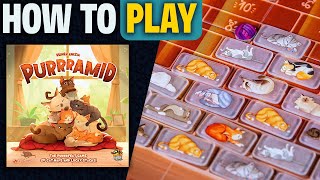
The dice placement mechanic anchors all decision-making in Purrramid. Players must not only find a space whose value matches their rolled dice sum, but they must also satisfy strict placement conditions before those dice can convert into cat tiles. All spaces where a player has placed dice must be connected to one another, meaning each space must be adjacent to at least one other space containing the player's dice. Additionally, all dice must be supported from below, either by existing cat tiles, other dice, or the pyramid's bottom row. Failure to meet either condition results in a bust. This layered requirement means a player can build something promising during their roll sequence only to discover, when attempting to place tiles, that the structure doesn't hold. The double-sided board adds replayability without adding rules complexity, letting groups experience different number layouts across plays. Wool tokens collected from certain spaces unlock re-rolls, adding a resource-management layer that rewards strategic thinking about when to claim these tokens versus pushing forward immediately.
The Purrramid Experience
Whimsical and Tactile
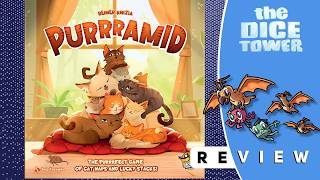
Purrramid wraps its push-your-luck engine in the most disarming theme imaginable: helping Grandma get her mischievous cats into a pyramid for bedtime. Where There's a Wilz, There's a Play's Stacy and Ian describe the game as featuring "cute little adorable um cat tiles. Like acrylic tiles, clear tiles that have really cool cats on them." The acrylic cat tiles are screen-printed with different feline illustrations, and the custom dice sport cat ears or whiskers around the numbers. These production details matter enormously. Brian Drake, a reviewer with nine years of professional experience, highlighted a technical innovation: the acrylic tiles feature roughing powder on their backs so they don't slide around the board during play. "That's to me is a win," Drake said. This kind of polish, where form and function merge, elevates the tactile experience. Players handle smooth acrylic, read custom dice that delight rather than frustrate, and place tiles that genuinely feel good to manipulate. For a game about stacking cats, the physicality of play reinforces the theme without ever feeling forced.
Tense and Table-Engaging
Despite its cozy exterior, Purrramid creates genuine tension at the table. Mark from The Dice Tower observed that it is light and approachable, "but it absolutely has those moments where the table goes quiet, the dice hit the table, and everyone waits to see if it's brilliance or bust." The push-your-luck decision point triggers this focused attention. Everyone at the table watches, invested in whether a player will play it safe or risk everything for one more roll. The moment when a player cannot place dice and busts is crisply defined and universally understood. Stacy notes the "little push your luck element to it as well because you can stop at any time um before you've placed all your cats." This clarity keeps the game moving while maintaining tension. Bonus turns, triggered by using all five dice or placing tiles across three separate rows, add another layer of excitement. Mark notes these moments "can feel incredible until the dice remind you who's really in charge," capturing the emotional arc of hope and the potential for sudden reversal.
What Makes Purrramid Stand Out
Beautiful, Purpose-Driven Components
Component quality alone sets Purrramid apart in a crowded market. The acrylic cat tiles are not merely decorative; they solve a genuine usability problem by resisting sliding across the board. The custom dice, featuring cat ears and whiskers on the numbers, strengthen thematic immersion without sacrificing readability. The double-sided board offers two distinct number layouts, encouraging replays without requiring rule adjustments. These decisions reflect a designer who understands physical board game play. Where There's a Wilz, There's a Play's Ian and Stacy repeatedly returned to the components in conversation, calling them "so cute" and praising both the acrylic tiles and the "custom dice um all the numbers have like cat ears or whiskers on them." Brian Drake summed it: "The components themselves are great." Wool tokens that unlock re-rolls add tactical value without bloating the ruleset. Everything in the box serves the experience.
Accessibility Without Sacrifice
Mark from The Dice Tower described a crucial finding: they played Purrramid "at family gatherings and a lot of people who don't play board games really fell in love with it." The game's approachability works as a genuine feature, not a limitation. Where There's a Wilz, There's a Play's Ian appreciated that it teaches children "math concept as well" while remaining accessible. The game is light enough for casual players to grasp in minutes yet strategically interesting enough to sustain engagement across plays. New players immediately understand the core loop: roll, place dice, decide whether to continue. Mark noted that "what I really enjoy about Purrramid is just how quickly it teaches you its lessons. Every turn asks the same question. Do you play it safe or do you risk everything for one more roll?" That single, repeating decision keeps cognitive load manageable while maintaining genuine stakes.
Potential Drawbacks
Post-Game Scoring Ambiguity
One element divides reviewer opinion: the post-game scoring system. After a player places all their regular cat tiles, they become the "winner" and claim gold cat tiles, continuing to play while other players finish placing regular tiles. Only then does the winner's score derive from their gold cat placement, while others lose points for unplaced tiles. Brian Drake found this structure conceptually odd. "I cannot tell if this is a joke or not," they said. Drake's concern: why continue playing after a winner has emerged just to determine a final score? They suggested their household would likely play to first completion and call it done. This design choice appeals to Knizia enthusiasts who enjoy tracking final scores, but some groups may find the post-win continuation anticlimactic or unnecessarily prolonged.
Minor Dice Visibility Challenge
Brian Drake noted one small production consideration: "It's kind of hard to see the difference between fours and twos and sixes on here sometimes." While the custom dice feature cat ears for charm, distinguishing certain numbers at a glance can prove difficult under typical table lighting. This is a minor friction point that most groups work around but worth mentioning for players with vision sensitivities or those playing in dim environments.
If You Enjoy Purrramid
If Purrramid appeals to you, explore other push-your-luck games that share its tension and accessibility. The Dice Tower's Mark called push-your-luck "one of my favorite types" of game mechanic, and reviewers who loved Purrramid will likely find joy in titles that emphasize decision-making over rules complexity. Fans of Reiner Knizia's design philosophy, where elegant mechanics marry strong themes, should explore their other works. The game's success with non-traditional gamers suggests anyone seeking a family-friendly game that doesn't talk down to players will find Purrramid rewarding. The whimsical cat theme and beautiful acrylic components make it a conversation piece; the push-your-luck tension makes it genuinely engaging.
What Reviewers Are Saying
"But it absolutely has those moments where the table goes quiet, the dice hit the table, and everyone waits to see if it's brilliance or bust."
— The Dice Tower
"I absolutely love this game. It's a Reiner Knizia game, so it's automatically, you know, a good game."
— Where There's a Wilz, There's a Play
"It's cute. It's about cats. And that's a cool idea."
— The Dice Tower