




Rolling Seas Deep Dive
What the Community Thinks About Rolling Seas
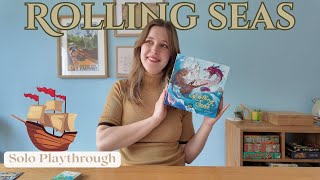
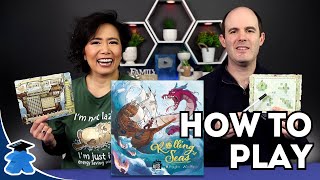
Rolling Seas has generated genuine enthusiasm across the board gaming community. Meeple University, both in their teaching video and their May 2025 favorites list, highlighted the game as a compelling addition to the roll-and-write landscape. Crimsonboardgames praised it during a solo playthrough, appreciating its core design philosophy. The consensus is clear: this is a thoughtfully designed game that delivers a memorable pirate adventure experience, whether played solo or with friends. Reviewers consistently emphasize the thematic coherence between mechanics and story, noting that the game's systems create an emergent narrative rather than simply simulating one.
Core Mechanics That Define Rolling Seas
Flip/Roll and Write
Rolling Seas embraces the roll-and-write format but expands it with ambitious scope. Each round, a shared card is drawn from the adventure deck, prompting all players to simultaneously mark their personal boards. The adventure cards show shapes that must be drawn onto players' maps following specific coordinate placement rules. Meanwhile, navigation dice determine movement costs and available directions for sailing. Critically, players choose which card results to act on through their chosen action each turn (sail, explore, or visit a port), giving each player meaningful agency despite the shared randomness. The game runs for exactly 25 rounds, ensuring a complete campaign arc every session.
Resource Management
Provisions and gold form the backbone of player economy in Rolling Seas. Provisions represent supplies and movement fuel; players spend them to extend their movement range or bypass resource gates. Gold accumulates through exploration and pirate encounters, and players spend it at ports to upgrade their ships, purchase additional cannons, or increase cargo capacity. The interplay between these resources creates constant meaningful choices. Players must balance building up provisions for future turns against spending them for immediate positioning, or deciding whether to pursue expensive ship upgrades at the next port. The system ensures that every resource token represents a genuine decision point, not mere busywork.
The Rolling Seas Experience
Legendary Adventure Storytelling
The defining emotional core of Rolling Seas is the act of creating and telling stories. Players accumulate story points through encounters with sea monsters, perils, currents, and pirates. These points gain their true value when players visit ports and convert them into renown. The genius of the scoring system is that story points visit ports repeatedly, each visit unlocking their multiplied value. Points earned early in the game can score up to nine times across multiple port visits, making every adventure feel consequential. This creates a satisfying rhythm where players feel like legendary bards building a legendary memoir one adventure at a time, then performing that memoir to increasingly receptive audiences at each port. The game transforms abstract points into an actual narrative progression: you're not just scoring points, you're gathering tales and selectively revealing them when the moment is right.
Map Drawing Puzzle Tension
The spatial puzzle of map management creates an undercurrent of tension throughout Rolling Seas. Players must draw adventure shapes onto their personal maps following strict coordinate rules, but the board gradually becomes crowded. Opponents can add problematic shapes to your map by drawing rocks or staging ambushes, forcing you to navigate around obstacles you didn't choose. The map becomes a living record of your journey, but also a constraint that narrows your future options. Some placements feel forced rather than optimal, creating moments of frustration that paradoxically deepen engagement. The solo mode intensifies this by blocking ports with opponent-drawn obstacles, making optimal route-planning crucial. This mechanic elevates Rolling Seas beyond pure storytelling into a satisfying puzzle game where narrative and logistics intersect.
What Makes Rolling Seas Stand Out
Story Point Multiplier Mechanic
The port-revisit multiplier system is beautifully elegant. Most games score points once and move on. Rolling Seas rewards early exploration by making those points stackable across multiple port visits. This creates a completely different strategic paradigm: you want to accumulate story points early, but you don't convert them to renown until you're ready. This decoupling of earning from scoring is uncommon in roll-and-write games and gives players genuine strategic agency. Do you rush to a nearby port to score your points early, potentially wasting their multiplier potential? Or do you spend precious resources positioning yourself for a more distant port visit to maximize your scoring? This tension, more than any other mechanic, makes Rolling Seas feel like you're actually playing a game of legendary bards managing their greatest hits for maximum impact.
Simultaneous Play with Meaningful Interaction
Rolling Seas delivers the interactive pen-and-paper experience that fans of Cartographer cherish. The shared dice rolls create common information, but the three simultaneous action choices (sail, explore, visit port) mean that no two players' turns are identical even with the same dice. Player-drawn obstacles keep the map chaos alive and personal. Unlike purely solo roll-and-write games where luck is the only opponent, Rolling Seas players interact through the maps they shape for each other. This maintains engagement even when it's not your turn, as you watch where opponents position their ships and anticipate where they might go next. The game respects the genre's low-component footprint while maximizing social interaction within it.
Potential Drawbacks
Crowded Map Drawing Limitations
As play progresses, the game boards become increasingly filled. Reviewers noted that sometimes desired shape placements become impossible due to coordinate restrictions or previous elements blocking space. The map fills up naturally and authentically, but it can create moments where you're frustrated by placement constraints rather than engaged by them. In solo mode, this problem intensifies since there's no player to mitigate the difficulty. The solo achievements require collecting all three ancient monoliths before turn 15, which reviewers described as prohibitively difficult. While this difficulty scaling is intentional, some players may find the crowding feels punishing rather than challenging.
Turn Action Constraints
Players can take only one action per turn (sail, explore, or visit port), which sometimes feels restrictive. Reviewers mentioned wishing for slightly more flexibility to accomplish multiple objectives in a single turn. The game does provide workarounds (spending cargo for bonus movement, using wind-in-sails resources), but these mechanics require active remembering and planning. New players might not fully leverage these systems in their first play, leading to turns that feel less impactful than desired. The reliance on dice rolls for movement direction also constrains player agency, particularly in solo mode where unlucky rolls can derail carefully laid plans.
If You Enjoy Rolling Seas
Players drawn to Rolling Seas will find kindred spirits in the Cartographer community. Both games offer simultaneous pen-and-paper gameplay with meaningful player interaction through map drawing. If you love the spatial puzzle of building an optimal map around player-placed obstacles, Cartographer satisfies that same itch. Rolling Seas, however, adds a strong narrative and resource-management layer that Cartographer doesn't emphasize. For pure roll-and-write fans, games in that genre like Ganz Schön Clever offer different mechanical depths, but Rolling Seas is notable for its thematic integration and the story-point multiplier system that rewards long-term planning. Players who value adventure narratives and emergent storytelling through game systems will find Rolling Seas particularly resonant. The game's designer George Yos and publisher Nuts Publishing have created something that transcends the typical roll-and-write formula by making the narrative feel like the point, not an afterthought.
What Reviewers Are Saying
"The aim of the game is to become the most renowned adventurer. And with every great encounter along your journey, you'll gain stories to tell. Every time you stop to visit a port, you'll tell your tales and build your renown."
— Meeple University
"The main goal that we have basically is we are trying to live an adventurous life, encounter as many obstacles as we can so we can make stories about our sea adventures. And then we're going to try to go to all these different ports to tell our tales that we've went on, tell our adventures, and we will score points mostly for that. We will also score points for some other things, but the main thing is just really trying to get our stories out there, which I think that's a really cool concept for this game."
— Crimsonboardgames
"The more ports you visit, the more times you get to tell the same stories. So points early in the game could score up to nine times to make it work. I love that feeling. It's like, okay, you just gather this particular points and then you trigger the point scoring on your own term. So really fun."
— Meeple University