

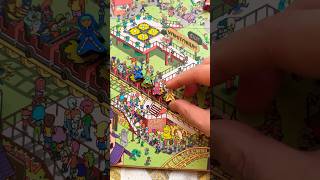


Vomitland Deep Dive
What the Community Thinks About Vomitland
Vomitland has captured reviewers' attention as a genuinely fun push-your-luck game that delivers exactly what its cheeky title promises. Across video reviews, the consensus is overwhelmingly positive: this is a clever, well-balanced game that manages to be both light-hearted and tactically engaging. Reviewers consistently praise how the game balances the tension of pushing your luck against the wisdom of knowing when to step away. Meeple University's Stella offers the most comprehensive breakdown, walking through the full mechanical system with enthusiasm, while Board Game Sanctuary highlights the strong thematic connection to classic theme park experiences. The game's appeal extends across player types: it works as a filler game for experienced players yet remains accessible enough for families discovering modern board games.
Core Mechanics That Define Vomitland
Push Your Luck
At the heart of Vomitland lies a push-your-luck system where every turn on the roller coaster becomes a calculated gamble. Players start each round feeling fine, but as coaster cards reveal features, their nausea level climbs. Reaching five nausea points means a trip to the vomitorium, forfeiting any cards earned that round and gaining a negative point token. Each card drawn offers a choice: exit the ride safely and collect cards based on position, or stay on for more cards at the risk of going over. Reviewers note this creates a constant internal debate between greed and prudence. The mechanism resonates particularly well because players feel the tightness of the odds tightening with each draw, a hallmark of effective push-your-luck design.
Set Collection
The cards collected from the roller coaster become the engine of the endgame. Players score points by assembling sets: one point per largest set of maneuvering cards, two points per set of three different emotion icons, and bonus star points from completed sets. Reviewers highlight how this scoring structure creates recurring tension throughout the game: players often find themselves pushing their luck to complete a set they're racing to finish before an objective expires. The set collection mechanic elevates what could be a simple push-your-luck filler into a game where tactical card drafting matters alongside risk assessment.
The Vomitland Experience
Thrilling Tension and Release
Vomitland creates a distinctive emotional arc. The early rounds feel light and forgiving, but as nausea tokens accumulate in players' hands and scoring objectives demand specific sets, the stakes intensify. Each decision becomes weighted: do you need that next card badly enough to risk everything? Reviewers consistently mention the satisfying release when a player exits safely, especially after a harrowing near-miss. The theme amplifies this tension; the vomit mechanics feel humorous rather than punishing, giving the game a playful tone that keeps losing a ride from feeling like genuine failure.
Accessible Fun with Strategic Depth
Despite its simple core loop (reveal card, decide to stay or go), Vomitland offers surprising tactical depth. Workers can be placed at the souvenir shop to gain helpful cards or the bathroom to reduce nausea. Reviewers note that this worker placement layer provides real decision space without overwhelming the game's pacing. The balance between push-your-luck thrills and set collection planning appeals to both casual players looking for a fun, light experience and experienced gamers seeking to optimize plays. The game delivers what reviewers call "a really tight little balance": every mechanic reinforces the central tension without overshadowing it.
What Makes Vomitland Stand Out
A Cohesive Theme That Lands
Vomitland's theme goes far beyond window dressing. The nausea mechanic, the vomitorium, the souvenir shop: every rule reinforces the central conceit of riding a theme park coaster to excess. The game opens with a jingle and corporate disclaimer in character. Reviewers specifically cite this thematic unity as a major strength; it gives the game personality that makes both success and failure feel narratively satisfying. The theme also justifies the unusual risk profile in a way that doesn't feel mean-spirited, making even a vomit-inducing loss memorable and funny rather than frustrating.
Intuitive Decision-Making Without Overcomplexity
The game's rules are straightforward enough to teach in minutes, yet players discover new strategic layers as they play. Each turn asks a single question (stay or leave), but the answer branches into evaluating card positions, nausea track position, remaining objectives, and opponent advantage. Reviewers emphasize that Vomitland achieves this balance without requiring players to track complicated interactions or memorize exception clauses. The light-to-medium complexity rating feels accurate because the thinking time is spent on meaningful decisions, not rules parsing.
Potential Drawbacks
Limited Replayability in Player Count Scaling
While Vomitland plays three to six players, reviewers note the game works best with a stable group size. The worker placement spaces and souvenir shop mechanics create different pressure points depending on player count. At three players, the bathroom may feel less critical; at six, it becomes a genuine bottleneck. Though the review transcripts don't extensively criticize this, the variation in game feel across counts suggests some tables may need to house-rule or adjust tactics significantly between different player scenarios.
Reliance on Risk Tolerance
The game's central mechanic (deciding when to push luck) creates a dependency on player risk appetite. A table of cautious players may find the game plays more conservatively, reducing the push-your-luck tension that defines the experience. Conversely, a table of aggressive players might see less set collection maneuvering and more volatility. This isn't a flaw, it's inherent to push-your-luck games, but it means the ideal experience depends partly on group chemistry and player style rather than emerging purely from the game itself.
If You Enjoy Vomitland
Players drawn to Vomitland's blend of theme park thrills and tactical tension will find kindred experiences in other games. Those who love the roller coaster fantasy should explore RollerCoaster Tycoon, the board game adaptation that challenges players to build and manage the most spectacular coasters. For push-your-luck enthusiasts seeking similar risk-reward decisions in a different context, King of Tokyo offers a comparable escalation of danger with tactical mitigation options. Fans of the set collection and worker placement elements might gravitate toward games that layer multiple competing objectives: the interplay between completing sets and managing resources feels similar to the optimization puzzle in lighter economic games. The accessible complexity and playful tone also appeal to tables seeking modern filler games with genuine strategic meat; Vomitland walks that line exceptionally well.
What Reviewers Are Saying
"There are roller coaster cards that cause you to increase nausea twice, or extreme cards that reveal even more cards before your next chance to get off."
— Stella, Meeple University
"Do you like board games that take you on a wild ride? Well, here is a worker placement game all about riding the most thrilled coasters possible. Watch out for the big drop, maybe a tornado or even a loop. Your aim is to gain all these different icons, avoiding being sick."
— Board Game Sanctuary
"It actually balances everything really nicely. You've got times where you need to push to collect the high scoring sets because you're racing for some set collection objectives, you're trying to get standarded sets that will score you points, and you do lose points at the end of the game every time you push too far, and ends up being this really tight little balance that works pretty well."
— Taran, Meeple University