
These gnomes are sweet, hardworking and sometimes very naughty!
Gnome village is a strategic game with a touch of luck. Your gnomes are going to work in your village. So that with these products your village can expand.
Each player creates his own village. You start with 2 houses and 5 roads. You can place this however you want, if only 1 road tile is adjacent to the buildings. You have a gnome that starts at the house with the lights on. The player who starts may take a forest card, from which you can receive products, money or an action. Then you check whether your gnome is on a company, you get money for this. Then you use the products and coins you make to buy things. At the end you can move the gnomes and put them to work in workshops. You turn the tile over so that you can clearly see that the workshop is active. At the companies you can perform different actions and even fly to fellow players from another village!
Once someone has moved in all their gnomes, each other player may complete this round until the starting player. After that, the player with the most points wins!
Do you delve into the gnome life?
—description from the designer

Images


- Bones of the game are good, has a good idea
- Rules were very confusing
- Lost in translation (possibly from Holland)
- Not a big hit
- Felt too easy but also difficult to do things
- Constantly looking up rules
- Took a long time to play
- Did not work for us at all
- Gnomes
- Gnome Hollow
Mechanics (from transcript analysis)
- action selection — Complex actions based on building types.
- Worker Placement — Using workers and building different shops.
Video topics + discussion points
Quotes (from this video)
- It's Family Feud, but it's Disney themed.
- Just like it for nostalgia.
- It's actually not horrible, you know, a horrible mashup.
- It's a nice little cozy, quick little solo game.
- This is a great game.
- I do like the dice.
- It's got an interesting hook with the globes and stuff.
- It was one of the darling games of 2024.
- The rules were very confusing.
- It's a fun take on the game of golf, you know.
- This is one I've only played solo. I do enjoy it.
- It's a silly game.
- This is silly fun.
- It's a flip and right without the right.
- It's the nostalgia factor.
References (from this video)
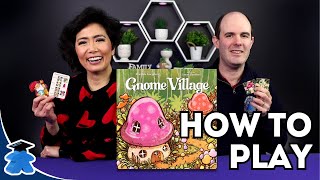
Mechanics (from transcript analysis)
Video topics + discussion points
Quotes (from this video)
- Gnome Village is a tile placement game
- the aim of the game is to score points indicated by this points icon on many of the tiles you place
- Gnome Village is played in turns starting from the first player and going clockwise around the table
- The game ends once any one player has five gnomes in their Village
- the happy gnome token will always pass to whichever player has the most hat businesses in their Village
References (from this video)
- wealth and attractiveness of a village for gnomes
- gnome village tile-placement
- instructional tile-placement and resource management
Mechanics (from transcript analysis)
- Abilities and attacks — Certain forest cards and business tiles grant disruptive actions (e.g., stealing coins, discarding opponent tiles) and special tokens like the Happy Gnome influence scoring.
- End condition and scoring — The game ends when a player has five gnomes; final scores are tallied from houses, workshops, hat businesses, and unused coins according to the rules.
- Forest cards and income — Reveal a forest card each turn to gain coins or activate related actions; some cards grant immediate coins, others interact with market or workshops.
- Gnome movement and activation — Move gnomes along roads to activate tiles; landing on a workshop flips it to active; landing on a business with a green square triggers its action; standing on an active workshop yields effects.
- Market and purchases — Spend gnome coins to buy businesses, workshops, or product tiles from the market; some items are limited and replenish when a face-up item is purchased.
- Product tokens and spends — Product tokens can be spent during the perform phase to activate corresponding workshops or gain new tiles by spending specific tokens.
- Tile Placement — Place houses, workshops, and roads so each tile is adjacent to existing tiles and ensure houses are adjacent to an empty road; neighbor constraints apply for legal placements.
Video topics + discussion points
Quotes (from this video)
- Gnome Village is a tile placement game
- the aim of the game is to score points indicated by this points icon on many of the tiles you place
- Gnome Village is played in turns starting from the first player and going clockwise around the table
- The game ends once any one player has five gnomes in their Village
- the happy gnome token will always pass to whichever player has the most hat businesses in their Village