

Game Info
Year
2024
Players
1-4
Age
10+
Playtime
45 min
Complexity
2.5/5
Collection
Your Tier
Loading…
Mechanic profile
Not enough video data yet
Vibe profile
Not enough video data yet
Description
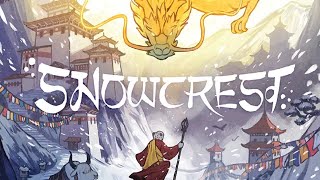
A tableau-building card game where players develop a snowy mountain settlement across competitive and solo modes
Featured Videos
Review
Snowcrest: Discussion
Rules Teach
Snowcrest - Official How to Play
Ask a Rules Question
Images
GID0453044.jpg
GID0453044_thumb.jpg
All mentions
Browse transcript mentions, sentiments, pros/cons, mechanics, topics, quotes, and references.
Total mentions: 8
This page: 8
Sentiment:
pos 6 ·
mix 1 ·
neu 0 ·
neg 0
Showing 1–8 of 8
Video QNaQz52yNNU
Board Games UnLocked Review at 0:16 sentiment: mixed
video_pk 112942 · mention_pk 324585
Click to watch at 0:16 · YouTube ↗
Overall sentiment (raw)
mixed
Pros
- Adorable and cute art style
- Surprisingly deep strategy for its size and apparent simplicity
- Clean and refreshing gameplay mechanics
- Good pacing, doesn't overstay its welcome
- Visually appealing components, especially in the deluxe version
- Solid core system of flipping cards for actions
- Never starved for resources
- Charming theme
Cons
- Potential for repetition after multiple playthroughs due to lack of unique Guardians
- Confusing design choice regarding personal decks
- Anticlimactic moments when new villagers can't be utilized
- Guardians lack unique design beyond their title
- The 'meditation' (bidding) mechanic feels tacked on
- Lack of strategic depth for some players
- Limited incentive to acquire more common villagers
- Personal decks are virtually identical among players
Thematic elements
- Animals in an Asian theme
Comparison games
- Roll for the Galaxy
Mechanics (from transcript analysis)
- action selection — On a turn, players activate a card in their village, add a card to their village and activate it, or rest.
- Bidding (Open Bid) — The 'meditation' action involves an open bid of bells, where players openly reveal how many bells they are willing to spend to gain scrolls.
- Deck Building (mentioned as a comparison/point of confusion) — The game has personal decks for players, but the host questions their necessity and compares it to deck-building mechanics, finding the integration confusing.
- Resource Management — Players use resources to fulfill achievements and gain Scrolls. The game states that players are "never starve for resources".
- Set Collection — Players fulfill achievements by visiting Guardians which require offerings of buildings, cards, or resources to gain Scrolls (victory points).
- Tableau Building — Players activate cards in their village or add cards to their village, which is described as a form of tableau building. The game uses face-up and face-down cards to provide resources or trigger actions.
Video topics + discussion points
No key topics recorded for this video.
Quotes (from this video)
- this is a adorable cute little game that has quite a little bit of meat to it more so than I was actually uh anticipating
- for a game box of of this size and like the Simplicity of the rules I was thinking this was going to be a relatively lighter game but there's there's actually some some deeper strategy to it than I was expecting
- the art is fantastic it's adorable
- it sounds like I hate this game and I don't the game you know was you know it worked it's Charming the art probably carries it a little bit more for me
- On scale 1 to 10 I'm giving snow Crest a seven I think it's a good game
References (from this video)
No references stored for this video.
Video LSjupA-zRdg
Meeple University Top 10 List at 7:11 sentiment: positive
video_pk 86470 · mention_pk 223784
Click to watch at 7:11 · YouTube ↗
Overall sentiment (raw)
positive
Pros
- Elegant and easy to play
- Satisfying tableau building
- Deceptively interactive
- Multiple paths to victory
- Different every game
Cons
- Balancing changes from prototype to production were minimal
Thematic elements
Comparison games
none
Mechanics (from transcript analysis)
- action selection — On a turn, players either play a card or flip a card on their grid to activate it.
- Majority Control — Final scoring involves majority control of resources.
- Resource Management — Players gain resources when cards are activated or not activated, and must manage these to achieve objectives.
- Set Collection — Players need to get scrolls to win points, which have requirements that might involve discarding cards or destroying buildings.
- Tableau Building — Players play cards onto their grid to build up their tableau.
Video topics + discussion points
No key topics recorded for this video.
Quotes (from this video)
- Rebel princess is a trick taking game where the theme is amazing you are princess is a you are a rebel princess you're trying not to marry Prince Charming because you a rebel basically
- it's very fun fre taking game and there are a lot of variability as well
- very very clever card drafting game
- hunt for really broken combos that will give you a whole lot of points
- currency in the form of stones which are worth one three and six points but you're not allowed to make free change and you're limited to the specific number of stones not the value of stones you can hold
- feels a lot like dwellings of elderil but set in in the space
- I just love that mechanics just makes it feel you have to balance how many workers you do and then how often do you do that action
- when you bring a piece back you can essentially use it with some energy resources to activate an entire row of your Tableau
- all the actions have timing engaged in them
- everything is so Linked In with timing for what other players do
- the most clever thing is the way the solar system rotates
- you are encouraged to score points this and this was in your um I think it was 19th you sorry so it's the way you being encouraged to score points Within game because then you get to pick the uh the better objective for endgame scoring
- it's going to scratch the itch of someone who wants sandx gentle sandbox do your own kind of thing
- action selection mechanism unlimited advancement rondle
- every action is so re what other players do the timing uh wanting to do something before somebody else is so baked into every single action
- limited capacity for storage which makes it really tight
- it's like Dominion with every good expansion cram into a really compact deck building game
- six unique captains in the game as well with their own decks and some of them have their own powers
References (from this video)
No references stored for this video.
Video 8eB8eNnAd7M
CA Couple Playthrough at 0:09 sentiment: positive
video_pk 74424 · mention_pk 179328
Click to watch at 0:09 · YouTube ↗
Overall sentiment (raw)
positive
Pros
- Fast-paced actions and quick turns
- Engaging village-building mechanics
- Two-player tension with meaningful scoring decisions
- Prototype showcases core ideas clearly
Cons
- Prototype components may change before final release
- Iconography/terminology may be confusing in prototype
- Balance nuances may shift in larger player counts
Thematic elements
- Knowledge acquisition and village development
- Fantasy alpine village focused on knowledge gathering
- Cooperative-neighborhood growth with competitive scoring
Comparison games
none
Mechanics (from transcript analysis)
- Action selection / worker placement — activate villagers on your board or from supply by paying food and flip them face down
- Auction / Bidding — some actions involve exchanging or bidding resources to gain specific benefits
- bidding-like/resource exchange — some actions involve exchanging or bidding resources to gain specific benefits
- Building placement — spend resources to build buildings that provide ongoing benefits
- Compound Scoring — rest action triggers points when you have three in a row or diagonal; sets and rows impact rest and refresh
- End Game Bonuses — the game ends when the knowledge scroll pile is depleted and final scoring occurs
- end-game condition via scroll depletion — the game ends when the knowledge scroll pile is depleted and final scoring occurs
- pattern-based rest scoring — rest action triggers points when you have three in a row or diagonal; sets and rows impact rest and refresh
- Resource Management — collect knowledge scrolls and various resources to build and score
- Worker Placement — activate villagers on your board or from supply by paying food and flip them face down
Video topics + discussion points
No key topics recorded for this video.
Quotes (from this video)
- Everything you see here today is in Prototype form
- check out the crowdfunding page just in the links down below
- Snow Crest you can see it in all its Glory
- the goal of the game is to collect the most knowledge
- we'll head on over to the table and play
References (from this video)
No references stored for this video.
Video qpRcrmyEM1k
CA Couple Game Preview at 0:00 sentiment: positive
video_pk 74390 · mention_pk 179236
Click to watch at 0:00 · YouTube ↗
Overall sentiment (raw)
positive
Pros
- clear, approachable engine-building feel that remains deep with meaningful choices
- multiple viable paths to acquire scrolls and knowledge, promoting exploration
- tight player interaction through card effects and grid-based competition without forced engagement
- two-player games have produced nail-biting, close scores, increasing replay value
Cons
- resting can interrupt flow and create a pace slowdown
- endgame can feel pressure-filled if scrolls are scarce, potentially punishing cautious play
- prototype status means some rules or balance aspects may change before final release
Thematic elements
- knowledge gathering and village development through resource management and ritual actions
- remote mountain village with anthropomorphic animal residents and a mountain ascent to knowledge
- story-driven ascent, quest-like progression toward knowledge atop a mountain
Comparison games
none
Mechanics (from transcript analysis)
- bidding_and_guardians — meditation/bidding rounds determine who gains scrolls and access to Guardians’ knowledge; adds interaction and risk.
- card_modification_and_dynamic_decision_space — players can modify their grid and cards to adapt strategies, creating evolving, low-stress yet deep decision-making.
- Engine Building — players gradually build a personal engine by activating villagers, constructing buildings, and leveraging cards to generate resources and scrolls.
- engine_building — players gradually build a personal engine by activating villagers, constructing buildings, and leveraging cards to generate resources and scrolls.
- Hand Management — cards from hand or grid are activated, potentially replaced, and used to gain resources, scrolls, or other benefits.
- hand_and_grid_card_management — cards from hand or grid are activated, potentially replaced, and used to gain resources, scrolls, or other benefits.
- knowledge_and_omen_scoring — scrolls, omen track position, and built structures determine final scoring; endgame is triggered by depletion of scroll tokens.
- Reclaim as Action — resting is required when certain conditions are met (three cards in a line), yielding resources but slowing progress and adding strategic tension.
- Resource Management — resources (food, scrolls, and other tokens) are produced via villager actions, buildings, and card-play, driving endgame scoring.
- resource_and_scroll_generation — resources (food, scrolls, and other tokens) are produced via villager actions, buildings, and card-play, driving endgame scoring.
- rest_action — resting is required when certain conditions are met (three cards in a line), yielding resources but slowing progress and adding strategic tension.
- village_placement_and_replacement — place villagers on an AOW-style grid; can add new villagers or replace existing face-up cards to modify your engine.
Video topics + discussion points
No key topics recorded for this video.
Quotes (from this video)
- it's a simple light engine buildy feel game
- the decision to make when you were figuring out which card to place where was very interesting
- rest is something you have to do, and that makes it even more easier to decide what kind of actions you're going to be taking
- it's a nailbiter of a game
- acquiring buildings throughout the game get and using those buildings for those resources it's a really clever way to slowly ramping up
References (from this video)
No references stored for this video.
Video muL4Q5tZD1M
Rules Teach
video_pk 70560 · mention_pk 167569
Pros
none
Cons
none
Thematic elements
none
Comparison games
none
Mechanics (from transcript analysis)
Mechanics unknown.
Video topics + discussion points
No key topics recorded for this video.
Quotes (from this video)
- "Snow Crest is played in turns starting from the first player and going clockwise around the table until the end of the game is triggered"
- "we're using a prototype copy of the game so the rules and components may not be final"
- "check out the project page for the game we'll put a link to that in the description below"
References (from this video)
No references stored for this video.
Video muL4Q5tZD1M
Rules Teach at 0:08 sentiment: positive
video_pk 70560 · mention_pk 179337
Click to watch at 0:08 · YouTube ↗
Overall sentiment (raw)
positive
Pros
none
Cons
none
Thematic elements
- Enlightenment and ancient knowledge (Scrolls)
- a village in harsh snow-covered mountains
- mythic/ancient knowledge
Comparison games
none
Mechanics (from transcript analysis)
- Achievements — Achievements provide objective-based scoring; when an achievement is met, the card is removed and Scrolls are gained.
- activate — Activate a face-up card in your village; resolve the action printed at the bottom of the card; flip it face down.
- Add — Add a card from hand or from the face-up common village display; pay the card's printed cost in barley; add it to your village and then immediately perform its printed action; flip it face down.
- anti-curse / ignore — Some villagers can ignore curses or anti-curse effects on Guardian cards.
- Building Construction — Spend Juniper to take a building from the supply and place it on the leftmost open slot of your building track; endgame points are awarded based on building count.
- draw action — Certain actions simply draw cards from the deck into your hand.
- End Game Bonuses — Endgame occurs when remaining Scrolls are depleted; scores are tallied based on Scrolls, omens, and resources.
- End-game scoring — Endgame occurs when remaining Scrolls are depleted; scores are tallied based on Scrolls, omens, and resources.
- forest/omens — Forests provide tokens and can trigger omens; removing tokens disturbs the forest; resolving forest cards can grant omens with end-of-game scoring implications.
- Guardian — Guardian cards (Guardians) are resolved by drawing from the Guardian deck; this works like the forest deck but with higher costs and rewards.
- Juniper — Juniper works differently from other resources; you gain from forest top tokens; Juniper is used to pay costs and is drawn from forest-related pools rather than a single common supply.
- Merchant — Merchants enable exchanges of resources or Scrolls.
- prayer bell bidding — Meditation action where players bid prayer bells to gain Scrolls; players may outbid each other; rewards depend on bid and player count.
- Reclaim as Action — Activate a face-up card in your village; resolve the action printed at the bottom of the card; flip it face down.
- Rest — If you have three face-down cards in a row/column/diagonal, you may rest to gain resources from the top-right corners of cards; then flip all cards back over to face up.
- setup and variants — Game can be played with basic rules that remove certain decks and adjust Scrolls for a simpler experience.
- Trading — Merchants enable exchanges of resources or Scrolls.
- two-part card actions — Many cards give two options (left part or right part) for actions; you choose which side to use.
Video topics + discussion points
No key topics recorded for this video.
Quotes (from this video)
- "Snow Crest is played in turns starting from the first player and going clockwise around the table until the end of the game is triggered"
- "we're using a prototype copy of the game so the rules and components may not be final"
- "check out the project page for the game we'll put a link to that in the description below"
References (from this video)
No references stored for this video.
Video PVu3E3nXPzM
Board Games With B7 Review at 0:00 sentiment: positive
video_pk 12157 · mention_pk 35557
Click to watch at 0:00 · YouTube ↗
Overall sentiment (raw)
positive
Pros
- Engaging theme and immersive artwork
- High-quality components (upgraded wooden tokens in optional pack)
- Fast-paced, accessible rules
- Rich villager abilities add strategic depth
- Stunning visuals and cohesive thematic design
Cons
- Guardians and forest interactions could use harsher penalties for more risk
- Wished for longer play sessions to explore more strategies
- No insert included, though artwork and components compensate
Thematic elements
- Quest for wisdom and serenity
- A snowy, enchanted realm where villagers seek enlightenment
- mythic, aspirational
Comparison games
none
Mechanics (from transcript analysis)
- Card/Chit Market — Activated cards are flipped face down and later flipped back up.
- End Game Bonuses — Game ends when the last scroll token is claimed.
- end_game_condition — Game ends when the last scroll token is claimed.
- flip_face_down — Activated cards are flipped face down and later flipped back up.
- grid_based_village — Each player controls a 3x3 village grid on their mat.
- Hand Management — Players manage a hand of villager actions and activate one per turn.
- hand_management — Players manage a hand of villager actions and activate one per turn.
- multi_use_cards — Villager cards provide multiple uses depending on activation.
- Multi-Use Cards — Villager cards provide multiple uses depending on activation.
- Resource Management — Collect barley and other resources to fuel actions.
- resource_management — Collect barley and other resources to fuel actions.
- variable_setup — Scrolls, guardians, and resources create variability per game.
Video topics + discussion points
No key topics recorded for this video.
Quotes (from this video)
- I absolutely love the theme and setting
- The artwork is nothing short of incredible
- The game play is awesome and fast-paced
- I hold heartedly recommend Snow Crest for anyone seeking a dynamic blend of fun, strategy and eye-catching aesthetics
- The start player marker... dragon on a large blue disc it's fantastic touch
References (from this video)
No references stored for this video.
Video GZF7-bbgsVI
Board Games With B7 Discussion at 0:24 sentiment: positive
video_pk 3951 · mention_pk 11548
Click to watch at 0:24 · YouTube ↗
Overall sentiment (raw)
positive
Pros
- Stunning artwork and components
- Engaging theme and village-building tension
- Fast-paced with meaningful choices
- Accessible to a wide range of players
Cons
- Guardian/Forest cards could use harsher penalties
- Would like the game length to be a bit longer for deeper strategy
- No insert in box (storage is passable but could be improved)
Thematic elements
- Quest for wisdom, harmony, guardians and monks
- A snowy, mystical realm where a village pursues Enlightenment
- Story-driven with lore-rich environments and spiritual motifs
Comparison games
none
Mechanics (from transcript analysis)
- Compound Scoring — Goal is to collect Scrolls to maximize end-game scoring.
- grid_based_action_placement — A square grid village where villagers are placed to take actions.
- Hand Management — Players manage a hand of cards to perform actions.
- hand_management — Players manage a hand of cards to perform actions.
- multi_use_cards — Cards serve more than one function depending on play.
- Multi-Use Cards — Cards serve more than one function depending on play.
- set_collection_scoring — Goal is to collect Scrolls to maximize end-game scoring.
- variable_setup — The starting layout changes between games.
Video topics + discussion points
No key topics recorded for this video.
Quotes (from this video)
- I absolutely love the theme and setting.
- the artwork is nothing short of incredible.
- the rules are straightforward, making it easy to jump right in and start having fun.
- Push-your-luck element to be a standout feature.
- Moo plays best with four to six players.
- two players is where Aopa Mine shines.
References (from this video)
No references stored for this video.
Transcript Navigation
Showing 1–8 of 8