
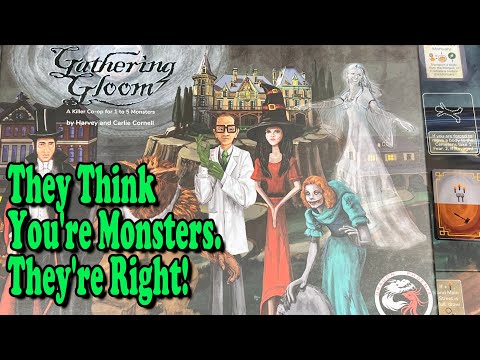




Gathering Gloom Deep Dive
What the Community Thinks About Gathering Gloom
Gathering Gloom has quietly become a standout discovery among board game reviewers who specialize in finding overlooked gems. Reviewers describe it as a game that transcends its mechanics to create something genuinely special, though opinions vary on how accessible it is to learn. The consensus is clear: this is a self-published title from Dragon Phoenix Games that punches far above its weight in terms of thematic integration and replayability.
Dungeon Dive's Daniel identifies Gathering Gloom as one of the best games of 2025 and notes disappointment that it didn't receive more attention when first covered, calling it exactly the kind of game the channel exists to champion. The praise centers on how the game's various systems interlock to create emergent storytelling and memorable moments. Stella Explains offers a more straightforward preview of the mechanics, emphasizing the cooperative nature and icon-matching puzzle at the game's heart. Both reviewers highlight that while Gathering Gloom is undeniably good, it demands some effort to learn and isn't for players who won't embrace its gothic monster-family theme.
Core Mechanics That Define Gathering Gloom
Deck Building and Set Collection
Each player begins with a starting deck specific to their monster character and can acquire additional deed cards throughout the game. These cards serve double duty: they can be spent for their trait symbols (acumen, charm, horror, strength, or wild) to solve crises, or they can be used for their special actions like murder or deception. The deck building is paired with constant set collection as players gather matching symbols from their cards, minions, and even environmental tokens to assemble the exact combination needed to resolve a crisis before it escalates.
Designer Harvey Cornell and their wife Carly built this system so players are always making meaningful choices about what cards to prioritize acquiring. The game rewards careful deck construction while remaining forgiving enough that a newly learned player can still find viable paths to victory.
Worker Placement with Asymmetric Character Powers
The village board contains multiple locations that players can visit to take actions. Each character in the Charming family (the Werewolf, Zombie, Witch, Vampire, Mad Scientist, Ghost, and others) brings unique traits and starting abilities that differentiate how they approach problems. Players move between village locations and family properties, triggering location actions or using their character's special powers. The limitation isn't the number of actions available but rather the resources and symbols players can gather to execute them, creating a puzzle where planning and sequencing matter enormously.
The Gathering Gloom Experience
Dark Comedy and Gothic Atmosphere
Playing Gathering Gloom feels like participating in a 1930s gothic mystery where you're on the wrong side. The Charming family are genuinely evil, and their staff and the villagers who encounter them have every reason to be suspicious. Reviewers praise how the theme flavors every mechanical interaction. When you move a corpse to the mortuary or ravage a dead body for its soul, the game isn't just triggering systems; it's telling a darkly humorous story about monsters trying to hide their wickedness while increasingly desperate villagers gather evidence. The game creates space for narrative interpretation at every turn, and solo players in particular find it rewarding to construct mental stories around the mechanical conflicts unfolding on the board.
Mounting Tension and Escalation
Gathering Gloom excels at creating a sense of dread that builds over time. The gloom track ticks upward each turn, the fear track can spike suddenly when evidence emerges, and villagers transform into stalkers who actively hunt your characters once they gather enough clues. The threat level snowballs in the mid-game as random events trigger peril cards, evidence multiplies, and minions become harder to control. This escalation is largely beyond player control, which means every decision about resource allocation carries weight. Reviewers note that the randomness doesn't feel arbitrary because the game's systems ensure that setbacks create new interesting situations rather than dead ends.
What Makes Gathering Gloom Stand Out
The Minion and Equipment System
One of the most praised mechanical innovations is how villagers interact with equipment. Reviewers highlight with particular delight the moment when you enthrall a villager who's armed with a weapon or tool, and that equipment transfers to your minion side of the board. Villagers can be armed with press passes, shotguns, police sources, cameras, or holy items depending on what evidence surfaces. The genius lies in how this creates a feedback loop: the very items meant to expose or defeat you can become assets if you turn the villager before they fully realize who you are. One reviewer describes a game where two lawmen armed with holy weapons proved ineffective against a werewolf who later enthralled them precisely because they had the wrong intelligence about how to harm the werewolf. This system rewards creative thinking and makes every villager card on the board feel like an active puzzle piece rather than a static threat.
Thematic Mechanics That Tell a Story
Every mechanic in Gathering Gloom serves both mechanical and thematic purposes, and reviewers consistently cite this as a primary strength. The cemetery where you harvest souls, the evidence locker where you hide damning proof, the mortuary where you stash bodies, the town square where you attempt to soothe suspicions through charm, the staff members who work for your family until the evidence becomes overwhelming, even the stalkers who follow your characters relentlessly because they've seen too much. The game doesn't narrate a story; instead, it creates the conditions for players to construct one through mechanical play. Reviewers emphasize that this integration of theme and mechanism makes Gathering Gloom especially rewarding in solo mode, where a single player can fully immerse themselves in the narrative of a monster family under siege from an increasingly paranoid village.
Potential Drawbacks
Significant Learning Curve and Complexity
Reviewers agree that Gathering Gloom is not a quick teach. There is substantial iconography to learn, multiple systems that interact in non-obvious ways, and several rules that only become relevant as specific game situations develop. The rulebook is well-written, but the first game demands genuine attention from the rules reader and an investment of time from all players. The most commonly cited point of confusion is the villager check system, where players must count up evidence symbols on various sources to determine whether a villager becomes suspicious or a stalker. Once players have completed a full game, these systems become intuitive, but the climb to competency is steeper than many modern board games.
Production Quality and Component Concerns
As a self-published title, Gathering Gloom does not match the production standards of Fantasy Flight Games or other major publishers. The player boards are described as a bit flimsy and oversized, and the iconography has an amateur quality that doesn't scream high production values. Some icons appear to be stock or stock-adjacent rather than custom designed. None of this breaks the game mechanically, but players expecting AAA presentation will notice the difference. Reviewers suggest that the gameplay quality easily justifies overlooking these production shortfalls, but the modest presentation may limit appeal among collectors or players who prioritize component quality.
If You Enjoy Gathering Gloom
Those drawn to Gathering Gloom will find similar satisfaction in A Touch of Evil, another gothic-horror board game where players face asymmetric challenges and must coordinate against a common threat. A Touch of Evil shares Gathering Gloom's commitment to atmospheric theme and mechanical depth, though it plays quite differently. Arcadia Tanner offers another alternative for players seeking a horror-themed cooperative experience with meaningful decisions and memorable moments. Both comparison titles have been mentioned by reviewers as part of a three-game horror trilogy that could be played across a weekend for an ultimate gothic game marathon.
What Reviewers Are Saying
"Beyond its mechanisms, beyond the things that you are doing, what Gathering Gloom does so well is create lasting memories and stories and the way that all of the different pieces of this game work together in interesting ways. This is a fantastic game. This is one of the best gaming experiences I've had in 2025."
— Dungeon Dive
"This is the kind of game that The Dungeon Dive lives for. I live for these kinds of games that are under the radar of most people, and games that really do need a big boost in popularity because of how great they are. My god, what a game."
— Dungeon Dive
"Really cool co-op, lots of fun theme. And then the way the game plays, like it builds a story."
— UndeadVikingVideos