


Gussy Gorillas Deep Dive
What the Community Thinks About Gussy Gorillas
Gussy Gorillas is a 2023 negotiation game published by Bitewing Games and designed by Nick Murray. Players each hold a pile of cards they are not allowed to look at, then trade openly to build collections that score points. The game supports three to ten players, and the reviewers featured here agree on its core appeal: it is loud, social, and deliberately messy, and it works best as a table-talk game rather than a calculation exercise.
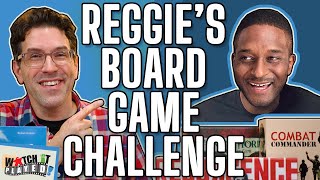
The strongest endorsement comes from Rodney Smith of Watch It Played, who named Gussy Gorillas among their honorable mentions in a mid-year reflection video. The channel first played it during a live party stream, and a full game was recorded for the Watch It Played audience, with chat questions about the rules answered as the scoring unfolded. Designer Nick Murray describes it as a chaotic trading game and says they still enjoy playing it. Their remarks come from the Bitewing Games podcast, which is the publisher's own show, so they reflect the designer's perspective rather than an independent verdict. The reviews show little open disagreement. The caveats that come up concern scoring complexity and the physical and sonic footprint of the table.
Core Mechanics That Define Gussy Gorillas
Face-Away Hands and Open Trading
Each player starts with a pile of 11 cards that they cannot look at, and the table trades openly from that point. On the Watch It Played stream, the hosts described the opening as everyone pulling a card forward and then calling out what they hold and what they want. When a trade is accepted, the cards from both hands go into the trading player's collection, and the cards received are turned face up so that player's interests become visible. Because no one can see their own hand, a trade is always a leap of faith. A player can also pad a weak offer by adding cards to it, but a declined offer cannot be pulled back, so every bid is committed. Players can keep their collection open so the table can see what they are gathering, or closed to keep their plans private. Designer Nick Murray frames the game around this open bargaining, calling it a chaotic trading game.
Special Cards and Pair Cancellation
Scoring is where the trades pay off, and it is also where the rules get intricate. Identical cards cancel each other out, so a matching pair of minus eights scores nothing, while two ones add up to eleven rather than canceling. Special cards give players ways to repair their hands. A reverse can turn a minus eight into an eight, a flip can change how a card counts, and a split lets a canceled pair count as individual cards again. The hosts noted that every special card must be used and that each can be applied to only one card, so players are advised to take cards they can actually use their specials on. The highest scorers collect bananas, the game's prize tokens, and the stream treated the banana chase as the reason players lean into trading aggressively.
The Gussy Gorillas Experience
Chaotic Table Talk
Reviewers consistently describe a table that gets loud quickly. Before the first trade, the Watch It Played hosts warned that the game would be a bit chaotic and probably loud. The stream paused several times to talk over the volume, the trades, and whether a particular card was worth taking or passing. Because nobody can see their own cards, the conversation focuses on reading other players, pushing offers, and watching who seems eager for a specific card. Viewers compared the frantic open trading to the game Pit, and the hosts acknowledged that the comparison fit. The appeal is social more than calculated: the game rewards boldness in a room where everyone is shouting offers at once.
Party Game Energy
Gussy Gorillas fits the party-game slot that Watch It Played uses on its live streams. Rodney Smith explained that Matthew recommended the game, and the channel played it in full during a live party stream. The surrounding stream featured prize contests between games, the hosts laughing through rule clarifications, and plenty of banter about who was winning. The game is quick to teach and encourages personality at the table, which is why the hosts kept returning to it as an event rather than a mechanical exercise. One host joked that players have to promote themselves to succeed, a line that captures the game's theatrical side.
What Makes Gussy Gorillas Stand Out
Trading That Keeps Every Player Involved
The quality reviewers return to most is that the trading never lets the table sit idle. Every player is both buyer and seller, and the face-away hands turn each deal into a bet on what the other player is holding. The Watch It Played hosts noticed that a player can take a first card and then know exactly which cards to hunt for next, which builds momentum early in the round. Nick Murray says the game still delights them after many plays, and the design has earned a place on the Watch It Played list of favorites for the mid-year reflections.
Readable Cards and a Modular Expansion
The Watch It Played stream highlighted that the rules for each special card appear on the side of the card itself, which makes scoring easier to check at the end of a round. The game also includes a small expansion module with special sixes, which are worth six points but have no effect, a rare nine that must be taken and forces the holder to discard two scoring cards, and a wild special. These additions add variety without changing the core trade-and-score loop, which is why the base game remains the centerpiece for most groups.
Potential Drawbacks
Scoring Takes Time to Learn
The pair-cancellation and special-card rules were the main source of confusion on the Watch It Played stream. Even after a full rules explanation, the hosts stopped repeatedly to recount totals, check whether two cards formed a pair, and work out what a flip could change. The hosts also said scoring is simple once understood, and that is a fair reading, but the first round is where most of the mid-game clarification happens. Players learning the game at home may face the same stumble, especially when several special cards land on the same hand.
Table Space and Noise at Higher Counts
Both physical and sonic space are recurring concerns. The hosts said table space was likely to be an issue because players keep their collections in front of them, and the open collection option makes the footprint larger. The game also gets loud enough at higher player counts that the hosts asked whether they needed to lower the audio on the stream. Groups with small tables or a preference for quieter games should plan for that, particularly with the full ten-player count.
If You Enjoy Gussy Gorillas
- Soda Smugglers, a bluffing and smuggling game from Bitewing Games that Nick Murray discusses on their Bitewing Games podcast. They say its bluffing interactions have a more-the-merrier feel and that it works best with five to eight players, which makes it a natural next step for groups that enjoy reading the table as much as Gussy Gorillas asks them to.
- Scram, a team game with hidden card values that Rodney Smith named their favorite discovery of the year on Watch It Played. They compare it to Cabo and say the three-versus-three format is a lot of fun. Its bluffing and hidden information suit players who enjoy the social deduction side of Gussy Gorillas.
- Sidereal Confluence, a heavier option that Nick Murray places in their top 15 games of all time. They describe its simultaneous negotiations as a long, sprawling experience in which almost nothing is off limits to trade and every deal is binding. It suits trading enthusiasts who want more time to haggle than a short party game allows.
What Reviewers Are Saying
"When you make a trade, everything from your hand and everything from the person you're trading with hand swaps, and you put it all into your collection. So you never know what you're giving up."
— Watch It Played
"You really have to promote yourself when you play this game. You really have to employ some Gorilla Marketing."
— Watch It Played
"Gussy gorilla this chaotic trading game is designed by yours truly. I still get a kick out of playing it, and the process of bringing my own design to publication was very rewarding."
— Nick Murray, Bitewing Games