






Zoom in Barcelona Deep Dive
What the Community Thinks About Zoom in Barcelona
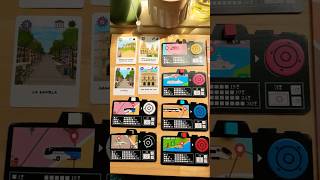
Zoom in Barcelona has earned consistent praise from the board gaming community as an elegant gateway game that doesn't compromise on fun decisions or thematic depth. Reviewers emphasize that its accessibility doesn't mean it's a game only for newcomers to the hobby. The core appeal lies in how the game's mechanics reinforce its photography-contest theme, creating an experience where every choice feels meaningful and every turn moves quickly. The artistic presentation, featuring beautiful Barcelona landmarks and a clever black-and-white camera contrast, immediately draws players in, making it an excellent choice for people interested in travel, photography, or strategic family gaming.
Core Mechanics That Define Zoom in Barcelona
Hand Management and Strategic Movement
At its heart, Zoom in Barcelona is built on elegant hand management. Players begin with a hand of three movement cards that determine how far they can travel around the Barcelona map each turn. Beyond this base movement, players can move a standard two spaces without using cards, forcing meaningful decisions about when to spend valuable cards. This simple system creates constant tension: do you have enough movement to reach your target landmark, or should you use your card now? The hand management layer extends beyond movement into when players draw new cards from the eye action space, allowing them to refresh their tactical options. Every card in hand represents potential paths around the city, and managing this limited resource drives the game's snappy pace.
Set Collection and Tile Placement
The skyline tile collection system represents the game's strategic depth. Players pursue iconic Barcelona landmarks represented by skyline tokens scattered across the board. However, there are fewer tokens available than players competing for them, creating genuine scarcity and encouraging players to race for desired pieces or pivot their strategy mid-game. When players collect consecutive skyline tokens, they form groups worth exponentially more points: two adjacent tiles are worth four points, three are worth seven, and the rare opportunity to complete all eight yields thirty points. This encourages both aggressive pursuit of specific tokens and opportunistic adaptation. Meanwhile, picture cards awarded throughout the game feed into a secondary scoring track unlocked by moving along the natural light track, which itself requires visiting specific landmarks in sequence. This layering ensures players must balance immediate picture collection with long-term tile positioning.
The Zoom in Barcelona Experience
Racing Across a Beautiful City
The thematic integration creates an immersive sense of racing across Barcelona in pursuit of the perfect photographs. Each landmark and skyline tile represents an actual location in the city, and the game's design encourages continuous movement rather than camping in one area. The requirement to visit specific landmarks at specific times of day adds a travel-show flavor to gameplay. Players feel like photographers chasing the golden hour, making strategic decisions about which locations offer the best light conditions and which pictures will complete their collections. The game's quick turns and constant activity maintain momentum, preventing any single player from dominating table time. Even in larger player counts, games typically clock in well under the advertised 30-60 minutes, making the experience feel snappy and brisk.
Casual Accessibility With Hidden Depth
Zoom in Barcelona walks an impressive line between approachability and decision-making engagement. New players grasp the core loop in minutes: move, take an action, repeat. The theme makes the rules intuitive. Yet experienced gamers find genuine choices throughout: navigating card scarcity, predicting which tiles opponents might pursue, and timing your advancement on the natural light track to unlock scoring thresholds. The game appeals to people who might not identify as board gamers yet, particularly those drawn to photography or travel, while remaining engaging for hobby players who appreciate well-designed mechanics. This crossover appeal makes it an excellent introduction to the hobby for families and casual players without feeling like a watered-down experience.
What Makes Zoom in Barcelona Stand Out
Board Movement Design That Rewards Exploration
The game's central strength is how it architecturally enforces exploration and discourages clustering around single zones. The natural light track acts as a gating mechanism: players cannot score photograph points above a certain threshold until they have visited the required landmarks in sequence. Combined with the scattered placement of skyline tokens, this creates organic pressure to roam the entire board. Players cannot simply camp at high-value locations or form a tight cluster. The system encourages players to make calculated routing decisions and seize opportunities as they present themselves. This design ensures every game board tells a different story of player movement and priorities.
Thematic Coherence and Art Direction
The artistic presentation reinforces the game's rules and theme in ways that make every component feel purposeful. The striking contrast between vibrant landmark photographs and the black-and-white camera board creates visual intrigue. The zoom mechanic itself, allowing players to photograph landmarks from a distance if they spend zoom tokens, is not just mechanically interesting but thematically perfect: players are truly zooming in and out with their cameras. The dragon mechanic, which introduces wild card flexibility, adds charm and local color without disrupting the core experience. This attention to detail means the game tells a complete story through both mechanics and presentation.
Potential Drawbacks
Limited Skyline Tokens for Competitive Pursuit
The game's scarcity of skyline tokens, while creating competitive tension, can feel frustrating to players who fail to secure their target tokens. With fewer tokens available than players, at least one person will walk away unable to complete a promising set or will be forced to abandon their strategy entirely when others claim key pieces. For players who prefer games where everyone has a realistic path to victory, this scarcity-driven conflict might sting. The game mitigates this by offering alternative scoring paths through photograph collection and natural light advancement, but the skyline track remains the most satisfying and high-point solution. Players seeking a purely cooperative or non-confrontational experience may find the zero-sum tile competition jarring.
Light Weight Might Disappoint Complexity Seekers
Despite its engaging decisions, Zoom in Barcelona remains fundamentally a light game. Serious strategy enthusiasts or players accustomed to longer, heavier titles may find the lack of deep complexity underwhelming. The game is quick enough that casual two-player sessions finish in 15 minutes, which some players might perceive as insubstantial. While the underlying design is sound and the decisions matter, players specifically looking for heavy euros, engine-building games, or intricate systems should temper expectations. The game's positioning as a gateway experience means it deliberately prioritizes accessibility and pace over mechanical depth. This is a feature, not a bug, but it worth noting for players on the far end of the complexity spectrum.
If You Enjoy Zoom in Barcelona
If Zoom in Barcelona resonates with you, you might also enjoy Ticket to Ride, the gold-standard gateway game that similarly rewards route planning and encourages player movement around a beautiful map. For those who love the photography and travel theme, look toward lighter tile-placement games like Azul or Carcassonne, which share the architectural elegance of decision-making within simple rules. If you appreciated the push-your-luck elements and set collection, consider King Domino, which combines drafting and placement with accessible-yet-engaging gameplay. For players drawn to the family-friendly competitive atmosphere, Love Letter and Point Salad offer similarly quick, decision-rich experiences that work across varied experience levels.
What Reviewers Are Saying
"i really enjoyed this game i think the strength to this game is the fact that it's making you move around the board you could just go for those cards but that's not going to do anything for you and i just really like that the game encourages you to move around it encourages you to go to all these different places"
— Ryan and Bethany Board Game Reviews
"easy it's simple but you still have fun decisions to make and then it's just like it's um thematic of how you have to go around the board and take pictures but at certain times of day i absolutely love this game in the artistic style"
— Ryan and Bethany Board Game Reviews
"it's a fantastic hand management photo collecting love letter to barcelona it's full of dragons"
— Watch It Played