




1920: Nest of Eagles Deep Dive
What the Community Thinks About 1920: Nest of Eagles
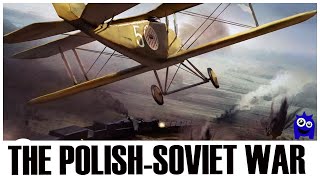
The response from board game reviewers toward 1920: Nest of Eagles has been consistently enthusiastic. Reviewers describe a game that feels thoughtfully crafted, covering a historical period rarely explored in tabletop gaming. The Polish-Soviet War of 1919-1921 serves as the backdrop for what multiple reviewers have called a fascinating strategic simulation, combining innovative mechanics with historical authenticity. Phalanx Games' attention to presentation, from the rulebook organization to the map design, stands out as a hallmark of the design.
Core Mechanics That Define 1920: Nest of Eagles
Lines of Friction and Reactive Movement
Rather than using traditional zones of control found in most hex-and-counter games, 1920: Nest of Eagles introduces a distinctive mechanic called "lines of friction." Instead of hexes surrounding a unit, lines extend from the unit in certain directions. When enemy units cross these spines, they interact with this friction system. This creative rethinking of movement restriction creates a different tactical puzzle than players may expect from a traditional wargame.
The game also features a reactive movement phase that can occur at multiple points during a turn: at the beginning, during the main action sequence, and again later. Either player can opt to move a limited number of units during the opponent's turn, creating back-and-forth gameplay that emphasizes response and counter-response rather than pure simultaneous planning. This design choice makes 1920: Nest of Eagles feel more interactive and dynamic than many hex-and-counter systems.
Morale as Victory
Morale plays a significant role in 1920: Nest of Eagles beyond simple flavor. Combat results shift the morale track, and both successful attacks and failed attacks can swing momentum in the players' favor. Many victory conditions hinge not on capturing every objective but on breaking opponent morale or driving units from particular theaters. This emphasis on psychological victory rather than pure attrition creates a different strategic narrative, one where positioning and pressure matter as much as direct confrontation.
The 1920: Nest of Eagles Experience
Accessibility Through Graduated Complexity
One of the most praised aspects of 1920: Nest of Eagles is its approach to teaching new players. The game includes nine scenarios, and the first three serve as an introductory sequence. The initial scenario requires only 12-17 pages of the 36-page rulebook. Subsequent scenarios progressively layer in additional rules, allowing players to build competency without overwhelming new learners. This structured approach means players can begin playing meaningful military decisions almost immediately, with complexity ramping naturally as competency grows.
The rulebook itself reflects careful organization. An "easily forgotten rules" section at the back helps players avoid common mistakes discovered during playtesting. Examples of play illustrate key mechanics with clarity. Scenario overviews and historical context appear in a separate 16-page scenarios book, ensuring that information is where players need it when they need it. This thoughtful presentation extends even to explanations of the three-player variant, giving the design real flexibility in group size.
Strategic Depth and Solitaire Play
With no hidden information, 1920: Nest of Eagles accommodates solitaire play well. Players can manage both sides of the Polish-Soviet conflict two-handed, or use the built-in three-player variant by splitting Soviet forces into separate factions. Scenarios vary dramatically in scope, from short engagements lasting three weeks to a full 27-week campaign. Players can also use various scenarios as starting points for the campaign game, effectively creating thirteen different campaign entries depending on desired play length.
The game is compact enough that multiple scenarios can fit on a table, yet deep enough that even a single scenario demands serious strategic consideration. Supply lines must be traced. Unit positioning must account for lines of friction. Morale swings can create cascading advantages. The design rewards careful planning while allowing enough tactical flexibility that players remain engaged throughout.
What Makes 1920: Nest of Eagles Stand Out
Coverage of an Underrepresented Topic
Post-WWI history rarely receives attention in board games. The Polish-Soviet War sits in a curious gap, after the Great War's massive conflicts but before World War II's dominance in wargaming literature. This historical invisibility makes the game itself remarkable. Reviewers consistently note that 1920: Nest of Eagles covers a conflict worth exploring, one with distinctive military operations that don't simply echo earlier Western Front dynamics. The game treats its topic with respect, including historical context and genuine decision points derived from the actual campaign.
Publisher Excellence and Sharp Design
Phalanx Games' reputation for quality carries through in every component. The map design draws praise for both aesthetic appeal and functional clarity. Terrain, lines of communication, and strategic chokepoints all read clearly despite the density of information. The art direction feels appropriate to the period without becoming anachronistic. Component quality extends to the counters and player aids, though reviewers note the counters are smaller than some players might anticipate, a trade-off necessary given the complexity of the map and the volume of units required for a realistic operational simulation.
Potential Drawbacks
Small Components Require Careful Play
Reviewers consistently mention that the counters and hexes are smaller than expected. Unit tokens measure 5/8 of an inch, and the hexes themselves are 3/4 inch from side to side, compact enough to fit an operational map on a reasonable playing surface but small enough to require careful reading. This design decision prioritizes playable scale over ease of reading. Players with vision concerns or those seeking components that read easily from across a table may find this challenging during extended play sessions. The prototype nature of review copies means final production could alter component sizing.
Combat Emphasizes Retreats Over Attrition
Combat in 1920: Nest of Eagles resolves differently from many other hex-and-counter games. Rather than inflicting immediate casualties and eliminating units, successful attacks force defenders to retreat. When units cannot retreat due to congestion or map edges, casualties follow. This approach emphasizes spatial control and maneuvering over grinding attrition. Reviewers note this as a distinctive feature, not a flaw, but players expecting quick unit elimination should understand that 1920: Nest of Eagles rewards careful positioning and supply management as paths to victory.
If You Enjoy 1920: Nest of Eagles
Players who appreciate post-WWI history, operational-level hex-and-counter simulations, and games where morale and supply matter as much as direct combat should prioritize 1920: Nest of Eagles. The game appeals to those seeking meaningful decisions without rules bloat, and to solitaire players looking for a meaty campaign that doesn't require five-hour play sessions. The three-player variant opens the door to group play without requiring a large table or extensive teach time. For anyone tired of the same European conflicts recycled across a dozen titles, 1920: Nest of Eagles offers genuine novelty grounded in overlooked but compelling history.
What Reviewers Are Saying
"Really nice job with this. I think there's a lot of attention to detail. I really like the idea of building in that introductory rule set to help players into the game, historical context, example of play, all of the things you're looking for in good documentation in a game here."
— Zilla Blitz
"This looks like a fun game covering a topic that really hasn't had a lot of coverage in board gaming. I think is kind of the post World War I battles in particular, Poland versus the Soviet Union, and this also has, including a bunch of scenarios, a three-player option, so there's the Poland against, you can play, you can split the Soviets up into two factions."
— Zilla Blitz
"Their rule books are good size, but they're ru, they're easy to follow. That's what I like about them. I, I can actually follow the rule books pretty well."
— Watch Review