







Stable Times Deep Dive
What the Community Thinks About Stable Times
Stable Times has resonated with reviewers as a charming, accessible family game that punches above its weight in design elegance. Reviewers praise the game's beautiful integration of real-horse theming with thoughtful strategic decisions that remain simple yet satisfying. Let's Table It highlighted how the game succeeds as both a solo experience and multiplayer experience, working equally well for cozy evenings and family game nights. The consensus is clear: this is a game that delivers on the promise of being beginner-friendly without sacrificing meaningful decision-making.
Core Mechanics That Define Stable Times
Hand Management and Card Play Timing
At its heart, Stable Times is about managing uncertainty and timing your plays wisely. Each turn, players hold a hand of horse cards and must decide not just which cards to place, but precisely when to place them. The core loop involves drawing from a meadow board, swapping cards in and out of hand, and choosing the moment to commit. This decision-making is simple but satisfying because it's less about what you draw than about how well you spend what you already hold. Players can discard cards they don't need, drawing from the pasture stacks in exchange, then carefully sequence their plays to maximize the scoring potential of their stable. The hand becomes a tool for strategy rather than a constraint, and every card held represents a future opportunity.
Aisle Placement and End-Game Tension
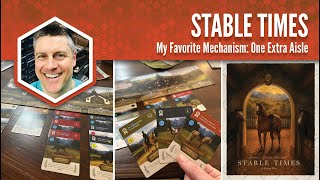
The second pillar of Stable Times is what creates its most interesting strategic moments: the interaction between aisle placement rules and the variable end-game trigger. Each stable has four aisles, each accepting only one horse type (with wildcards offering flexibility), and each can hold a maximum of three horses. The elegant tension comes from this rule: the game ends when any player completes three full aisles, but a player can play zero, one, or two horses per turn. This simple rule generates profound decisions near the end. Stonemaier Games' review captured the moment precisely, weighing whether to finish three aisles and end the game or hold back to play more cards and get more points, potentially even creating a fourth aisle. Players might intentionally slow their own progress on one aisle to maintain flexibility, or hold back from triggering the end condition to squeeze in one more high-scoring play. This mechanism rewards planning and gives players real control over pacing.
The Stable Times Experience
Cozy and Charming Theming
Stable Times wraps its mechanics in genuine warmth. Every single horse in the game is based on a real horse, submitted by its owner. Each card carries flavor text written by that owner, sharing a personal detail about their horse's personality or quirks. Let's Table It observed that this really adds character to the game and makes it feel personal. This isn't mere thematic window dressing; it transforms the act of playing a card into a moment of connection. The stable boards themselves offer variety, giving each player a distinct starting aesthetic and strategic flavor. The entire aesthetic and packaging radiate a coziness: a sense that this is a game made with care, intended for pleasant evenings rather than competitive cutthroats.
Quick, Accessible Gameplay That Feels Deeper
The game plays in 20 to 30 minutes, yet doesn't feel shallow. It works well solo or with up to five players, adjusting its social dynamic without losing its soul. Reviewers praised it as wholesome, beautifully themed, kid-friendly, but adult approved, and fast enough for school nights. The accessibility is genuine; new players grasp the placement rules and card flow within minutes. But beneath that approachability lives real strategy. Players are not just collecting horses; they're solving a spatial and temporal puzzle where every choice about which aisles to develop, which types to pursue, and when to cap off their work has lasting consequences. Reviewers highlighted that the puzzle elements keep it feeling fresh across multiple plays, as priorities shift based on which horses are drawn.
What Makes Stable Times Stand Out
Personalized Horse Content and Community Art
In an era where many board games lean on licensed IP or generic fantasy art, Stable Times chose to celebrate real horses and real people. This decision creates a game that feels alive and grounded. There are no two copies of Stable Times with identical horses; the flavor text varies by owner, and the artwork celebrates individual animals. Let's Table It marveled at the real horses with fun names, fun enough to say aloud when actually playing the cards. This transforms the game from an abstract puzzle into something that carries genuine personality. It's the kind of detail that builds loyalty and word-of-mouth enthusiasm.
Elegant End-Game Decisions Without Runaway Leaders
The four-aisle system with a three-aisle end trigger is deceptively clever. Because players can intentionally avoid completing that third aisle, the player who appears to be winning doesn't automatically trigger the end and deny others their final turns. This creates a window for catch-up and allows skilled players to read the board state and make contrarian decisions. Instead of a race to the finish where whoever gets there first wins decisively, there's genuine tension about whether completing the game now is the right move or whether an extra turn of play will outweigh the points opponents might score. Stonemaier Games praised the design decision to let players complete up to four aisles, noting it gives players flexibility and creates real tension at the end of the game.
Potential Drawbacks
Card Draw Variance and Aisle Mismatch Frustration
Not every hand of cards aligns perfectly with a player's stable strategy. A player might commit to building a strong lineup of one horse type, only to draw predominantly another type for the rest of the game. Let's Table It noted that drawing a horse that doesn't quite fit your stable can feel a little frustrating if you're trying to perfect your play area, while also acknowledging it's part of the charm and strategy. It's worth noting that players who prefer tight, predictable experiences may find the luck factor unsatisfying. The discard mechanism mitigates this somewhat, but luck remains a factor in how smoothly a strategy flows.
Pacing Issues Toward Conclusion
The Dice Tower identified a structural issue that deserves serious attention: the game's pacing falters near the end. The review described it slowing down a little at the end, not landing as well coming to the conclusion, feeling like something is missing in the final part of the game. This may stem from the tension between wanting to extend play for more points and needing to eventually trigger the end condition, or it could reflect an imbalance in scoring distributions. Players seeking a tightly paced experience with a punchy climax might find the endgame sprawls rather than builds.
If You Enjoy Stable Times
Stable Times appeals to a specific player profile: those who love light, family-friendly games with genuine decision-making and beautiful presentation. Players who enjoy cozy games like Calico or light tableau builders that reward careful hand management will find much to like here. The game shines for players who value charm and narrative (the real-horse component) alongside mechanics, and for anyone seeking a game that plays quickly but doesn't feel throwaway. It's not for competitive players hunting for brutal, high-interaction euro experiences; it's for players who believe a game's emotional arc and aesthetic matter as much as its systems.
What Reviewers Are Saying
"The horses themselves are all based on real horses and each card has charming little flavor text from their owners. It really adds character to the game and makes it feel personal."
— Let's Table It
"As I got closer to the end of the game, I was faced with a really interesting decision. Do I try to complete the game right now and finish three aisles, or do I try to play around that a little bit so that I can actually play more cards and get more points?"
— Stonemaier Games
"It just a little bit, it slows down a little bit at the end. It's not as good coming to the conclusion of it. It feels like it's good, but you're missing the final part of the game. I don't know how to explain it. It's close."
— The Dice Tower