


Perch: Birds of Play Deep Dive
What the Community Thinks About Perch: Birds of Play
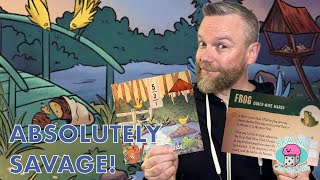
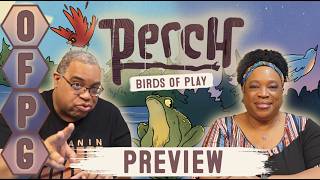
Reviewers agree that Perch: Birds of Play is a playful, tightly themed expansion to the bird-habitat drafting game Perch from Inside Up Games. Grant Lyon describes the base game as one of their "delightfully cutthroat" favorites and presents the expansion as three modes that can be mixed and matched. Brains On Games, hosted by Dr. Brian McDonald, calls the expansion "more of what makes Perch a really fun game," and stresses that it works best when players do not treat it too seriously. Our Family Plays Games previewed the expansion with a prototype and says it "goes in seamlessly" into the base game, adding replayability and more ways to disrupt an opponent.
The consensus is that the three modules complement one another without changing what made the base game appealing. Reviewers also agree the expansion leans further into confrontation. They differ on which module stands out most. Brains On Games singles out Pondemonium as its favorite because of its new creatures, while Our Family Plays Games emphasizes the sun and moon module as a "very interesting, very wild" addition that rewards careful planning. Because all three reviewers played prototypes, their comments on components reflect placeholder pieces rather than the final retail product.
Core Mechanics That Define Perch: Birds of Play
Take That
Take That is the mechanic reviewers return to most often. The base game already lets players place birds in an opponent's location, and the expansion expands that interaction. Grant Lyon notes that in base Perch, a tie in birds at a location cancels out, so a well-placed bird of someone else's color can cost an opponent points. Birds of Play adds tools that push this further. In Pondemonium, the perch creature can move a bird out of the pond to any location, and the frog moves birds away from the pond, so control of those creatures can be used to dislodge a rival's birds. Our Family Plays Games describes the result plainly: "It's a lot of take that now. It's a lot of take that cuz you're going to hurt some folk." The new hidden objective cards, which are tailored to each module, add another layer by making certain pond control goals hard to achieve when rivals are actively contesting them.
Modular Board
The modular structure is the expansion's most distinctive design choice. Pondemonium adds flat pond tiles that slide underneath three board tiles and sit in the middle of the play area, so each pond is adjacent to three locations. Brains On Games explains that depending on player count, one or two pawns are used to mark these ponds, and that the flat tiles are needed for this placement. Because the ponds are attached to existing locations, Our Family Plays Games notes that they "flow seamlessly" into the game. Majority scoring on a pond counts birds on the pond along with birds at every adjacent location, which means the board's geography determines how players contest it. The three modules themselves are also modular. Grant Lyon points out that players can "play with one or play with all three," so the board and scoring rules can be tailored to each group.
The Perch: Birds of Play Experience
Playful Chaos
Reviewers consistently describe the expansion as silly, loud, and a little unpredictable. Our Family Plays Games opens its discussion by noting that "birds are acting a fool" on the homestead, and its hosts describe the game as "an already wild game" made wilder. Brains On Games, which played with all three modules, says the expansion offers "a lot of fun" through its new creatures and the way they interrupt other players' plans. Dr. McDonald frames the experience as lighthearted, saying the game is "not really a game, honestly" when played casually, and that the fun comes from the table banter rather than precise calculation. Sun and moon tiles that move each round, and frogs and perches that hop around the ponds, reinforce the sense that the board is always shifting.
Tense Table Rivalry
Beneath the humor is a strong sense of rivalry. Brains On Games warns that players who take the game too seriously may damage friendships, because "every single turn you're kind of really trying to ruin everyone else's plans while earning points for yourself." Our Family Plays Games describes a moment when a hidden objective required control of a pond, and an opponent kept interfering with that control, leaving the player frustrated and unable to respond. That blend of spite and laughter is central to the feeling of play. Reviewers describe moments of genuine annoyance that quickly turn into shared amusement, which suits a table that enjoys direct interaction.
What Makes Perch: Birds of Play Stand Out
A Theme That Ties Every Module Together
Reviewers praise how closely the new content matches the bird theme of the base game. Our Family Plays Games highlights that bird feeders with bread, ponds that birds are lured toward, and creatures that scare birds away all "go along with the theme." The bird feeders, which hold seeds that award three points to the first bird placed on them, reflect the idea of birds rushing to a food source. The sun and moon tiles reshape the value of locations in a way that feels like shifting light across a yard. Brains On Games praises the components and art, saying "I love the art, the table presence," and calls the acrylic creatures "a lot of fun." The effect is that the expansion does not feel bolted on, but grows naturally from what players already see on the table.
Mix-and-Match Replayability
The ability to choose which modules to include is a feature reviewers reward. Grant Lyon notes that the three modules can be combined in any way, and Brains On Games says that letting players decide which modules to use "is something that I like." Dr. McDonald explains that the expansion adds replayability and flexibility, since groups can start with a single module and add more as they grow comfortable. Brains On Games, which favored the full set, still recognizes that a modular expansion gives players control over complexity. For existing Perch owners, this means the expansion can serve both casual sessions and groups that want a more involved scoring puzzle.
Potential Drawbacks
The Seed Module Can Stall
Our Family Plays Games raises a practical concern about the seeds module. Each location holds a single seed that is never replenished, and the first bird to land there collects it for three immediate points. Because the game lasts only five rounds, a reviewer's group found that one or two bird feeders sat untouched for several rounds before a player decided it was worth going there. The mechanic rewards quick movement and can help a trailing player catch up, but it may feel slow when no one is willing to commit a bird to a low-value location early. Groups that want consistent tempo may find this module less engaging than the others.
Confrontation Can Sting
Because the expansion amplifies Take That interaction, its tension can feel personal. Our Family Plays Games describes how being targeted at every pond through an objective card left one player feeling powerless, saying they "couldn't say nothing" in response. Brains On Games acknowledges the same risk when it warns that too much confrontation can damage friendships among players who take it seriously. The expansion works best with a group that accepts being disrupted and treats the game as lighthearted competition. Groups that prefer low-conflict games may find the added interaction uncomfortable.
If You Enjoy Perch: Birds of Play
The clearest recommendation is the base game, Perch, by Inside Up Games. Birds of Play is designed as an expansion, and reviewers assume players already know the base rules, which describe placing birds at locations, scoring with majority counts, and cancelling ties. Players who enjoy the base game's direct interaction will find that the expansion layers on additional ways to disrupt opponents without changing that core. Reviewers also suggest the expansion suits groups who value theme and table presence, since the acrylic creatures and bird-related art give the game a strong visual identity. Players who want more replayability from a single box may find the mix-and-match structure a natural fit.
What Reviewers Are Saying
"This has three new game modes in it, and you can mix and match them. Play with one or play with all three."
— Grant Lyon
"If you take this game too seriously, you're going to ruin friendships because there's so much take that. Every single turn you're kind of really trying to ruin everyone else's plans while earning points for yourself."
— Dr. Brian McDonald, Brains On Games
"It's a lot of take that now. It's a lot of take that cuz you're going to hurt some folk."
— Our Family Plays Games