




The Wildsea Deep Dive
What the Community Thinks About The Wildsea
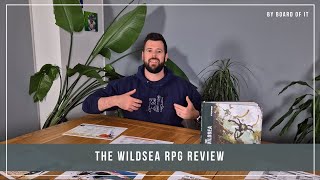
The Wildsea is a postfall tabletop RPG set in a world where the cataclysmic event known as the Verdency supercharged plant growth until ancient forests tower above the land. Players sail the treetops in airships and submersibles, and reviewers at Board Of It describe it as a fantasy game with the feel of a pirate campaign, only with the sea replaced by a canopy. The consensus among the channel's reviewers is that the setting carries the game. They praise how vivid and easy to imagine the world is, and one reviewer credits the core rulebook for the detailed description and imagination that make the setting feel lived in. The reviewers also stress that The Wildsea is a loose, free-form campaign game rather than a tightly crafted one, and they recommend it to tabletop players who want a world to explore more than a scenario to finish.
Core Mechanics That Define The Wildsea
Track Advancement
Tracks appear almost everywhere in The Wildsea. Reviewers note tracks for travel, tracks for combat, and tracks for events, and the Firefly (the game's term for the gamemaster) creates many of them during play. A travel or fight is resolved by filling in the track that the Firefly has set up, and different decisions, actions, or roles can move the track more or less. Reviewers find this an easy-to-read signal of progress, and they describe filling in a track as "weirdly cathartic." The same system governs injury. Rather than hit points, a character has tracks attached to their aspects, so damage weakens the thing that makes that character distinctive. Once an aspect's track is full, the character loses access to it until they heal. The channel's reviewers see this as a smart punishment because players care most about their aspects. Publisher Mythopoeia's design keeps the focus on the story, since a character cannot die unless the player chooses it.
Variable Set-Up: Player
Every character in The Wildsea begins with a distinct identity, built from a species, an occupation, edges, skills, languages, and aspects. Edges describe broad approaches to problems such as grace or instinct, while aspects capture traits, gear, or companions that give a character a unique benefit. Reviewers point out that seven species are available, ranging from ordinary humans to fungoid or cactoid humanoids and even hive minds of bees or spiders that wear a costume of skin. Because these choices are made at the start, they shape each player's early plans and their place in the world. The same principle extends to the ship, which the group builds together during session zero. Reviewers from Board Of It describe that shared construction as a bonding exercise that gives the whole table a stake in the world, and the options are imaginative enough that one reviewer's ship was powered by a cluster of tentacles fed by kinetic energy from rat companions.
The Wildsea Experience
Immersive, Imaginative Exploration
Reviewers repeatedly describe the Wildsea experience as immersive. One reviewer who admits to having little imagination says the setting made it easy to picture the strange creatures and characters the group encountered, such as spiky-legged pin wolves. In the second Board Of It segment, the reviewers say the world building is very strong and that they can genuinely imagine the scenarios being described. The result is a game where players feel they are inhabiting a place rather than running through a list of rules.
Loose Campaign Momentum
The Wildsea rewards a free-form style of play, and reviewers say its tone changes once the group leaves the scripted opening. Early sessions can feel slow, and one reviewer noted that the opening scenario took two or three sessions when it was expected to take one. Once the group moved into character arcs and personal drives, the reviewers described the game as no longer "on rails," with whatever the characters chose to do driving the story forward. That shift is where the reviewers found real satisfaction, and they expressed eagerness to return to the table.
What Makes The Wildsea Stand Out
Dice Rewards Creativity
Reviewers consider the dice system one of the game's cleverest features. When a player attempts something challenging, they describe the action, name the edge, skill or language, and can add advantages from backstory, items, or the situation. The pool is built from one die for the edge, one to three dice for the skill or language, and up to two dice for advantage. The highest die is taken, a six is a perfect success, a four or five is a success with a drawback, and a one through three is a failure. The channel's reviewers explain that this structure "directly rewards players for their creativity and utilizing their character," so the more thought a player puts into an action, the more dice they tend to roll. A second reviewer in the same channel described the system as simple enough that the whole group adopted it very quickly, and said the bartering system, which at first sounded unworkable, works well in practice.
Collaborative World Building in the Core Book
The reviewers praise how the core book helps groups turn character creation into adventure ideas. Because players reveal what they care about through their occupations, skills, and ship features, a Firefly can build an adventure around those choices. Board Of It described asking players for personal drives and sprinkling them into the reaches, which are distinct regions of the Wildsea. The core book supplies ports, factions, and local rumors to fill those regions, which the reviewers found the most helpful part of the book for running a campaign. A free online companion resource also drew praise. Reviewers say it is available at no cost with the approval of the designer and publisher, and it helps groups who play long distance or cannot meet in person, though they still encourage buying the core book.
Potential Drawbacks
A Slow Opening Scenario
The reviewers were candid that the pacing of the included opening scenario, One-Armed Scissor, was slower than they expected. The scenario is free and designed to ease players into the world, and the channel appreciated it as a starting point. However, the reviewers noted that the game felt more alive once it became looser and more reactive. They also observed that their group was not moving the story forward as quickly as they hoped at first, and that the early sessions were the main source of frustration.
Needs a Campaign Mindset
The Wildsea is not designed for one-off play. Reviewers state that the game is very much a loose campaign and that a single-session adventure will not work well with it. The Firefly is expected to supply details of a region, bare-bones adventure outlines, or story hooks, then let players explore and pursue side quests. For groups that prefer a prepared scenario or lack time to prepare, this demand for preparation and campaign commitment can be a barrier. The reviewers were quick to say that the reward is worth it, but they recognized that not every group will want that kind of open-ended play.
If You Enjoy The Wildsea
The reviewers do not name direct comparison titles for The Wildsea, so the most reliable recommendations come from the traits they praise. Players who enjoy sailing-themed, world-driven fantasy with a pirate flavor will find the setting familiar, and the channel's comparison to a pirate RPG captures that appeal. Groups who want a loose, player-driven campaign with a strong sense of place and an emphasis on character creativity are the audience the reviewers describe. Those who prefer a tightly scripted adventure may find the One-Armed Scissor scenario a better fit at first, while the core rules and campaign tools suit groups ready to explore freely.
What Reviewers Are Saying
"The world itself. It's colorful. It's vibrant. It's full of experiences."
— Tally, Board Of It
"It's quite a clever dice rolling system because it directly rewards players for their creativity and utilizing their character. The more thought and embellishment they put into an action, the more dice they'll generally get to roll."
— Tally, Board Of It
"A character can't die unless a player wishes them to. The world is far more focused on the experience than the game element."
— Tally, Board Of It