









Aberration Deep Dive
What the Community Thinks About Aberration
Aberration resonates with reviewers as a rare example of a board game that genuinely embraces the tower defense genre, which remains underdeveloped in tabletop design. The consensus leans positive, especially for multiplayer experiences: reviewers consistently praise the core loop, the aesthetic of escalating pressure, and the collaborative energy around the table. The primary tension centers on whether the game's structure delivers on the full potential of its character-building system. Some reviewers view it as a satisfying cooperative experience that scales beautifully with table size; others see it as underutilizing one of its most compelling systems due to typical game length. Notably, the consensus diverges on solo play, with feedback suggesting multiplayer brings out the game's strongest qualities.
Core Mechanics That Define Aberration
Bag Building
At its heart, Aberration operates through a continuous process of bag augmentation. Each turn, players select a chip from their personal bag and add it to their growing tableau, then draw additional chips equal to their intellect value to activate character abilities. This simple feedback loop creates tangible progression: as reviewers note, the experience of throwing new chips into your bag and watching your character's options expand is inherently satisfying. Ghostfire Gaming's implementation ensures that tableau-building is not a side activity but the central strategic axis. Players face constant decisions about which abilities to upgrade first, creating multiple viable character paths even with identical starting positions. The system rewards planning several turns ahead while remaining intuitive enough that teaching takes minutes.
Tower Defense
The board presents an encroaching threat: shadows creep toward the village's center, and aberrations grow increasingly dangerous as the great beast's influence spreads. Players must simultaneously defend outposts, uncover hidden enemies, and manage a spreading corruption that brings enemies closer. Unlike traditional tower defense video games, Aberration roots the challenge in human-scale heroism: you are not a tower, but a hero standing between darkness and the village. Each round, unrevealed shadows advance; each great beast card introduces new threats or effects. Reviewers highlight this structure as both elegant and appropriately punishing, creating the constant sense that pressure is intensifying and decisions matter.
The Aberration Experience
Relentless Pressure
Playing Aberration generates a persistent question: will the heroes survive? This tension is not incidental; it is the game's emotional core. Reviewers describe the experience as one of constant crisis management, where the board state can cascade from manageable to dire through a single cascade of shadow revelations or influence spreads. The darkness of the Grim Hollow setting reinforces the atmosphere; enemies and threats remain unknown until heroes venture out to meet them or light sources reveal them. This fog of war, combined with escalating monster strength and expanding corruption zones, creates a horror-tinged mounting dread that builds round by round.
Power Through Corruption
A counter to the despair is a dark progression: as heroes take damage, they become corrupted, growing stronger at the cost of increasing the terror level. This transformation mechanic inverts the typical hero narrative. Reviewers note the appeal of this trade-off, where a hero might sprout a tentacle and simultaneously gain a powerful new ability. The system is psychologically complex: yes, becoming a monster is mechanically good; yes, it frightens you; yes, that duality is exactly the point. Over the course of a campaign, heroes who survive become increasingly alien and powerful, creating a sense of both progress and loss that mirrors the game's thematic tension between survival and the cost of that survival.
What Makes Aberration Stand Out
Table Discussion and Synergy
Reviewers unanimously highlight the cooperative quality of Aberration when played with multiple players. The character synergies invite genuine team discussion: one player might uncover a shadow while another finishes the enemy, creating a moment of coordinated heroism. The worker placement layer (recruiting villagers to defend outposts and support the heroes) opens additional coordination points. One reviewer specifically noted that this game scales with player count better than many cooperative games in its weight class, and that the enforced discussion of strategy remains satisfying even at the table's moment of defeat.
Character Customization and Variety
The pairing of unique character cards with separate class boards creates substantial character diversity. Reviewers emphasize that each combination generates a different puzzle: a character's inherent abilities interact with the class board's starting chips in ways that naturally differentiate playstyles. Even within a single scenario, changing your character and class can completely reshape your strategy. Expansions like the Spellcasters add new characters and entirely new action types (spells), further multiplying viable approaches without overwhelming new players.
Potential Drawbacks
Character Progression Cut Short by Game Length
The most significant critique centers on pacing and scope. Scenarios typically span five to eight rounds, giving players access to only a fraction of their potential character upgrades. Reviewers note that the most compelling part of Aberration is the tableau-building system, which creates the fantasy of a hero growing progressively more powerful. However, most games end before players can fully explore their chosen upgrade path. This limitation feels particularly acute when compared to games like Cthulhu: Death May Die, where players typically access a larger percentage of their potential upgrade track. Some reviewers suggest the game would benefit from either longer scenarios or a mechanic that accelerates character advancement, balancing the desire to feel powerful against the need for timely resolution.
Randomness and Cascading Effects
Bag-building systems are, by nature, subject to random draws. Reviewers report occasional draws that leave a hero with chips that do not align with the current board state, and rare cascading shadow revelations that can produce an overwhelming number of threats in a single turn. While not game-breaking, these moments can feel punishing to players who were following a clear strategy. The randomness serves the atmosphere but occasionally crosses into a feeling of powerlessness rather than tension.
If You Enjoy Aberration
Reviewers recommend Kingdom Rush and Elemental Uprising for players seeking deeper tower defense experiences in board game form. Both offer the satisfaction of holding a line against waves of enemies. For cooperative horror atmosphere without the tower defense layer, Zombicide: Black Plague delivers hack-and-slash satisfaction in a grimdark world. If the worker placement and tableau-building aspects appeal most, Flamecraft and Leviathan Wilds offer more generous upgrade paths and gentler themes, though without the same sense of escalating crisis. Finally, Cthulhu: Death May Die shares the transformation-as-power fantasy and the horror setting, making it a natural comparison point for players interested in that particular blend of mechanical and thematic synergy.
What Reviewers Are Saying
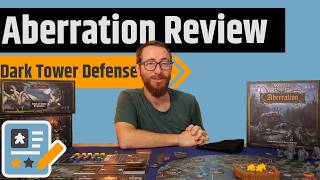
"In Aberration, players are playing a tower defense bag building game. That's what you're doing, it's tower defense bag building. That kind of describes most everything you need to know, because what you're going to do is you're going to start off with a character. You have a specific character, as well as you're going to have their class. So, you have two different aspects that already customize your character before you begin the game."
— BoardGameCo
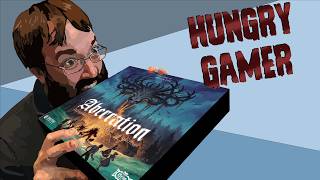
"The more you get hurt the more powerful you become because as you get damaged you start to get corrupted and so you might grow another arm. Well, that's terrifying. So the terror level's going to go up, but at the same time now you have another arm that you can use and you can do things. Really clever the way that that works as the you take more damage you get stronger."
— Hungry Gamer
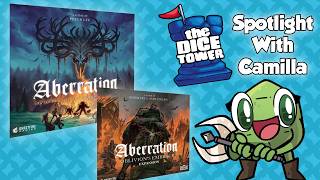
"In the dark fantasy world of Grim Hollow, something is moving through the forest and its eyes are set on your village. Aberration is a cooperative tower defense game for one to four players where you're not defending a single tower. You're trying to keep an entire village alive through the night."
— The Dice Tower