
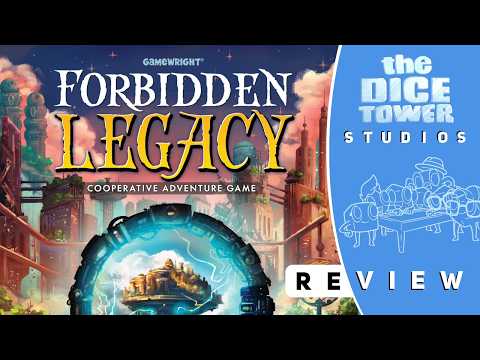











Forbidden Legacy Deep Dive
What the Community Thinks About Forbidden Legacy
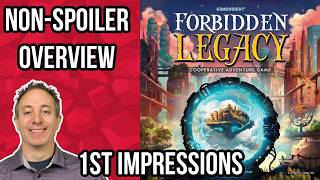
Forbidden Legacy arrives with significant expectations built on two decades of the Forbidden series and the legacy game expertise of designers Matt Leacock and Rob Daviau. The community response is notably mixed, spanning from enthusiastic advocates to measured skeptics. Reviewers consistently acknowledge that the game delivers what they expected from a Forbidden title, but reactions diverge sharply on whether it exceeds expectations or merely meets them. Most critics appreciate the sheer value proposition of seven replayable games in a single box, while others worry the legacy elements feel more ornamental than transformative.
Core Mechanics That Define Forbidden Legacy
The Forbidden Game Framework with Legacy Evolution
At its foundation, Forbidden Legacy builds on the cooperative tile-flipping and resource-collection gameplay that defined Forbidden Island. Players gather element cards with both type and attributes, using matched sets to locate and collect the four stones needed to activate a portal before the island collapses beneath them. The game grants four actions per turn instead of three, creating more meaningful decisions with each round. What distinguishes this entry is how reviewers note the element cards carry both a type (fire, water, earth, air) and features including color, number, and shape, creating layered hand-management challenges as tiles sink and options narrow. The threat escalation system mirrors Forbidden Island's tension-building design, but the legacy structure introduces new components, unlock boxes, and modified rules across seven episodes, each playable as a standalone game.
The Seven-Episode Campaign Structure
Rather than a single destructible playthrough, Forbidden Legacy divides the legacy experience across seven distinct episodes. Players may lose a scenario and replay it once before advancing, meaning the campaign spans between 7 and 14 total plays depending on success. Each episode maintains the core puzzle while introducing new mechanics, lore tokens to collect, and permanent world-altering choices. The game explicitly supports replaying any chapter after the campaign concludes, moving away from the "play once and discard" formula many players associate with legacy games. Reviewers note this design choice makes the game more accessible to groups with scheduling challenges and reduces pressure on single playthroughs.
The Forbidden Legacy Experience
Engagement Through Discovery
One of the game's defining moments arrives on the first turn when players can immediately acquire lore tokens, immediately pulling content from the chronicle book. Reviewers emphasize this delivers an early sense of discovery and progress compared to the prologue-style first episodes of other legacy games. The chronicle book itself, a hardback with thick cardstock pages, becomes a tactile focal point for the experience, guiding the narrative framework while remaining light on deep storytelling. Players describe uncovering mysteries through lore collection, piece by piece, creating moments of anticipation around what the next episode will reveal.
Tension and Escalating Challenge
The game generates mounting pressure as tiles sink, locations disappear, and threat levels rise. Reviewers highlight how the locating mechanic, discovering where elements hide based on matching card attributes, becomes increasingly tense as fewer locations remain available, forcing harder choices about resource allocation. The variable difficulty modes allow groups to calibrate challenge, with hard mode reportedly providing genuine tension even for experienced players. Later episodes layer additional mechanical complications, though some reviewers note these feel more like system tweaks than fundamental shifts in how the game plays.
What Makes Forbidden Legacy Stand Out
Exceptional Production Quality and Art Direction
The chronicle book and component design receive consistent praise across reviews. The hardback binding, cardstock pages, and professional artwork create a premium presentation that elevates the psychological weight of opening sealed boxes and revealing new systems. Tiles are noticeably larger than the original Forbidden Island, improving table presence and readability. Reviewers specifically commend the visual design of the location artwork, noting improvements over the original series while maintaining series consistency. The physical quality signals respect for the player's time investment, particularly meaningful in a campaign-length experience.
High Replayability Within a Single Box
The promise of seven games in one box delivers immediate mechanical variety. Later episodes shift tone and mechanics enough that players report feeling different moment-to-moment gameplay despite the shared foundational rules. The ability to replay chapters independently after campaign completion removes the finality pressure of destructible-component games, allowing groups to return to favorite scenarios or practice new combinations. This design choice appeals particularly to players who enjoy legacy mechanics conceptually but hesitate when faced with permanent changes or group scheduling conflicts.
Potential Drawbacks
Legacy Elements That Feel Semantic Rather Than Transformative
The most consistent criticism across reviews concerns the nature of the legacy changes themselves. The first four episodes reportedly introduce rules modifications that shift naming or thematic framing without fundamentally altering how the game plays, substituting one mechanic for a mechanically similar alternative and repackaging it thematically. Some reviewers describe this as "shallow" legacy progression, comparing it unfavorably to games like Pandemic Legacy where episode transitions genuinely reorganize player options and strategic approaches. Later episodes add more substantial new mechanical elements, but the pacing of innovation leaves some reviewers feeling they played Forbidden Island seven times with cosmetic variations rather than a true seven-game evolution.
Complexity and Accessibility Trade-offs
The game introduces more cognitive load than the original Forbidden Island. Four actions instead of three, the dual-attribute card system, and tactical timing questions around when to locate versus repair make the game heavier in decision weight even if not mechanically intricate. Reviewers note this sits awkwardly for families: too demanding for younger players approaching the Forbidden series for the first time, yet still thematically and mechanically tied to accessible-game DNA. New players with Forbidden Island experience can learn it, but younger or newer players are better served starting with the original title. The added depth primarily rewards experienced cooperative-game players rather than introducing wholly new design territory.
If You Enjoy Forbidden Legacy
Players seeking similar cooperative escalation and tile-management tension should explore Forbidden Island and Forbidden Desert, which maintain cleaner baseline gameplay without legacy overhead. For those specifically drawn to legacy structure and designer pedigree, Pandemic Legacy Season 1 and Pandemic Legacy Season 2 deliver the kind of mechanical and narrative transformation some find missing here. Rob Daviau's Ticket to Ride Legacy, designed with Alan Moon, also showcases how legacy systems can reshape core mechanics rather than layer atop them. Reviewers specifically recommend Fate of the Fellowship for those craving a Leacock design with stronger thematic stakes and puzzle variety, suggesting it delivers greater narrative weight in a similar playtime envelope. Groups committed to campaign-length experiences who tolerate lighter storytelling may find satisfaction in the sheer breadth of Clank Legacy and Clank Legacy 2, which similarly use legacy structure to extend play without requiring destructive choices.
What Reviewers Are Saying
"The chronicle book is so cool. This thing is high quality. Even that it's hardback. Like even the cover's like a hardback and all the pages are like cardstock. So like it's a heavy book almost like a kid's book, that thickness, because you know, you got to be taking stuff off and opening things and things like that. It's really nice."
— TheGameBoyGeek
"There were definitely rules changes and additions. But a lot of them felt like instead of doing X you do Y even though Y is very similar to X and really we're just calling it Y instead of X so that it feels like there's an episodic change. It felt weak, frankly."
— BoardGameCo
"This has got to be one of the best bargains in board gaming this year because you get seven games for the price of one. There are seven Forbidden games inside this box. Which means if you combine with what is it? Forbidden Island, Forbidden Desert, Forbidden Sky, and Forbidden Jungle. There are now 11 unique Forbidden games out there."
— Rahdo Runs Through