



BLORP! Deep Dive
What the Community Thinks About BLORP!
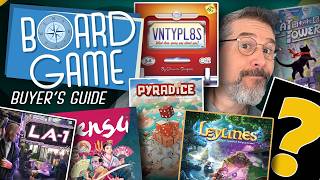
BLORP! is a lightweight tile placement game for two to six players, typically played in 20 to 30 minutes, and reviewers agree that its defining trait is deliberate strangeness. Grant Lyon of Grant‘s Game Rex describes it as an intentionally weird game that leans into its own oddness, while the Game Night Picks - Pair Of Dice Paradise buyer‘s guide singles it out for a strange name in a month full of unusual releases. Agreement breaks down on whether the oddness pays off. Chris of The Dice Tower rates it a five, calling it a little too strange with scoring that does not justify the effort, while Wendy Yee of The Dice Tower gives it a six and says its unique mechanisms did not strike Wendy Yee as especially interesting. The overall picture is of a quick, odd game that reviewers find easy to recognize but few present as a must-own pick.
Core Mechanics That Define BLORP!
Color Region Building
The central mechanic is building regions. Players place tiles to grow clusters of colored blorps, the blob-shaped pieces that give the game its name, and Grant Lyon explains that the goal is to create the biggest regions of these colors. Points come from the tiles in the largest region of each color, so every placement is a decision about which cluster to extend. The Game Night Picks buyer‘s guide adds a rule that shifts the emphasis: only blorps that have been enclosed count toward scoring. That makes closing off a region as important as extending it. Smirk & Dagger Games publishes the game, and the rules as reviewers describe them make enclosure the point where tile placement becomes points.
Trumpet Matching
The second mechanic is the trumpet, a symbol on the tiles that lets two blorps join. Grant Lyon describes matching a trumpet against another trumpet as the way to combine blorps so they grow bigger. The Game Night Picks buyer‘s guide explains how this interacts with enclosure: a blorp still has to be enclosed to score, but trumpets can still chain blorps together. That split means connections and enclosure are separate considerations, so a player has to plan both the shape of a region and the links that feed it. Reviewers describe matching sides and colors as the core puzzle, and the trumpet is the element that gives that matching its extra layer.
The BLORP! Experience
Playful Weirdness
BLORP! is built to feel silly, and its reviewers respond to that commitment. Grant Lyon points to the rhyme that comes with the game, which ends with the words "It‘s blorp" and sums up the mood Grant Lyon wants players to bring to the table. Grant Lyon says the game is about leaning in to the weirdness, and the summary ends with the line "you want to be blorping." The experience is less about grand strategy and more about a table that enjoys the joke. Chris of The Dice Tower sees the same tone and finds it tips too far, so the feel will land differently depending on how much absurdity a group wants from a tile game.
Light Puzzling With Matching Sides
The second feeling is the modest puzzle of a short tile game. Grant Lyon describes the game as lightweight and puzzly, and the Game Night Picks buyer‘s guide frames it as a tile placement game that rewards attention to matching colors and sides. The appeal is the satisfaction of watching a region close off or a trumpet link two blorps into something larger. Wendy Yee of The Dice Tower found the tile work fine but not memorable, so the puzzle is a pleasant rather than gripping experience for some players.
What Makes BLORP! Stand Out
A Commitment to Its Own Oddness
The most consistent point in favor of BLORP! is that it does not hedge. Grant Lyon argues the game works because it leans into the weirdness rather than apologizing for it, and the Game Night Picks buyer‘s guide highlights the game‘s name as part of its personality. Reviewers who like the game treat the odd theme and the odd title as the same design decision, which is why the rhyme and the blobs feel intentional rather than accidental.
A Quick Tile Game With Familiar Rules
BLORP! is short enough to slot into a typical game night. Grant Lyon places it at 20 to 30 minutes for two to six players, and the Game Night Picks buyer‘s guide includes it among the month‘s honorable mentions. Its core actions stay close to tile placement conventions, which is why Chris compares it directly to Carcassonne. Players who already know that style of game can start placing tiles without much friction.
Potential Drawbacks
Scoring That Does Not Reward the Effort
The most critical perspective comes from Chris of The Dice Tower, who gave BLORP! a five. Chris describes the scoring as not fun for the amount of effort and work it requires, and finds the theme a little too strange to carry the rest of the game. Because scoring is where the tile placement pays off, this is the criticism most likely to decide whether a table enjoys the game. It is worth weighing against the praise from the other reviewers, who treat the scoring as a secondary concern.
Familiar Ground in a Crowded Genre
The second concern is that tile laying is a crowded category. Grant Lyon notes that there are a lot of tile-laying games out there, and Wendy Yee of The Dice Tower says the unique mechanisms in BLORP! did not strike them as especially interesting. Chris makes the comparison to Carcassonne directly, which places the game next to the standard the category is measured against. For players who already own a large tile game library, BLORP! has to offer something distinct, and the reviewers are divided on whether it does.
If You Enjoy BLORP!
Carcassonne is the natural starting point. The Game Night Picks buyer‘s guide reports that the publisher drew the same comparison, and Chris of The Dice Tower describes BLORP! as kind of like Carcassonne, with the difference that you build your own area. Players who like the classic‘s placement logic but want more visual weirdness will find the shape of BLORP! familiar. For a different take on tile selection and placement, Grant Lyon‘s coverage of Teliko is a useful companion. In that game, players slide a tile into a central board and take the tile that pops out the other side, and the spot each tile came from restricts where it can go on the player board. The puzzle is quieter than the region building in BLORP!, but it rewards the same kind of forward planning.
What Reviewers Are Saying
"This is intentionally a weird game. It‘s a tile placement game, but you are trying to create the biggest regions of these blorps, of these colors, these kind of weird blobs."
— Grant Lyon, Grant‘s Game Rex
"Also raising the bar on strange game names is Blorp, which is a tile placement game where players compete to build the biggest Blorps, of course. And they do this by combining colors and by matching sides of their tiles."
— Game Night Picks - Pair Of Dice Paradise
"It‘s a tiling game, kind of like Carcassonne, but you‘re building your own area. It‘s a little bit too strange, and the scoring‘s not fun for the amount of effort and work."
— The Dice Tower