





The Monolith Deep Dive
What the Community Thinks About The Monolith
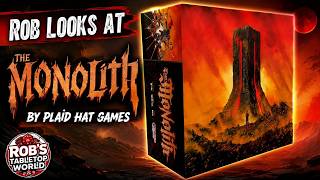
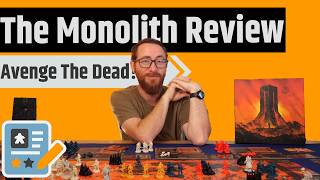
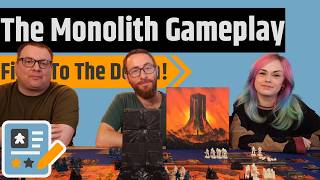
Board game reviewers have embraced The Monolith with enthusiasm, praising it as a bold entry in the area control genre. BoardGameCo's Alex Radcliffe calls it "an excellent area control game" and rates it 4 out of 5, citing exceptional design despite some component frustrations. Rob from Rob's Tabletop World describes it as "another masterpiece from Plaid Hat Games," celebrating the game's cult-fanatical theme and aggressive gameplay. The Hungry Gamer describes playing it at Gen Con with simple enthusiasm: "I love it. It's crazy, but in all the best ways." What emerges across all reviewers is respect for the mechanical depth combined with recognition of the game's most divisive element: the Monolith component itself, which creates tension both thematically and mechanically.
Core Mechanics That Define The Monolith
The Monolith Action System
The most distinctive mechanic in The Monolith, published by Plaid Hat Games, is the central action-determination system. Players commit remaining "hearts" (the game's primary resource) into the Monolith structure at the end of the order phase. These hearts fall through the honeycomb-patterned interior and land in slots that determine which actions will be available during the subsequent action phase. The available actions are slay (kill enemy units and gain honor), boast (claim control of a region), and maneuver (move units across the board). This creates a tension between preparing thoroughly in the order phase and banking resources for the action phase. As Alex Radcliffe explains, the first player to commit receives bonus actions (surge), making timing critical: commit early and you gain momentum but risk insufficient preparation; wait too long and you lose the advantage but gain more information about what your opponents need.
Asymmetric Shaman Powers
Each player commands a unique shaman, a warrior priest who interprets the monolith's will and possesses a distinctive ability that fundamentally shapes how that faction plays. Some shamans excel at aggressive slaying, while others provide movement bonuses or resource manipulation. These asymmetries are powerful enough that Alex Radcliffe initially worried about balance, noting that certain shamans "might seem incredibly overpowered at first." However, Radcliffe also discovered that skillful play can mitigate these abilities and that shamans with less obvious attack power often have subtle control advantages over board positioning and movement. This design prevents any single playstyle from dominating; victory requires understanding your shaman's strengths and the strengths of your opponents' powers.
The Monolith Experience
Reviewers consistently describe the game as creating an atmosphere of tense, high-stakes competition. The Hungry Gamer characterized the combat system as a "knife in a phone booth" situation, where aggressive factions clash in confined spaces, and dead bodies on the board serve as both testament to past battles and fuel for future actions (converted into the "rage" resource). This creates a distinct area control experience where bodies linger on the map, requiring shamans to cremate them, adding a unique layer to the territory-control formula.
Rob's Tabletop World captures the thematic essence: the game evokes Warhammer 40K's Space Marines in tone, with shamans as fanatical priests of a foreign god. You don't turtle defensively; instead, you feel compelled to attack, to prove your sect's dominance, to make sacrifices to the monolith. Rob notes that "the fanaticism" is the game's core appeal. "You feel the fanaticism in each action and how when you kill guys, they mean nothing. They want to die for the monolith." This thematic coherence makes the aggressive gameplay feel inevitable rather than punishing.
What Makes The Monolith Stand Out
The most frequently praised aspect is what Alex Radcliffe calls "possibly one of the easiest area control games I have ever learned, taught, and played relative to the amount you get out of it." The rulebook is compact (approximately 16 pages), yet the emergent complexity is substantial. Reviewers emphasize this as a rare achievement: maintaining both accessibility and strategic depth. The divination cards (powerful special abilities that players bid hearts to acquire) amplify this balance by forcing constant resource-trade-off decisions throughout the game.
The second standout element is the theming. The Monolith isn't just a flavor wrapper; it shapes every decision. The monolith as both a game component and narrative device creates a cohesive experience where shamans clash over control of temples, harness the anger of fallen warriors, and race to claim the monolith's favor. Rob emphasizes that everything feels deliberately strange and thematic: "It's unusual, but that's what makes this so great."
Potential Drawbacks
The physical monolith component creates two problems Alex Radcliffe documents. First, it blocks line of sight when placed on the board, making it difficult for seated players to see what's happening on the far side. Second, and more frustrating, the randomness of where hearts land inside the monolith can invalidate careful planning. Radcliffe notes that in every game they played, at least one turn was disrupted by unfavorable action distribution: "I would say my entire game really did come down to whether the monolith favored me this turn or whether it really just screwed up my plans entirely." While the game includes mitigation through the anger resource (spent to reposition hearts between zones), this randomness conflicts with the otherwise tight tactical play and can feel unfair to players who spent the order phase setting up specific strategies.
The second limitation is player count: the base game supports only 3-4 players. Multiple reviewers note this isn't a solo or two-player game, which narrows its appeal for some households. Rob states this directly: "The only negative thing is this is a fantastic game... for a game group. You need to play this in a group... Not even two, three to four." Plaid Hat Games has addressed this with an expansion that enables 1-2 player modes, but the base experience is strictly multiplayer.
If You Enjoy The Monolith
Reviewers recommend Blood Rage as a spiritual sibling: a three-round game of area control where players compete for territorial dominance while managing limited resources. DEI (Divide et Impera) is another pairing, particularly for players seeking area control with less combat focus but similar push-your-luck tension. For those drawn to The Monolith's aggressive faction-building and thematic depth, Wonderland's War offers similar region-control gameplay set in an alternate-history Alice in Wonderland setting. If the fanatical, nearly apocalyptic theme appeals to you, 40K (Warhammer 40,000) captures that same sense of zealous military conflict, though at a very different scope and complexity.
What Reviewers Are Saying
"This is possibly one of the easiest area control games I have ever learned, taught, and played relative to the amount you get out of it. I'll start with that. The The rulebook is a handful of pages of the actual core structure of what you're doing, and then a few more other pages of, like, you know, card clarity and whatnot, but it's almost certainly the best ratio of simplicity to how good the game is in terms of games like this."
-- BoardGameCo
"Okay, it is very different. It feels creepy and and for what this does, it really is unique and fantastic. And when I mean it feels creepy, it's very thematic. You feel the fanaticism in in each action and how when you you knock guys off, you know, you kill guys, they mean nothing. They want to die for the monolith."
-- Rob's Tabletop World
"I love it. I love it. It's crazy, but in all the best ways. And because of that kind of mechanic that I was talking about, the body stay all it seems like it's actually a bit of a different take on area control games. So hyped for it. Absolutely. If you were an area control person, you should be hyped for it."
-- Hungry Gamer