


The Altered: Anomaly Containment Archives Deep Dive
What the Community Thinks About The Altered: Anomaly Containment Archives
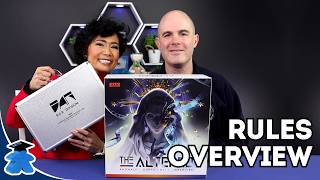
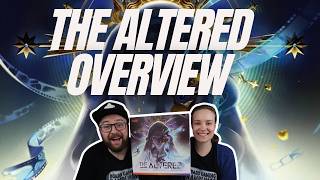
Reviewers across board gaming channels are unified in their enthusiasm for The Altered: Anomaly Containment Archives, a narrative-driven experience from Tin Universe that prioritizes story and atmosphere over mechanics complexity. What stands out is how the game succeeds as both a choice-driven adventure and a tactical system without compromising either. Board Gaming Ramblings emphasizes the thematic coherence, describing it as leaning hard into presentation, while Meet Me At The Table reviewers highlight the game's capacity to make meaningful decisions feel genuinely consequential. Meeple University frames it as delivering "what few narrative games can," pairing rich writing with production value that reinforces the dystopian immersion. The consensus is clear: this is a game that excels at making players feel invested in their choices and the world they unfold.
Core Mechanics That Define The Altered: Anomaly Containment Archives
Choice-Driven Narrative with Persistent Consequences
The Altered centers its gameplay loop on a guided narrative where every decision matters across the campaign. Players read dossiers written in second-person perspective, making branching choices that shape the story in real time. What makes this mechanic compelling is its persistence: choices are recorded as stamps in what the game calls the Collective Unconscious Audit Ledger, a shared record that accumulates across all four core campaign cases. As one reviewer noted while playing, the act of reading and making choices becomes harder as you learn about your character, because you understand the weight of each decision. The game also uses physical documents and evidence that players discover based on their choices, meaning different playthroughs uncover different materials, incentivizing multiple runs through the same story.
Rock-Paper-Scissors Combat Grounded in Theme
When investigation escalates into direct confrontation with the anomaly, combat kicks in using three attributes that cycle against each other: Communion suppresses Insight, Insight suppresses Protocol, and Protocol suppresses Communion. Each round, players draw a threat card, choose which attribute to use, and roll dice to resolve outcomes. The tension comes from not knowing which attribute the threat will use before you commit. What reviewers praise is how simple this system is to learn (a few minutes) yet how tactically engaging it remains, with bonuses for successful matches and penalties for overusing the same attribute. This design keeps players adapting strategy rather than defaulting to a safe button, and crucially, the system stays connected to the story; threats you face are rooted in your narrative choices, and combat never distracts from the emotional arc of the adventure.
The The Altered: Anomaly Containment Archives Experience
Bureaucratic Dystopian Horror
The Altered unfolds in New Harbor, a techno-dystopian setting built around the Covenant Life Assurance Company and its Biological Asset Risk division. You take the role of an evaluation commissioner investigating altered signatories who've been changed by anomalous incidents. The setting merges institutional horror with corporate science fiction, creating a uniquely unsettling atmosphere. Reviewers describe the writing as vibrantly tense, building pressure as you piece together evidence from fractured memories. The dystopia itself becomes a page-turner, pulling readers into a world where you're handed enormous authority over someone's fate without certainty about what's happened to them. This is a game that trusts its prose to create unease and philosophical weight.
Immersion Through Tactile Physicality
The Altered achieves immersion not just through narrative but through its component design. The prototype arrives in a briefcase, and contents unfold as you play: custom dice, lock boxes, physical dossiers, blind-bag token systems, audit overlays that overlay on a ledger to reveal hidden information, and even a detailed map of New Harbor. Multiple reviewers emphasize that this immersion feels intentional and sophisticated. As one put it, "the immersion is second to none." Components arrive in contexts that match the story; you're not just reading about being an evaluation commissioner, you're handling official-looking forms and using physical tools to record your decisions. This tactile layer transforms what could be a reading experience into a full ritual of participation.
What Makes The Altered: Anomaly Containment Archives Stand Out
Novel-Quality Writing at Board Game Scale
The Altered distinguishes itself through writing quality that reviewers consistently describe as novelistic. Multiple channels noted the prose is vibrantly written with few to no grammatical errors, and structured to build genuine tension as you read. The second-person perspective places you inside the altered signatory's fractured perspective, creating a sense of unreliable perception that reinforces the game's themes. At 16 to 24 hours of content in the core tier alone, and up to 40 hours with all tiers, this is substantial narrative material. The writing isn't filler framing mechanics; it's the game itself, and reviewers who engage with it report that decisions become harder to make not because the system is complex, but because the story has earned your emotional investment in what happens next.
Deluxe Components That Match the Narrative Ambition
What reviewers repeatedly highlight is the commitment to production value. Lock boxes, custom dice, a briefcase, physical documents that feel like artifact evidence, audit overlays, dossiers, and a full map of New Harbor all serve the fiction. The prototype demonstration revealed that later campaign cases will introduce new materials and unlock additional content, suggesting this game grows in scope as you progress. The component design is smart: it supports player agency through blind-bag tokens and the audit ledger without becoming mechanical busywork. This is a game designed for players who value tactile, sensory engagement with the world they're exploring.
Potential Drawbacks
Incomplete Information in a Single Playthrough
Reviewers noted that the game contains more evidence and documents than any single playthrough will uncover. Because narrative choices determine what materials you access, players may finish a case without seeing all available content. One reviewer found only one field asset during their playthrough despite knowing others existed, based on how their choices branched. For completionists or players seeking mastery, this design choice may feel frustrating until multiple playthroughs reveal the full picture. Understanding that the game rewards replayability is essential; linear-minded players may interpret incomplete discovery as a limitation rather than an invitation.
Prototype Components Subject to Change
Because this is a crowdfunding project launching from a prototype, reviewers explicitly noted that components and content may be upgraded before final release. While this typically translates to improvements, backers should be aware that final production may differ from what has been demonstrated. The game requires a significant time commitment (6 to 8 hours per case, with seven cases total), so alignment with the designer's vision in the final version is worth confirming before backing.
If You Enjoy The Altered: Anomaly Containment Archives
Players drawn to The Altered's immersive narrative design and high-production components will find similar satisfaction in Abyss: Echoes of the Forbidden Right, the previous release by Tin Universe that reviewers consistently referenced as a precedent for their commitment to immersive experience design. Abyss similarly prioritizes atmosphere and physical immersion over mechanical complexity.
For those who enjoy the choice-driven campaign structure where decisions accumulate across multiple stories, Abyss Echo offers another entry point into Tin Universe's design philosophy, demonstrating that the studio consistently delivers on the promise of choices that matter across a campaign arc.
What Reviewers Are Saying
"This is an immersive narrative experience where the choices you make are not only going to have ramifications in the story that you're working on, but in future stories that are going to progress as the game moves forward."
— Meet Me At The Table
"It is a bit of both. It's very story forward, it leans hard into the presentation and the theme and the combat is simple enough to learn in a few minutes, but has just enough push and pull to stay tense."
— Board Gaming Ramblings
"The scale of the Altered delivers what few narrative games can. A rich mystery with novel quality writing, deluxe quality board game components, and just enough choices and branching elements to make it non-deterministic."
— Meeple University