








Seeker of Spells Deep Dive
What the Community Thinks About Seeker of Spells
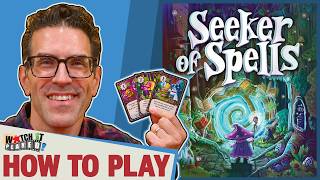
Reviewers consistently celebrate Seeker of Spells as a family-friendly game that manages to be simultaneously simple and engaging. The game strikes a balance between accessibility for younger players and enough strategic depth to keep experienced gamers interested. One reviewer called it "super cute for what it is," praising not just the mechanics but the overall presentation and how the game teaches valuable foresight skills. The community response highlights that Seeker of Spells works best when players embrace its chaotic, playful nature, and the game structure actively encourages this by rewarding players even when they get knocked around on the board.
Core Mechanics That Define Seeker of Spells
Portal Jumping and Board Movement
Movement in Seeker of Spells is where the game's magic lives. Players simultaneously choose direction cards (north, south, east, or west), then take turns moving both their mushroom wizards along the chosen direction until they hit something. What makes this brilliantly tense is that the board wraps around its edges, portals teleport you across the forest mid-move, and reflecting barriers bounce you back the direction you came from. One reviewer noted that as the game progresses and fewer spellbooks remain on the board, players can move dramatically farther, creating escalating moments of wild movement chains. Portals in particular add delightful unpredictability: a wizard moving east might land on a colored portal, instantly jump to its matching portal on the opposite side of the board, and continue east into a completely new area. This system teaches planning and foresight because players must mentally trace where their wizards will end up before committing their direction card, but the wrapping and bouncing mechanics also create surprising outcomes that keep the game from feeling overly calculated.
Spell Cards and the Stealing System
Seeker of Spells uses colored spellbooks with distinct point values and effects. Green books are worth three points, purple books give you a spell card when collected, blue books are worth six points but force you to give a spell card to an opponent, and gold books start negative but become valuable if you collect three or more. The stealing mechanic turns potential loss into opportunity: whenever another player steals from you, you immediately draw a spell card, meaning getting targeted feels like you're earning a consolation prize with real value. Spell cards themselves become the game's secondary economy. They have powerful effects that let you teleport, jump over books, rotate tiles, steal from opponents, or protect your stack. A reviewer highlighted that keeping spell cards unplayed is also valuable because each unplayed card is worth points at game end. This creates a satisfying tension between wanting to deploy powers for tactical advantage and holding cards for points, and it's a choice that changes as the game progresses.
The Seeker of Spells Experience
Chaotic, Delightful Portal Movement
The movement system creates what reviewers describe as "pretty fun, chaotic, jumping around" moments. Because movements happen in turn order after simultaneous card selection, players can predict what the first player might do and position themselves to intercept or avoid them. But the portals and reflecting barriers mean even carefully planned moves can bounce someone into an unexpected area of the board. Reviewers watched players experience genuine delight when a bounce chain resulted in reaching a far corner of the forest or finding an unexpectedly valuable book. One Gen Con visitor observed kids playing the game and noted they "loved poking at each other and talking trash," suggesting the physical movement and constant interaction keeps energy high throughout play.
Learning to Plan Ahead
Multiple reviewers highlighted that Seeker of Spells teaches a valuable cognitive skill: looking ahead to see where your wizards will end up. Reviewers appreciated that this planning element exists but isn't punitive if you skip it. As one reviewer put it, "You don't have to be that forward thinking if you don't want to be. You can just kind of play and see what happens, and there's still fun chaos and excitement." Another reviewer noted that the game is "clever how the board opens up" and described appreciating "games that matter the order matters." The progression is intentionally designed: the game starts simple when the board is full of books and movement is short. As books get collected and the board empties, movement chains become longer and more dramatic, naturally introducing the visual planning element at the moment players are ready for it. This incremental teaching is especially valuable for children discovering programming-style thinking for the first time.
What Makes Seeker of Spells Stand Out
Art, Components, and Charm
Reviewers consistently praised the physical game. The artwork is described as "so cute" and the quality "surprised" reviewers with "how well done it is." A particularly clever design choice is the use of metal spellbook tokens instead of cardboard. As one reviewer noted, stacking physical books means you can visually see how many gold books someone has collected, telegraphing their scoring strategy. The tokens are nice enough that having tall stacks that might topple is worth the game-play advantage of transparency. The overall aesthetic and theming of mushroom wizards in an enchanted forest feels cohesive and appeals to families while maintaining genuine gameplay depth.
The Consolation Prize System
What sets Seeker of Spells apart from other take-that games is that being stolen from never feels bad. The moment someone lands on you and steals your top spellbook, you draw a spell card. Reviewers loved this design because it means you always get "something, a little consolation prize." One reviewer explained that "there's never that sense of like, oh, you just messed me up and now this is terrible. Like there's always a point where you get something." This single design decision transforms the dynamic from purely adversarial to something more playful. Steal aggressively and the person you wronged gets a powerful tool. Trade meanness for spell cards and nobody leaves the table feeling trapped.
Potential Drawbacks
Spell Card Complexity and Timing
Some reviewers noted moments of confusion around spell card timing and effects. Certain cards allow interrupting other players' turns, and effects like rotating tiles require understanding clockwise versus counterclockwise rotation. One experienced reviewer mentioned moments of analysis paralysis when deciding whether to interrupt: "I have a card that may or may not affect you... I have to sit and think about it... because if I rotate this clockwise, then that means you picked east. So then you're going to go east. No, no, I don't want to use that one." This isn't a broken element, but some spell cards introduce rules overhead that can interrupt flow. Players new to the game might need a teaching moment on which spells can be played when and whether they want to hold a powerful interruptive card or just play it for points.
Physical Game Management at Higher Counts
Reviewers who played with stacks reaching 15 or 20 books noted that the stacks topple over regularly once they get tall, requiring players to split them into multiple piles. While this is intentional (the game wants you to see gold collections), it means table management becomes an ad hoc mini-game. One reviewer quipped about having to deal with "a little Jenga game mini game going on to get those nice books." This is a minor friction point, though not severe enough to derail play, and the benefit of transparent book stacks outweighs the nuisance.
If You Enjoy Seeker of Spells
Seeker of Spells works for players who love games with strong spatial reasoning elements and don't mind table meanness when everyone's laughing. If you enjoy simultaneous actions and games where order matters, where the first player to move can block or pounce on others' plans, this is your lane. Families looking for a game that teaches children to think two or three moves ahead will find Seeker of Spells does that naturally without feeling like a lesson. The game appeals to anyone who likes games where the board state shifts dramatically as it empties, creating escalating drama and surprise. Reviewers recommend it especially for groups willing to play it however chaotic they want, since the design supports casual, trash-talking play just as well as it supports thoughtful, careful play. The forty-minute playtime also makes it an excellent fit for filling a game night slot or teaching new players something mechanically interesting without requiring a time investment longer than a movie.
What Reviewers Are Saying
"Program your mushroom dudes movement around the board to collect books, which gets you points and powers. And if you don't keep your books safe, they can be stolen by the other players. I thought this game looked like a delight."
— Paula Deming
"I love that I can see and I'm like, Oh, Joey has a lot of gold, but not enough gold to make it to make it worth it yet."
— Wendy Ye, The Dice Tower
"I think Yeah. This this is a super powerful card. The u just pick a wizard. They don't move that turn. That's why it's probably worth zero points because it's such a powerful card."
— Chris Ye, The Dice Tower