




Beast: Ashfall Deep Dive
What the Community Thinks About Beast: Ashfall
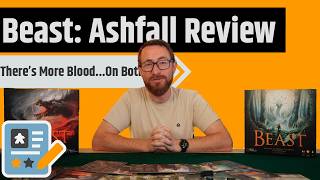
Reviewers across the board see Ashfall as a confident expansion that rewards experienced Beast players while maintaining seamless integration with the base game. The consensus is clear: this is not an entry point for newcomers, but rather a sophisticated layer added to an already complex hidden-movement system. Sir Thecos (Aikas) frames Ashfall as the final expansion meant to be "bigger, more sandbox-style and better," adding new layers of variety and asymmetry. BoardGameCo's Alex Radcliffe emphasizes how easily Ashfall plugs into existing games, noting its low overhead and straightforward rules additions. The expansion delivers mechanically interesting characters that are situational rather than all-purpose, requiring players to build strategies around their asymmetric abilities. This is a deliberate design choice that adds replayability for players who already know Beast intimately.
Core Mechanics That Define Beast: Ashfall
Boats and Fast Travel
Boats represent the most immediately impactful quality-of-life addition to Beast. These tokens, placed during setup at specific settlements, allow hunters to discard a card and instantly relocate to any untransformed named settlement on the board. This solves one of the base game's persistent friction points: traversal distance. When hunters successfully deduce the beast's location but find themselves stranded on the opposite side of the map, boats spare them from spending multiple turns just moving to engage. Aikas notes there is "almost no reason not to use" boats when cross-map speed is needed. Combining boats with cards that grant relocation abilities creates a powerful toolkit for hunters to respond tactically. Beasts, however, can destroy boats through directed attacks, so these fast-travel options remain temporary assets rather than permanent safe infrastructure.
Hidden Paths and Asymmetric Movement
Hidden paths function as habitat-dependent shortcuts connecting distant locations. These tokens create new movement possibilities, but with a strategic twist: an entrance only works if the character's preferred habitat matches the location type. Beasts gain more immediate access to hidden paths since their preferred habitats are fixed, while hunters must manipulate terrain to unlock paths for their own use. This creates a dynamic map that shifts based on which transformations are active. Sir Thecos observes that hidden paths "hardly" see use in practice games, possibly because they are situational and don't always lead to the exact part of the map where players need to be. Still, their presence adds strategic depth for players who can exploit them in specific game states.
The Beast: Ashfall Experience
Escalating Complexity and Mastery Curve
Ashfall deliberately trades accessibility for depth. Both new hunters and new beasts present a steeper learning curve than their base-game counterparts. Sir Thecos explicitly warns against playing the new beasts in first games, citing Ragnar as "quite difficult" to pilot correctly. This is not presented as a flaw, but rather as the expected territory for an expansion targeting experienced players. The reward is substantial: meaningful strategic choices that don't collapse into obvious plays. Experienced Beast players find that the new characters demand active decision-making and scenario-specific adaptation, transforming the expansion from mere content padding into genuine replayability fuel.
Quality-of-Life Refinement Without Power Creep
Ashfall is careful to enhance the core hidden-movement experience without overwhelming it. The new hunters and beasts add mechanical personality without rendering older characters obsolete. Alex Radcliffe describes the expansion as "seamlessly integrating" new content that provides "more variety, more interaction, more ways to approach the hunt." Movement improvements reduce the tedious arithmetic that can bog down Beast's pacing without fundamentally breaking the game's balance. The expansion adds ways for both hunters and beasts to manipulate traversal and positioning, keeping the asymmetric tension intact.
What Makes Beast: Ashfall Stand Out
Character-Driven Asymmetry
Each new hunter and beast brings a distinct mechanical identity. Nora works with animals scattered across the board, turning ambient creatures into strategic resources. Drog embodies a death-as-fuel philosophy, gaining power through wounds and cheating death via corruption, a mechanic that echoes Cthulhu: Death May Die but integrates cleanly into Beast's framework. Ragnar and Yelter introduce resource management tied directly to their signature summons, forcing hunters to reckon with powerful entities that reward damage and punish focused fire. These asymmetries matter: they change how beasts approach hunting and how hunters coordinate their defense. Sir Thecos notes that while these characters are "quite situational," they excel when circumstances align, rewarding players who build strategies around their specific strengths.
Expansion as Definitive Closure
Ashfall is marketed as the final expansion for Beast, a rare commitment in the board game industry. This positioning gives the expansion a weight beyond mere mechanical additions. Players backing the crowdfunding campaign are investing in what Studio Midhall positions as the definitive and complete vision for the Beast experience. The big box packaging and comprehensive integration suggest finality rather than the open-ended "more is coming" attitude that defines many expansion lines. This creates psychological closure for the Beast franchise while still leaving room for varied strategies within the expanded system.
Potential Drawbacks
Situational Character Design
Not every new hunter and beast serves every table equally. Sir Thecos describes the new characters as more "situational" than base-game counterparts, meaning they shine in specific scenarios but lack the flexible versatility of earlier options. Nora's animal-focused abilities matter most when the board has abundant creatures to manipulate; without them, her toolkit narrows. Bram's barrier placement is powerful for board control but offers less direct hunting pressure than other hunters. This design philosophy prioritizes meaningful choice and scenario-based play over uniformity, but it also means players can't simply swap in new characters and expect identical strategic frameworks to persist.
High Barrier to Entry
The expansion's complexity and situational mechanics create a steeper onboarding curve than the base game. Players new to Beast will struggle not just with the core rules but with understanding when and how to leverage Ashfall's additions. Sir Thecos explicitly cautions against using new beasts in first games, a warning that extends implicitly to several hunters. This limitation is baked into Ashfall's design philosophy, which prioritizes replayability for veterans over accessibility for newcomers. Those still learning Beast's core hidden-movement system should expect a learning period before Ashfall's nuances become navigable.
If You Enjoy Beast: Ashfall
Ashfall is the natural destination for players already invested in the Beast ecosystem. Those who have mastered the base game and its earlier expansions, Shattered Isles and Beast Storm, will find Ashfall provides the asymmetric depth and replayability they've been seeking. The expansion pairs well with these earlier additions, layering complexity rather than replacing it. Players drawn to hidden-movement games in general may also enjoy Cthulhu: Death May Die, which shares Ashfall's emphasis on asymmetric characters with special abilities and Drog's death-as-resource philosophy. Ticket to Ride's map pack expansions offer a different flavor of map manipulation and movement variety, though they lack Beast's competitive asymmetry. Ultimately, Ashfall works best as a capstone to the Beast franchise rather than a gateway, a comprehensive expansion for players who have already answered the base game's question: "What happens when one player hunts and the others hide?"
What Reviewers Are Saying
"If you need to move across the map quickly, there's almost no reason not to use them. And if you combine the boats with cards that let hunters relocate to any settlement, they become a very strong asset."
— Sir Thecos
"There's more characters, there's more beasts. It seamlessly integrates with your game. There's not a ton of new rules to add. It's a very easy to incorporate game."
— BoardGameCo
"Beast is snappy and immediate where hider and seeker bash up against each other constantly. It's a game that reveals intense and thematic stories."
— Quoted via Bower's Game Corner