















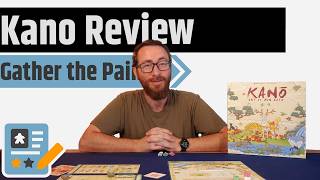



KANO Deep Dive
What the Community Thinks About KANO
The board game community has embraced KANO as one of Gen Con's standout releases, with reviewers consistently praising its beauty and accessibility. There is broad agreement that KANO delivers a cozy, meditative gameplay experience with stunning presentation. BoardGameCo's Alex found it "very charming, very pretty" and gave it a four out of five rating, while reviewers from Crimsonboardgames and The Board Game Garden both highlighted the calming nature of the experience. The main point of contention centers on complexity; some reviewers note that despite its elegant design, KANO sits on the lighter side of the spectrum, which appeals to some players and may leave others wanting more strategic depth. The solo mode, however, presents a notably different challenge and has earned respect for its genuine difficulty.
Core Mechanics That Define KANO
Gravity-Based Paint Pot Placement
KANO's central mechanic revolves around gathering paint pots in patterns and placing them on your board, where they respond to gravity much like pieces settling in Connect Four. Players swap paint pots in the center display using a Bejeweled-style mechanism to gather the colors they need. Once collected, these paint pots are placed on a personal grid where they fall to the lowest available position. This elegant constraint shapes every decision: the physical placement of paint pots matters as much as acquiring them. The gravity system creates moments of satisfying clarity as pots settle into place, grounding the game's puzzle-like feel in tangible, physics-based logic that anyone can understand immediately.
Scroll Painting and Pattern Building
Beyond placement, the true goal is to transform your paint pots into completed artworks by building patterns that match tiles depicting traditional Japanese Emakimono scrolls. When the arrangement of your paint pots matches a scroll pattern, you can exchange them for that tile, adding it to your gallery. Players chase multiple scoring paths: special masterpiece scrolls worth substantial points, themed collections that reward diversity, and positional goals tied to the sun and moon. Matagot designed this layering to reward both long-term planning and opportunistic play. The result is a system where every game invites slightly different strategies depending on which goals emerge and what colors become available.
The KANO Experience
Meditative and Calming Gameplay
Reviewers consistently describe KANO as a serene, low-stress experience. The Board Game Garden's Jenna called it "just a very calming like drafting game," and this tone permeates the entire experience. There is no time pressure, no aggressive player interaction, and no sense of urgency. Instead, players engage in a gentle puzzle, contemplating which paint pots to pursue and how to arrange them. The pacing invites deliberation without punishing it. Even between turns, there is something satisfying about watching the board state, anticipating future moves, or admiring what others are creating. This meditative quality makes KANO appealing for players seeking refuge from heavier, more confrontational games.
Satisfaction of Beautiful Creation
A secondary but profound appeal is the aesthetic satisfaction of building something visually lovely. Crimsonboardgames emphasized this repeatedly: "I love the whole like making the painting," and the review captured genuine joy in watching a scroll come together tile by tile. The game's production quality amplifies this experience. The paint pots feel pleasant to handle, the box organization is meticulously designed, and each completed scroll tells a small visual story. BoardGameCo noted that the art and components "work really well" together, creating cohesion that elevates the entire experience. For many players, the act of building becomes as rewarding as the scoring itself.
What Makes KANO Stand Out
Exceptional Component Quality and Presentation
Multiple reviewers highlighted KANO's physical beauty as a defining feature. Crimsonboardgames praised the paint pots themselves and marveled at the organization: "Inside of the box all the tiles are like organized. That's incredible." This level of care extends throughout. The mat, the tiles, the player trays all communicate quality and intentionality. Paula Deming's immediate take at Gen Con was that the game "looks puzzly and beautiful," and this aesthetic accessibility means the game invites play even before rules are taught. The board state is inherently readable and pleasing to look at. In an era where many games prioritize mechanics over presentation, KANO's investment in visual and tactile delight sets it apart. Matagot's production makes the game feel like a premium experience from the moment it hits the table.
Accessibility Without Sacrificing Engagement
KANO achieves something that many games struggle with: it is genuinely easy to teach yet still engaging to play. BoardGameCo emphasized that it is "very accessible, easy to teach, easy to dive into" with "a very light, easy to play polyomino feel." Despite this lightness, the game never feels trivial. The interplay of limited paint colors, positional constraints, and multiple scoring paths creates real decisions. Each player's board develops differently based on what they prioritize, making games feel distinct without requiring deep rules knowledge or a lengthy learning curve. This balance explains why both casual players drawn by beauty and experienced gamers impressed by the design can appreciate KANO on different levels.
Potential Drawbacks
Light Strategic Weight May Disappoint Heavy Players
Several reviewers noted that KANO's strategic landscape is relatively shallow. BoardGameCo acknowledged liking the game but observed that despite the variability of different scoring options, "the strategy doesn't change that much. You're just going for paintings and trying to choose which things you're going to grab." For players accustomed to games with deeper decision trees and more punishing consequences, KANO can feel somewhat surface-level. The lightest design decisions come early, and optimal strategies can emerge quickly. While this accessibility is a strength for casual play, players seeking ongoing strategic complexity may find that KANO's puzzle resolves before they are ready to move on.
Solo Mode Difficulty Creates an Uneven Challenge
Reviewers consistently mentioned that the solo mode is significantly more difficult than multiplayer. Crimsonboardgames noted the solo experience is "very difficult solo" and wondered aloud whether beating it is realistic, even with optimal play. Paula Deming expressed both excitement and trepidation, saying "I cannot wait to try this solo mode" after observing how punishing it seemed. The asymmetry matters: players seeking a relaxing solo puzzle may find the AI opponent too punishing, while those wanting a genuine solo challenge may succeed only rarely. This binary quality means the solo mode serves a narrow slice of the audience well, while others may be left frustrated by either the difficulty wall or the mismatch between the multiplayer experience and what the solo variant demands.
If You Enjoy KANO
KANO appeals to players who love tile-placement and polyomino games with a gentle, meditative tone. Those drawn to games like Cascadia for their accessible puzzle nature will find similar satisfaction here. The gravity mechanic and pattern-matching system recall the logic of abstract games like Azul or Splendor but with less confrontation. Players who appreciate cozy games with beautiful production, titles where the experience of creation matters as much as winning, will gravitate toward KANO. The game also works well for groups mixing experienced and new players, since the teaching is quick and success is accessible to all. For anyone seeking a game that prioritizes beauty and calm over cutthroat competition, KANO stands as a genuinely thoughtful choice.
What Reviewers Are Saying
"It is absolutely stunning. We have these paint pots that we're going to use to make these paintings. I love the whole like making the painting. I'm very excited to play this multiplayer with friends as well. I think they were really going to love it, my friend group. Um it's just stunning."
— Crimsonboardgames
"This game is very cozy. It's got a very cozy, first of all, the feel of it, the art, the look, the art style over here, all that works really well. This mat over here, by the way, this mat is fantastic."
— BoardGameCo
"The game play is actually a lot like more simple than I initially thought for this game. But I really love that it is just a very calming like drafting game slash polyomino game. It is absolutely beautiful. Very fun little game. Definitely recommend."
— The Board Game Garden