





Lunar Rush: Innovations Deep Dive
What the Community Thinks About Lunar Rush: Innovations
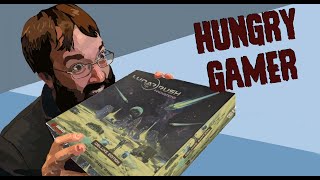
Lunar Rush: Innovations is the first major expansion for Steven Brown's simultaneous-play economic euro, and reviewers converge on a single assessment: this expansion transforms a solid game into something far more compelling. The expansion was reviewed favorably by both preview channels and players who have tested prototype versions at conventions. Hungry Gamer calls it essential for anyone who enjoyed the base game, while Brains On Games highlights the huge shift in strategic depth. One Stop Co-op Shop echoes this sentiment, noting that the expansion makes competitive play significantly more fun compared to the base game alone. The consensus centers on how effectively the asymmetric designs elevate replayability and engagement, though reviewers acknowledge that the expansion does increase complexity and that balance remains uncertain in some areas.
Core Mechanics That Define Lunar Rush: Innovations
Asymmetric Factions
At the heart of Innovations lie five completely asymmetric corporation boards that fundamentally change how each player approaches the game. The yellow faction gains access to specialists (a farmer, miner, and other consultants) who provide powerful bonuses but cost three credits per turn they remain on the moon. The cyborgs are massive workers that produce significant resources but must be fed with both life support and energy each round, requiring careful resource management. The red scientists can unlock research tokens and develop special discoveries that alter the game's rules; these abilities range from allowing free construction of moon wonders to warping slow-delivery routes into instant fast routes. The green robots faction eschews the traditional life support track entirely, instead managing up to twenty energy-powered mechanical workers that never need to be fed, only charged. Finally, the purple gamblers represent the only faction with inherent randomness, rolling dice each time a worker is placed to determine yields, with options to spend energy adjusting the results. Each faction creates a completely different resource curve, decision space, and path to victory, making every game feel like a new strategic puzzle.
Events Deck
The events module injects variability into the otherwise deterministic turn structure through a deck of good, bad, and neutral events that trigger beginning in round three. What makes this mechanic elegant is the lookahead mechanism: players see which event is coming one round in advance, allowing them to plan and prepare rather than simply react. A moonquake might reduce all players' life support by four but grant workers who produce ore double production for that round. A depleted mines event forces players to discard one ore for every two produced. These events create dynamic moments that prevent players from running the same optimized engine repeatedly, forcing mid-game strategic pivots that keep the experience fresh across multiple plays.
The Lunar Rush: Innovations Experience
Strategic Asymmetry and Unbounded Replayability
Playing Lunar Rush: Innovations generates a distinct tactical experience depending on which faction a player selects. A player commanding the specialists must weigh expensive consultant fees against powerful bonuses, creating a high-risk, timing-sensitive strategy. A cyborg player juggles massive production against maintenance costs, pushing the player toward efficiency puzzles. The scientist player feels weak initially until breakthrough research unlocks game-breaking abilities that completely alter their position. The robot player manages energy scarcity across a vast workforce. The gambler accepts chaos in exchange for volatility and upside. Reviewers describe this as a dramatic shift in strategy, where each faction creates its own mini-game within the larger economy. This drives significant replayability because winning with specialists requires entirely different decisions than winning with scientists or robots.
Dynamic Engagement Through Meaningful Choices
The events system and asymmetric factions work together to create moments of genuine tension and decision-making weight. Rather than simply optimizing a known path forward, players constantly adapt to new circumstances: an upcoming event, the factions their opponents have chosen, or the power curve their own faction has entered. Reviewers note that the milestones also contribute to this dynamic feel by giving players concrete sub-goals to chase during the game, creating racing moments and narrative arcs that prevent the experience from feeling like pure arithmetic optimization.
What Makes Lunar Rush: Innovations Stand Out
Five Wildly Distinct Faction Designs
Each faction achieves asymmetry through completely different mechanical systems rather than simply providing stat-based bonuses. The designers avoided creating merely "stronger" or "weaker" versions of the same core system; instead, each faction solves the core puzzle of Lunar Rush (delivering resources to the moon and developing a base) through an entirely unique lens. The cyborg needs to balance powerful production against maintenance costs. The scientist must first build an engine to generate research, then convert that research into game-breaking powers. The specialist pays continuously for consultant expertise. The robot manages uncharged and charged states. The gambler trades certainty for upside. Brains On Games emphasizes that each of these makes "a huge shift in strategy depending on which faction you are playing with," meaning players cannot simply apply the same winning strategy across factions. This design depth rewards both exploration and mastery.
Modular Architecture
Innovations follows a thoughtful approach to expansion design by making nearly all its modules optional. The events deck can be added or removed based on player preference. The milestones and awards are entirely modular. The asymmetric factions themselves can be used or ignored. Hungry Gamer notes that while the other modules are "cool," the real draw is the factions themselves, but players uncomfortable with added complexity can start with core factions and events before layering in additional modules. This respects the preferences of both new and experienced players and allows the expansion to scale with group comfort levels.
Potential Drawbacks
Increased Learning Curve and Teaching Complexity
Each asymmetric faction introduces distinct rules and mechanics that new players must understand. A group teaching this expansion for the first time will spend more time explaining how specialists cost credits, how cyborgs consume energy, how scientists research, how robots charge, and how gamblers roll dice. Brains On Games notes that the modular approach helps mitigate this, and the game remains reasonable to teach, but players unfamiliar with heavy strategy games may find the asymmetry daunting initially. Setup and component sorting also increases slightly due to the additional faction boards and specialized pieces.
Balance Uncertainties and Incomplete Solo Design
As a prototype reviewed at conventions, some discoveries available to the red scientists appeared extremely powerful (shrink ray, wormhole, wondrous construction), and without extensive testing across all faction combinations, balance confidence remains moderate. Brains On Games flags this uncertainty, noting that balance could vary significantly in the final release. Additionally, One Stop Co-op Shop directly observes that "the Innovations expansion makes the competitive game a lot more fun" but that "it still does not fully fix the solo game." This indicates that while the expansion significantly improves multiplayer, solo players seeking a complete redesign may find the solo mode still has structural issues that asymmetric factions alone cannot resolve.
If You Enjoy Lunar Rush: Innovations
Players drawn to Lunar Rush: Innovations for its asymmetric faction designs will find similar satisfaction in Merchants Cove, which likewise pairs each player with a unique character and asymmetric board, requiring players to master different resource systems and strategic approaches. Where Merchants Cove adds shop-tending variety to a shared market, Innovations introduces faction variety to a shared lunar economy, making both games excellent explorations of how asymmetry can create depth and replayability.
What Reviewers Are Saying
"And that's where this game shines. That's what this is about. Like the other modules are cool, I don't need them. These expansion factions, that is what I'm talking about. Because part of the fun, well, the main fun I think of Lunar Rush is building up your base. And you become asymmetric as you go because you start focusing on different things. But with this expansion, these factions play crazy different."
— Hungry Gamer
"The biggest change, the huge thing that this new innovations expansion adds to Lunar Rush is asymmetric player boards. All of the corporations can be made asymmetric. So you've got a lot more variability and replayability here. And it totally changes up your strategy because each one of these new boards plays very differently."
— Brains On Games
"The Innovations expansion makes the competitive game a lot more fun. I still don't think it fully fixes the solo game for me. This is a solo game that I think does have some flaws and I don't think it works best in that mode, but the competitive play is good and with the expansion, it's even better."
— One Stop Co-op Shop