



Vengeful Dragons Deep Dive
What the Community Thinks About Vengeful Dragons
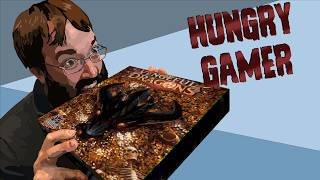
Reviewers describe Vengeful Dragons as a competitive, aggressive card game for two to four players, where each player takes the role of a dragon trying to collect the most treasure. The Hungry Gamer presents it as a game that plays in roughly 30 to 60 minutes, and walks through every phase of a turn in detail, from the relic roll to the five-treasure finish.
The Dice Tower covered a live four-player session with a representative from Vengeful Gaming, and the table set the tone immediately. The hosts announced that the goal was to be mean to one another, taking treasure and disrupting each other‘s plans. The publisher‘s Tyler Clemens acknowledged that the current version leans chaotic and that the team is adding cards to push it toward more strategic play. A separate Dice Tower convention vlog from Funky Town Games in Knoxville, Tennessee also spotted a Vengeful Dragons display at the convention.
Core Mechanics That Define Vengeful Dragons
Dragon Abilities With Discard Costs and Cooldowns
Each player picks one of several dragons from Vengeful Gaming, and each dragon carries its own power. Activating a power means discarding a card from hand, and the dragon then goes on cooldown for three rounds. As the Dice Tower session explains, the dragon is flipped over as a reminder and turned once per pass around the table until it is available again. The powers vary considerably: one moves a trap from one player to another, another destroys an attacking raider, another sends a raider against any player, and another locks a target‘s treasure horde for a turn. Because these abilities are instant, they can be used on any player‘s turn, which the Hungry Gamer highlights as a key part of how the game flows.
Raiders, Face-Down Traps, and Symbol Matching
Players lay traps face down in their trap row, so rivals have to decide which trap to approach without knowing what sits behind it. When a raider is sent, the defending player chooses which trap it meets, and the trap is flipped to compare symbols with the raider. The Hungry Gamer breaks down the three outcomes: a matching yellow symbol destroys the trap and returns the raider to its owner‘s hand, a matching red symbol defeats the raider and discards it, and a matching green symbol destroys the trap and lets the raider claim a treasure for its horde. A defeated raider leaves the trap face up, so every player now knows the symbol and can plan around it. That information leak is part of what makes the trap row feel like a bluffing contest.
The Vengeful Dragons Experience
Chaotic, Table-Talk Party Energy
The Dice Tower session is the clearest picture of how the game feels at the table. Players trade barbs, announce their intentions with theatrical flair, and cheer or groan at each reversal. One host summed up the attitude plainly: "Big picture here is get treasure or die trying." The Hungry Gamer‘s explanation of final-round responses, where every player gets one last chance to use magic cards after someone announces five treasures, adds another layer of drama to the finish.
Swingy Tension and Constant Interaction
Reviewers repeatedly describe a game where a single turn can reverse everything. Dice rolls decide whether relics stay attached, a "nope" can answer another "nope," and a dragon power can freeze a player‘s treasure for a full round. One Dice Tower host noted that players can be "only lucky on dice rolls, not lucky on card draw," which captures how volatile a session can feel. Even players who fall behind stay engaged because they can respond, reclaim cards, or raid back.
What Makes Vengeful Dragons Stand Out
Asymmetric Dragon Powers
The Hungry Gamer points out that each dragon has a different ability. The Dice Tower session shows the variety in practice, with one host using a dragon that allows sending raiders at any time for a cost while others rely on trap control or treasure protection. Because every activation costs a card and then a three-round cooldown, the timing of each power matters.
Illustrated Cards With Credited Artists
The Dice Tower hosts singled out the card art, noting that every card credits its individual artist. They praised a capybara ninja card in particular, and the credit line gave the group a chance to appreciate the illustrators by name. That emphasis on individual credit stood out to the hosts as a deliberate touch.
Potential Drawbacks
Relics Feel Punishing
Relics are the most frequently criticized part of the design. Each relic sets a d20 threshold for removal, and the roll happens only once per turn no matter how many relics a player carries, so one unlucky roll can leave several problems in place. The Dice Tower hosts were blunt about it: "They‘re not fun to have in this game." Relics like Grand Cipher, which blocks treasure gains until a low roll, or Chains of Regret, which doubles dragon costs, can stall a player‘s whole turn. The Hungry Gamer adds that a single roll can also clear several relics at once, so the outcome can be good or bad depending on the dice.
Tracking Effects Takes Memory
Many effects last for specific numbers of rounds, and reviewers say this is easy to lose track of. One Dice Tower host admitted that their memory is poor and that anything not written down is quickly forgotten, while another host told the table they would simply have to rely on memory for a cooldown. The designers have acknowledged the problem, and the publisher said they are considering a dice tracker using four d6s to help track effects such as Silent Night. The Hungry Gamer also notes that the No card only applies to the action types the designers specify, and that other situations are left to house rules, which adds another thing to remember.
If You Enjoy Vengeful Dragons
The Dice Tower hosts compared the game‘s instant-speed responses to Magic: The Gathering, with one host noting that in Magic, reading the card explains the card, and another admitting to missing triggers in Magic all the time. Players who enjoy holding up responses and reading card text closely should feel at home with Magic. For a closer match to the aggressive table talk and dragon-themed raiding, look for other dark fantasy party card games that reward bluffing, hidden setup, and direct attacks on rivals.
What Reviewers Are Saying
"This is simply a card that is going to reverse the last action that was taken and prevent the player from taking that action for one round."
— The Hungry Gamer
"They‘re not fun to have in this game."
— The Dice Tower
"Big picture here is get treasure or die trying."
— The Dice Tower