




Wizard Community College Deep Dive
What the Community Thinks About Wizard Community College
Reviewers present Wizard Community College as a lighthearted, cooperative storytelling card game that is easy to pick up and most rewarding when the table commits to the bit. Grant Lyon, covering August retail releases on Grant's Gamerecks, described it as a lighter weight roleplaying storytelling game for about 20 minutes of play with three to eight players, and recommended it to anyone who wants to use their creative side. Kimberly, reporting from Origins 2026 on Tabletop Tolson, enjoyed a session at the publisher's booth and planned to bring the game into their college classroom. Paula Deming, in a Gen Con wrap-up on Paula Deming, watched a group demonstration that looked like a blast but noted that the game appears strongly group dependent. The overall picture is a positive one, tempered by the recognition that the experience depends heavily on who is sitting at the table.
Core Mechanics That Define Wizard Community College
Shared Spell Cards Drive a Collective Story
The central mechanic in Wizard Community College is that every player holds a hand of spell cards, and when a problem appears, players take turns playing cards that move the narrative toward a solution. Grant Lyon explained that a scenario arises where something is going wrong, and each player builds on the story the previous player established. In that example, one player plays a card that makes everyone start farting, which confuses the attackers, and the next player responds with an 80s boom box and a round of moonwalking to distract them further. The cards supply the raw structure, while players supply the connective tissue. Grant noted that there is enough structure and creativity with the cards that no single player has to carry the comedy alone, which makes the collective narrative feel like a genuine team effort.
Roleplay Determines Whether a Spell Lands
The second defining element is that a spell's success depends on how convincingly it is performed. Paula Deming described the game as one that relies heavily on a player's willingness to roleplay whether a spell successfully defeats whatever challenge has been set before them. Because the outcome is tied to the quality of the performance, the game produces unpredictable results: a spell that seems absurd can work if the story carries it, and a sensible-sounding play can fall flat. Grant Lyon framed the result as a narrative that will weave into very weird and wild places, which underscores how the mechanic turns each scenario into an improvised outcome that the table discovers together.
The Wizard Community College Experience
Lighthearted Humor
Reviewers consistently highlight the comedy. Grant Lyon framed the premise as a group of magic students who maybe did not quite cut it and whose spells are not the best, which sets a tone where failure is funny rather than punishing. Paula Deming saw a table that appeared to be having a blast, and the absurdity of the sample spells Grant described, from flatulence-based confusion to a dance-off distraction, shows how the game invites players to be silly on purpose. The humor is not just in the cards but in the audience's reactions as each new twist is revealed.
Creative, Improvisational Energy
The second feeling reviewers describe is the improvisational rush of building on someone else's idea. Grant Lyon noted that the game is a fun cooperative way to create a collective narrative, and that players need to weave together the cards in front of them while paying close attention to the story already unfolding. Kimberly echoed this emphasis on adaptation, describing the experience as one where everything a player does is a way of rolling with the punches. For players who enjoy improv, the game offers a structured playground where each turn adds a new layer to a story that nobody planned in advance.
What Makes Wizard Community College Stand Out
A Safe Space for Failure and Creative Risk
Kimberly, who teaches at a college in Idaho and uses games-based learning in their classes, singled out the theme of failure as the game's most valuable feature. Kimberly explained that the game's trainee wizards constantly face setbacks, and that the game models adapting and rolling with the punches and addressing the fails and moving forward, intending to use it to destigmatize failure in the classroom and arguing that creativity is fostered in exactly those moments. Kimberly also pointed to the durable, soft skills the game exercises, all wrapped in a fun package. This framing makes Wizard Community College notable among light party and card games, because its core fiction treats mistakes as material for the story rather than as losses.
Structure That Lowers the Pressure to Perform
Grant Lyon highlighted that the game does not rely on any single player being the funniest person in the room. The cards provide enough scaffolding that players can contribute ideas without feeling responsible for the entire performance. That balance between structure and freedom makes the game approachable for players who are less comfortable with improvisation, while still offering the open-ended creativity that more experienced storytellers enjoy. Grant's recommendation was pointed at creative players in particular, but the design also appears to welcome a broader range of comfort levels.
Potential Drawbacks
Strong Dependence on the Group
The most consistent caution comes from Paula Deming, who said the game looked pretty group dependent after watching a demonstration. Because success depends on players being willing to commit to roleplay, a table that is reluctant to perform may find the experience flat. The same willingness that makes the game delightful with an energetic group is what could make it fall short with a quiet or skeptical one. Reviewers who recommend the game effectively describe it as a title for players who already enjoy collaborative storytelling.
Heavy Reliance on Attention and Improvisation
Grant Lyon noted that players have to weave things together and pay attention to the story that is happening. The game asks each participant to listen closely, track what has already been said, and connect new cards to that narrative. For players who prefer clear rules and predictable turns, that open-ended demand may feel like too much responsibility. The impressions in these reviews also come largely from demonstrations rather than extended play sessions, so the long-term replay experience remains less documented than the initial reactions.
If You Enjoy Wizard Community College
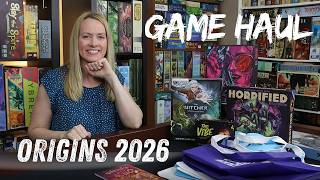
Reviewers did not directly compare Wizard Community College to other titles, but several games they discussed share its cooperative or storytelling appeal. Kimberly, on Tabletop Tolson, described the tabletop roleplaying game Epitaph as a short, celebratory session used for games-based learning, making it a natural next step for players who enjoyed the roleplay element. Kimberly also praised Horrified as a cooperative game where players work together on a shared map to take down monsters, which suits groups that like shared problem solving. On Grant's Gamerecks, Grant Lyon highlighted Mind the Lines, a cooperative drawing game that does not depend on drawing skill, and Hypothetically, a small-box party game that gets everybody talking. Players who enjoy the social, improvised side of Wizard Community College will likely find these titles appealing.
What Reviewers Are Saying
"If you want to use some of your creative brain, then check out Wizard Community College because we're kind of all, you know, magic students that maybe didn't quite cut it and our spells aren't the best and we're not doing the best at stuff."
— Grant Lyon, Grant's Gamerecks
"Everything that you do is some way of like adapting and rolling with the punches and just kind of like addressing the fails and moving forward, which is the kind of climate I want to set up for my students."
— Kimberly, Tabletop Tolson
"This is a game that relies heavily on your willingness to roleplay whether or not you can get your spell successfully cast to defeat whatever challenge has been set before you."
— Paula Deming