




boop Shuffle Deep Dive
What the Community Thinks About boop Shuffle
boop Shuffle divides the board game community along a single fault line: how much randomness they are willing to accept. The game maintains the core spirit of Scott Brady's original Boop, published by Smirk & Dagger Games, but trading wooden meeples for a shared card deck introduces unpredictability that reviewers either embrace or resist. Some see this as a liberating chaos that makes the game more reactive and fun; others view it as a departure that undermines the original's elegant strategy. The consensus: boop Shuffle is worth trying if you value puzzle-like spatial challenges and travel convenience, but it may disappoint players seeking the deterministic, chess-like gameplay of the board version.
Core Mechanics That Define boop Shuffle
Pattern Building
At the heart of boop Shuffle lies the pattern-building challenge: position three of your kittens in a line to graduate them into cats, then align three cats in a row to win the game. Each placement matters because the spatial arrangement creates chain reactions. When a new kitten card is played adjacent to existing pieces, it boops adjacent cats away in a cascade of movement. The goal is to set up this domino effect so that your cats cluster together rather than scatter, while simultaneously pushing your opponent's pieces away from their own winning configurations. Grant Lyon emphasized this puzzly nature, describing the satisfying spatial challenge: as you place cards and everything around it boops out, you must constantly recalculate which positions support future patterns and which lead to chaos.
Multi-Use Cards
The card-based format introduces a second layer of strategy through shared deck composition. Unlike the original Boop where each player controls only their own meeples, boop Shuffle draws from a shuffled pool containing both players' kittens and cats. This randomness is intentional: you might draw your opponent's pieces and must decide whether to play them strategically against their position or hold back. Ryan observed a subtle deck-building dimension, noting that players can intentionally flood the discard pile with their own cats so that when the deck reshuffles, their cards dominate the next draw phase, giving them more pieces on the board. This creates a secondary strategic layer where managing the discard pile composition becomes as important as spatial positioning on the grid itself.
The boop Shuffle Experience
Chaotic Fun
boop Shuffle embraces unpredictability in ways the original does not. The shared deck introduces an element of luck that forces players to adapt their plans mid-turn. Special cards amplify this chaos: wild cats count for both players simultaneously, creating contested pieces that shift advantage moment to moment; scaredy-cats trigger chain reactions when booped, multiplying the distance pieces travel; superstar kittens and cats boop two spaces instead of one, creating longer cascades. Ryan described boop Shuffle as the most chaotic version of boop encountered yet, contrasting it sharply with Boop the Halls or the original Boop, which reward forward planning. Here, the ability to react, to pivot strategy when an unexpected card emerges, matters more than foresight. Players who thrive on dynamic, seat-of-your-pants decision-making find this exhilarating.
Spatial Puzzle
Despite the randomness, boop Shuffle remains deeply puzzly. On every turn, players must visualize how a newly drawn card will cascade through the existing board state. Grant Lyon highlighted the moment of discovery when a placed kitten suddenly lines up three pieces perfectly. The challenge is combinatorial: each placement must satisfy multiple constraints simultaneously, creating patterns for yourself while disrupting an opponent's existing formations. The grid itself becomes the canvas, and the compact neoprene work area that comes with the card box frames the problem space. The puzzle unfolds gradually as pieces accumulate and patterns emerge.
What Makes boop Shuffle Stand Out
A Travel-Friendly Remix
boop Shuffle succeeds as a portable alternative to the original Boop. The card-based format shrinks the footprint dramatically compared to the board version while maintaining all the thematic satisfaction. Ryan and Grant both praised it as a hotel-room game or convention-floor option when shelf space and luggage constraints matter. The box is small enough to pack in a backpack, yet the game unfolds on a grid defined by included neoprene strips that feels spacious during play. For fans already invested in the Boop universe, this card version offers a way to own another iteration without sacrificing portability or storage.
Deck Manipulation as a Subtle Strategy Layer
Unlike the original Boop's fixed setup, boop Shuffle allows players to influence future draws through discard pile management. Ryan observed that the game contains a small deck-builder dynamic: when kittens graduate into cats, those cat cards immediately enter the discard pile and eventually reshuffle back into the deck. Savvy players can intentionally play their own cats early to seed the coming deck with pieces they control. This creates a forward-looking tension between immediate board advantage and future card availability. It is not deckbuilding in the traditional sense, but it gives the game a subtle resource-management layer that rewards medium-term thinking.
Potential Drawbacks
Card Draw Randomness Overwhelms Planning
A primary criticism from The Dice Tower cuts to the core tension in boop Shuffle's design: the card draw introduces enough randomness that strategic planning becomes difficult. In the original Boop, a skilled player can think two or three moves ahead, orchestrating their pieces into position methodically. In boop Shuffle, there is no control over which cards emerge each turn, forcing reaction rather than architecture. The randomness is consistently frustrating: sometimes a player wants to play one of the opponent's pieces to disrupt their setup, but might not draw it. Other turns bring nothing but a player's own pieces when an opponent's card would have been more useful. For players who prize the chess-like certainty of the original, this unpredictability feels like a flaw rather than a feature.
Grid Form Factor Creates Physical Friction
The neoprene grid strips that define the playing area, while compact, introduce a practical problem: cards slide easily across the neoprene surface. Ryan noted that if the table shifts even slightly, pieces slip and shift position, making it difficult to remember exact placements. The farther a card sits from the grid border, the harder it becomes to see where it actually is. This is a minor complaint in isolation, but during a tense endgame where positioning is everything, it can cause confusion or require frequent board reorganization to maintain clarity. The Dice Tower pointed to a related issue: without a fixed grid like the original board, the visual geometry feels messier and less satisfying to work within.
If You Enjoy boop Shuffle
If boop Shuffle's chaotic energy and spatial puzzles appeal, consider exploring its close cousins. Boop, the original, remains the definitive strategic experience: more deterministic, more cerebral, more rewarding for players who excel at forward planning. Boop the Halls offers a seasonal reskin of the same core experience. For those who want boop Shuffle but crave more certainty, these versions restore the chess-like decision tree that Shuffle sacrifices in the name of accessibility and surprise. Conversely, those drawn to Shuffle's unpredictability should lean into games that prioritize reaction and adaptation over rigid strategy, where wild-card elements like scaredy-cats, superstar pieces, and shared deck draws create the same sense that the board is alive and fighting back.
What Reviewers Are Saying
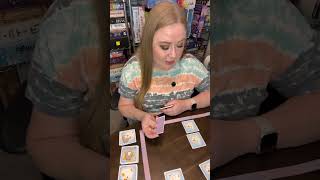
"For what is a deceptively simple two-player game, it is really got some deep strategy and is a lot of fun. So if you have enjoyed Boop or any of its iterations at all, I think you definitely would like to give this one a try because it really does turn it up to that next level."
— Tabletoptiktok
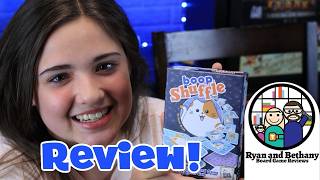
"I feel like this is the most chaotic version of boop I've ever played and I've played a lot of versions of boop. If you're looking for the most strategic versions, I would say boop the halls or boop are excellent choices. If you're looking for a little bit more chaos in your game, a little less certainty, I would say that boop shuffle is definitely the one that's going to give you the most ability to react to what's happening."
— Ryan and Bethany Board Game Reviews
"I don't like Boop Shuffle. I want to be clear, I really do like Boop. I think Boop is a fun strategic game as you place these cats around and move them. But the reason I'm not a big fan of this Boop Shuffle is I think it's too random."
— The Dice Tower