
Game Info
Year
2026
Players
1-4
Age
Playtime
Publisher
OtherWorlds
Collection
Ratings
Creator Score
Mechanic profile
Waiting on more creator content
Vibe profile
Waiting on more creator content
Description
A story-driven multiplayer gamebook mixing RPG and board game elements with a 30-hour campaign of scratch-off map exploration and tactical combat for 1 to 4 players
Ask a Rules Question
All mentions
Browse transcript mentions, sentiments, pros/cons, mechanics, topics, quotes, and references.
Total mentions: 1
This page: 1
Sentiment:
pos 1 ·
mix 0 ·
neu 0 ·
neg 0
Showing 1–1 of 1
Video 04Csw7gmUwk
ON TABLE Board Games Discussion at 0:00 sentiment: positive
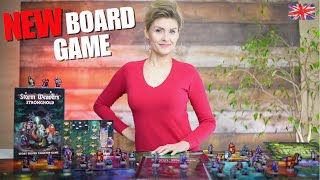
Click to watch at 0:00 · YouTube ↗
Overall sentiment (raw)
positive
Pros
- Rich narrative-driven exploration with a varied map and numerous locations
- Three distinct hero classes with unique sphere-card sets
- Tactical combat that involves terrain, objectives, and enemy variety
Cons
- Prototype components and map; final visuals may differ
- High complexity and potential learning curve for newcomers
Thematic elements
- Exploration, resilience, and heroic development within a narrative-driven dungeon-crawl setting.
- A dwarven fortress and adjoining cave network in a mythic land called G, after a devastating storm.
- Paragraph-guided exploration with read-ahead mapping and paragraph-based storytelling.
Comparison games
none
Mechanics (from transcript analysis)
- Attack/defense stats from decks — Enemies have stats (e.g., shield/defense, health) drawn from attack decks; players respond with actions and card play.
- Combat maps and terrain effects — Different map types, terrain features, and hazards affect combat and movement.
- Combat: Deck/Hand — Enemies have stats (e.g., shield/defense, health) drawn from attack decks; players respond with actions and card play.
- Fate points and resource management — Fate points are earned as rewards and spent to improve spheres or pay action costs.
- Hero sphere cards — Each hero uses a designated set of sphere cards that define statistics and specialties; actions require spending these cards.
- movement and pushing — Map zones, push values, and terrain modifiers influence hero movement.
- Narrative Choice — Players read map paragraphs to determine outcomes and new locations to explore.
- Paragraph-based exploration — Players read map paragraphs to determine outcomes and new locations to explore.
- refresh phase — Exhausted sphere cards refresh and return to hand after the refresh phase.
- Tests resolved with sphere cards — Tests require shuffling and drawing two face-down cards from the tested sphere and comparing total power to a difficulty.
- Variable Map — Different map types, terrain features, and hazards affect combat and movement.
- Variable Phase Order — Exhausted sphere cards refresh and return to hand after the refresh phase.
Video topics + discussion points
No key topics recorded for this video.
Quotes (from this video)
- "the final version of this game will be entirely a scratchboard"
- "this map depicts the area around the fortres"
- "and as you can see it's a lot of different locations"
References (from this video)
No references stored for this video.
Transcript Navigation
Showing 1–1 of 1