


Meister Makatsu Deep Dive
What the Community Thinks About Meister Makatsu
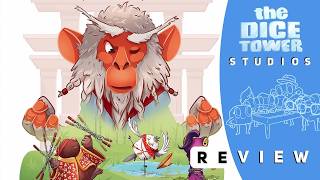
The Dice Tower presents Meister Makatsu as a small card game that gets more interesting than its rulebook suggests. In the featured review, Mike Delisio and Chris Yee each gave it an 8 out of 10, and the same score returned in the channel's week-in-review roundup. Both reviewers acknowledge that the game can look thin on first reading. Chris Yee described how people often read the rules and keep asking "where's the game?", and Chris Yee's answer was that the game is there, just not in the rules themselves.
The game is a Reiner Knizia design published in Germany by AMIGO, and the reviewers note that a North American printing called Dojo carries the same theme. Both names describe a dojo owner training ninja students to impress a demanding master. The featured review also points out that the game appeared on the recommended list for the Spiel des Jahres, which was part of the reason the channel chose to review it now.
Chris Yee said they taught the game to a group the night before, and the table began reacting to every played card with a shared "hmm." The reviewers treat that reaction as a sign of how much tension a single card can create, even in a game with very few rules.
Core Mechanics That Define Meister Makatsu
Each player shuffles an identical deck of cards in three colors, yellow, purple and blue, numbered one through eight. Players draw four cards, play two of them each hand, and set the other two aside. The reviewers stress that this is not a trick-taking game, since a player can play any card regardless of the suit already on the table. Once everyone has played, the highest card of each suit that was played triggers that suit's effect. Purple takes one chip and a Meister Makatsu token, blue takes one token, and yellow takes two tokens. The chips represent penalty points, and the lowest total at the end of the game wins.
Hand Management With a Reserve
The most-discussed mechanic is the reserve. Chris Yee called it the feature that makes a simple game compelling: "You're drawing four cards but you're only going to be playing two and you're setting aside the other two as a reserve. That is interesting to me because it creates two levels of decision making." Players must decide what to play now and also which cards to keep for later rounds. The set-aside cards are turned sideways, reshuffled, and become the hand for the next round, while the cards played in the earlier round are removed from the game for good.
Drafting Cards to Your Future Self
Because the reserve shapes what you will hold later, the reviewers describe the game as a kind of drafting. Chris Yee said it almost feels like a card drafting game where you pick one card and pass the rest to your future self. The rising stakes support that feeling. Most hands are played in the first round, fewer in the second, and only two in the last, while the chips grow in value from one point to two and then three. Chris Yee noted that this pushes players to take low-value tokens early so they do not have to take expensive penalty chips later.
The Meister Makatsu Experience
Reading the Table
The reviewers describe the game less as a puzzle and more as a conversation with the people across from you. Mike Delisio said the rules get out of the way and the play turns into trying to get into the other players' heads and figure out what they are trying to do. Chris Yee explained that a single card played on the table forces each person to weigh options, such as whether to play underneath it, take points, or play above it. The player count changes the feel. At two players, Chris Yee said you are directly trying to outthink your opponent, and penalty points pile up quickly because there are only two people to share them. With more players, there are more chances to slip under the radar.
Small Psychological Rewards
Beyond strategy, the reviewers point to moments that feel good in a way the math does not explain. Chris Yee said playing one card directly below an opponent's card is not mathematically better than playing a card two or three ranks lower, yet it feels better. Chris Yee described the game as one that lets those small human moments shine. Penalty points also carry emotional weight, and Chris Yee said the game makes players feel the "penalty bad" instinct strongly, which Chris Yee found delightful.
What Makes Meister Makatsu Stand Out
Simple Rules With Real Decisions
The reviewers compare Meister Makatsu to other light card games and place it above them. Chris Yee said the game has more going on than Llama, although it would be hard for a game to have less going on than Llama. Chris Yee added that Meister Makatsu is, to them, a much better version of Uno. The comparison underlines the reviewers' view that the game delivers meaningful choices without a heavy rulebook. Mike Delisio described it as a very simple game in which the rules are remarkably simple, yet the play still rewards careful thought.
Holding Up Across Player Counts
The game supports two to six players, and the reviewers were pleasantly surprised by how it performed at each size. Both hosts said they had expected it to be weaker at lower player counts, but Chris Yee found it felt like a solid two-player game. At five players, the reviewers reported that it felt great, and they assumed six would feel similar. Chris Yee said the experience feels slightly different at each count, with a different takeaway, but never bad.
Potential Drawbacks
Limited Decision Space
The featured review is clear that the decision points are well built but not especially deep. Chris Yee and Mike Delisio agreed the decision points are great but somewhat limited, which is part of why the game stopped just short of excellent for them. Both reviewers rated it an 8 rather than higher, and the review describes the result as a light, fun game rather than a heavy one.
Uncertain Replay Value
Mike Delisio admitted being not sure about the game's replay value over the long term. Mike Delisio noted still playing it after owning it for about a year and looking forward to teaching it to new players, which Mike Delisio saw as a positive sign. Still, the reviewers did not claim the game will sustain repeated play indefinitely, and they were careful to say the verdict on longevity is open.
If You Enjoy Meister Makatsu
Based on the reviewers' comparisons, these titles are the closest reference points:
- Dojo: the North American printing of the same game, sharing its theme of dojo owners training ninjas.
- Llama: another very simple card game that the reviewers say has less going on than Meister Makatsu.
- Uno: the card game that the reviewers say Meister Makatsu improves on, with more meaningful choices and a deeper feel.
What Reviewers Are Saying
"You're drawing four cards but you're only going to be playing two and you're setting aside the other two as a reserve. That is interesting to me because it creates two levels of decision making."
— The Dice Tower
"And that's really compelling. There's something psychological in the little brain of ours that says, Penalty bad. You know what I mean? And And you really feel it in this game, which is I think absolutely delightful."
— The Dice Tower
"Very simple game, remarkably simple game. You're playing two cards every hand, and then just three different kinds of card suits that have a very simple trigger action that happens when the highest card of it is played. It is another of the games that this designer does so much where the rules get out of the way, and it just turns into this kind of trying to get into the other players' heads and figure out what they're doing, what they're trying to do."
— The Dice Tower