



Legendary: A DC Deck-Building Game Deep Dive
What the Community Thinks About Legendary: A DC Deck-Building Game
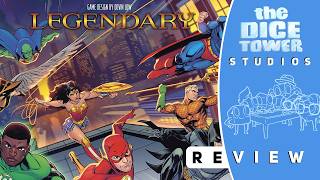
Reviewers agree that Legendary: A DC Deck-Building Game is a well-built package that carries the Legendary deck-building system into the DC Comics universe. Upper Deck's release is treated as a sibling of Marvel Legendary rather than a copy of it. The panel on The Dice Tower called the DC version a deliberate step up in complexity, with more references, more mechanisms, and a harder opening than its Marvel counterpart. That panel scored the game a 9, while a host on The Dice Tower Week in Review gave it an 8.5 and described the difficulty as the main obstacle.
The points of agreement are the theme and the cast. Reviewers consistently say the characters feel like the heroes they know, and that the villains and masterminds, including Lex Luthor and the Joker, are a strong draw. The Discriminating Gamer, who scored it a nine out of 10, said they could not remember the last time they were as excited about a Legendary release.
The disagreements center on difficulty and pacing. The Dice Tower's main panel felt the game starts at a hard level before any expansions add pressure, and one panelist said the game would have been better served by a gentler entry point that builds toward this one. Others argued that a harder game is exactly what separates it from a reskin. The Discriminating Gamer had the most trouble with the rough early turns, particularly in a four-player game where their group could not afford good cards.
Core Mechanics That Define Legendary: A DC Deck-Building Game
Hope and Fear Track
The most discussed addition is the hope and fear track, a new element in this edition of Legendary. Cards that inspire hope or inspire fear move a marker along the track, and the ends of the track trigger effects. At the hope end, inspiring hope draws a card and resets the marker, while at the fear end, inspiring fear forces the player to discard. Players can also spend three attack to fight crime, which nudges the marker one step toward hope or fear without crossing either end.
Reviewers see the track as a way to keep leftover resources useful. The Dice Tower's main review said it "eliminates those wasted turns," since a player with attack but no villain to hit can still spend it on the track. The same review also noted that the track can become a distraction in the middle game, when the marker must be kept moving or the villains become too hard. The Dice Tower's main panel offered Starfire as an example of how the track rewards attention, since one of her cards gives a benefit based on where the marker sits, whether that is money or attack.
Mastermind, Schemes, and the Villain Deck
The second system that defines play is the pairing of a mastermind and a scheme. The scheme sets the conditions of the game, while the mastermind is the threat the team must defeat by hitting it four times. The Discriminating Gamer described a scheme that asks players to keep villains from escaping the city, and a Joker master strike that forces a player to draw extra cards and then discard down. The Discriminating Gamer also praised Captain Cold, whose master strike freezes heroes in the HQ and forces players to spend attack to recover them. Villains that escape the city feed the scheme, so every turn involves a balance between clearing threats and advancing toward the mastermind.
The Legendary: A DC Deck-Building Game Experience
Thematic Immersion
Reviewers describe a strong sense of playing as the characters themselves. The Discriminating Gamer praised how the designers tailor cards to specific heroes, and called the result "so much fun to play" in the Legendary system. Dice Tower panelists pointed to moments where the mechanics echo the comics, such as Superman entering play and pushing the hope track upward, which one panelist called "thematic." The Discriminating Gamer added that Batman's gadget-driven card draw and Wonder Woman's ability to answer master strikes make the heroes feel distinct from one another.
Tense, Punishing Pressure
The other prominent feeling is tension. Reviewers describe a middle game that must be survived, where the villain deck grows faster than the player can recruit. The Dice Tower's main review said that a player who fails to ramp up fast enough has lost, and that a strong late-game turn can make the team feel unstoppable. The Discriminating Gamer's most memorable game came down to the final turn, and that kind of finish is what they said they enjoy most. The pressure is not universally welcome, though, and some reviewers describe it as wearing on them over repeated sessions.
What Makes Legendary: A DC Deck-Building Game Stand Out
Character-Specific Card Design
Reviewers praise the way individual heroes receive their own card abilities rather than generic recruit and attack effects. The Discriminating Gamer singled out Zatana, whose best card scales with recruit and attack in ways that can add up to the equivalent of ten attack. The Discriminating Gamer also noted that Martian Manhunter's abilities trigger when a player collects three or more classes, which rewards deliberate deck construction. The Dice Tower's main review described the character strengths as coming through strongly, and said the cast is one of the game's chief strengths.
Transforming Heroes and Leveled-Up Cards
Several heroes can be upgraded mid-game by knocking out a card and replacing it with an enhanced version. The Discriminating Gamer gave examples of Bruce Wayne becoming the Dark Knight, Clark Kent becoming Superman, and Barry Allen becoming the Fastest Man Alive. The Dice Tower's main panel called the transforming card a satisfying reward for a well-executed combo, saying that a player who pulls off a difficult sequence feels they have earned it. Reviewers see these upgrades as a clear reason to plan a deck around specific heroes.
Potential Drawbacks
Discard-Based Difficulty
The most consistent criticism concerns the way the game raises difficulty. Several enemies force players to discard from hand, and the Dice Tower's main panel said this frustrates them because it makes good hands feel wasted. The Week in Review host also said that the discard-heavy design is the part of the DC game they like least. The panel added that a hand-reduction effect can undermine a strong turn, leaving players with less to do than they planned for. Some reviewers accept discard pressure as part of the challenge, but the criticism is that it can make a well-built turn feel like a setback.
Steep Early Difficulty and Downtime
Reviewers also warn that the game can be hard to enjoy at higher player counts. The Discriminating Gamer said that three players is their preferred cap for Legendary, since four or five players introduce downtime and can lead to a rough opening. The Dice Tower's main review said the game ramps up difficulty immediately out of the box. Smaller criticisms include the bystander deck, where one panelist disliked the small set of special bystander cards, and the generic dividers in the box.
If You Enjoy Legendary: A DC Deck-Building Game
Players who enjoy Legendary: A DC Deck-Building Game's recruit and attack core will find a familiar rhythm in Marvel Legendary. The Dice Tower's panel recommended choosing between the two based on the heroes you care about, and noted that Marvel Legendary is the easier entry point. Players who enjoy the hope and fear track's push and pull will find a similar tension in King of Tokyo, which a panelist compared directly to the wicked track in that game.
Fans who want a different take on DC heroes can look to Cryptozoic's DC Deck Building Game, which the Discriminating Gamer described as a fantastic game in its own right, or to Whiz Kids' DC Forever, which the reviewer called a fun alternative. Players who want a more plug-and-play experience than the Legendary core will find Legendary Encounters closer to that goal, since the Dice Tower's main panel described those games as more plug-and-play.
What Reviewers Are Saying
"I mean, Zatana is freaking awesome. But they're all great."
— The Discriminating Gamer
"It makes the game less fun. I have this great hand of cards, discard two. I have this good hand of cards, discard one. Like for goodness sake, just let me play a hand of cards for once."
— The Dice Tower
"It's really robust and engaging and fun. There's a great cast of characters in there, great villains."
— The Dice Tower