



Mind Sweeper Deep Dive
What the Community Thinks About Mind Sweeper
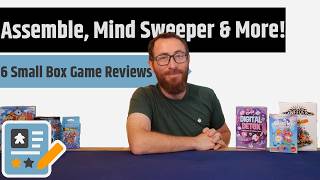
Reviewers who have covered Mind Sweeper generally land in the middle. It is entertaining enough to play, but rarely the game people reach for again. The BoardGameCo small box roundup from Gen Con described it as a decently fun time that does not wow. That same review placed the game in the gateway category, calling it a strong icebreaker that works for kids and families. The Dice Tower covered it in its Gen Con news segment as a party game from Floodgate Games, and the hosts used the segment to joke that the name probably came first in development. Across the BoardGameCo videos, the reviewer returned to the game after a demo and a full rules read, and the consistent verdict was that it works as a light social game more than as a strategic one.
Core Mechanics That Define Mind Sweeper
Sweep-and-Clue Tokens
The defining mechanic is the clue phase. Each round, one player learns a secret word and has one minute to communicate it using a broom. As The Dice Tower described it, the clue giver sweeps tokens on the table into arrangements that will lead teammates to the answer. The BoardGameCo Gen Con review demonstrated the flow, with the clue giver pushing tokens into piles and speaking freely the whole time. The reviewer explained that the broom is a tool for painting a picture of the target, and that there is no limit on how many words the clue giver may say. That open-ended talking, combined with a short clock, is what makes the table feel busy and loud. Floodgate Games publishes the base game, and reviewers noted that a Deep Clean expansion was also being shown at Gen Con.
Cooperative Lineup Guessing
The second mechanic governs how the team wins. Teammates shout guesses during the clue phase, and if anyone says the secret keyword, the group wins immediately because the game is cooperative. If the keyword is never spoken, the clue giver reveals a lineup of six candidate words, and the group has another 60 seconds to choose the correct one. In the demonstration covered by BoardGameCo, the candidates were cabin, log, fireplace, hearth, home, and woods. The reviewer pointed out that the lineup is deliberately built from overlapping meanings, so the team cannot rule out choices by picking unrelated categories. The answer in that round was home, which the reviewer connected to the pyramids and castle the group had already tossed onto the table as clues.
The Mind Sweeper Experience
Chaotic Table Energy
The most vivid part of the game for reviewers is how messy it gets. BoardGameCo chose to show the game in its roundup specifically because of "how crazy and chaotic this one can be," and the reviewer sweeps a pile of objects across the table in the opening seconds. Players shout words over one another while a one-minute timer runs, then pivot to a second minute of cross-table guessing. Reviewers describe the result as a frantic burst of activity rather than a slow puzzle, which suits groups that want to laugh and move around.
Easygoing Icebreaker Warmth
Reviewers consistently frame the feeling of play as warm and low-pressure. Because a team can keep guessing for as long as the clock allows, no single player is eliminated or left waiting for a turn. The BoardGameCo review called the game good for kids and families, and the reviewer valued it as an icebreaker. The tone is friendly rather than competitive, although the same reviewer cautioned that this atmosphere is not the same as the tense hidden-information play found in some other social games.
What Makes Mind Sweeper Stand Out
A Tactile Way to Give Clues
Reviewers highlight the physical act of clue giving as the feature that sets Mind Sweeper apart. Instead of only speaking, the clue giver rearranges tokens with a small broom, and that shifting visual field gives teammates something concrete to react to. The Dice Tower summary captures the core idea of one player sweeping tokens into clues while the others guess, and the BoardGameCo demonstration shows how the physical arrangement and the spoken clues reinforce each other during the same minute.
Forgiving Guessing Rules
The second feature reviewers praise is how forgiving the guessing rules are. The clue giver is not limited in the number of words, and the team is not limited in the number of guesses. The BoardGameCo reviewer explained that players can keep guessing until the right card is reached, which keeps the group engaged even when early guesses miss. That openness is a large part of why reviewers recommend the game for mixed-age tables.
Potential Drawbacks
Familiar Design and a Name-First Feel
Some reviewers felt the concept lacks novelty. On The Dice Tower, the hosts noted that games that group tokens or cards into associations are common, and they questioned whether the name drove the design more than the mechanics did. BoardGameCo also described Mind Sweeper as a word association game, placing it within a familiar category rather than presenting a new approach to clue giving. For players who already own several word or clue games, the reviewers suggested the game may not stand out.
Limited Depth for Experienced Players
The more significant criticism is that Mind Sweeper offers less depth than the hidden-communication games reviewers compare it against. The BoardGameCo reviewer said the game was entertaining but would not be pulled out for personal play, and described it as a game that does not spark joy for them personally. The BoardGameCo vlog reached a similar conclusion after a demo and a full rules read, noting that the rule book is quick and easy and that there was little to learn past the demo. Reviewers therefore see the game as best suited to groups that want a quick, social round rather than an experienced table looking for strategic tension.
If You Enjoy Mind Sweeper
Reviewers did not name a direct comparison for Mind Sweeper in these discussions, so the most useful recommendations follow the shared experience. Players who enjoy the broom-and-clue format and the rapid team guessing should look for other party games built around one clue giver and a group that guesses in a short time window, particularly ones with light rules that can be taught in a few minutes. The BoardGameCo vlog pointed to Ward Wipe, designed by Peter Hayward, as a word association game where the goal is to clear the table by matching the right cards. The same vlog described Mind the Lines from Ravensburger as a simple party game with a degree of teamwork, which makes it another good option for groups that want low-stakes cooperative drawing and guessing.
What Reviewers Are Saying
"Overall, Mind Sweeper is a decently fun time, but not being a game that wows me. I think this is a great icebreaker, a great gateway game, good for kids and families as well."
— Alex Radcliffe, BoardGameCo
"So, you are searching for a word and each round one person knows the word and has one minute to sweep with a little tiny broom tokens on the table into clues that will get people to guess the correct answer."
— The Dice Tower
"I think there are a lot of games that go for this gateway icebreaker vibe, and Mind Sweeper, while being entertaining enough, isn't one I would pull out."
— Alex Radcliffe, BoardGameCo