
Game Info
Year
2026
Players
1
Age
14+
Playtime
35 min
Publisher
Chip Theory Games
Collection
Ratings
Creator Score
Mechanic profile
Waiting on more creator content
Vibe profile
Waiting on more creator content
Description
A solo scenario deck for 20 Strong where you defend the cursed lord's castle from attackers
Featured Videos

Ask a Rules Question
All mentions
Browse transcript mentions, sentiments, pros/cons, mechanics, topics, quotes, and references.
Total mentions: 2
This page: 2
Sentiment:
pos 0 ·
mix 2 ·
neu 0 ·
neg 0
Showing 1–2 of 2
Video Sr-pKt8K5Kg
Board Games UnLocked Review at 0:16 sentiment: mixed
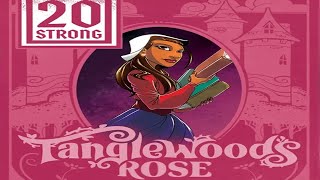
Click to watch at 0:16 · YouTube ↗
Overall sentiment (raw)
mixed
Pros
- More straightforward than other Tangle Wood versions
- Hits a good playtime sweet spot (30-40 minutes)
- Problems from other Tangle Wood versions are alleviated
Cons
- Host generally dislikes the Tangle Wood system
- Dice rolls are too dependent for success
- Missing the 'fable system' from other versions
- Removed the merchant system
- Upgraded items can be worse than one-time use
- Keywords and special enemy effects make the game convoluted
- Bosses that go off to the side are disliked
- General feeling of 'whatever' while playing
Thematic elements
- Beauty and the Beast
Comparison games
- 20 Strong Red
- 20 Strong Gold
- 20 Strong White
- Solar Sentinels
- Hop Lamachas Too Me Bones
Mechanics (from transcript analysis)
- Daylight Cycle — A minimal daylight cycle affects enemies by giving them armor at night.
- Deck building (implied) — The game involves going through an entire deck of enemies.
- Deployment phase — Players can choose to deploy enemies, which has trade-offs like recovering dice or gaining rewards at the cost of time.
- Dice Rolling — Success is heavily reliant on the outcome of dice rolls, which are used to attack enemies.
- Gold System — Gold is accumulated and can be spent on upgrading stats, items, or removing enemies.
- Item Upgrades — Items can be upgraded using gold, though the effectiveness of upgrades is questioned.
- tower defense — Enemies come down lanes and the player defends the castle.
Video topics + discussion points
No key topics recorded for this video.
Quotes (from this video)
- Out of all four of the Tinglewood series, I think this one is the most straightforward.
- The formula of the 20 strong system literally just kind of feels very meta.
- I don't really have many negatives about the the actual rose system except that it is just a tower defense. But my problems with the other versions are alleviated in this one. But I kind of miss that that fable system that was in the other three, which is not here at all.
- So, on a scale of 1 to 10, I'm gonna give Tangle Woods Rose six.
References (from this video)
No references stored for this video.
Video wZbveF9ZBOw
Board Games UnLocked Top List at 9:59 sentiment: mixed

Click to watch at 9:59 · YouTube ↗
Overall sentiment (raw)
mixed
Pros
- Handles player agency more effectively when swarmed by enemies.
- Simpler knight system compared to other Tangle Woods games.
- Timer element creates stress.
Cons
- Can feel extremely repetitive (sy).
- Lacks innovation compared to other Tangle Wood systems.
- Bosses could be annoying if they came out at the wrong time.
- Bosses could have global effects that were difficult to counter due to range limitations.
Thematic elements
- Tower defense version
Comparison games
none
Mechanics (from transcript analysis)
- Dice exhaustion for movement — Can exhaust a die to immediately move to another area if there aren't enough enemies in the current row.
- hero movement — The hero card can move between the four columns.
- Range tied to strategy — The hero's strategy is tied to their range, determining how far they can hit.
- timer element — A timer dictates how much time you have to get through the entire deck of enemies.
- tower defense — Played as a tower defense game with four columns and advancing enemies.
Video topics + discussion points
No key topics recorded for this video.
Quotes (from this video)
- Hofflamus Vtorum. This one gets a lot of credit because at the time I played this, I did not like Hoffamachus Vtorum as a game.
- All that being said, the 20 strong version I did enjoy because I already knew that the system was a push your luck element and this kind of it's also not 8 hours long.
- So, if you like the idea of Hoplamakus Victorium, but don't have a couple hundred bucks to shell out um or you don't have the time, let's say you do own it, but you don't have the time to actually sit down and commit to a, you know, eight hour campaign. Well, then play this.
- Cloudspire came around and I was like, oh no, this system is good when you take it back to its roots and you don't add a bunch of [ __ ] that makes it way too long and way too random and you streamline it.
- my favorite one of 20 Strong is the original Solar Sentinels
- This I feel like is obviously it's it's just the OG. And I think it does it best. It it fits this 20 strong system the best.
- And in and of itself just makes this one my favorite to play.
References (from this video)
No references stored for this video.
Transcript Navigation
Showing 1–2 of 2