




Atlanteum Deep Dive
What the Community Thinks About Atlanteum
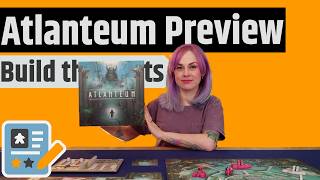
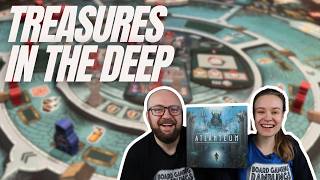
Reviewers see Atlanteum as a tightly interactive rondel game, and their opinions split over whether that interaction carries the whole design. Rahdo of Rahdo Runs Through was enthusiastic. Rahdo and Jen placed it second among that month's games and tied the praise to Bad Comet's track record. Rahdo gave only a brief description of the rondel and diver systems on camera, saving the detailed breakdown for a separate sponsored run-through still to come. Board Game Coach gave a sponsored preview of a prototype, with Professor Meg walking through the rules and calling the game a puzzle of competing choices, while noting that rules and components could still change. Board Gaming Ramblings was more reserved. Johannes and Senna praised the timing and interaction on the board but found the cards unexciting and the game short on progression. The crowdfunding roundup on Tantrum House mentioned Atlanteum only as an upcoming Bad Comet Games launch, describing an expedition for an artifact that is worth more in your hands or in the museum.
Core Mechanics That Define Atlanteum
Rondel Submarine Movement and Oxygen Pricing
On a turn, a player moves one of their submarines one or two spaces around the rondel and takes the action on the space it lands on. Board Game Coach notes that oxygen can buy extra movement, and Rahdo describes Bad Comet's design as one where landing in a crowded area costs oxygen. The cost scales with the number of submarines already there, so timing becomes the core decision. Johannes explains the logic: you might wait for another player to move so a space becomes cheaper, or move in first because more players are heading to the same spot and the price will rise. Board Gaming Ramblings also points out that submarines can recall their divers only once they are empty, which ties movement to resource planning.
Private Collection Versus Museum Donation
Cards from the market can be played two ways. Tucked into a player's private collection, a card provides its ability and fewer tags. Donated to the museum, it adds its tags to the museum tracks and covers a box with a plaque for a bonus. Board Game Coach calls this the big decision of the game, because donating raises the end game scoring for chosen tags while keeping the bonus. Board Gaming Ramblings adds that donating also lets a player avoid boosting the symbols that opponents are already scoring well with. Rahdo describes these cards as multi-use, forcing a choice between a personal ability and a donation that chases victory points.
The Atlanteum Experience
A Tense Push and Pull Over Oxygen
Oxygen is the resource reviewers return to most often. Board Gaming Ramblings describes it as "a push and pull of this oxygen resource that you need to manage throughout the whole game," since it pays for crowded spaces, boosts actions, and powers divers. Board Game Coach stresses that oxygen governs whether a strong move is affordable at all, and that players constantly weigh when to gain it and when to spend it. That tension gives each turn a sense of urgency that the reviewers found engaging.
Exploring Sunken Ruins on a Quirky Rondel
Rahdo frames the game as a search through the "sunken ruins of Atlantis," with each player's submarines circling the rondel and sending divers into the depths. Board Gaming Ramblings found the theme unusual because the rondel forces submarines to travel in one direction, and Johannes joked that a submarine may not be able to reverse at all. Johannes admits the rondel is "very thematic," which makes the rule feel like part of the setting rather than an abstraction. The fiction is light, but the image of divers leaving the submarine to explore the inner rondel holds up.
What Makes Atlanteum Stand Out
Temple Races With Scoring Multipliers
Board Game Coach explains that pillars must be repaired before they can be placed in one of three temples, with bonuses along the way. A temple scores based on its condition, multiplied by a player's placement among contributors. Placing first earns the highest multiplier, which Board Game Coach illustrates as three times the score, while third place earns only one times. Scores are capped, but first place also denies rivals the top points. Johannes notes that the bonus chosen when placing a pillar matters, since the player furthest left wins ties. This race keeps players contesting temples even when they are not chasing them directly.
Divers, Recall, and Bonus Actions
Rahdo highlights the diver system as a standout. After a submarine acts, its diver can leave for the inner rondel and take a bonus action there. When a submarine is empty, the player must recall its divers, and any recall cards trigger at that moment. Rahdo also notes that a blocked spot keeps other players out until their divers return, and that a submarine can pay for an action with oxygen sent down from the surface. These layers make a single turn feel like several decisions at once.
Potential Drawbacks
Repetitive Cards With No Engine Building
Johannes and Senna offered the sharpest criticism. Most cards in the deck are instant cards that do a single thing and are then discarded, which leaves little sense of growth. Johannes says the game does not ramp up, so the rhythm becomes "get the things, do the things, and repeat." Neither reviewer felt that cards created the kind of "I really have to play this card" excitement that engine-building games produce. Johannes also says the cards are good enough to help but rarely exciting.
Recall Cards That Feel Less Impactful
Recall cards are meant to reward a recall-focused plan, but Board Gaming Ramblings found that strategy feels random. Recall only happens when a submarine is empty, so players cannot recall early the way they can in Wondrous Creatures. A single recall card often plays more like an instant card than a strategic engine. Johannes suggests the design may not intend heavy recall strategy at all, which leaves these cards underpowered for players who want them.
If You Enjoy Atlanteum
Board Gaming Ramblings directly compares Atlanteum to Wondrous Creatures. Johannes says the games feel very different despite sharing a publisher, and that recall works more freely in Wondrous Creatures. Players who want a recall-based plan should look there. Rahdo also points to Bad Comet's broader catalog, including Life of Amazonia, as proof the studio consistently delivers strong production and design, so players won over by Atlanteum's presentation have reason to trust the publisher's other titles.
What Reviewers Are Saying
"Atlanteum is going to be a puzzle for players to figure out because you're going to be building out your tableau where you're constantly choosing between playing cards into your private collection and donating them."
— Board Game Coach
"Jen and I loved it like we've loved all their games. We are searching through the sunken ruins of Atlantis. We found it, and it's a rondel game where we each have little submarines that go clockwise around the rondel."
— Rahdo Runs Through
"I like that it is interaction, where do I want to wait for you to move before I go somewhere to make it cheaper for me, or do I think that more people will move into the space that I'm wanting to move to? Then I need to act now so that it doesn't cost more oxygen."
— Board Gaming Ramblings