Learn to Play: Patchwork
Games in This Video
1 game is featured in this video — it unlocks as you watch.
Transcript
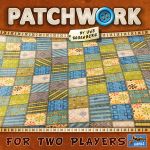
Welcome. Today we're going to be taking a look at Patchwork, a two-player tile placement game where you take the role of patchwork quilter filling in your quilt board or your player board with patch tiles gaining and spending buttons, which is the currency for the game, all while going down a time track trying to become the best patchwork quilter. How do you become the best patchwork quilter and win the game? By having the most points at the end of the game through your buttons. If you are the first player to fill in a 7 by 7 portion of your quilt board or your player board, you will gain seven points. And then for each empty spot on your quilt board or your player board at the end of the game, you lose two points.
Whoever has the most points at the end of the game wins and is the best patchwork quilter. Now that we know what the winning condition is, let's take a look at the components, set up, and how a turn works in Patchwork. Now let's look at the components for Patchwork. You have the main game board or your time board, your two quilt boards or your player boards, you have your buttons, your patch tiles, your five special patch tiles, your 7 by 7 special tile, your neutral token, and your two time tokens. Now let's take a look at the setup for Patchwork. Setup takes seven steps. Step one, each player is going to take a quilt board, a time token of that same color, and five
Step two, place the time board in the play center of the play area. The time board does have two sides, so you can choose which side you'd like to play with for this game. Step three is to choose a starting player, which is the last person to touch a needle, and then place the time tokens on the start location on the time board. So, in this case, let's say that yellow is the first player.
Step four is to place your patch tiles randomly around the time board. Step five is to place the neutral token in front of the smallest tile going clockwise. So, since this is the smallest tile, we would go clockwise in front of that tile. Step six is to set aside your 7 by 7 special tile, and to create a pool of buttons.
Step seven is to place the special patches on the time board. Now, let's look at how a turn works in Patchwork. Turns are not necessarily alternating. Whoever is last on the time track, or on top if they're in the same location, takes their turn. Turns consist of either advancing your time token to receive buttons, or taking and placing a patch tile. If you choose to advance your time token to receive buttons, you would move your time token one space in front of the other player, and receive the number of buttons equal to the number of spaces that you moved. So, let's say that yellow wants to advance their time token to receive buttons on their first turn. They would move their time token one space in front of the other player, which is just one space, and then they would only receive one button.
Now, if green wanted to do the same thing, they would move their time token one space in front of yellow. And because they moved two spaces, they would receive two buttons. If you want to take and place a patch tile, you must follow five steps. Step one is to choose a patch within three of the neutral token going clockwise. So, let's say that yellow wants to choose this tile. Step two is to move the neutral token to mark that location.
Step three is to pay the buttons on the patch tile. So, in this case, three. Step four is to place it on your quilt board. Step five is to move the time token the indicated number on that patch tile. So, in this case, three.
When a token moves past a special patch on the time board, that player will take and place the patch on their quilt board. If a player passes a button on the time board, you would gain buttons equal to the number of buttons on your quilt. So, if yellow went one more space, passing that button, they would gain one for the button on their quilt board. The first player to complete a 7 by 7 portion of their quilt board would gain the 7 by 7 special tile. Turns will continue until both players have their time track tokens at the end of the time track.
Then we would go into the final scoring, which there are three steps. Step one is to count your buttons. One button is equal to one point. Step two is to add in the seven points if you have the 7 by 7 special tile. And step three is to subtract two points for each empty square on your quilt board. And after the final scoring, whoever has the most points is the best patchwork quilter and wins Patchwork.