Shallow Sea - Board Game Review - Gaming With The Fishes
Games in This Video
1 game is featured in this video — it unlocks as you watch.
Transcript
Hi everyone, I'm Luke Hector and this is the Broken Mele, the show where I devote my time to ranting and raving about board games, but usually more the latter part. Nice little quick review here for Shallow Sea, as well as his expansion because it won't take long to talk about it. This is another game from Bad Comet. And if you've seen my videos in the last year, you'll know that I've um started off on kind of a good front with uh the Bad Comet games. We got Life for the Amazonia and Wonders Creatures on my shelf. Amazonia was worth an eight out of 10. Wondrous Creatures was a nine out of 10, both of them. Check out those full reviews by all means. There's pros and cons to both of them. But I even played Wondrous Creatures last night, in fact, as I record this video. So, yeah, these two are still going very strong for me. demand suddenly skyrocketed. You all saw it.
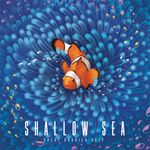
Actually, I was kind of intrigued to get another one from them, Shallow Sea, Great Barrier Reef, which is meant to be a lighter affair than those two put together. But other than that, I knew nothing about this game going in. This one I went in pretty much entirely blind. So, thank you for the review, Copy. Let's tell it how it is.
Do it. Do it. Do it. Do it.
Shallow Sea borrows a lot of its rules set from games such as Cascadia, Virgin, and the like. And yes, as I explain the rules, you're going to wonder why Cascadia doesn't sort of come along and take it to court because the rules are very similar. The idea is that you are placing tiles on your player board such as coral tiles and sea life tiles. The coral tiles basically come with victory points as well as colors around the edge. The sea life tiles come with victory point bonuses which are dependent on how you place these coral tiles and these, you know, really cool colored fish around said tiles. It is very much a kind of spatial awareness puzzle. Now, the idea is is that you will have these various tiles laid out in such a way that you have a coral tile, a fish, and a sea life tile. Much like in Cascadia, you'll have four or five columns of these. And you choose one of the columns to interact with and take the fish as well as either the coral tile or the sea life tile. And you will have a currency of sea shells during a game, which you can spend much like the pine cones in Cascadia. You can spend them to basically say, "Well, you know what? I want to scrap some of these. They're not particularly good."
Or, "You know what? You know, when I've got a setup like uh this one, for example, hang on. All right, let's take this one out." Then I might be like, "Well, you know what? I like this tile, but I want this fish." So, I can spend a sea shell and basically go against the order. When you place them on your board, the idea is is that as you place the coral tiles and the fish, the fish go on the little bubbles around the edge of these tiles. You're trying to get it so that the coral tiles and the fish match in color. Because when you are able to do that around the entire coral tile, you can basically flip it over. It's now complete. And when you have completed coral tiles, you can satisfy the condition of the sea life tiles. And the sea life tiles basically, you know, there's quite a few of them with the expansion. I've got free trays full here. You select so many of them at the start of the game. They come in sets A B CDE E. So it tells you which ones to pick. And for example, I've got one here that wants me if I put the one uh tile here. Then in these three spaces, I need to have, you know, the different types of fish or whatever. And like this one might be, well, in these three tiles, I need to have all the colors the same.
You know, they basically have very simplistic criteria. And the game just carries on and on until players have only so many spaces left on their board, at which point you total up all the victory points from these completed coral tiles and sea life tiles and see who's got the most. That's easy.
Not a lot to it, is there? And as you can see, a lot of it is Cascadia. You have the columns of tiles and fish laid out similar to what Cascadia and Verdant and various ones like that did. You choose which ones you want. You put them on your board and you try and, you know, space with spatial awareness try and set them out in such a way that they're going to be lucrative for you in points. There's not much else to it than that. I mean, most of the scoring is done by the sea life tiles as well as these ecosystem cards. You pick out one blue, one red at the start of the game and they've got extra scoring conditions, but everybody can score off these whereas the tiles are your own. So, production quality, oh my god, Bad Comet has certainly upping their game with production quality cuz Amazonia was produced really well. Although, I really didn't particularly like that waterfall board, but you had to buy a lot of deluxe add-ons in order to get the decent components from it. So, that one was hit and miss, but in deluxe form, gorgeous. Wondrous Creatures was just generally a really good production no matter what. It was like really nicely done. Well, this one is fantastic in pretty much all regards. It's just gorgeous. I mean, you have got these very nice patented bags that hold all the different tiles. The tiles are thick. They're good card stock. They've got pretty, you know, the coral tiles have got basic stuff on one side, but then they've got this really nice picture of some kind of sea life coral on the other side. And if you want to know what they all are, the appendix will even tell you. The sea lifestyles fairly the iconography could be maybe a little clearer in terms of the victory point side of things, but you know, in terms of what you need to achieve, pretty straightforward. Fish. You've got
this bag full of Whoop, here we go. Let's grab a handful of them. All these different types of fish and seashells, all the different colors. I mean, they looks beautiful when it's on your board. Then you've got the trays to hold the actual sea life tiles themselves. Very good. Very handy for storage. Although they're set out in this weird 545 pattern, which when you actually count how many A B C D's there are, it's not entirely even. It's not set out in the most easy way. I mean, it's not like that's the A's, that's the B's, that's the C's. No, you end up with like a few a bunch of A's, then a ton of B's, and then barely any C's or D's. It's kind of odd. And the trays could have maybe been designed, you know, in such a way that you could easily sort them out, but it's not that big a deal. I mean, you can see the patterns. You just put them in stacks and it works fine. But the fact that you actually have these trays, I mean, you get two of them in the main box and you have another one with the expansion, I just think is a very nice storage system. I mean, they could have easily not bothered and you could have punched these out and had to have baggies everywhere, but this is a nice touch. Even the rule book is linen finished. And even though it's 20 pages long, don't worry. The rules to this game are very straightforward. I mean, it took me barely a few minutes to explain the gist of the game to you. A lot of this is appendix. the shallow sea encyclopedia, you know, the achievement modes for solo mode, for example, you know, I mean, all of that, all of this at the back is mostly appendix stuff. So, the actual rules of the game are not that complex.
There's a lot of pictorial examples. The rules are very clear, and it even goes into intricate detail as to how every sea lifestyle scores. There's a couple of pages here pretty much devoted entirely to this sea life tile scores in this fashion. Here's an example. This sea lifestyle scores in this fashion. Here's an example. I mean, it's maybe going a little over the top, but I'm not going to dock it for, you know, explaining too much. The fact that it does explain all this means that you should never get any FAQ moments or anything. It's very straightforward to get people into, much like the Cascader and the other ones it's based on are. So, production qualitywise, pretty much top-notch. Rules, very straightforward. Is it a good fun game, though? Yeah, it's a nice interesting puzzle. you effectively have. So, you consider, right, well, I need to put the coral tiles in such a way, you know, I want to get the right fish to go on top of them, but I also want a sea life tile to make sure I'm actually scoring something for these. And each sea life tile is kind of like a mini objective. So, if I take one, for example, that says, "Right, well, with these three over here, I need to have all the fish the right color."
Well, when I'm putting coral tiles down, I better make certain I can actually do that. And so, you're setting yourself up with a lot of little short-term goals. This one also gives you a little bit more freedom than some of those other games mentioned. Do you you had times where you look at the columns there, people take some, and you think, I've got pretty rubbish things there. There's not a lot I can do with them. But here, because you've got the sea life tile, the fish, and the coral tile, and you're basically taking the fish and one of those two tiles, it feels like you've got more choice. You've certainly got more options to pick from, but I didn't come across very many occasions at all, if any, where I felt like I had a dud turn. like the turn was completely useless. And also, you have more freedom in this game than in certain other ones where, you know, you can actually rotate all these tiles to your heart's content.
So, if I need to have the two yellows pointing this way or that way or that way, I can do that. If my sea life tile is talking about, say, I mean, let's take another one. Um, uh, let's take this one here. So, all right, the corals, they've got to be the same, but they're pointing in a certain direction. Well, that direction could be that way, that way, that way, or that way. Doesn't matter. I can rotate it how I like to suit the pattern that I'm doing. So, you get a little bit more flexibility than with some of those other games that are a bit more restrictive. And believe me, there are some out there. I mean, you try and compare this to something like Calico, for example. Calico is incredibly restrictive most of the time. And and all these games tend to have like I mean, Cascadia is a bit more free form that as the game goes on, you don't necessarily feel like you're constrained for space that much. Calico gave you very restrictive options as the game progressed as you ran out of space.
Well, here, yeah, you're running out of space on your board, but you still have a reasonable amount of freedom with the tiles. So, it doesn't feel anywhere near as constrictive. It's kind of in the midway point between the two. Now, the solitire nature of the game, yeah, that is still apparent. You know, it's the same with the other ones mentioned. You This one is, you know, pretty much you doing your own game. The only thing you're doing with multiplayer is the fact that you're taking from the same display of tiles and fish. That's literally it. There's nothing else. I mean, everybody gets surprised with the ecosystem cards and this is all your own board. So, you you can play this with up to four players, but honestly, you could just play it solo and have the same deal. And solo mode is pretty easy. you just have a little deck of cards that kind of dictates how certain things are going to play out with the columns and that, but other than that, you just go through the puzzle pretty much as you were and it's a good fun puzzle. So, you know, you could buy this purely as a cool solo experience if you really wanted. And even then, like Cascadia, if you go to the back, not only do you have different setup guides for the wildlife tiles, but you've also got achievement modes for the solo mode there. So, much like Cascadia with it scenarios, you effectively have scenarios in this one.
So, plenty of replay value if you are a solo player. But yeah, it would have been nice if there was an extra multiplayer element, per se, cuz there's not much else. The sea life tile setup is a bit weird, though, because you're supposed to select a certain number of tiles, get them in the bag, but you have to pick from certain stacks. So, you have to take like all the D1's, all the D3s, and stuff like that. That adds a bit of faf to the setup, and I'm not entirely certain it's warranted. They claims that, oh yeah, this will create like a balanced gameplay or a certain style of game, but I honestly don't see why you couldn't just take 40 tiles or whatever the number is and just mix them up in the bag and just take them at random, especially when you've got three trays worth with the expansion, but even before the expansion, just take with two trials worth and just mix them up. You know, you so you don't necessarily know which ones are coming out. Now, currently, you know that all right, there's so many of each stack. So, I know there's going to be three or four tiles that have this particular type of thing on them. And I mean, it's not a terrible thing or anything, but it's just like, I don't know, it just feels like it's one extra step too far with the setup that isn't overly necessary.
Now, I've not played the game enough times to know if shoving in 40, you know, shoving in tiles willy-nilly is going to cause any major concern. I mean, I I did it once just for giggles, and it effectively just meant that maybe you had to check the rule book a little bit more often for what the tiles did because obviously there was more variety of them. Whereas, if you just choose some ahead of time, you could kind of go through those ones and then that's it for the whole game. So, maybe it was just an ease of teaching. I don't know. But I I don't know. Whichever way you pick, I think it would work just fine, honestly. Now, you've got the expansion as well, the shallow, what was it they called them? Sorry, no, shallow season in the game. This one they call nesting season. Now, the reason I'm not doing a separate video for this is because there's really very little to talk about this one. In fact, there's so little to talk about with this one. I'm surprised it wasn't just part of the game.
Although, when you put the content for this in all the in the tray and the bags and stuff and then try to get it in the box, you better be good at your Tetris skills because it does fit barely. It's um a little bit on the squishy side. There's like squeezy side. Like really get it in there. But all this expansion adds is effectively more tiles, sea life and coral, more ecosystem cards, and a turtle island module board. So, three out of four of the modules in this are entirely just more variety. Why aren't they in the best game then? And then the turtle island board, I kid you not, all it is is basically you have this board out depending on player count. You'll use one less ecosystem card because you'll now have three turtle tiles on the top here. And these essentially give you objectives in a competitive fashion.
So rather than having two cards where everybody gets a prize, now you have one card where everybody gets a prize, but now you have this where you have little turtle iced their turtle there. They'll get a certain amount of points and then it's diminishing return. So, it's kind of like, you know, just a first come, first serve for the most points. But that's all that board is. It's literally just if you didn't fancy the two co-op objectives, you just have a little bit of that and then some competitive objectives. So, just that and some more variety is this entire box. Doesn't really seem necessary to have repackaged it as that. I mean, why wasn't all of this content just in the main box? Could you imagine how much variety we would have got in just that one box if all of this was included in it? I mean, we would be like raving about it. It's not that the base game is devoid of any variety. There's still plenty of sea life tiles and everything, but if you were to throw all this lot in, imagine this just feels like an unnecessary way to kind of repackage the game. And you can make you can put this island board in for your first game and it would be easy enough to teach it. So, I don't know. This just feels like a waste, but not it's not a waste. I mean, it's nice stuff. More variety in the Turtle Island board is perfectly fine. It just seems I'm just dubious as to why this needed to be packaged separately and sold separately, other than the uh well, the whole money argument.
We've got to have money.
So, Shallow Sea is a very entertaining game. It's a good special awareness game. It's got much of the heart that, you know, Cascadia and those similar games have. The spatial awareness puzzle is easy enough to understand, but can still be quite tricky to actually get on your board. you know, be efficient. It's produced fantastic. You know, more better than some of these other ones out there. You know, the expansion would add this and more variety. Nowhere near not not essential by any means, but if you got it, fair enough. And it's just very, very cool. And this is not even like a deluxified version or anything like that. You just get this stuff. I don't believe this was a Kickstarter one. And certainly, I do not believe there was like a deluxified version. you just get all this cool stuff, which is nice to see. You don't have to buy like weird little add-ons or something like that.
If anything's going to hurt this game, and it is a big hurt, is that it's not the most unique game out there. It's another type of these Cascadia tile games. We've seen a lot of them. It's quite a common thing to do. You know, whatever theme you pick is irrelevant. You can do any theme you like and the games will still work. But this one doesn't add anything that sets it out from the crowd. It's not like, you know, this one is going to stand out on its own to say, "Right, out of all these games, I am the one that you should get. I have the crowning glory." No, it's another one. It's a good one. Another good one, but it is still just another one. And I know that's kind of a weird thing to explain, but you know, something like Cascadia has stood out for, you know, for many years as like a quintessential gateway game. This one is, I would say, gateway level as well.
I mean, it's not that complicated. Maybe some people find it easier to deal with the animal side of scoring rather than the tiles. We'll see. But I think it's perfectly good as an introductory game really. But it's just like I can't in a real world sort of go right uh which one should we get Luke? Which one should we get? And it's like well how do I suggest this one over that one over this one over this one? It it's tricky to say and I feel like this one's going to get kind of left by the wayside because it doesn't stand out other than the fact that it's produced beautifully. And how do you rate it in a vacuum? It's tricky to do that. I'm still going to give it an 8 out of 10. It's still a great game, you know. I can't say, you know, that it's negative, you know, too much negative about it for it, but this one doesn't add anything new to the table.
It's not really innovating on the system. It's just another type of game within the same system. That means it can still be a great game if you never got if Cascadia went out of print and Verdant, I wasn't as huge a fan of Verdant. I think that was like a six, seven out of 10 I would have given that one. But, you know, and Calico bit too restrictive for my liking. So there's there these tiny little differences between them that might make you pick one over the other. You know, if you just like the theme of sea life and coral and you want it to be the best produced it can possibly be, then this is probably the one you should pick. But then there are reasons why you would pick Calico and Cascader and all the rest. And I mean, I'm mentioning those names a lot. I'm pretty sure there are others I just can't think of right now. But all in all, it's really cool. The expansion not as great. I mean, it's just more variety and a Turtle Island board. Really should have been in the base box. I mean, that one's kind of it's I can't even really rate the expansion. It's just variety and that it's probably as an expansion really.
Probably just a five out of 10. It's average. You know, it adds more variety which is cool and a little board which is easy to include, but that's literally all it does. But Shallow Sea itself, 8 out of 10. Great game, just not one that stands out from the pack. So, that's it for me on this episode of the Book of Me. If you like what you see, then please thumb it up on YouTube and thumb up on board game when it goes live on the page. Check out the rest of my content. By now, we should hopefully, if not already, have the Don't Starve preview on there for the upcoming Kickstarter. So, by all means, check out that video and see if it's a co-op game you would enjoy. And there's lots more besides a canvas digital playthrough, you know, big reviews of other games, and there's more on the horizon that I can see there. So, uh, don't worry, plenty of content to come even before we get to Ess. So, take it from me. No. So, that's it for me on this episode of the Broken Me. If you like what you see, then please thumb it up on YouTube, thumb it up on Board Gate Geek when it goes live on the page. Check out the rest of my content by now. Hopefully, we should have the Don't Starve preview out for the upcoming Kickstarter. I don't know which order I'll release those two in, but you know, if not already, it will be the next video. Uh, by all means, there's other videos I've done like the Canvas digital playthrough, canvas beta on Steam. You know, you can check out how that looks. And of course, there's other reviews besides as we lead up to Essen, which is fast approaching.
So until next time, remember, regardless of whether you prefer sea life, animals, cats, plants, it's still ow. Pick one and have fun. Take care.