Board game universes, cultural appropriation (guest: Jane Hoffacker, Incredible Dream) | Ep 159
Games in This Video
3 games are featured in this video — they unlock as you watch.


Transcript
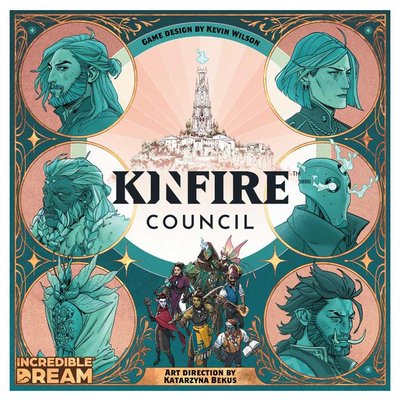
Hey everybody, welcome to the Going Analog podcast in which uh board gamers come to talk about games and a topic that we'd like to discuss board game wise. It's all board games here. Um, I'm your host, Christina, and we recently had the chance to play Kinfire Council, which was a beautiful, beautifully produced game, um, strategy, politics, set in this Kinfire, um, universe in the city of Denlux, and we were just blown away. So, um, we've heard a lot about the other games that we didn't have a chance to play because we're not co-op people. We'll discuss them, but, uh, you know, Incredible Dream Studios headed by Jane Hoffacker has been, uh, you know, on our radar for a long time. We've been super impressed by everything we've seen and so, of course, we wanted to invite Jane to our show today.
Thank you so much for having me. It's really a pleasure. I've been watching your show and it's like it's fun to actually be on the other side.
Yeah. Yeah. And, you know,
we found out you don't live that far from so,
right? So had an excuse to have her have her come by. So um and then Incredible Dreams has put out, you know, Kinfire Delve, Kinfire Chronicles. Um you've published a new edition of the solo game, A Gentle Rain, which is one of my f my probably my one of my favorite solo games for sure. Um so really excited to have you here and talk more about Kinfar Council and just talk games with you. So, um, really excited by the style and the direction of your studio cuz we've never seen somebody I I I just like the whole, um, you know, this very cohesive universe. Um, everything is such high quality and you just feel like you're getting more than you paid for when I came from Incredible Dreams. So, yeah. Um, thanks for the media copy of this.
We really enjoyed it. Played a full game and, uh, yeah, we have a lot to talk about. I'll definitely want to talk about this when we get to our topic. Um, but what topic did you bring for us today?
Uh, I wanted to bring up I mean this isn't a recent topic and it may be a unpopular topic in this day and age, but um, you know, I was uh, reminded about the uh, Maang game and how it got repopular recently
uh, recently as in the last 5 years um, by a team based in Dallas that wasn't even of Chinese def descent. Um, and so I thought it was interesting back then when it blew up and it's just uh this idea of cultural appropriation is something that's uh continually running through my mind because like it's u I think it's an interesting topic that's not often talked about and it also kind of connects back to like you know games made in Asia because Asia is one of like the biggest markets or a they have big markets for board games as well and gaming in general and so like I think for me it kind of developed into this big like question mark over like why don't we see more Asian games by Asian designers? Cool.
And with me as always is Shu. You are the crypto to my superman. So you know
where are we are what five minutes 3 minutes into this podcast and you finally introduced me.
Always nagging about this. Of course I'm going to introduce my guest first and then you know that's just how it goes. What's our topic today? Well, uh, so when I was playing, so I we played Kfire Console at, uh, Gen Con and then we played it again recently and I was rereading the rules and then in the upgrade kit came a comic book that talks a little bit more about this world of Kenfire. And then at the same time when I'm reading the rules, I'm like, "Oh, there's there's a whole you could tell everything. There's a whole universe that's crafted very carefully with a lot of thought into the settings, the people, why people are doing what they're doing." And so I want to talk about board game universes like um different companies have tried this like uh are they commercially viable creatively like where what do they do for the studio for the designers for the players and all of that but just when board game companies try to build a universe what is that just diving into that topic right like what is that like what is that is that good or you know for the customer how so and what are some of our favorite examples of such
yeah I have several excited to talk about those and uh we'll just jump right into talking about our games. So, the game we recently played also um is Tea Witches, which is this giant right here. It's our game pick for today um for this episode. And Tea Witches is designed by Manny Vega uh illustrated by Sundara Tang, the design duo who did Flamecraft. Um, and so in this game we are playing witches who own tea shops cuz that's an obvious thing that you would do. Herbs and tea, you know. Um, and we are serving other very cool witches. Maybe sometimes some celebrities who will come by and we're trying to fulfill their orders basically. I love the art. I love the concept. I like hope to play.
Yeah,
it's super cute and it's actually especially for the OP uh as the publisher. It's a heavier game of
they said it was the most strategic game they've published. So yeah, and I I would probably agree.
Yeah. Well, they had that Court of the Dead game that was pretty heavy. That was a little
also.
Yeah, it was a little off brandand for them it seems, but uh they did try experimenting into delving into different heavy games before. Uh but this one like uh we re like we played Gnome Hollow last year, which was them getting a little bit more strategic and Tes is even more so. Um but yeah, it's a it's a little bit of worker placement. It's a little bit of uh managing your hand your deck uh and things like that, but what I really liked about it is it's a strange game. It doesn't really uh you can't categorize it like like what I just tried doing, right? It's not it's not worker placement how you think and it's not deck management like how you think. It just does things differently. So, uh I think the first round with people play this game, they're a little bit like, what do you do here? Like, how does this work? And then after one round, you're like, oh, okay, I get it.
and you have to kind of reprogram your brain to work around the strategy. It's just unlike a lot of games. I really like that. It's just very unique.
There's still a lot of potential for comboing. So, the fun part is there's a first phase where it's a little bit pusher luck. You're trying to attract these different um witches to be your customers, but if you get two of the same type, then you've busted and then a bunch of them go away, right? So, there's that first aspect where you're collecting resources and customers. And then the main uh bulk of the game is the action selection second phase um where you are collecting different types of tea. So there's all these different colored tees. You're going to different quadrant not even quadrants that's those are sections uh you know sixths of the board. Each of them have their own um place where they line up with that tea. You can collect tea, but you can also spin the center tea fountain essentially to get another tea in front of you. So, it's very exciting when you get to spin this, too.
Um, you fill up your tea pup with your tea and you try to collect tea to serve your uh your your various tea witches. Um, along the way there's plenty of tea puns everywhere, which I enjoy. Um, and then it's just a very like beautiful light uh light art game, but there's a lot of decisions to make in this. So, um,
I love these little like cartoon like pedals.
They're your little workers and then you also fill the tea into them.
Yeah, they're almost Alice and Wonderland like kind of in terms of the whimsy fantasy whimsy, but also like you have to try to figure out what te's to get to serve to which customers, but also how do you store the tees? And then there's different uh engines that you can build within your storage like uh generate like putting one tea in here will duplicate it or putting in this will create extra toppings for you. And then there's scoring everywhere you go. And then there's the celebrities that you mentioned earlier. They're all puns on uh real life celebrities and there are special customers that are a little bit more high maintenance but they give you better goods. So there's just like quite a bit to think about but it's not heavy heavy. It's just like again for the app it's a little bit heavier but it's probably at once you get to know how to play the game probably at least an hour hour and a half of play.
Yeah, depending on how many players and stuff. So a beautiful game. Can't wait to play at different player counts cuz we played it at 4 uh with some good friends. So there was too much talking but it took us a while but it was a it was a really fun game to play it again.
Mhm.
Awesome. And what game did you bring for us Jane?
Oh I didn't actually bring it. I feel bad talking wise like u but yeah the the game that I I literally played yesterday for the first time was Dungeon Mayhem.
Um I it's a D&D branded game. Um I I feel bad cuz I I'm forgetting the designer's name, but I know the artist was Kyle Fen fair
who did Root and bunch of other games as well. You showed me
fourth one of my favorites,
which is now a game that I'm going to have to play. But um I I I brought up this game because lately I've been really interested in like how do you kind of groom or bring in new players into the board gaming space and we were just talking about social games and like you know that can be a starter for certain groups cuz like it kind of helps uh makes it feel like a social thing and less of a like tabletop gaming thing.
Uh but then I also have an 8-year-old and so we're trying to like kind of introduce him to different things. Part of this started because I I really love Ticket to Ride Legacy and I had this master plan of like teaching him like getting him ready to play that game by teaching him like Ticket to Ride normal game and I was like, "Oh, I need to do Ticket to Ride Junior."
Um but like I think in trying to like get him more into the hobby and stuff like that, I found that like um more adult games like strategic games, card games like Dungeon Mayhem um have actually like gra he's really gravitated to it. So, we played that recently. Take Five. Um, all these like lighter, not they're not really lighter because it's still really strategic, but it's just sort of there's less components on the board and it's more about like a core mechanic or two.
Uh, but anyway, sorry I'm kind of going off on it, but uh, Dungeon Mayhem, what what what we enjoyed about it is that I played it with a bunch of D and D friends. Um, and so we found the art just hilarious. I think Kyle did such an amazing job just making us chuckle every time we would pull out a new card. And the way it plays is like you play a different uh D and D character class and then you're kind of it's a really short game. It's like 15 minutes, but you're kind of like playing these cards from your hand uh to kind of conquer the other players at the table.
Um so it was just fun thematic. Um just humorous and it was quick, which was really great.
Cool. Dungeon Mayhem.
Yeah, I've not heard of it before this so we're not big D and D fans so but yeah, I'll have to check it out. So, let's talk about our first topic because this was inspired by Kingfire Council, which is the newest game from Incredible Dreams. And, you know, we I think we first well, we'd heard about it and then when we walked by um the booth at I think it was even before Gen Con. We maybe saw it at Dice Tower West or
probably Gamma Gamor. Were you at BGCON last year?
Oh, yes. BG, right? BGC. Yeah. And it's just like very striking. The color palette was like is so not typical of a board game you would see that is like um like a sort of like a medium mediumheavy strategy game. So you're like, "Oh, what is this? It's so pretty." And then we typically are not that excited by co-op games. So I'd heard a lot about Kinfire Chronicles and Delves. So I was like, "Uh, all these friends have said we need to play them." But then when it was like, "Oh, there's a competitive Euro strategy game." That's down our alley for sure. It was actually Eric Slawson who's a game designer who was on our show and then his game pick uh like what you just did with Dungeon Mayhem was Kinfire Chronicles and he was just raving about it and he was just like this sounds so good and it got us kind of excited about it but it's it we just it's hard for us to find time to play a full campaign game. It's just a lot of games to play. Um but yeah same I I was the same way. I'm like oh this is something in that world but it's a standalone worker placement strategy game. And then I was the same thing. I was like I saw it on the table. I think you were actually giving a demo when we walked by. We're like that's so pretty.
What is it? And it's like more muted colors. It doesn't like pop in terms of like bright visual colors.
It's not beige.
Yeah. But it's like like you see from the box if you're watching this on YouTube or Facebook. Uh but it's just unique colors. The line art's very sharp and uh and this permeates the whole board. And then even even the board is really cool to look at because there's if you set it up properly, there's three tiers of the city that you can visit, but they're physically higher. So you need a little bit more longer table space, but it's like tier one's flat on the table. Tier two is a little higher. Tier three is a little higher. And it kind of represents like the more upper echelons of the city. It's a little bit more expensive to use those spaces cuz you got to pay more taxes and such. Uh but yeah, it's a really neat game. But what really struck me back to our topic is uh when I was reading the rules like uh our friend James Hudson taught it to he was excited when we got a copy at Gen Con. He's like I'm going to carve out 2 hours to watch videos and read the rules to learn to play this game so that we could play it at Gen Con uh late Saturday night. So we did that. Uh but then a little bit later I was responsible for teaching it. I'm like I need to reread the rules or read the rules. And I'm like there's references everywhere as to why does this thing uh like context for what this is in the world of
why are there lighouses you know things like for example there like what are you trying to do like what is the Kinfire and I we haven't played again Kinfire Chronicles to know everything about this world but I took away from I was trying to explain to the table I'm like well I don't know this world that well but I know from reading the rules just the rules that there's this sort of darkness kind of creeping in around the world. The Kenfire is this light that kind of keeps this darkness at bay. And then so part of the game, what you're trying to do is build these lighouses in different areas to kind of help the the city uh expand its protection kind of aura. And at the same time, but there's these cultists that are kind of undermining everything as well. And then so again, there's context for in this world, this is what the cultists are doing. This is what you're doing. This is why this exists. So, I was really impressed in terms of like this isn't just someone had a game mechanic idea and just like applied a theme to it. It's like everything is felt like we had this world and now how do we build a game around everything that's happening within the world from a narrative point of view, from a lore point of view, uh the characters and such. And I assume a lot of characters in this game are in come from Kenfire Chronicles and other games.
Absolutely. like the seeker characters that are in each of our games um are I mean you're playing in this game as the counselors so for the first time you're not actually playing as a seeker uh but the counselors also show up in previous games are kind of like running the city and so this is now a game kind of told through their perspective but the seeker characters are the same characters that you play in Delve as well as Chronicles
okay so my question is again back to our topic we have it it'd be easier for you just to make the game without having thought through all this and making those connections and making sure those connections work in a way for like a fan of the franchise. But uh for you, how do you feel as like a the business owner of like why is this worth it to us? Like is it because Kinfire Chronicles is so big and it's worth it to you to serve that audience with a new game or is it just from a creative point of view? It's just hey this is just cool to do and uh we continue we have other plans for building this out building out this franchise. But just from your from a business perspective, like why invest that extra energy into making this all work like that?
Yeah, thank you so much for the question. I don't think anyone's actually like asked me about this before, but um but yeah, I would say um you know, for for Kinfire, we approached um Kinfire very differently than maybe a lot of uh other indie board game uh companies might do. Because I think for for me like with board games, we're always trying to kind of create new original IP in board games. Um, and so like we wanted to I mean when we sat down to do Chronicles, we spent actually a lot of time thinking about like what is kind of the premise of a world that can like outlive just one game cuz the problem is is if you have in a game like a full solution then like what's the point of following up on it. Yeah.
You know, you have to reintroduce new characters, you have to reinvent the world or new problems all over again. Um, so one of the challenges was like how can we create a tension in the game that could exist across many different games and not be solvable.
So you mentioned the the starless nights or the darkness that comes in the world and basically it's not solvable, right? It's a like global phenomenon, a cataclysm that comes back. It's just returned cuz it went on hiatus for like a millennia. Now it's coming back and it's it's like the weather where you have like a really bad storm and like you know what it does is like in the environment it will change different environments. So if there was like a desert there one day if the the darkness or the starless nights come then all of a sudden it could be like a glacier. Um and so everything you you knew that was familiar world suddenly gets changed and people and homes disappear. So the people in this world are very scared of it. Um and in Denlux which is like the main setting for all of our games so far. Uh it's the light of the Kinfire Tower which they forgot why it was relevant cuz it was always there and it became part of their religion. They're like we don't care anymore. Uh, but it was the light of the Kinfire Tower that protected everybody in that city from this returning Starless Knight. And so a lot of the the mystery that's unfolding across all our games is just sort of like what is the nature of this darkness? And like it's also in especially in Council kind of turning to like the people in this world in the city and like how do they deal with something as like big and immense like this and like how do they live with each other because they were all former enemies and now they're kind of stuck in the same city together. Um, and I won't lie, but like a lot of this also came uh as inspiration from like the pandemic, which uh was like what 5 years ago now.
But like, you know, that feeling of being like, you know, we're all kind of isolated. We're dealing with this like bigger than anyone problem that's affecting everybody and just sort of like I felt like there was a lot of interesting threads and questions back then about like what do you do and like what's normal anymore, right?
That's one interesting thing about playing that game too is it is competitive. there is a winner. that there were so many times where you know we as players had to work together to deal with things like um you know uh like of course building that lighthouse so that we could get points but also for the good of the city and then like there were the needs of the people as council members you have to meet those and then there were the uh dangers trouble the trouble was it trouble I think it was called trouble threats threats yes the threats coming up too where you're like well if we don't do that then the cult gets more power and so it was a very like coopetition type situation, which was really interesting because when you're all squeezed together into this one city, that's that's got to be things that happen where you're like, well, I want to win, but also there's really bad things that happen if we don't work together. So,
yeah, you sell an expansion that makes this a full co-op game, too, right? Uh cuz I know like I when I teach when I show this game to people, I explain it like this feels like a cooperative game because there's constantly bad things happening and you have to figure out together how do you tackle those things, but you're not cooperating in the end. You're still trying to find the one winner. Uh, and then it has an interesting twist like the cult, which is almost like an AI player that's doing its own thing that's like building up its own points. And if it wins, everyone can lose unless you side with the cult, which is another thing you could do. You could just like
you could just tank the whole like city to like try to take over the cult, but then you know, interesting. Well, that would have work. Uh but but in building this world like uh again creatively it sounds really awesome but like from a business perspective like is it good for you to have a game that's like in this universe with that much thought behind it like you you put out a comic book for this uh for Kenfire console in the Kimfire world like is it all like is it great because the Kinfire Chronicle fan base is so rabid that they want to consume all of this like what are your findings from like a just a pure business perspect perspective.
Well, um I think like when we started um and started expanding off of so we did Chronicles first and we followed it up pretty quickly with Delve and whatnot. I did get quite a number of comments from well-meaning people in the industry just questioning why like they're like you should just move on to other things, other like IP and whatnot. But um so it's definitely atypical especially for original game. that like I I think for me we had uh in the process of building Chronicles built such a great like uh story world building and background behind it. Um that actually what it inadvertently did was like it really inspired a lot more games and themes um that we wanted to tell outside of it. Um, so I do have to credit like I mean you mentioned the art being fantastic. That was Katina Beckus and I can't my Polish accent's terrible so I really apologize for that but like you know she she really went to bat coming up with this art design and the art nuvo uh flavor of it was actually a reaction to like the art deco stuff that we had in Chronicles and wanting to contrast that with a theme for the city that felt different and ownable separate from Chronicles. Um, so she came with that inspiration and really wanting to develop this separate but connected look because the two art styles have connected points together. And then uh Kevin actually like I think he came up with the inspiration for this game when uh we were still developing Delve. But I think like he looked at the map that we had in Chronicles which is like one of those component pieces that we have that's just of the city. Um and you know we had done all this like world building to explore like who are these
counselors? What are these things that they're dealing with? um that like you know I think he he came up with this idea and this concept for a competitive sorry game in the series and so like I think um when you start from a place that's like creative and like really world building like it just tends to inspire um other things especially if you listen to the creatives on your t at your table and like inviting them into the process right
so I think a lot of this um did happen organically for the team some of it was business driven where you know we had invested so much in the IP um and I felt like there was still worth telling more parts of it Um, and it was kind of a big bet cuz again like not a lot of companies do it this way.
Do you find feedback from the Kinfire Chronicles crowd that they're excited about this or maybe they might not have otherwise because it's set in this world that they already know?
Yeah, I think like uh for the uh Chronicles and Delve fans, it's interesting because we have fans that have started with us in Chronicles, fans that have started with us in Delve and other fans that have now started with us in Council. And I think the the interesting thing is is like I think at first a lot of the Chronicles and Delve fans weren't were seemed some of them were enthusiastic, some of them were unsure if they would like a competitive game because they love co-op. And just as you mentioned, you love competitive games. You may not be into cooperative games, which is partly why we also wanted to create a competitive game in the series.
Um, but I think after they kind of experienced it and stuff, I think they do appreciate the connective tissue that we have in the game between all of them. So, like you'll see characters from Delve coming up in here. Uh you'll see references back to things that happened in Chronicles back in this game. And we're trying to do it in a way where like you don't have to have played any of those to appreciate the little Easter eggs, but when you find them, it feels really gratifying.
Yeah.
Yeah. We I mean, we don't know any of the previous Tinfire games. So, for us, it was still like, oh, on its own, it's a great game. Just game from a gameplay and mechanic perspective. But uh like I said from me reading the rule book and I try it's hard to get it all expressed to everyone at table because you're teaching them a game like when I taught it to you and a couple of our friends I'm like well here's the context for here's what the lighouses are here's what's happening at city so I try and give them enough of that so they could appreciate the flavor but it's almost like oh you should read the rule book because there's a lot more than what I'm able to express at the table while teaching the game and uh yeah and actually I was one of my goals before you came here was I'm going to read this comic book so I could dive more into and I just ran out of time. I'm like I didn't get to it. But um but yeah, it was like even incredible that you made a big thick professionally produced comic book as just an accessory for the upgrade kit for this game which was pretty cool.
Yeah.
Um have you are there plans for additional games in this universe that are different from not sequels to the previous games but just new standalone games in this universe? uh at this moment um because I think we we've covered sort of the uh big campaign series, the smaller uh deck building sort of games or not deck building but um card games with Delve and then now the competitive uh section with Council. I think at the moment we're we're looking into different ways to tell stories within the universe. Uh maybe not necessarily in board games, but uh this is all kind of exploration for us right now.
But could definitely use feedback.
How can Kenfire a party game? Oh man. Uh I think I think with a lot of like IP stuff too, um you know, I think the reason why a lot of game companies won't expand their original IP the way we've done it is that like certain games you don't like especially mass casual games, you don't want to go there until you have enough of like that big audience and fan base. Uh because again, I think if
especially for the mass casual games, like a lot of it relies on themes and just your common knowledge about the IP. So, it's it's hard if you do that with a game like this, which may be a little bit more of a a smaller community, than if you did it with Star Wars, where everybody has a Star Wars meme in their head.
Lord of the Rings right now. Everything's Lord of the Rings.
I think it's also harder because if you went through it through Kinfire Council, for example, the competitive strategy game, uh you'll get less of the lore. You just can't help it, right? You're not you're not storytelling. You're not going on an adventure. Uh, so you'll get bits and pieces like I've mentioned the context for what's happening in this world, but it's I imagine you're going to get much more of the lore and the world and uh the canon through the cooperative adventure games that you put out. So I think that makes that tough as well. Like people coming from that side will know more of the world than people like like us starting with console and such.
But just out of curiosity like you know building that IP like how how did that work? Did you hire like writers? Were there was there like a team like what what was what went into that in the beginning too?
Oh yeah, it's a great question. Um well we we brought in some friends of mine. So I was connected with uh the writing the narrative duo from The Witcher 3 Cyberpunk 2077. Cool.
Um and we brought them in.
Oh yeah, I forgot to mention you're huge video game background,
executive producer of Arcane. We're huge huge fans of that show. But yeah,
but yeah. Um, so we did we we created a bit of a writer's room and that was something that I learned from Arcane was like this uh creative writing process where uh in in television especially episodic television they have to like write episodes so fast. Sorry I just napped for the microphone but uh you have to write new episodes so quickly that they have to start from a foundation of a shared like world bible or story bible. And so like usually when you're you're beginning a new series, you invest some amount of time just like building up that background and that backstory. And like a lot of the the um episodic television that you might enjoy, you might be surprised to learn that a lot of the characters have like really fleshed out backstories and just personalities, even if they show on screen for one episode. Um,
and it's because when the the screenwriters are sitting down to write an episode covering that character, they want it to feel like it has depth, like the character existed before this episode, etc., etc. So, we took a lot of the learnings that I had from that process and like we formed a bit of a writer's room where, you know, we formed the IP, we went back and forth. Kevin was involved from the very beginning as well.
Is this Kevin Wilson? Yeah. Uh, cuz he's actually like a really great storyteller and he's worked on D and D and all this other stuff too. And so like you know we had him him involved. We had um Keterina Redesuk who was our f our first art director uh who was also involved in that. And then you know we kind of kept that going forward even after the initial story was developed. We would meet weekly with Kathy Bach who was our story editor at the time. And we would like as a team anybody on the team could come and kind of pitch ideas and we'd explore different areas and different environments and different problems in the world. So, um, so that was kind of like basically the process and for us, but it's not like the typical process because I think for a lot of board games, especially if you're doing original IP, there's really two approaches you could take. You could take what I call the um the veneer approach where like or the facade approach where imagine you're creating a Disneyland storybook ride. You only build enough that's going to be on the facade that like people just see what they see and you don't build past that cuz it's inefficient economically. um versus the way we did it was like we overbuilt because we wanted to tell a lot more than one story in this universe and so we did have a lot more like stories behind everything. But you know hopefully that's what helps this feel richer and less of a um theme but like Yeah.
Yeah. Mhm. So really because a lot of that reminded me of uh our friend James Hudson from Druid City Games and his uh universe of Nibiri. He actually had his artist uh Mr. Cington the design the artist uh duo they were like if you could illustrate whatever you wanted and come and they were like actually huge worldbuilders there too. So um and then we were when we were teaching kinfire council one of our friends was like oh this a little bit reminds me of tidal blades in which was set in Niri too because of the threats that we all had to work toward and stuff like that. So
Title Blades is gorgeous by the way. I love that game so much.
Yeah. Yeah. That was one I I forgot about that. that was its own universe as well because there's three games in that universe.
Three. Yeah. Yeah, you're right.
Because there's the uh the banner festival as well.
Um but also the another classic example I think is Red Raiden Games. Uh
now they have two universes.
Yeah. Yeah.
Uh but there um
that one is interesting too because it's like a consistent artist Ryan Lockett who's the designer and artist for most of their games. Uh but then it's like now when you go back to a new game in that universe, it's like there's already immediate familiarity because you just know the the art design kind of draws it all and kind of centralizes it all. Yeah.
Like were there other board game in worlds or inspirations that helped with this process that you're like this is a good example or even a bad example if you wanted to call that out? But
um I think like um it's hard to find. I mean, definitely I saw what James was doing with Title Blades as well and like really respect the the stuff and approaches that he's taken as well. So, there's a lot of indie games that do it, but I think like um I think for people that may not be so familiar with board games, when you think bigger to like Dn D is a wholly like original world that was like grown up in tabletop and uh Warhammer is like a incredibly deep story and it's all based well they've created the whole category of wargaming uh or they they're basically it now. But like I think when you think of how big storytelling can get into board games, it's actually a lot bigger than you might suspect.
Uh but it's hard to to get at the top, right? Because again, it's a really competitive area and there's a lot of great ideas and great creators out there. But um you know, it's a it's a moonshot and sometimes you have to aim for it.
Yeah, I was going to say it seems like it's a it's a risky investment. It could be because board games, as we all know, like they don't they don't sell like
a huge money maker.
So it could be tough and the margins are tight. So it but uh hopefully it pays off for you in the long run. Like this is like
we really enjoyed that one.
The world was just really fascinating to us. So yeah,
can't wait to play that again.
The other topic we did want to save time for was your topic. If you could remind us about that. Yeah. So, um, this one's a bit controversial and like I, you know, I don't want to, this isn't about like regurgitating rage or like getting back into all that stuff cuz I don't think that anybody wants that to be honest. Uh, but I think I proposed this topic cuz I found it personally interesting and it it kind of nudged me to a bunch of rabbit holes. But uh so maybe about in 2021 I think it was there was um a resurgence of Maong thanks to this uh Dallas based company run by uh three American women, white women. Um and they refreshed the the classic game Maong uh to be kind of in their style and like you know the things that they found appealing. And I have to say the artwork is delightful when you look at it objectively. It is nice. It's colorful. It's really um modern American feeling to it. Um but it sparked a lot of controversy um beginning in the Asian-American community. Um I think there was a Taiwanese u or Taiwanese American um I think she was in the in government somewhere but like she had raised it as an issue and others also raised it and there was a lot of outrage I think in the the community about like hey like you didn't even give a nod back to the Chinese history behind this game.
It feels a bit disrespectful that you're refreshing this or cleaning it up. And like, you know, I think uh maybe for some people out there it could be a head scratcher because like uh you know, if you think about it in terms of fandom, the thing that you want most as an IP holder is people making stuff out of your your IP. You want people like celebrating it and adopting it and like drawing their own versions of it and whatnot like Yeah. And so like, you know, I think from that perspective, like why wouldn't you want people kind of building on it and doing more? But then on the other perspective too, like I think for people that aren't uh familiar with Asian history in the US, there's like a lot of pain and hurt there that often doesn't get talked about. And so like, you know, I think there was justification in bringing it up and the anger around it. But like I think, you know, as we all know, the algorithms got really focused on the rage and all this stuff and then like all real discourse got lost. But um but yeah, I mean this this this idea of you know, I think there's two ideas here.
One is um this idea of cultural appropriation which was like a big topic in the board gaming industry not too long ago and I think we all kind of got frustrated with modern times and kind of wanted to put it aside understandably and then but it's still relevant. I think a lot of us still think about it and wonder about it and like want to engage with it in a way that feels productive and not reductive and all that stuff. And then the other side of it too is like because um this whole thing made me sit sit there scratch my head be like why aren't there more uh Asian games that we see from Asia or from Asian history out there. There's definitely games with Asian themes and they're often
often not actually by like Asian run companies or designers and stuff. Um but you know like and so I thought that was also an interesting thing of like why don't we see more, right? But
yeah. Yeah. I mean, we just had on uh Jay Bernardo from um Cardboard East and he uh focuses specifically on games from Asia. He's like on this mission to play all the games from Asia. Um and he's like a huge like source of knowledge and was like if I have a question about it like ask Jay, you know. Um, but yeah, you know, like I I think uh getting into the hobby, one of the first games that I remember was Tokaido and it was like beautiful and it was about I learned a little bit about like oh this is a traditional road from um you know Tokyo to uh to like Kyoto and stuff like that and I was like oh that's so neat but you know it's a French designer and it was a French artist. Um, so you know, I think that there's a lot of that because board games really like unique themes. I think a lot of board game designers are fascinated by Asian culture. Um, you know, it's a fascinating culture, but this it's it's not a monolith. There's so many cultures that um can't really be appreciated if you don't have like perspective there. Potentially, you could be missing a lot of stuff. Um, and you know, I do like the trend that that companies are going toward at least with a with a cultural consultant, you know.
So, I think that's been trying to correct itself a little bit. Um,
I feel like though the cultural consultants are more
to avoid uh traps and avoid avoiding controversy rather than uh showing appreciation. I think they're just like sometimes we just got to make sure we don't do something bad more than let's make something really great.
Yeah. Yeah. So there's definitely that aspect to it also and you know I guess like you were mentioning like if a designer is inspired by this thing like that's cool like you know be that's great I'm glad you're inspired by it but you know is it done with enough respect I think is the main issue uh for me like the ma jang whole thing like I've actually they're they play those three white women play ma jang way more than I have ever played it which is cool u but you know some of the things are like iffy like instead of the bamboo suit instead of like having bamboo, they just wrote bam bam bam like like you know they did
they did it. It's like done in a cute way you know. Um and and in one way it's sort of like well if we want to attract more people into playing ma jang maybe it's easier for them to see things that aren't like it with Chinese characters. Uh but that's ignoring such a a long tradition of ma ma jang in China and and with a diaspora of Asianameans going everywhere. that. Yeah.
Yeah, definitely. Um like I also have to admit like I haven't played maong which I feel like now I should
um but like you know it but that's also an interesting question for me because like I've been playing a lot of um you know tabletop games in the space especially like starting this company and yet I haven't gone back to play a lot of these classic games that originated in Asia. So self call out there for sure. Um, but I think it's um, but you know, I think one thing that is super cool about maong is like it it is a game that that originated in China, but like a lot of cultures actually play it. Like there's a Korean way of playing maong. American maong is a thing. And like the way that it got adopted and and grew and I believe American maong is very different than the way that Chinese people play it as well. And so like there is something beautiful when a different culture can adopt uh the culture and and traditions and pastimes of a different culture. Like I think that's how culture ultimately expands.
Like I'm looking at K-pop and like I can tell you that pop music did not originate in Korea, right?
Yeah. Uh but like I think that part can all be interesting, but it is this question of how do you do that in a way that feels respectful and acknowledges things and you know I think there's a lot of counterex examples too like love letter was actually designed by a Japanese designer, right? And it's what I mean is I don't even know which culture it's representing. Is it English? Is it just sort of
generic? had the original um version a long time ago and it was um you know it like Imperial Court but it was a Japanese Imperial Court and it was like with art that was with the like different
we did
or at least we played a friend's copy. I've seen it.
I definitely have seen it.
Um or like I think there was one printing where they used some of the original art.
Oh, okay. And but it was like yeah it was not as familiar because we you know growing up in America I am used to the European tropes very euroentric stuff. Um and you know you had the same characters but they looked very different. Um it was a very cool style though was like very like heavy brush work um sort of style for that that art and set. I would love like an Okami version
like I love that games talking about video games but um
but yeah I think um yeah I I think that's the interesting part of it and you know this kind of connects back you mentioned tropes and this connects back to like IP that's the danger in doing a a game any game that's based on a culture or like really clearly connected to a culture is that like in IP you you need footholds in the IP that people are familiar with right um you have to build things off of characters that they've heard before or like themes that they've dealt before in previous stories or whatever. That's why like you know the latest Star Wars is basically a rehash of the old Star Wars, right? It's because it's what's familiar to people. And like the danger I think of doing a culture is that like you you you tend to gravitate towards stereotypes or you tend to gravitate towards those elements that most people would be familiar with for various reasons. And so like it's tough and I guess that is where you you do need to bring in consultants if you're not that familiar with the culture cuz a lot of landmines I think are possible. But
yeah, our personal example, we were in Mexico City a couple years back and uh we went to Teayot Wakan um you know right outside the city and we were talking to our tour guide and she was very knowledgeable, really great. And then we were like, "Oh, do you know there's a game that's based on Teayotan where you're building the the pyramid?" And she's like, "Oh, really?" And then we showed her the cover and she's like, "Oh, that's just all sorts of wrong." Basically,
she's like, "Oh, that's BS." She the full word BS. Uh she immediately called out cuz just the the way the uh uh the civilization was portrayed, what the everything looked like.
She was like, "That's the wrong civilization building it." And then we were like, "Oh, yeah." Yeah.
So, that's that's something that, you know, hopefully we are getting better at as an industry.
That's a difficult conversation, right? Is it the responsibility of that game to represent everything accurately that might not be marketable like for the front box of a cover, right? Like cuz one of the things she talked about like the the uh ornaments and what the people were wearing on the box cover were not accurate, but they probably would brighten it up a little bit and maybe the certain interpretation to make it a little bit more appealing on a store shelf somewhere too. But I feel like that should be your challenge where you need to respect what is at least nominally accurate and then you can punch it up in other ways. I would think, you know,
well, I think I think probably what they do is like what can we get away with like no they they probably would figure out like no one's going to know the difference and then this is this is good enough and this gets us 70% of the way
game. So, you know, old old in terms of like our our our age in the hobby. I guess
we're still young. Yeah, we're so young. Um, no, but I think that's an interesting example because it makes me think of two other examples, right? So, like Puerto Rico, I think is the classic like we don't talk about that game. I mean, it's a beloved game, but it had a lot of issues. German designer, the treatment of like, you know, the slavery basically and the washing of that as as being something else.
Uh, but then like in research for this show, um, I was looking into Kingdom of Midog. I can't pronounce it right, but it was a Taiwanese game designed by a Taiwanese designer. Um, and it's basically a worker placement that like kind of connected back to like um native indigenous Taiwanese cultures.
Um, but even that game in Taiwan got a lot of or some flak I believe because like there was some arguments about whether that was seen more from the Han perspective versus the indigenous perspective. And so like
it can feel like you can't please everybody at some point, right?
Um, but I think like I mean I don't know. So I mean I think that's partially the problem with internet these days is like you do anything and then the algorithm just like speeds up any outrage against you and the discourse gets lost but I think as long as like I think you can only control your intent and what you're trying to do and so I think if you are approaching it from an area of respect and like you know really trying to bring something new and and joyful to other people um you know mistakes may happen but I think like as we're all learning like I just hope that there's more continued uh discourse around all this uh more care continuing around this and like you know maybe um you know just more more diverse games in general
that always better for me as a gamer for sure. So yeah I mean I can't tell you how many things I've learned about other cultures or science or like history because I played a game about it, you know. So um yeah, you know I and I wish I just hope that what I learn is accurate and factual.
Yes.
Yeah. It's sometimes how it's presented, right? Like sometimes in a rule book like if uh there's certain rule books the way they read I'm like I it feels at least my impression is they did the research and are they're expressing facts to me and so hopefully they could easily not right maybe they just wrote it well in a way that's very believable and I got fooled but uh your your hope is that you kind of trust people that hey what they're expressing to us like why this culture does this thing or why this thing exists is with good intent of like hey we want to educate you and let you know why this thing is happening this way. So, uh, but that's the optimist in me perhaps, you know.
Yeah. I mean, like there's some interesting cases where, you know, we love Let's go to Japan and it's designed by a Southern Californian, uh, white guy. He's a great guy. Josh Wood. Um, but yeah, you know, he's not trying to say, I'm teaching you all about Japan. It was a very interesting perspective where he's like, I want to visit Japan. This was these were my plans before the pandemic hit. And so instead I designed a game about visiting Japan and they made sure to have like um all artists from Japan illustrate those cards and I think it turned out really well for that reason. So um you know there's definitely ways into talking. You don't have like an author you don't always have to write only your perspective. That's the point right but you know hopefully you like do your research you know or find somebody who can do that research well.
Yeah. And whatever happens, I think I um if your game does succeed, it will spur these conversations and these debates, which you know could feel bad if you made mistakes, what whatever. But I think as long as that the discourse happens, I think that's actually good for us because it it encoura Yeah. Yeah. Well, I think at the very least then whatever comes next like they can take those learnings, right, and see what happened. Like like for example, the the ma jang uh women from Dallas, do they approach it like we don't like traditional ma or we don't we think it's inaccessible and it's very hard to get into and this is how we're going to fix it or did they approach it more like we're very inspired, we like it, we just want to make it uh uh hopefully bring it to a new audience like what was their approach?
That was more what they said the latter. Um they they said it was a respectful refresh. Uh you know, but then respectful is a subjective word, right? So, you know, they thought it was respectful, but they had they're still, you know, in business selling different versions of these sets. And some people, you know, uh that's how they prefer to play American maj.
So, yeah.
Yeah.
They're there.
Well, look, it made us all talk about it. It's
true. Yeah. Yeah. And maybe I will go and play Maang for the, you know, it's like every 10 years I try to play it and I forget how to play it. So
yeah,
I learned when I was a little little kid and I don't but I don't remember now. I haven't touched it in years.
But we'll see, you know, where things go from there. Hopefully we're learning lessons all the time. Um, thanks for joining us so much, Jay.
Yeah, thank you for having me.
Really had a great talk with you. And uh, where can people follow what Incredible Dream is doing?
Uh, definitely check out our website. Well, we have kinfirechronicles.com. That's where you'll find most of our products and stuff like that. I haven't updated our company website. My whole team's yelling at me, but yeah. Uh, but yeah, but yeah, we're there. We're on BG. We're on Instagram, all these places. So, please check us out.
Awesome. And, uh, big big thanks to our favorite editor, only editor, Mike Zipkin. And thanks so much for listening. Now, you can go stop listening and go play a game.
Bye.