Striking Flint: My Favorite Mechanism
Games in This Video
1 game is featured in this video — it unlocks as you watch.
Transcript
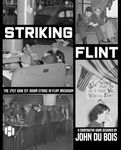
Hey, I'm Jamie from Stonemire Games and today I'm going to talk about the cooperative game Striking Flint, which is about a strike in Flint, Michigan that happened a couple decades ago. And in a unique twist to the cooperative game genre and the worker placement genre, this is a game about trying to occupy the factories uh as the people who are performing the strike. So, you're trying to have workers in the factory. You don't get any benefits when you place workers. Rather, you are placing workers so that bad things don't happen. So, for example, because yellow has a worker here, if uh a certain die number is rolled during the facto's turn, um I don't get an exhaustion cube or uh a bribe doesn't happen or the police don't show up or a scab doesn't show up or a scab doesn't appear. Um so, kind of a neat twist on worker placement there. However, I think my favorite mechan mechanism of the game has to do with this central track here that all players are sharing to win the game. You need to get this factory token. I think it's called like the agreement token of the game. It's essentially a victory point token which starts all the way over here in 40. You need to get that token to pass all four of the or actually a five in a in a fiveplayer game. I believe we played a two-player game where we each controlled two of these um organizations. You need to get all of these organization tokens to pass the victory point token or vice versa.
Like they're kind of moving towards each other throughout the game. Um a little bit like the game Arc Nova. There's an intersection between those two, but you need all of these to pass by the victory point token to win the game. Um so that in itself is a neat mechanism, right? Intersecting interlocking paths like that. We've seen that in a few games like Rogers of the Ganges, Arc Nova. I don't know if I've seen it in a cooperative game before. But uh the other twist to this that makes it so good is the way that these tokens advance. The victory point token will advance, I guess, down the track in a descending path. whenever you control at least two factories on uh at the end of a turn and if you happen to uh meet the condition on an event like this one says there are three uh exhaustion tokens on this event. So if you accomplish that event the event goes away and you get to move the victory point token an additional time. Um so that's happening. You're trying to have good things happen, have the victory points, move tokens, move forward on the other way. And this is perhaps the even more interesting way the track is moving. The way that you move these tokens is at the end of your turn, you must move your uh whoever whichever organization you were operating that turn, you need to move it forward in an ascending path as far as the number of exhaustion tokens as you have on your turn. Which might sound easy, right? Why not just do some actions that cost a lot of exhaustion and move forward a lot on the path? The reason that you can't just do that all the time is because every time your
token cross reaches or crosses a section on the track that matches the color of that token, like um when the blue token crossed over this 15 right here, that's when the factory gets to take a turn. That's when bad things happen in the game. Uh that's when the factory rolls a dieice or maybe triggers their event, maybe both. Um, and so you are trying to avoid those things happening as you play. Um, and so this is this dichotomy between wanting to move your organization tokens as far forward as possible based on having a lot of exhaustion. That's great. Uh, but you don't want to move so far that you trigger ideally not trigger more than one event or even zero events on your turn if possible. Also, as you are advancing along this path, as you trigger those events, you might gain even more exhaustion, meaning that you can't exactly math it out. you might gain more exhaustion on your turn and you need to account for that as you are moving along the track at the end of your turn. Um, and there was one other thing that I thought was pretty cool about this track movement. Uh, I'm blanking on it right now. Let me pause and see if I can think of it because it was pretty crucial. Okay, I remember the other thing that I was trying to remember. It is that you have a limited supply shared by all players of exhaust tokens. And so if you just accumulate a bunch of exhaust tokens and jet along this track, activate the factory a bunch of times, maybe you get lucky, you might still just run out of exhaust tokens and then you lose the game that way. So yeah, this intersecting path in a cooperative game and how uh your choices to take actions that require a lot of exhaustion feel
that feels good because you're moving along the path, but you're activating the bad things that happen by doing so. That to me I thought was really cool and added some really great discussions and decisions as we played Striking Flint. I'd love to hear your thoughts if you have played this game or if you've played another cooperative game with intersecting tracks like that or with a decision space that's in the same realm as striking flint. I'd love to know about it in the comments below. Thanks.