How to design a strategic DICE Game
Games in This Video
2 games are featured in this video — they unlock as you watch.

Transcript
board games in the 20th century were frequently dice driven that is to say you rolled a die and it determined your fate it told you how many spaces you could move on a board it decided who won or lost a battle the game which kickstarted the modern board gaming hobby Settlers of Katan utilized a similar mechanism with players rolling a die to see which areas of the board generated resources on each turn years later Jeff engelstein would coin the phrase output Randomness to describe such games where chance determines the fate of the players or the success or failure of any decision made by them and if we have a term for such games that must indicate that there's an alternative right if we need to label some forms of Randomness with the qualifier output that suggests there must be another way input Randomness this alternative qualifier describes games in which chance determines a series of options available to players and the players then select from those options to clarify with output Randomness the chance element comes after a decision and determines the outcome with input Randomness the chance element comes earlier and sets the parameters for a decision in the early 2000s worker placement was an exciting new innovation in board games William ata's kalus was the first to really break through and capture the imagination of Gamers around the world two years later Andrea chizo and Luca yanako were were the first to
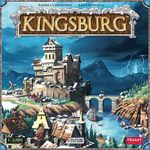
incorporate dice as the core driver of their own worker placement game Kingsburg shared some design DNA with kis but also with Tom Layman's recent DIC driven roll selection game to court the king in a player's turn they would roll three dice then allocate these dice to characters on a central board preventing other players from using those characters and receiving rewards using dice to draft actions in this way was novel and the use of resources and abilities to mitigate bad dice rols inspired a whole new genre of strategic games reclaiming the use of dice as a core element of game playay I'm Adam Porter I'm a game designer from Wales and in this video I'm going to explore the growing family of dice placement games this is a relatively new concept and the categorization is very vague but I'll try to stay on topic this video is a toolbox for you as a designer an exploration and stallation of what has gone before how a mechanism has developed Lessons Learned and new avenues to explore now I can't give you a recipe for the perfect dice driven strategy game if it was that easy the market would be saturated with them but hopefully I can Inspire some new ideas highlight well trodden paths and less explored areas which might be worth taking a look at take these mechanisms combine them subvert them and create something new there are two commonly cited candidates for the first worker placement Game Richard Bree's keum in
1998 and splotter Spell's bus in 1999 but it was William ATA kalus in 2005 which really broke through capturing the imagination of Gamers and designers and coining the phrase worker placement now worker placement games involve placement of tokens to trigger an action from a set of options available to all players generally one at a time and in turn order usually with a limit on the number of times a single action can be taken now dice placement games are going to trample all over this definition they're going to stretch it in every manner possible often to Breaking Point dice placement is not a distinct mechanism it describes a family of games connected by a central component and a feeling dice placement games invoke the feel of worker placement games but many of them are not worker placement games by the usual definition so if you've watched my previous video d seting the worker placement mechanism you'll remember that the placement of workers is not enough to categorize something as a worker placement game by the generally accepted definition there has to be a degree of blocking of worker spaces limiting options for other players now the blocking aspect is not so clearcut in dice driven games the term dice placement is widely used to describe any game where you place dice to select an action regardless of whether other players are allowed to select the same action or not I'm sure some Gamers would ascribe the same limitations to dice
placement as they do to worker placement that is to say the action blocking is for them a defining feature but for the purposes of this video that definition is too limiting so in fact I'm going to go one step further and I'm also going to discuss games where dice are drafted to take actions regardless of whether they're physically placed on a board when learning about the diverse range of mechanisms within a genre it's probably best to use the broadest definition we can get away with so don't come shouting at me but Dice Town isn't a dice placement game I know I know what do you want me to do put a disclaimer on each video clip this is not a dice placement game fine you can have your disclaimer and here's a Content warning while we're at it only 79.6% of the games featured in this video are dice placement games happy now so let's talk workers not the concept the component the physical playing piece in early work placement games these were discs simple two-sided tokens as kazon took the market by storm savy board game Publishers borrowed the now ubiquitous meeple and this became a symbol of worker placement games so what can you do with a meeple you can place it like this or like this you can toss it but I'm not sure it achieves much it comes in a variety of colors and shapes and sometimes it's screen printed for flavor dice as workers offer us a variety of New Opportunities like tokens they can come in a variety of shapes and sizes
but unlike tokens which have precisely two faces face up or face down dice have six or eight or however many you want really and this increases the design space enormously suddenly a worker can have multiple different states and they can change throughout the game and of course the second big opportunity afforded by dice is the ability to roll dice rolling is a familiar mechanism used in games since their very Inception in eon's past it adds tension big moments Thrills and immediate feedback to a game all things which make an experience memorable but increasing the number of states of a worker from 2 to six increases the complexity of a game not by trebling it but exponentially some of the dice placement games are among the most complex in the hobby with lengthy rule sets and unintuitive systems and with inreased complexity players are far less forgiving of chance-based mechanisms or output Randomness competitive players don't like to feel their cunning decisions have been undermined by bad luck where Randomness is utilized it must always feel fair so a die is a hugely versatile component opening up a myriad of options for a designer but it's also a dangerous tool which could unbalance your game if handled carelessly as I have done in past videos for abstract games Tableau Builders polyomino games deck builders and many more categories of game I'm going to pick apart the dice placement
genre by looking at 10 commonly utilized mechanisms with loads of examples but before we dive deep into the world of dice I have a message I'd like to share with any game designers watching this channel I'm Adam Porter and over the last decade I've shared hundreds of videos about games and game design offering up honest practical advice about how to develop your own games but also how to develop yourself as a designer my latest project is a tabletop game designer Journal which helps you to do exactly that with structured prompts reflective logs tools to assist you in prioritizing and developing your ideas and much more the content is designed to give you a clear direction of travel towards success however you choose to Define it this is not a play testing Journal that is to say the journal is not focused on one specific game or project it's focused on you you are the project the Adam and Wales board game designer Journal is available right now exclusively from Amazon so check out the link in the description for this video and if you do purchase a copy and find the content valuable it would really really help me out if you could leave a review early Amazon reviews are essential in getting the journal seen and making more designers aware which doesn't just help me but hopefully helps the whole designer Community now back to the topic at hand in Snakes and Ladders and other traditional Rolland Move games as soon as a die settles on one of its faces the result is set there is no opportunity to manipulate the diey if
you roll the four you're moving four spaces in the traditional game of yachi players roll a selection of dice and roll repeatedly locking dice between rolls until they settle on their final pool so a key decision for the designer of a dice placement game is to what extent players are able to manipulate their dice results once rolled stepan feld's castles of burgundy is one of the most popular DIC driven strategy games on the market in this game players each roll two dice once rolled the results are set unless a player chooses to spend tokens to add or subtract from the result but the dice don't dictate the player's action each die can be used in one of four ways to take a tile from the corresponding Depot to add a tile to a corresponding space on the player's map to sell all Goods corresponding to the value of the die or to take two worker tokens from the supply regardless of the die result so designer Stephan feld's decision here was to accept the randomness of an initial dice roll but ensure that every result is valuable so that every player has a wealth of Positive Choices available whatever they roll castles of burgundy is not the only dice driven game where once rolled dice results are set rooll for the Galaxy is another example but it isn't true of all DIC driven strategy games in dice town players is roll a selection of dice lock one then roll the remaining Dice and they do this repeatedly until all dice are locked they are however allowed to
pay money to lock more than one die from any given role in pandemic The Cure players can roll their pool of dice as many times as they like but they must keep any biohazard symbols rolled and these are always bad imp Pioneer Days players draw a selection of Dice from a bag then roll them to create a dice pool players then take it in turns to select one of the dice noting the dice face showing and use it to power and Associated action this is called a draft if you've played a lot of modern board games you'll have seen the same mechanism used to distribute cards tokens and other game components drafting dice After Rolling them is a great way for a designer to incorporate the excitement of a random dice roll but still provide players with plenty of meaningful choices regardless of the outcome one particularly clever aspect of P near days is that after every player has selected a die one will remain and the face showing on that die will advance the corresponding marker on the disaster track punishing all players immediately if any marker reaches the final space now when we talk about card drafting the mechanism which commonly comes to mind is the pick and pass draft of games like sushi go or seven wonders and this is replicated with dice in the deck building game taverns of tanle at the start of a round players each each roll four dice they take one die allocating it to an action space then place the others on a small tray and pass them to the player to their left each player takes a second die then
passes the remainder and repeats this process until every player has allocated dice to actions in Sagrada On Any Given turn a player drafts a single die from a central randomized pool and places it into their display to create patterns with restrictions on placing dice of matching color or value adjacent to each other role player features a similar draft with each player selecting a single die from a central pool and allocating it to one of the rows on their player board but the Dyson role player are paired with initiative cards and some also come with gold so when a player selects a die the associated initiative card determines the player order in the following Market phase and any gold gathered increases the player's spending power Sebastian duan's TWA adds a second layer to the action drafting players assign meeple workers to locations to collect dice of certain colors they then roll all their gathered Dice and only at that point the players get to draft the dice either by taking them from their own Supply or by paying to use dice gathered by other players in Grand Austria Hotel a selection of dice are rolled at the start of each round and grouped together by number on the associated action space and when a player takes a DI from the board they get to use the Associated action not once but a number of times equal to the number of dice on that action space hence the actions become less powerful the more they're used so we're starting
to discover that the feel of a dice placement game can be heavily influenced by when you roll and how often a game like Grand Austria Hotel feels very strategic with only a few dice rolls in the game but it lacks the drama and excitement of a frantic dice chucker like dice town Kingsburg finds a middle ground allowing lots of strategic ways to use your dice but also featuring a tense dice roll at the start of each round and of course this could result in a player rolling anything from three to 18 across their three dice a huge range of possible outcomes So to avoid the game becoming determined entirely by chance catchup mechanisms are employed to stop unlucky players falling behind the lowest roller in each round gains the benefit of being first to place their dice claiming the exact spots they desire and the player with fewest buildings at the start of each round rolls an additional die the Voyages of Marco Polo is another game which uses dice rolls at the start of each round and as with Kingsburg mitigation is offered for low dice rolls if you roll less than 15 on your five dice you receive your choice of one coin or one camel for each point of difference between your total and 15 in most of the examples discussed so far the number number or symbol showing on the face of a die directly relates to a specific action so in Grand Austria hotel number one allows you to collect strudel or cake but number two is for coffee or
wine in dice town rolling nines allows you to mine for gold tens lets you rob the bank Jax gives you access to cards from the General Store Queens allow you to steal cards from other players at the saloon and Kings allow you to claim the sheriff's badge and waggle dance action spaces have exactly one space for each dice result so players can only place their dice there if the corresponding space is still empty the flowers on the other hand can hold any number of dice but the dice faces must show the number corresponding to that shown on the flower Kingsburg develops this idea by allowing you to combine dice to make higher numbers so each space on the board offers a different reward with higher numbers being more valuable players can place one die or combine two or three dice to generate the number they desire but this comes at a cost because using multiple dice in a single turn results in fewer actions per round the White Castle features a clever mechanism whereby players can use the wrong die result to utilize an action space but they must pay the difference if the dice value is too low or receive the difference in coins if the dice value is too high incor and Marcus brands rajes of the Ganges features dice as resources collected by players throughout the game these dice can be spent to utilize certain actions and the board dictates that many of these spaces require a dice of a certain value but other spaces instead require dice of a
certain color alien Frontiers was one of the most prominent early dice placement games and also one of the first big board games to launch through Kickstarter back in 2010 it's a true worker placement game with limited action spaces available and plenty of opportunities for blocking your opponents now alien Frontiers assigns a set of dice to each action so you need to place a matching pair to use the shipyard or orbital Market three of a kind to use the colony Constructor or a run of three consecutive numbers to use the Raiders Outpost and a total of eight or above to use the alien artifact space at the solar converter a player can place any Dy to receive fuel equal to half the value showing on the dy's face so in this in the dice result does not dictate where you can place it but it does determine the strength of Your Action Now other games have used similar mechanisms In Tua release the same year as alien Frontiers to take an action you must place a meeple worker on it which comes at a cost and then assign one to three dice matching the color of the action and the dice value is totaled then divided by the number shown on the action card to determine how many times you can use the action so a higher role results in a much greater reward in steampunk rally players build racing Contraptions and power them with dice on your turn as In Tua you can place dice into spaces of corresponding color then divide the total by the number shown to
determine how many times to use the action the Voyages of Marco Polo explores this concept thoroughly when playing dice the value of any die plac determines the number of times that action can be taken at a K's favor location dice are placed in sequence with each subsequent die required to be equal to or greater than the last at the Grand Bazaar and the travel location you must place two dice and the lowest of the two dictates the reward that you receive one of the Marco Polo designers Danielle tasini Revisited this mechanism in his later game te toan where when you visit an action space you consult a grid within that location now your lowest number die determines the column and the quantity of your dice at the location determines the row and in combination these two elements determine the reward that you receive in Marco Polo's contracts location you place a single D and then select one or two contracts to keep the die face tells you how far down the row of contracts you can consider when making your selection rajas of the Ganges features a river track where players can advance their workers to gain rewards but they must spend a die to do so and the value of the die dictates the distance traveled underf in Skies also makes use of the dice value to indicate how far you can travel within the display so in this game you're limited to using excavated action spaces so this means spaces before the excavator token on the track one die per
round can be placed ahead of the excavator and this D can be placed a number of spaces ahead of the excavator equal to the values showing on the die later in the round the excavator token will move to the space occupied by that die freeing up more space for the player to utilize in future rounds so we've explored games where the dice face determines which actions are available to you and we've explored games where the dice value determines the strength of any chosen action and the rewards Associated but there are also games where the outcome of an action is dependent on the quantity of dice placed in that location so a simple example of this mechanism is seen in rudiger Dorn's Las Vegas here players are competing to claim prize pots of money at a range of casinos and on your turn you roll all your dice and group them together by number you then place all dice of one number onto any casino in an attempt to have more dice of your own color at that casino than any other player and claim the prize the wicked twist in the game is that ties are ignored so if you have the same number of dice at a location as any other player those dice are completely irrelevant when it comes to allocating prize money so this is an example of the so-called area majority or area control mechanism which is a staple of the dice placement genre in waggle dance dice placed onto the flower spaces are resolved at the end of each round with the player with most dice receiving two nectar and the player with the second highest number receiving one nectar in Brew dice are placed on to
Forest cards to gather the indicated resources and at the end of the round the player with the most dice on each card claims the card and retains it for end game scoring as with Las Vegas there's a nice little twist here as well as using their own colored dice players can place neutral white element dice onto Forest cards and when the forest cards are resolved these neutral dice don't count for any specific player but they do compete for area majority so to win a forest card you need to not only have more dice than your opponents but also more dice than the neutral color too in Alien Frontiers the dice themselves are not used to compete for area majorities but the actions powered by the dice frequently generate colonies and the player with the most colonies in each territory gains a bonus ability usually a discount on future action costs or gaining an additional resource when they use a specific action in some strategy games the dice are not the workers themselves but a dice rooll determines the strength value or characteristics of other workers or actions within the game so a simple example is Stephen feld's Brugge recently remade as Hamburg in this game five color dice are rolled at the start of each round and for each diece showing a five or a six each player receives a corresponding colored threat token each player then has the opportunity to advance one step on the reputation track the cost to advance is equal to the sum of all dice showing a one or a two players can use cards in various ways to power different actions one option is to discard the card to gain money and in
that case the amount of money gained is equal to the value showing on the die matching the color of the discarded card in Lorenzo will magnifico three colored dice are rolled at the start of each round and these corresp to the symbols on each of the players workers to determine whether a worker is able to take an action the owner consults the dice to see what value the worker currently has to place a worker on the first floor it must have a value of one or above for the second floor the value must be three or above and you'll need a five for the third floor and for the highest floor you'll need a value of at least seven which can only be achieved by supplementing the dice value with servant tokens or using card effects so we've seen how dice roles can determine the characteristics and values of our workers and actions in some games the reverse is true ingame actions can determine the characteristics and values of our dice so Steven Glenn's rattle bones regie bonus's dice Forge and Thomas Layman's dice Realms all featured dice with detachable sides the faces of the dice are customized and upgraded throughout the game dependent on the player's choices now a similar effect can be created without the need for such expensive components by giving each player their own board with spaces corresponding to each dice face players can customize the meaning of each result by selecting rewards and assigning them to the corresponding space so this system is used in games like dice City space base and Bad Company W aers of the
South Tigress has a system whereby icons are accumulated throughout the game and added to a player's Caravan board assigned to a specific dice result when a die is placed into an action space the icons on the Caravan board dictate which dice can be placed where you can't for example place a number five on a telescope space unless you have a telescope icon in the number five column of your Caravan so the modular dice utilized in dice Forge or dice Realms are an extreme example of custom dice not all custom dice need detachable sides but for a designer the ability to determine what icons Adorn the six sides of a standard die and what those various icons mean opens up new options for a project so of course functionally there's no reason why the various nature themed icons on the dice in Brew couldn't be numbers but there's something distinctly abstract about a standard six-sided die it's not hard to imagine that this token represents a coal miner visiting a pit it takes a little more imagination to Picture This Cube as a honeybee collecting nectar for its swarm the justification for using custom icons on dice is often thematic so in dice town they uses poker dice rather than numbered dice purely because it invokes gambling in the wild west but customizing the dice faces can help to differentiate different types of dice especially if number dice are also used as in pandemic The Cure where numbered dice represent the spreading disease and
custom dice represent player actions with a different distribution of symbols on each individual color so some dice even offer a choice of two different icons on a single face in the fox experiment dice with half symbols can be combined to create a whole the downside of using custom dice as opposed to standard numerical dice is that you can no longer use arithmetic to constrain or differentiate player actions you can't add or subtract one from a leaf and there's no obvious hierarchy of results in many games a six would generate a more powerful action than a two but it's hard to see why a ringe would generate more than a helicopter there are multiple ways to add two standard dice together to create a seven But whichever way you look at it a cow combined with a plank remains a cow and some wood the added complexity afforded by having workers with six different potential states can create quite a large decision space for players the puzzle you have to solve on each turn can be challenging and it's probably for this reason that many dice placement games utilize personal player tablos so when your dice are placed on action spaces they're often spaces which are available to you and you alone the player boards in taverns of tanti the personal display of landscape cards in Wayfarers of the South Tigress the character boards in role player there is enough going on in these games without having to consider your opponent's dice placements and how they might interfere with your own so it's primarily for this reason that many
dice placement games are not truly worker placement games if you're placing your workers on your own personal board there's zero scope for Action blocking now that's not to say that action blocking and direct player interaction cannot feature in a dice placement game you'd be hard pressed to find a more Cutthroat strategy game than Brew but if every player is head down working on their own individual puzzle manipulating Dice and pouring over a myriad of placement options the result can be significant downtime for other players and for this reason some dice placement games have Incorporated an element of simultaneous play so in dice town all players shake their dice cups together at the same time before revealing their lock Dice and rolling again and this is repeated until one player stops rolling all other players then have limited rerolls before they must also stop rolling it's only when all rolls are complete the results are compared and the players with a majority at each board location get to take the action and the brilliant twist in the game is that one of the actions determines the sheriff for the next round and the sheriff decides the winner in the case of any future ties and of course the sheriff is allowed to accept bribes so the game is generally full of wild and hilarious negotiations as players barter to claim their desired rewards Ro for the Galaxy is a more serious contemplative game with a significant portion of the game played simultaneously behind player screens players roll their Dice and then assign them to action spaces before removing the screens and revealing their choices
to the other players now the hidden nature of the gameplay does allow you to quietly get on with solving your puzzle without distraction but it does also open up the possibility of cheating nobody's checking your opponent's work so you'd better make sure you're playing with people that you trust the fox experiment similarly has a simultaneous phase where players align their dice to create symbols which represent genetic traits transferring from parent foxes to their offspring and so that concludes my 10 mechanisms frequently used in dice placement games there are some mechanisms however which are common in dice placement games that hav covered in detail here simply because they're all common in worker placement games and I've already made a whole video about that topic for example just as with worker placement games dice placement games sometimes feature immediate collection of rewards as in Alien Frontiers and sometimes feature delayed collection when all players have been placed into an action queue as in waggle dance vying for turn order is always a consideration in worker placement games and it's also a consideration in many dice placement games now worker placement games sometimes feature restrictions on where workers can be placed as in dominant species Marine where each subsequent worker must be placed further down the action board than your previous workers an under falling stars features a restriction on where you can place dice workers only allowing one in each column of the board this is similar to the Restriction in Lorenzo will magnifico where you can only have one of your own colored workers in each individual Tower
starting with a small pool and obtaining additional workers throughout the game is less common in dice placement games than worker placement games perhaps because of the component cost but it does feature as a mechanism in Alien Frontiers seasons and events are a common feature in worker placement games think agricola's Harvest or ell's production phases similarly in dice placement game Brew there are day phases and night phases with different actions available in each but there are some Staples of the worker placement genre which haven't featured heavily in dice placement games as yet and might be worth considering when designing your own DIC driven strategy game for example there aren't many dice placement games where you have to feed your workers at the end of each round as in agrica zulin or little town and there aren't many dice placement games with accumulating resource spaces as in agrica or zulin so when should you as a game designer utilize dice placement mechanisms in your games well dice are an extremely versatile tool for a designer they're a gift for a designer with a mass mathematical brain probability statistics addition subtraction multiplication division are all used extensively in these games dice can be paired to create coordinates on a grid they can be combined to generate patterns of numbers there are loads of different ways they can be utilized to create an intriguing puzzle dice are also a very tactile component they're satisfying to hold and throw they're not flat like cardboard tokens so they help
to add some height to a game increasing it visual appeal they can even be stacked most significantly they're exciting full of possibilities which may or may not come to pass dice do present challenges though they're not a cheap component especially custom dice so it's a good idea to limit quantities in your game though Ro for the Galaxy and pandemic The Cure appear not to have received that memo and they have a life of their own random effects can snowball creating statistically unlikely runs of bad or good luck and generating runaway leaders winning or losing a game based on luck alone is inherently unfair it is tolerable in short simple games but not so much in complex strategic games and there's the potential for a player to have a very negative experience if luck is not on their side dice should be handled carefully with designers giving utmost consideration to the experience of the players who don't roll well the game maker needs to ensure that these players have just as positive an experience as someone who just can't stop rolling sixes to summarize here's a few questions to ask yourself if you're dabbling in this genre in your game do players own their own dice perhaps dice of one particular color do they roll them at the start of their turn and then use whatever they roll or are all dice owned collectively rolled at the start of a round and then drafted by the players does each dice face correspond to a specific action or can any face be used at any action space and in that
case why does the dice face matter does the value determine the power of the action or the quantity of the rewards you can attain from it are dice placed individually or can they be placed in sets how many different ways can you think of to combine dice to create unique patterns and melds are action spaces in your game blocked to other players when occupied if occupied by multiple players at the same time What determines who gets the reward dice value or quantity of dice at the location do the dice represent workers in your game or are the workers a separate component and if so how do they relate to the dice results do the dice determine the cost of an action space the strength of a worker the quantity of resources attained from any given space does your game utilize standard numerical dice or custom dice can players customize the dice faces throughout the game and is this done by physically detaching dice faces or by reference to a player board which describes the changing meaning of each dice face or icon do players Place their dice on a shared board directly interacting with other players pieces or are they placed in a player's own personal Tableau is the game turn-based or do players roll and place their dice simultaneously and how many dice does each player have access to and can players get any extra dice throughout the game do your dice need feeding or
they taxed in any other way do all dice have the same distribution or are some dice specialized to carry out specific roles or actions and when do players receive their rewards immediately after dice placement at the end of the round or perhaps they don't get the reward until the dice are brought back home how is turn order handled in the game can players claim a start player token or do the dice roles determine turn order in some other way are the action space is always the same or could you incorporate a variable setup can players introduce new action spaces throughout the game I hope this video has given you some inspiration for your own dice placement designs there are similar videos on this channel for many other popular game genres and mechanisms and if you want to learn more either of these videos would be a great place to start