New & Improved Song for War Overview | Wargame Historical Game | Invicta Rex
Games in This Video
1 game is featured in this video — it unlocks as you watch.
Transcript
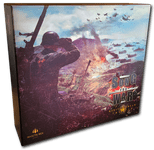
about 2 years ago I had the pleasure of exploring a game called song for war Mediterranean theater that was coming to Kickstarter now this was a strategic operational level two to four player game about the Mediterranean theater in World War II designed for easy access and playability and yet with a lot of subtlety and depth to the sequence of play and the way you could use units and the unit characteristics unfortunately that game didn't make its Kickstarter I thought that was the end of it but fast forward to today and I'm incredibly excited because the game is coming back for round two the developers of the game at invictor Rex took all of the feedback and comments and thoughts that they heard about the previous Kickstarter um revamped a lot of the composition of the game and some of the gameplay added two more scenarios to the game uh created a couple of options for the kickstarter so it's basically a reworking and reenvisioning of the game while keeping true to the spirit of the original that addresses the concerns that people had in the first Kickstarter it's coming back to Kickstarter in early 2025 in this video we're going to do an overview of the game and talk about some of the changes between the last version and this version let's jump in and get started before we jump in and take a look at the components in detail let's do a big picture view of what we've got what we're looking at right now is one of the new scenarios added to the game this is the North Africa scenario it plays on this 27 in by 31 in map of the North African desert now in the previous kickstart starter there was one 154 INX
31 in map here's what it looked like right here and there were two scenarios now these scenarios took quite a while to play four to six hours and some of the feedback from the earlier Kickstarter was it'd be nice to have a couple of options that didn't take so long to play and didn't have as big a footprint so hence we've got this North Africa scenario and in addition to the North Africa scenario there's also an Italy scenario that uses another 27 in by 31 in map now these scenarios in in addition to having the same core mechanics have also added a couple of Mechanics for example the Italian scenario has some hidden deployment and this North Africa scenario has supply lines and Mobile Supply hubs to represent kind of the dynamic Supply nature of the North African campaign in the upcoming Kickstarter you have two options you can get the North Africa scenario here together with the Italian scenario or you can get the bigger package that has all four scenarios in it including of course the two Mediterranean theater scen scarios on that 54 in by 31 in big map in addition to the two new scenarios there's been a lot of continued play testing and refinement of gameplay some of the elements and some of the cards and things have been redesigned a little bit and we'll take a look at those as we dig in more into the the games here and with that being said let's jump in now and take a look at some of the components in the game what we're looking at right now are the Allied unit trays and there are over 400 units in the game a quick uh disclaimer this is still in the Prototype stage so the final comp composition of units and what they look like and the art uh may change between
what we're looking at right now in the final production version that goes for everything in the game now there are over 400 units tiled units in the game representing a variety of air sea and land forces in the game let's take a deeper look now at the units and talk a little bit about how they Impact gameplay uh first up there's a great variety so this is not comprehensive but we can see anti-aircraft units transports destroyers artillery light bombers uh ground transport uh we've got some infantry over here in addition to this we've got heavy bombers and cruisers and battleships and aircraft carriers and submarines uh a a a pretty broad pallet here of unit design each side also has a unique unit here is the B17 for the us and this Alpine infantry for the Italian forces the units bring up a couple of aspects about gameplay when I made some previous videos about the game people said wow it looks like axis and allies um there is some visual comparison perhaps in terms of the style of units but the gameplay here is much deeper and much richer than axis and allies nothing against axis and allies this is just a more subtle more involved in a deeper game but while we are looking at the units it is important to note that all of these units function in very unique ways they have unique movement capacities they have unique armor ratings they have unique hit unique hit power and hit ratings and then almost every unit has a unique skill or function within the game put it all together and you get a very unique air sea and land combined arms effect in the game having said that an artillery unit for the Italians for example is going to function the same way an
artillery unit functions for the Germans and likewise armored for British forces is going to function the same way as armor for German forces with the caveat that in the Mediteranean theater there are ways to spend National support currencies to give these units unique functions for their own nationalities all of that adds up to a game where we've got a historical Foundation For What happening inside the game play but I wouldn't call this a historical simulation this is a game that focuses on gam play on focuses on creativity and tactics and strategy and it isn't really tying you to the actual history or the way these conflicts played out and nowhere I think is the uniqueness of gameplay better stated within this player Aid that we're looking at and there is one for each of the four powers we're looking at the German standard units one right now on the Le hand side we can see all of the elements and and strengths and factors and information about the units in the game the right hand side is the sequence of play let's take a moment just to talk about both of these because they're very important I think for understanding how the game works so the left-and side here has the air sea and land units Capac capabilities this is the column for movement so it talks about what the movement ratings are for all of the different units and again this is the same for every nation so Fighters for the Germans are going to function as Fighters for the Allies for the US and the British forces until you get to those unique unque units that come into play uh this is the armor rating so what it takes to destroy a unit like this
this is the hit power that it has at it so it does needs a seven to hit and it does a white level of damage there's different levels of damage that units do and these are the characteristics the special characteristics of all the units over here we can see on the right hand side this is the cost and Supply factors to rebuild a unit during the supply phase so every unit's got a lot of different things going on learning how the unit functions is probably the most complex aspect of the game overall I'd probably give this game a complexity of a three though it's really not complex and you've got all of the information right here once you understand the basic gameplay elements you pretty much use this as a reference all the time and you're good to go let's talk a little bit though about the right hand side which is the the sequence of Play It's divided up into two parts we've got the movement part the movement sequence and then the combat sequence and I'm going to make another video that will show pieces of this in action but basically what happens at the beginning of a turn you're going to move everything that has this so the first part of the movement in a turn is going to be for example the Allied Forces moving all their Fighters and their submarines then if there are any Fighters and submarines that have generated combat you walk through these battle steps and these are this is the order that the units that are engaged with combat fight so the anti- anti-aircraft is going to fire first Fighters are next light bers bombers and heavy bombers go next destroyers and submar Marines and so on so forth through any hex that there is any area that there is combat involved with once you've done all that you go to the
second player which is going to alternate it could be the Axis or the Allies depending on which turn it is and which part of the turn then they're going to move their Fighters and the submarines then you're going to go back to the first player in the turn they're going to move all of these air units moving the fighters again moving destroyers and the ship transports uh they can their mines are actually in here as well and this is going to go through any combat that's generated by that we'll walk through all the combat steps so a scenario like this uh North Africa scenario is five turns but each turn is a very involved process where you're going through in seven different well six different stages here until you get to the end of it so a turn is Big A Lot happens and this is a fast moving game where the action really cranks up fast this is a great player aid though for using it for understanding the sequence of play and also quickly referencing which what units do what and how they can perform in combat and in action on the other side too we have an explanation of all of the unit abilities so this talks about what each one of those symbols mean on the units and this is the setup information and keep in mind again this is a prototype version the final version of this will likely look a lot different let's talk now about the unique aspects and these unique cards that come into play in the Mediterranean theater version so this aspect of gameplay isn't in the North Africa scenario or the Italy scenario it's only in the big Mediterranean theater scenarios and and this is where we have a set of about 60 cards that represent unique events unique units and unique capabilities that are
asymmetrical that each side in the game can develop and what we're looking at right now are some of the US and British and German capacities and basically we talked about how an infantry unit for the Italians is the same as an infantry unit for the Germans but this with this system here this is how you distinguish them at the end of each turn in the Mediterranean theater version you're going to get two of these National support tokens and we can see that right here there's a cost on each of these cards for example this cost two national support tokens to purchase and what you do at the end of the turn is you spend these National support tokens to pick a very small subset that you're given in each game out of these cards and by the way these cards have all been redesigned with a different look so these are most definitely a prototype version I should should mention that so for example here if you were to spend the two national support tokens on the US Infantry you're going to punch them up to a level that they hit at a gray level of attack Which is higher and harder basically because they developed the Bazooka they can do more damage and it would cost you two of these National support tokens here is a US Ranger class aircra craft carrier a German junker dive bomber and a Matilda tank for the British in addition to units some of these cards provide unique capabilities and unique actions to your entire side for example bomb alley allows the axis bombers to use their tactical bombers in a strategic way this is an uprising innate Naples of pro-allied resistance that's going to put a force in there this is Counter Intelligence that allows you to move
some of the Italian units around supply lines giving the US forces a greater amount of Supply in a particular turn so there's a lot of different unique ways that these units are going to influence a game and they can in turn influence your strategy for example if you get Matilda tanks as the British you probably want to start building more Matilda tanks and resupplying with more Matilda tanks so it's going to give you a greater strength with that force and perhaps lead to some of your strategy going down that line it's really neat way to bring a lot of asymmetry to a game and also because you're only going to see a very limited set of these in any one game it creates a lot of replayability as well because every game in that Mediterranean theater is going to play out different depending upon what units you're given to pick from and what what what special cards and abilities you're given to pick from and which ones you finally decide on what we're looking at right now are the victory Point tiles basically every scenario has a number of objectives objectives that each side is fighting over we can see their values up in the top left here of these different tiles and when an objective changes sides it represents a transport a transfer of victory points that go with it and you track that as you're playing the game um when a point when a side gets to a certain Victory point total it can trigger an automatic win so scenarios don't necessarily go their first turn length but basically this is what you're tracking in terms of objectives so you're looking to gain these objectives with your combined operations and try to tilt the nature of battle to your side so you can end the conflict and win I want to talk briefly about hidden fleets
and how they Impact gameplay also a little bit of a connection with these two soliter play so one interesting feature of the game is that most scenarios start with one of the four powers uh or more having a hidden Fleet here is the German hidden Fleet basically resupplies for North Africa as you start that North Africa campaign and these this ser tile here this designates that it's in this the hex not the the area j7 and this is the units that are there so the German player is keeping these off the map and just designating as they are moving their Fleet where the actual location of the fleet is now there are mechanics for discovering the location of a fleet and for when you can break up a location of the fleet and how it works when you reveal it but one of the big elements of gameplay is trying to guess and figure out where your opponent's hidden fleets may be and likewise they're trying to do the same thing to you especially in the Mediterranean theater game where you're not really sure where the Allies are going to land are they going to go up perhaps through Greece are they going to come up through the boot of Italy are they going to go through Sicily it's a lot of mystery and so as the axis player that that hidden game behind the game of where is the Allied Fleet the axis also have a hidden Fleet that can counteract that so there's a little bit of subterfuge and mystery going on in the game now obviously if you think about that that's the trickiest thing for soliter play that's the one thing that's really not going to work all that well in a soliter environment even playing both sides you're going to kind of know where they are now I know there are being some rules and considerations or guidelines being written perhaps written
perhaps the best way to describe them for solitire play I haven't seen those yet so that would be interesting to see if they're coming up with a mechanic that might uh kind of allow you to bring this hidden Fleet aspect of gameplay into a solitire play the only other place where I would see soliter impacting it is in that Italian scenario where you've got some hidden fleets Landing for the allies and you've got some hidden deployment for the axis forces so that one I'm curious to see how soliter might work for that at the moment I'd probably give this game a six I think it works really well with the loss of the Hidden Fleet aspect should also be mentioned the game comes with a bucket of dice white gray and black designating the strength of the units that are firing in combat very simply I I'll show this in the next video but your rolling to hit and the number of hits you get equals uh to a certain degree the amount of damage and units that you're going to be able to take out on the enemy side so it's a rather quick resolving combat system based on the Firepower and the armor ratings and the types of units that are involved it works really elegantly it allows you to get through combat in a in a way that represents both the strengths of the units and doesn't bog down the game and lastly the maps uh these are absolutely gorgeous uh they're all with thick high quality mounting and again these are prototypes so some of the designs I know in particular there's some being some rethought being given to some of the desert designations for the North Africa scenario uh so these are not final versions but in terms of the types of art that we're going to expect I think in the final version of the game these are absolutely Stellar I mean they just pull you right into the gameplay I know
talking often like what are the most beautiful maps in war games this is right up there with me I just absolutely love the the design the the color palettes of these the way it kind of evokes the nature of the terrain here kind of the lighter the desert nearby the water the thicker drier desert in here just absolutely stunning maps and beautiful color palette here I love how they look and here we are looking at the Italian map we can see this is for that kind of secretive deployment up here for the German forces but again we the mountains running down the spine of Italy the trains just absolutely beautiful stuff I I love the way these look and with that we've looked at all the components of the game and talked about gameplay I'm going to be creating a short gameplay video I'll put a link to it as soon as it's ready thanks for watching everybody have a great day