The Hungry Gamer Previews Grendel
Transcript
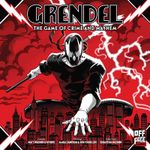
Ooh, that looks tasty. Welcome folks. Today the Hungry Gamer is back with another crowdfunding preview. And today we are talking about Grenle, the game of crime and mayhem designed by Allar Cameron and Senfung Lim and published by Off the Page Games with illustration by Matt Wagner and others and graphic design by Sebastian Kener. And I do apologize if I mispronounced any of those names. Now, before I get started, I'm going to move these pieces off cuz just the size of them, as you can see, they cast a bit of a shadow. And I'll explain what they do in just a minute. But also, before I get started, thank you to Ottopasia Games for sending me this prototype so I can make this video. And obviously, it is still in the prototype phase, and some of the rules may change as well as some of the components. Now, what this game is is this is a game that is based on the graphic novel series Gindle, which is a kind of dark game of well, crime because Gindle is not a hero. He is an assassin crime lord type guy. And so, you have that, you have the police, you have the mob, and you have Argent, which is the rival to Grenle. Now, I haven't read it.
That's my Wikipedia research, and that's about all I know about it. Uh, and that's really all I know about it, but that's what this game is. And it plays out in a bit of an area control style game. And this is a kind of the aftermath of a two-player game that I just played, a solo game I should say, that I just played. And then I kind of put some other pieces back on the board because all four factions will always be present even if no one is playing them. And as I said, it's going to be an area control style game in which you're going to wind up scoring these three areas of New York and you'll be gaining points for each of the different sections in each of the different burrows that you're going to be playing within the city. And I can't tell you too much more about how it plays because each of the four factions plays a completely different game. The green mob are doing a dice placement game. The purple Argent is doing a deck building/pusher luck style game. The red grindle is doing a baguer while the police are doing a randell. So all totally totally different. Now if you are not interested in how this game is played and want to jump into my final thoughts, then you want to go to the timestamp on the screen right now. For those of us still here, let's talk about how this game is played. And I'm going to very broadly, very, very broadly go over the how the different characters play just because we don't want this video to be 40 minutes long. But at its core, what's going to happen is each player is going to get to take their turn and it's going to allow them to put new units out on
the board or their influence out on the board and also more importantly put their aggression into these buildings. So you'll see here this is queens. Now, what will happen is as it's out there, you'll be taking different actions. And I'll mention briefly how this happens, but as you're taking actions, you'll be putting aggression tokens into the three different buildings from the three different burrows. So, Queens is right here, and then we also have Manhattan, and we have Brooklyn. And they all have their own building. And the tokens that you're putting in, hopefully it zooms in on there, are either one, two, or three aggression value. And the less aggression points you get, the larger and heavier the token is going to be.
And so what'll be happening is as you're playing through the game, people will be dropping in tokens into the building here. And as each different player has their own color tokens that they're dropping in, eventually it will collapse like it just did there. And you'll see the banner here has fallen down. But then you're going to pick it up and all the factions will get to use their aggression. And I will talk about that in just a minute how that goes. But after everyone's used all their aggression, you will score the burrow that you are having the mayhem happen in. So in this case, the way it would work is after we do all our stuff, again, I'll explain that in a minute. We would look if any of the regions has three or more factions in it, it does not score. So this region right here can't score. This region right here cannot score. This region right here cannot score. This region here could score. And then each of the different factions scores those differently. The police, for example, they score a faction. They score their point if they are in the region and they have the most units. So they would get one point for that. The mob, they score if they're in an area and they have two unique pieces. So this guy and this guy or maybe this guy and that token. That's how they score.
Gindle scores just by having his fear tokens in the region. That's how he scores. and the Argent scores by having his tokens in the region as well. So in this case, if this was the setup of the round, Gindle and the Argent would score for this. There we go. The police would score for this one. The mob would score for this one and this one. Gindle would score here and nobody would score there. And so that's what you are striving to do. Now again, very briefly, let's talk about how each of the different characters do that. So, starting with the Argent. So, the Argent's always going to have the ability to once per turn just drop an aggression token into a tower that is that he has his presence in the region. But at its core, what he's going to be doing is he will be drawing action cards and playing them out, watching the number of skulls that he has. Because if he ever gets four or more skulls, then he busts and he loses some of his potential. But at any time, he can say, "I'm going to stop there."
Or again, if he goes too far, there are some ways he can mitigate that, but he'll lose and lose some of his actions and he'll lose his bonus action. Once he decides to stop, he gets to take all of the different actions. And those actions might be move his ambush tokens around the board. That's how he's going to score points. It might be destroy another player's flat cardboard token that they have, which is a way to weaken them or remove their ability to get points. It might be move. It might be punch something to harm it. Might be draw a card. It might be put aggression in the bag. And there's also the ability this symbol which allows him to upgrade his deck of cards. Then we have the mob. And the mob's going to be rolling four dice. And they're going to pick three of them. And they can do a variety of things. They can do a recruit, put anything here, and that'll allow them to draw a card and place out one of their mob bosses and four mukes. Or down here, they'll be able to do all the different abilities they've unlocked, except as the game goes, they will start with fewer of these that they can do, and as they put them out onto the board, that will unlock new abilities that a die here will do. they can put the same die on these two spots. And if they do, then they get to do all the stuff that kind of goes down this crime racket spree that they're doing there. And you'll notice these kind of outlines because all of these different spots can be upgraded as you're going through the game. And that's the broad overview of how they work. Now, the police have
their two cars that are going to go around this rondelle here. And wherever the cars stop, they get to do those actions. And you see these little police badges here. As you're going through the game, you can get them and add them on to the different spots to give you more and more abilities. And you have your police wagons over here, which as they go out, they will give you more abilities. And they will also arrest different bad guys. And those tokens will go on there. And broadly speaking, that's how the police work. Now, Grenle is a bag builder. And so you'll draw three tokens out of the bag and then you'll get to place them wherever you want onto the board. And then you get to do whatever symbol is below it and everything to the left. So in this case, you could move two. But if I also place this one right here, I could do a little basically teleporting to your fear tokens and then move two more.
If I had this one, I could upgrade one of my fear tokens. So take it from this side to this side so it's hard to get rid of. then do my little teleportation and then move two spaces. And then anytime you fill up completely one of these rows because they stay out there, then you take one of them, you discard it, and you pick two wild tokens and you put them in your bag as well as these right here, and it empties out. Each of the different symbols has a bonus that you're going to get if you match the location. So, if I put the rose in the rose spot, I get to add an extra aggression token. And the shock fork lets me kind of change the chits that I drew out of the bag and so on and so forth. And each of the wild ones gives you an extra bonus as well. And that is how Grindle overall works. Now, the only other thing that I need to briefly cover is the mayhem phase. And this works basically the same for all of the players. So, what's going to happen is when you dump out the building, each player will have a certain amount of aggression that they've put in with those one, two, or three tokens. And so, you'll count up however much they have.
Let's say Argent got six. I would slide this over here. And there's ways to get more aggression, discarding cards, and so on and so forth. But then what's going to happen is each player will get to take a turn where they spend three aggression. And that's what this thing is down here. I have a total of six, but I have to spend three on my turn. So maybe I move one space. Or maybe I punch a weak grunt. Or maybe I have all three and I'm going to punch a captain and knock him out. Or perhaps I'm going to spend two to take a token that's in the space where I am and get rid of that. Or maybe I will play some of the cards that I have which will all do different things and have different costs in the top left corner. For example, right there there's a two. And I will take a brief pause. This is again just a prototype, but one of the fancier cards.
You'll see kind of the foiling on there. This is an example of what the some of the deluxe bits might look like. But you're going to go through and you're going to spend your three. And then the next player will get to spin their three. And basically what you're doing is you are trying to get the region that's scoring into a position where you're going to score and the other players are not going to. But then after you've spent your three, you'll slide this on down and the next time it's your turn, you can spend your next three. So you have to spend it in threes. You can't save any between mayhem rounds. And if something were to happen to say I started with seven and I had one left in my last turn I would simply spend one. Now here's the other catch. Once a player reaches zero they will score the points that they're going to get for that region. The other player is going to keep going and they may change the board state to where if you scored again immediately you would have more or fewer points. But each player scores as soon as they've gotten to the zero. And you're simply going to play until all three of the towers have triggered. Then you do kind of one final scoring of the whatever two regions scored first. And whoever's the most points is going to win the game. So what do I like about this game? The very first thing is the aesthetic of the game is really good.
The board is decently sparse. However, that what that does is it makes it really easy to know what is happening where, where things are. It's very easy to read the board. And I know often I will talk about games of this ilk and I'll say, "Ah, the board's boring." But in this case, especially when you start playing with the solo mode, it's really, really good that it's this simple and clean. But to counterbalance that, the cards are great. The artwork on those cards is just fantastic. It's really, really good and I really, really like it. The next thing is each of the factions is completely asymmetric. As I very, very briefly showed you cuz I did not want this to be a 35minute video. The mob is a dice placement game. Argent is a deck builder/push your luck style game. The police are a rondelle and Gindle is a baguer. And each of them plays really differently. And you even dig down a little further into two of the characters. You're really just one character, Argent and Gindle, and you're putting out fear and ambush locations around the board. While the mob and the police have armies of troops that you're sending out that you have to deal with in different ways. And it's really satisfying to every time you play have a completely different experience. So you're you can play this game four times and it'll be four times before you start to feel like you're playing the same game twice. So really really cool. But
the Kuragrass are those towers. I don't understand how they work, but what they do is they give you this intense I don't know when things are going to happen. And when you couple that with the fact that they've made the lower value tokens heavier, meaning you can trigger a tower, trigger a mayhem phase sooner potentially, but you get less from it is masterful. I love love love how that works. Also, with that in mind, I really like the vibe that at least in the games that I have played, you have this vibe that there is an escalation of mayhem going on because in all likelihood, there are people been putting their aggression tokens in all three towers. And in the first game that we played, the first tower tripped, we did that mayhem phase. The very first person took the next turn, the tower tripped, we did the mayhem phase. the very next turn the person took the tower tripped. So I can just really really escalate. I did check with designers that is not always how it happens but it just happened to be a few times for me but I really liked the way that went that it just escalates and so you're doing all this planning at the beginning. You have three locations and it's oh mayhem happened now everyone's on edge and oh mayhem happens. Really cool. And of course the towers
themselves are just it's just really neat. It's just a really bit neat of board game craft. I don't know what else to call it. It's really, really cool. So, all of that I really enjoy. I also think the game plays pretty darn quickly for what it is, which keeps it interesting. The game says about 30 minutes per player. That's probably about right. Probably about right. I think if everyone's kind of become a master of the game, then you can probably knock that down to a four player game in about an hour 45 or so. But it's a well-paced game. It feels tight. nothing feels wasted in the game and I really do appreciate that. So, what are my quibbles with the game? The first one is the teaching of the game can feel a bit belored and long because you have these four completely different games that are going on. And the draft rule book that I have, it recommends have the first player go, teach them how they play, and then teach the next player kind of as you go around. And I think that works in the way that we did it because I was playing with a whole bunch of gamers. I just pulled apart my rule book because it was, you know, just a print out and just kind of passed everyone out their stuff and we just kind of went through our own and we were able to jump in pretty quickly. But there is going to be a learning curve to this game because the factions are so very very different.
Even though the core things of like punching and luring and those things, that's all the same. It just it'll take a little bit longer than you think to kind of jump into your first game. Next thing I'll say is when you start hitting the mayhem phases, it is possible to just feel like you're doing nothing. And that is your own fault because you didn't put a lot of aggression in the towers. But it is possible for one to drop. In fact, the first time I played the guy playing the mob, one of the towers, he had zero. He just had nothing in there. So, he didn't really get to do anything. I mean, he could have discarded cards to get a little bit of aggression, but at the end of the day, he just didn't have much aggression, so he couldn't do much. And in a game when you're only going to have three mayhem phases, it's kind of a bummer if you're like, "Ah, wow. I've totally missed or basically missed out on that entire phase." And then the only other thing that I will point out is even though I just praise this kind of escalation and mayhem that you can have, it can also at the same time feel a little bit unsatisfying if the towers just start tripping.
one after the other because a big part of the fun is the planning phase. Like that's when you get to do your miniame. When you get to the mayhem phase, everyone's playing the same game. Their cards are different, but everyone's doing the same thing. And so when you get there, if it's just been trip, trip, tripped, it can feel sometimes like you've been robbed of perhaps one of the more interesting parts of the game. And again, I have to clarify again that the designers told me that while it's not unique to my experience that that happened in the big game I played and also all the solo games that I played, it does happen. So, it doesn't happen all the time, but that is something that can occur and that might feel like a little bit of let down to you. And then the last thing I'll say is at the time of my recording of this video, there is only a single option to play solo and that is the mob is run by an AI and that's a bummer. I want to be able to AI the other three and I get it. That's a lot of work. But hey, if I do feel like if you're going to have the option to do something to if you're going to be able to play solo, then I want to be able to play solo with all the factions. Even if it's just one more, even if it's just give me the police or something out there so I can play the mob versus the police or something like that. I think it would really really pop if you had that possibility. But all in all, I'm really impressed with this game. I don't know this graphic novel at all. I know
nothing about it. I'm kind of interested to go check it out just because the art's really cool, but I know literally nothing about it. I don't I don't have a clue and so I can't speak to how well this game really grasps the theme of Gindle, but it is cool and off the page consistently does something that I think is unique. every single game they put out, they're doing something that other games aren't doing. Have has another game done something like this? I'm sure someone has, but you don't see it very often. This is not just another area control game. This is not just another worker placement game. They're constantly doing something different and something unique and that is really cool. And part of that really makes me like this game even more. But even when I step back from that, this is so cool. these tower things and ah asymmetric. Woo! There is a very tight, very clean game underneath there, which I really do appreciate.
There you have it, folks. That is Grenle. As always, if I made any mistakes in the rules overview, please let me know in the comments with the time stamp so I can get that in the clan subtitles. If you found this video useful, please like, subscribe, share, maybe become a channel member. As always, thank you so much for watching. Have a wonderful, wonderful day.