Let's Talk Board Games #30 - Café Baras, The Gang, Tangram City, SUMO, Tokkuri Taking
Games in This Video
3 games are featured in this video — they unlock as you watch.


Transcript
hi everyone my name is Monique and I'm nine from before you play and welcome to another episode of let's talk board games where we talk about a few games that we played recently and give our thoughts on them yeah so today we are going to be talking about five different games all of which can be played in 30 minutes or less because uh our schedule has been quite busy so it's nice to get these games that are shorter kind of played really fast and easy to set up and easy to learn right but first today's episode is kindly sponsored by podcat who are launching a game called zero.exe on game found on October 15th welcome to the Future where a vindictive AI has taken over and now a renegade crew must fight through battalions of bots to survive in zero.exe players take on the role of one of eight unique characters and fight to reclaim the city of shiima this is a fully Cooperative roguelike Dungeon Crawler in a cyberpunk style setting where players will be required to download hacks to add to their decks attack enemy AI robots and scavenge them for parts to build mods and items and complete operations specific objectives the game features hand management and deck building as well as deterministic combat that requires tactical decision-making because in this game there's no dice rolling or card flipping that's right and your only hope for survival is to infiltrate their data banks and Destroy them before they destroy you so if zero.exe sounds interesting to you follow the link down below to their gamefound Campaign which Launches on October 15th and thank you so much to podcat for sponsoring this video all right so let's go ahead and talk about some of these games now we do have to
mention all of these are revieww copies sent To Us by the respective Publishers so just be aware of that all right the first game that we're going to be talking about today is a familyfriendly family weight game and it is one that we were highly anticipating it is called Cafe baras right so this game was designed by Roberto Taylor and published by kids table board games and this is all about it's a card game basically where you are running your own Cafe as a capy Bara now if you've never heard of a capy Bara this is a a type of animal it's actually the they are actually the largest mammal in the world largest rodent oh sorry I I think there's whales that are really big yeah there are much larger mammals in the world it's the largest rodent largest rodent in the world super compal tempered at least the ones that we've interacted with yes I've Loved caparas for a very long time I'm a big fan of odd animals I really really love giraffes uh you know weener dogs are also an odd type of of dog and so caparas uh for some reason has had a huge spike in popularity over the past several years and uh and now for some reason there are several themes like board games that are being released with caparas and I am all for it give me all the capibara themes I think this game was on our most anticipated of this year right yes it definely in24 and I will say and I think we said it in the video in that video as well that it was on the list for its theme mainly but Roberto Taylor has also designed a lot of other uh family friendly friendly games such
as Creature Comforts and Maple Valley this one is no exception in terms of its weight and so the way that this game works is it is a card game through and through everybody has their own starting uh Barista or Cafe owner that is a capy Bara and a hand of cards and basically players are just going to be taking turns playing a card from their hand either into their Cafe paying the cost in the top leftand corner and adding its item or a symbol such as type of food or uh Entertainer to your Cafe so that you can fulfill orders in the future basically doing it this way uh by playing a card in this manner you are enhancing your business right so like you have more menu items to serve to customers you have wall decor that um is maybe pleasing or performers who are going to attract customers right and each card is actually multi-use in the sense that you can either play it into your cafe or you can play them as a customer who you are serving and so the bottom of each card shows a combination of symbols and they represent what the customer wants from your Cafe when serving them as a customer you're going to earn one coin per symbol that you actually have in your Cafe which means you don't have to have the customer completely fulfilled in order to serve to them because you are required to play one card on your turn regardless of whether or not you can afford to put it in your cafe or if you actually have those symbols to serve which means you can potentially serve customers and not actually earn any money for them yeah that's in ideal obviously and game like this yeah it basically you just be
tossing a card out so you want to at least try to get some money because you want to be able to churn and burn the money you make and then put in more cards in that first manner how we talked about uh playing cards so that you can then eventually attract more customers uh there's also public objectives or public goals uh scoring conditions at the end of the game that you're going to be trying to uh achieve some of those might be have this particular food and this particular drink being served in your Cafe at the end of the game so there's a little bit of uh everybody has that kind of public knowledge of what cards could be very valuable to not only yourself but also to keep away from your opponents right the game comes with I believe nine or 10 of those special cards and each game you only play with a handful with a handful like five of them per game these public objectives in addition the cards themselves have extra bonuses when you put them into play some of them there's a description box that'll either give you some sort of ongoing ability or a one-time benefit when you pay to put the card into play M and when serving a customer if you're able to meet all three of the symbol requirements as well as the decor preference that they have their aesthetic that they like then they become a regular and you'll actually tuck them into your Cafe so that you can score points for them at the end of the game because typically when you serve any other customer uh they just give you money you don't actually score the points for them so you have to try to meet all of their symbols in order to actually score for them at the end of the game yeah so how you get those symbols out are how you play the card the first way right so maybe uh a customer wants cake they want this
particular aesthetic uh kind of design inside and maybe they want a performer performing or something like that so those are the kind of the cards that you have to kind of lay out and so you have to have this hand management aspect of it where it's like I want this card for its points but I want this card for its endgame scoring which links into that and this card is part of the public objective so I have to just basically decide with the cards that the four cards that are in your hand how am I going to get the right symbols in place so that I can satisfy the right customers at the right time yeah that's essentially it and uh these regulars by the way are the timer for the game so as soon as uh one player has acquired a certain amount of them I think it's depending on player count that's right yeah okay then that is one of the ways in which the game can end and at the end of the game players will score points for the cards in their Cafe as well as the regulars that they have and the public scoring objectives yeah that's one of the two ways a game can end also if you go through the entire stack of of cards multiple times after Shuff through uh in a two-player game you're typically going to end it uh regular yeah exactly so I enjoyed this one lived up to my expectations a light card game that has just enough decision- making something as simple as which card do I play for decore and for Need for having symbols out which card do I draw back up in order to not only enhance my ability to score but also take away from cards from my other opponents uh because of the public objectives and just the right amount of kind of pacing in the game uh it never overstates welcome in our plays yeah that's exactly it it's very it is
very light this is definitely a family weight game but it does play in about 30 minutes it's very cute like the illustrations the artwork for all of Roberto Taylor's games are amazing and this is no exception but it's exactly what naine was saying it just has just enough to make it uh crunchy enough where you're actively thinking like huh which cards do I keep if I play this it's not you only have like four cards in your hand at any given time and ecy little tight not M for a c into your Cafe can be problematic but you need to have the customers to serve in order for you to gain more money but also you're keeping in mind the public objectives so there really is just enough there for you to be like really you know thinking throughout it and I also I don't think we mentioned it some of the cards they have variable scoring depending on what else you've set up in your Cafe that's something that's also very important to think about when you're trying to take and cards because you might find yourself in a conflict with a public objective where it's like I need to have eight coins at the end of the game but I really need to spend my coins to get this in because I'm going to get a bigger multiplier on scoring for something else so there's a lot of little little things in there again in a 30- minute package which is always nice it definitely uh Treads that balance between very being very very simple you know on your card on your turn sorry you're playing one card that's it uh but also having multiple things that you're trying to consider so that's pretty much it but uh if you are curious about the age range it is a two to four player game and apparently it's eight and up in
terms of age and I think that's about right so anyway that is Cafe Barz okay moving on to the second game we want to talk about this is a city building uh tile Lane game from none other than of course uve Rosenberg that's right uh very common themes for him uh originally published by Korea board games and now by Capstone games yes this is the newest uh in the line of TI laying games but it's a little bit different in the sense that these tiles are tangrams so if you were a kid from the '90s you might be familiar with tangrams I don't know if they use those in schools anymore I'm not familiar with them to be honest you didn't use tangrams people people I've heard people say oh tangrams and I'm like yeah in elementary school we did so 10 GS now I'm going to get this all wrong I don't know if that's that's the literal definition of these but when we were in elementary school we had these oddly shaped tiles that they called T GS and we were given this like outline and we had to use the tangrams to fit them all in the shape but the tangrams were all like diamonds like they they have a very specific angular shape to them it's if you're trying to like make a bird or like a peacock or something like that yeah you're supposed to these to fit them in because they're they're difficult maybe maybe we did that and I did not know these were full Gams yes well this is an entire board game that is filled with 10 G shaped tiles and we are building a city on our player boards now the way that the game works is each player has their own player board and their own set of identical tangram uh tiles each tile is double-sided there
are only two different types of terrain in this city and that's going to be important because over the course of the game our goal is to try to fill up as much of our board as possible while balancing these two types of terrain in addition the game comes with a deck of cards that represents all of the different tiles in your supply and each round depending on player count you're going to deal out a certain number of these cards to players as well as in the center of the table again depending on player count we are going to reveal each card one at a time and will'll all simultaneously place that specific tile in our city yeah so it's almost think of it like kind of like a flipin right is or Flippin lay maybe uh very similar to like my city or yeah my city or karuba karuba was another is another game that's really popular from Haba where that has the same thing where you basically reveal a card and everybody has to place the same tile you you could technically in this particular game you could just toss that out but it's in your best interest especially early on to try to fill up your board as much as possible MH and when choosing your tile you can choose which side of the tile to place in your city and that's going to be very very important for scoring as you'll see and so the way that it works in a two-player game because that is the only player count that we played this at by the way is uh we deal out four cards one card to each player and we get to look at our own card but we look at each other's cards and then two cards to the center of the table one that is going to be face down and one that is face up and uh during the round we start with a face up card and then we move to the Face
Down card revealing that which means you don't get to look at it you know beforehand and again because we talked about these all being tangrams which I've now understood the definition they're awkward shape so you you're trying to plan building out your city by balancing the green and then the black tiles which of course is your choice as to how you want to do it but you never know what tile is coming next so if you're thinking okay I'll leave this with a little awkward overhang and eventually I know there's a tile that'll slip in it might not show up for four or five rounds so be careful but you have some information because you do have the the card that you have in your hand so you do know that that's coming which is actually really important for planning and so after the two cards in the middle of the table have been played then the players will play their cards one at a time right and that's basically how the game works you you basically keep on playing uh I believe it's six rounds yes it's total of six rounds and at the end of each round you're going to have end of round scoring where basically all players will score their largest rectangle that's in your city so during the round you are trying to create a larger and larger rectangle so that you can score more and more points from round to round but at the end of the game you're going to count the number of squares that you are able to fully make of each type of terrain you'll score additional points depending on how far off you were between the two types of terrains your goal is to have the green as close as possible equal to the other the city-like terrain because if you're perfectly able to have a perfect balance between the green and the black tiles you'll score an additional 20 points in the game yes there's also Fountain tiles
that we'll be placing one out uh from round to round and that also helps us complete areas as well as rectangles but that is that is pretty much the entire game yeah so this is probably the lightest of all of the thailan games that we played from U Rosenberg now if you're not familiar we we have done an U Rosenberg Series in the past we've chronicled all of his Ty games up to many as possible I think up to the point of wherever we were at at that time yeah like we haven't covered Apple Jack uh that's one I still want to play yes yeah we haven't played that one but uh We've also done all of his big box stuff and so we are not going to be doing a playthrough of this it's going to be impossible for us to just do all playthroughs of his games forever but of course he wanted to talk about it because we've played it a couple of times and so um like I was mentioning this is the lightest that I've experienced at least of all of his tile laying games because it really is as simple as that like we're just going to be revealing a card and everybody plays uh their tiles but I think the the U Rosenberg aspect of this is the complexity in the shapes the balancing of the terrain the t g the turn order so the fact that especially in a two-player game you know Rosenberg likes to it seems like he likes to do things with turn order you know we saw that in games such as uh Oran Burger Canal or uh newsford or even laav game it's only seven turns but one of you is going to get three one's going to get four right so the turn order aspect adds to the strategy or the thinking and in in such a light game like this that definitely comes into play yeah uh this particular
one though um even though I I kind of enjoyed it but I also kind of didn't at the same time um the idea of trying to balance the green and black it seems like I wish there the the there was penalties for not being able to do it because um getting just a large rectangle and then constantly scoring it for six times is way more points than just trying to get you know the 20 at the end you want to do both yeah you want to do both but um the mo like in our games we were scoring in the mid hundreds so like 150 160 so the balance aspect of it to nail it perfect was 20 points versus having just a large rectangle round after round after round accounted for about 130 of those points so the balance kind of seemed a little off um I don't know there there there's the part of that that uh just I wish there was a little bit more punitive damage for not being as close and so you really had to focus on it you know he wants the Agricola version maybe I don't know um no I I hear you though this one definitely fell flat for me uh just because I don't know if it's it it's very simplistic like you literally are just putting out a tile and the the the critical thinking there is ooh which areas do I want to leave for these really odd shaped tiles and I I felt like I wanted to enjoy the balance aspect of it a little bit more than I did but in the end it was a little bit too lackluster I guess yeah itat in the first game is when I realized at about like round three it's like oh wait I've
I've already scored like 60 points but my balance at the end of the game is the max I can get is 20 points I'm just going to focus on just making sure that I just have this really big rectangle and if I can balance them out in the end then I'll then I'll try to do that as I go because the rectangle scoring doesn't depend on the balance you don't you don't care about the colors of the tiles which by the way for such a a simple looking game with not really much artwork the artwork is really cute it's actually very nice artwork yes we like looking at the tiles this is cute it's such a Whimsical looking City that you're building you know for such a simple game I I just thought that the artwork was nice so of course we are big fans of U Rosenberg and always look forward to his designs this one unfortunately fell flat for me mhm but if you've played it we would love to hear your thoughts on it what other wise that is Tam gram City all right next up we have a couple of small card games from the same publisher we have Sumo which is a two-player only trick taking game oh yeah and tokri taking for two to four players this is not a trick trick taking game I thought it was because it says taking in the title but they are both published by brighte eye games so let's just start with this one first Sumo Sumo yes trick oh it says trick- taking card game in the O this one tells you about trick taking yeah yes uh two player only uh the box says 5 minutes and it's a very very short game yes it is very very short the designer by the way this game is designed by Kota Kono and uh the reason why it is such a fast playing game is because this is a
trick-taking game that simulates a sumo wrestling match oh yeah so the game comes with a small deck of cards only 25 cards and the deck of cards is comprised of four suits only numbered one through five so the 25 cards are actually 20 playing cards and then five cards that represent the Sumo ring the wrestling ring yeah you kind of construct you just put a couple cards together and it constructs the ring and so the way the game works is each player is dealt a hand of eight cards and so four cards will not be used in the round and before you actually start the trick-taking aspect of it the game starts by players trying to figure out who's going to go first and the way that that works is each player will simultaneously play a card face down from their hand and then reveal it at the same time and whoever played the higher number is going to be the lead player but if nobody plays a higher number if we just play the same number regardless of the suit then we do it again and we keep on doing it until somebody does play a higher number which means you can uh play out your entire hand and not actually have a lead player in which case you would start over so if we both played a three and we're like okay we both played another three yes okay then we B somebody then played a five and a four then it's like okay whoever played the five you are the first player all the cards played are out of the game yes they stay on the table they do not you do not replenish your hands so whatever you have left in your hand is what you actually get to play with so then once a lead player is determined then the trick taking aspect starts and it is played like a standard trick-taking game the lead player will
choose a card from their hand and play it face up and then the other player must follow suit if they can and if they can't then they play any card from your hand and keep in mind that at that point your hand is very small like you only have a few cards left so you have the eight you started with the cards that you flipping and that's pretty much it yes I think that is by Design because you really want to be critical about specifically which card you are playing there is a lot of card counting in this game you need to card count in this game yes and so the way that scoring actually works is who after the two cards have been played whoever plays the highest card in the lead suit uh wins that trick and in the match you actually move these Suma wrestler cards towards the player who is losing as if you push them in in the Sumo so you're getting them to the edge of the ring and you're trying to push them off so essentially if you can win two in a row because it's basically middle their end your end yeah and so once you get them from the middle you try to get them to the edge and then you want to push them off and you push them off so as an example if naven were to win two tricks in a row he pushes the Sumo over to my side and then the second trick he pushes them off and that is the simplest way of winning the game now the thing about this game is there is a reference sheet that includes a list list of several Sumo moves like counters yes counters and these are ways in which you can just win the game as an example if you play a number four against a number one of the same color then you win or if you play a number one against a number five of the same color or if you play a number two
in a different color than the lead color when you're on the edge of the the the mat the ring essentially then you win and so it's not as simple as you just trying to win two tricks in a row you you have to be cognizant and careful of these you know sudden death uh moves yeah that's where the card counting comes in so it's like if you're especially like at the beginning you're like okay we played three cards out all right I saw my three I saw your three I think Mo'Nique might have the one brown so maybe I'm safe here but then there's those four cards at the beginning of the game that you're kind of gambling on so it's like I got her up against is she short suited here can I play a can I play a card because if she plays a two off suit mhm and I have her on the edge then she automatically wins so you have to be very cautious and very careful uh depending on kind of the game state for how simple and how quick of a game it is yes um at first the very first time I played it I was like this isn't much there is nothing going on here this is what is this oh my was over it when we played this the first time but the more and more I understand the counter moves and the the positions that you can be in in for such a quick 5minute game yeah it's actually pretty entertaining it is you know the first time we played it um I think somebody had told me maybe that they didn't really care for the game and so I already kind of had this like okay just try to figure it out yourself kind of thing and it's a five minute trick taking game for two players so what what
could it possibly be like you know and then when we played it the first time you know you don't really have the card counting aspect uh locked down yet in terms of knowing exactly how you should be playing the game so it it plays so quickly that it kind of felt like that's it like you just win like how how could you possibly strategize it definitely was one that after several plays it's like oh oh it's really a mental game okay it is a mental game yeah you're trying to figure out like oh what are the chances that they have this card in their hand because four cards are just out of the game yeah so you cannot uh you cannot perfectly card count something as simple as that very beginning who is going to be the first player you're getting information from your opponent when they're playing a card face up uh to Det who's going first it's like okay you just played a three Brown I just played my five Brown so that means if I play a brown and Monique is short suited in that and she has twos she can instantly win if I have her up against the edge so you got to be very very cautious of those moves and so it's it's very important to know the five like instant wins in the game so um without the instant wins then it would be very just very okay very okay the instant wins are really what make the game and I think that the game is so it's it's very it's entertaining because it's so quirky you know the theme the way that they implemented the theme with a trick-taking aspect is interesting the fact that you're pushing you know the cards over to your side so when we went to Japan last year uh we actually went to a Sumo tournament and every time the
next yeah it's pretty amazing like every time there's about to be a match there's this like tension buildup excitement yeah and then all of a sudden it's just boom and then it's over within like few seconds and so it this game kind of tries to obviously emulate that and a card game like okay it's it's not Sumo like let's be honest but but that anticipation of like okay here's your eight here's my eight uh who's going first yeah yeah yeah yeah okay I'm going first oh you have okay that's one green card why did she play a green card of all the cards that she could have played why do she play the three green okay maybe she's trying to short suit herself there there's all these little little heady things and so I don't know I I this is one that I've had a complete 180 on from when we first played it to where I am now talking about it that's interesting I I enjoy it this is a good travel game now obviously this is not like the best trick taking game of all time I'm not trying to say that it's not incredible but it's entertaining and it's definitely you definitely get what you want out of it in that five minute you know what I mean like that five minute gameplay like it does what it wants to do it's entertaining because we play against each other yes that's the other thing because we are we are playfully competitive with each other on games like this even playing something like Mario Kart we're very competitive playing you know something like that so it's nice to just like one up the other one when you think like the most recent time I played We we played and Mo'Nique just got me on one of those instant wins and it was just like it definitely definitely has those moments so anyway
that is Sumo it's a silly you know two-player trick-taking game but it is quirky and I love finding quirky uh games that are you know that that has that gameplay there that's just entertaining enough so y so there you go that is Sumo all right moving on to the other one this is a different designer same publisher this is to taking by Takashi Saito and it is not a trick taking game this is a game for two to four players in which you are so the theme is really interesting I know there are dinosaurs on the the box cover here but the theme technically is we are drinking sake sake I believe and they are in these these bottles which I think are called tokis I they're traditional the traditional yeah bottles and the way the game works is everybody has a hand of cards and at the start of the game you have to choose one of your cards from your hand and place it face down because at the back of each of these cards is a tuuri bottle and this is supposed to symbolize the the sake that you are drinking and how full it is and how full it is so when you play that first card uh face down you also take a stick that comes with the game and you put it on the 10 marking that your bottle is completely full it's 10 full yeah yes now the object of the game is for you to uh completely empty as many of these tokui sake bottles fill them up fill them up and drink them yes and so on your turn you are either going to play a card from your hand face down in front of you as another tokui bottle or you're going to play it for the card Effect which is going to be emptying a certain amount of sake or drinking I
guess a certain amount of sake from a certain number of bottles so for each number that that is showing on your card you must be able to empty exactly that amount from one bottle so you might have a card that says five + 5 so that means one bottle you must be able to empty five and then from another bottle you can empty another five you cannot uh split that up so if I have a bottle that has four and another one that has one I cannot say four of the five is one and one is to make it the total five correct hope that makes sense in order for you to completely drink the bottle you have to nail it exactly so if you only have two left on a bottle then you have to play a card that has a two at some point somehow um now whenever you play a card and you empty bottles you can choose any bottles around the table and that is where the True Heart and Soul of the game comes into play because uh you can't pass until you've run out of cards which means if you don't have that math showing around the table then you're going to be forced to play a card as a toui bottle in front of you putting more pressure on you to try to empty it by the end of the game because if you do not empty it if you if your uh bottle is full from 3 to 10 then you get negative points right if it's at a one or a two then it won't score you any negative but three or higher than each bottle that you have that's that full is going to score you negative two points and for each bottle that you were able to empty then you score one point so you're losing more points than you're gaining in that case so it's just a big Balancing Act of trying to empty it's
really a big math problem it is yeah there's no passing in the game so it's like on your turn if if you cannot figure out how to play a card you're going to have to figure out which card are you going to play face down to represent another 10 that you're on the hook for um so that's kind of like the gamees like well if I put this card face down I have this card that then gets me to drop eight in a bottle so when it comes back around to me that 10 will become a two but let's say Mo'Nique or another player on the table has that example that five and five and they only have one bottle that they want to drop then if they drop my 10 down to a five and now it comes back around to me that I was planning on using on my bottle is no longer there mathematically I cannot go beyond zero so that's where kind of like the cleverness and kind of the quirks of the game go and that's what it feels like to play it you know at the start of the round you look at your hand of cards and you're basically thinking what kind of math can I do to add up to 10 so that I can completely empty out my bottles without helping my opponent and which cards will I be playing face down there are also some uh cards that have extra bonus effects like some cards would require uh players to pass a card to the player on their left stuff like that there's a there's a one card that is uh you cannot play this card in unless it's the very last card in your hand so that's kind of like a hot potato card that you're like I don't want this card because if it's my last card then I have no way to empty that 10 so I need to find a way to pass that card to somebody else there're also dummy tokri bottles where you can only play it as a face down bottle but if you empty it it
doesn't actually score you a point but it still counts against you if you were unable to empty it so there is stuff like that also but at the same time you are basically just trying to uh execute your plan while trying to avoid other people foiling it so that is the the heart and soul of game and then at the very end whoever scores the most amount of points is going to gain these chips from all other players equal to the difference between their scores and that's how you determine the winner of the game you pretty much can continue playing rounds until one player has completely run out ofs so that's essentially it for two c taking now I will say um it's not the best two-player game think so unfortunately that is the only player count that we were able to play it at right right so keep that in mind play two to four players 15 minutes on the box um two players uh because you want to have more math cards out there in play in our two-player games uh some of the cards that allow you to pass particular cards to other players or move cards around and draw more cards up they're just not in play as much um are potentially not in play as much so like there was one round where I got stuck with several of those dummy bottles and I we never had a card that said pass a bottle to somebody else so it was just kind of like I'm stuck with these I'm on the hook for these but I have to play these face down so then what's left in my hand is the math that I can finagle here so it it can feel very lopsided in kind of one way I think this game is definitely probably better at three and
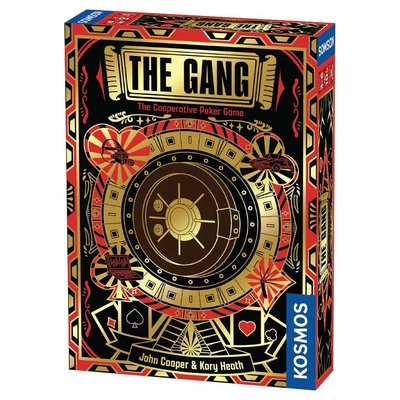
four I think so I think it's I I mean I don't necessarily think that it's bad at two it's just I didn't enjoy it as much at two I I think it it's probably more strategic um but I don't think that's the point of the game the point of the the point of the game feels like the aspect where you can lower everybody else's bottles and having to deal with that chaos and it's just not as present in a two-player game a two player game yeah especially with the passing of cards to each other it's just like well here's the card and then there was one time we played it where it was like here's one card and then you passed me and then and we had another pass and it's like well here you go back again it's like well that just undid everything that we yeah and then the the scoring at the end in a two-player game just like giving all your chips to one player constantly it's just I don't know I would recommend it at higher player accounts if you're going to try it but it is a fast playing game it is also quirky like the Sumo game but I found the Sumo game to be much more interesting especially at two you know this one has a cute theme it has cute artwork and they're very different games I don't actually mean to compare them they're very they're separate games but this one fell a little bit flat I think for me I think I like the potential of it more than than you do I I actually really want to play this at the full four and then maybe give an update as to how I felt about it uh so I'm going to try to bring this to like our local convention or something and force people to play it with me it is very fast playing but that's essentially it that is to taking okay talking about our last game today this is coming to us from Cosmos and it is called the gang now this is a game that came out at uh Gen
Con uh and it super popular very popular one of those sleeper games um we got to play it there fortunately and we are going to talk about it today yes this is a game for three to six players and it plays in about 20 minutes and it's designed it's designed by two people John Cooper and Corey Heath and so in this game players are working together it's a fully Cooperative game in order to order the strength of their hands in a poker Style game yes so it's based off of Texas holdom specifically the Texas holdom style of Poker and by the end of the entirety of a hand of Texas hold them which consists of everybody getting two cards there's a flop which is three cards followed by a turn card which is the fourth card and then the River card which is the fifth so seven cards total you have to by the end of the game or end of the the hand um you have to order your hand in relative strength from weakest to strongest if you do that successfully at the very end of the round then you win that particular round now in order to to understand the game you probably need to have some knowledge of Poker uh we're not going to explain that right now sure so just so you know for anybody who is familiar with the poker the way that the gang works specifically is each player will have a hand of two cards that you keep secret M and before any other cards are revealed there are these chips in the middle of the table that's going to be depending on player count each player is going to take one of these chips uh basically communicating to all other players around the table how strong they think their hand is so if you think oh
my goodness I'm going to get like the royal flush that's a really strong hand right then you would get the you would take that the highest valued number if you had like two Aces which is the strongest hand in in in Texas holdam at the very beginning you would take the highest value star and you would adamantly take it and be like I'm taking this thing yes so you're basically communicating what you think the relative strength of your poker hand is or your ability to make a solid poker hand um at the very beginning by taking these chips so if I have a really strong hand and somebody took that very high value one I'm I can take that chip away from that person you can yes you can just be like yes everything you do is communicating something about your hand nonverbal once everybody has agreed that okay we can go with this then you reveal cards in the center of the table in a Texas hold on fashion so if you're familiar with Texas hold them then you'll have the Flop which is you reveal three cards face up and now everybody is in possession of those three face up cards plus the two cards in your hand yes so maybe if I started with two t and I thought that was a pretty solid hand and then all of a sudden on the three cards that are face up we see an ace a king and a queen then I'm like my two tens are probably not as strong as they once were because anybody who has an ace anybody who has a king or anybody who has a queen in their two cards is probably beating me at this point so this is kind of where you're trying to tell the story every single um Street is what they call it in in poker um so
while nine was really strong at the beginning but based off these three cards he doesn't feel as strong anymore because he took that the very high chip at the very beginning but now in this turn he's taking like a midling chip so you do that all along the way and then um at the very end uh so after five cards have been uh exposed face up plus the two cards you have this is where it really matters how you communicate the relative strength of everybody's hand because you only win or successful if everybody orders from weakest to strongest only at the very very end of the hand when everything is revealed so you have a total of four four Communications so you communicate when you first have your two cards then you communicate when three cards are face up then when a fourth card is face up and then when that fifth one is face up that is where you have to be absolutely perfect you cannot have anybody relative just even off by just one uh space because then you would fail the theme of the game by the way way is you are trying to uh break into a vault and steal the loot a heist it's a heist yeah the G if you're successful you open up one of three vaults if you are unsuccessful then you are going to trigger an alarm you're trying to open three vaults before you trigger three alarms uh if you open up a vault then you're going to get a card that's going to make it a little bit more challenging if you trigger an alarm then you're going to get a helping card that kind of helps you along the way in the next hand so uh the game is played over a Max of five round right because you can only open three safes in two alarms or vice
versa yeah but that's essentially it that is the g in a nutshell now the first time I heard of this I thought for some reason that it was going to be a follow-up of sorts to the crew that's what they were they were kind of pitching it that at Gen Con in a way it is it's not trick taking it's definitely no sorry it's not it's not a followup to the crew at all this is not trick-taking but it is sort of the same small box style fully Cooperative uh sort of game right that's that's where the similarities end like this is a entirely different game yeah um now I will say that I've only played this once nven has played it way more sever times and uh this one is really this is not a Monique game this's not for unfortunately now the thing is I don't know poker I know I don't know poker at all she doesn't know poker and she doesn't know Tech selom I only know poker hands that because of board games that use poker hands like put down because they always have like the poker hand reference sheet and just kind of follow along with that or like playing um Bas or something or or Deuces if you've heard of those games like that like hand shedding games that require you to use poker hands so monik was not a big fan of this unfortunately and now I understand people's frustrations who play the crew and not understand trick taking because it sort of felt like that you have to be able to decide on your own you have to be able to communicate your hand which requires you to think independently and to fully understand the situation I am a big Texas Holden player I've been playing Texas Holden for many many years yes so this is
definely years game so what are what are your thoughts I love this game I am complete opposite of Monique I absolutely love this game this is we're going to do a our best games of the Year this is definitely going to be on there somewhere I'll figure out I'll figure out where it's going to be um such passion yeah such passion with this one uh it says three to six players I highly recommend playing at the five or six player count just because of that communication like you if you know poker and you have a hand like 95 95 off suit like what is that like relative to everything else like when when you're trying to communicate but over the course of the round it just becomes so interesting as if you are if you can understand relative hand size and and hand value and everybody else around the table has that kind of understanding that foundational knowledge of Poker and what is a good hand it can be a really really fun experience and so I've played with a lot of people that do know poker and we have a great time playing this game that's awesome does it play at 20 minutes uh we yeah no it played a little bit longer than that yeah definitely play yeah I don't know about the 20 minutes 20 minutes probably per like I mean maybe this this one we I would say it plays maybe in the 30 plus um and you said that you like this the five six player count what about the lower ends lower ends is just a communication just like in regular poker right like um there's just more more people to account for for hands right so like if I have a ace King in a three-player game I'm probably pretty good most most of the
way mathematically six players it's like well things can change you know now I will say uh you know take everything that I had said with a grain of salt because I don't know pork like I said but I will say that for people who don't know poker you might fall into the same position that I did just because like I felt I felt very lost when I was playing the game if you don't know poker um and Texas hold him as a very specific style of Poker knowing your relative hand in a five or six player environment is going to be kind of tough because there was there was times I have played with people who don't know um and then they'll reveal their hand at the end I'm like oh that was actually actually kind of a strongish hand especially like with these options and this is kind of what your hand can become you know over the course of the round as more cards get revealed but you wouldn't know that if you know if you're not a a poker player T Holden player so there is definitely that kind of like learning curve that would have to kind of be learned along the way but it's kind of like it is kind of like the crew playing the crew and not knowing not understanding trick- taking like that is a that is a tough position to be in at least early on but once I guess once you see the flow and understand it then like you can get better at it so I mean that I guess that is the important message so just keep in mind if you really know that you love poker might be something to check out if you don't know anything about poker just walk into it uh knowing that you are not alone because we we have very very
opposite experiences if you have never or if you don't really know uh poker that much but you have played this and you enjoy it I would love to hear your thoughts hear people's experiences with the gang who don't necessarily know poker MH well there you have it that is the gang one of my favorites of the year so far that's really really cool to hear because N I really like you know n is very passionate about board games sometimes more so than I am but to hear you know you Rave about one particular game after especially after just the first time you played it just right when I was explained to me I was like I'm I already like I already love this game yeah so um really really good and I also like that um they have that kind of like if you fail then things get better do well then they the game aspect of it the game aspect of it because technically you can just play if if it didn't have that you can just technically play with poker chips and and a hand of cards well there you have it those are another five games that we were able to talk about today the next let's talk board games episode will hopefully include some more mystery style uh something more along the lines of Halloween speaking of Halloween I would love to hear if you are playing any spooky games I know that people like to play uh specific games around the holidays and we are we are approaching the holidays we'll be doing a couple playthroughs uh horror based or like um Halloween is Vibe fantasy fantasy games yeah so we'll have a few of those coming out this month yes and I know in the last uh let's talk Games episode we mentioned that be warn because October is a very Kickstarter uh crowdfunding heavy month for us for some
reason this year stay tuned because the next couple of days is where that is going to be hitting the hardest so we have a lot of crowdfunding videos coming out over the next couple of days and then it'll slowly uh sort of plateau from there so there you have it those are our few games that we have played recently uh thank you so much to zero.exe from PCAT games for helping sponsor this video uh please let us know also in the comments what games you have been playing or what you plan to be playing this month over the course of Halloween in the spooky season and thank you all so much for watching the video we hope you enjoyed it if you like to see more videos like this in the future please consider subscribing thank you thanks bye