Cult of the Lamb: The Board Game - Follow If You Dare!
Transcript
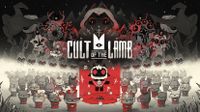
Today, Ryan and I have a preview, although this is a campaign that is currently running and we may soon be ending just in a few days, depending on when you're watching this. This is Cult of the Lamb. This is a board game interpretation of the popular video game Cult of the Lamb. And as you can see, there's a lot to this game, not only physically, but we can tell you there's a lot to this game overall.
There is I mean, there there are a lot of components they've done. uh their research on this game, kind of trying to convert what you're doing in that game into the board game. Uh and it does, you know, when you first glance at it, it's a lot. But what they've done is they've kind of divided this game into two sections. You're going to use some of the the pieces and some of the components during the crusade phase and then some of the boards and components in the cult phase. So, they've kind of broken it up and you're going to play through each of those phases one after the other four times throughout the course of one game.
Yeah. Uh to get this right out of the way, the game does, if you're familiar with a video game, the game does do a good job of sort of interpreting that in board game form for sure using those two phases. It starts with the crusade phase, which is like the dungeon crawling sort of like roglike element where you're going to be moving up through this sort of network of rooms potentially splitting up, potentially staying together. Might we say that this is a competitive game,
but this mode of the game feels semi semico-op in a way because if you're in rooms together, you're going to be fighting enemies together and you all want to defeat the enemies. So, you are going to be trying to do that. Uh, but whoever does the most damage is going to get the most points. And there can be some some trickery going on in some of those rooms where you could kind of like hang someone out to dry a little bit, but it is a bit of a semi- co-op feel, but you're moving up through this all the way up to a boss. And then the bishop and the bishop mode effectively takes this entire sheet, which is what you'd been working through during the crusade, and introduces the bishop, which is a giant fight in and of itself.
Yeah. During this whole crusade phase, this is where you're going to get a lot of your points in the game. And like David said, it is competitive. You are trying to defeat these monsters by yourself if you can, but you don't really know if you're going to be going with someone or not because they have these cards and each one of these cards is kind of your intent, the direction that you're going to want to leave. When you're leaving a room, there's an A through D depending on how many lines connect to other rooms. And each player is going to secretly and simultaneously decide where they're going to go. If two players go to the same room, then you fight your monsters together. I can fight David's monster, he could fight mine, and in fact, whoever does the most damage to the monster gets the most points. So, if you have a really good setup or you're rolling really well or using some items that really help you out, you could maybe potentially do the most damage to both and like kind of cut the other player out of some points. But ideally, you kind of want to talk to each other because if you don't defeat these monsters, they do some retaliation, which is a lot of times damage back to you. And so even though the game is competitive, you might be discussing it, especially when you get to that bishop, you're definitely maybe discussing it like how can we get through this without dealing with the retaliation.
You will find yourself definitely discussing it when you're in the midst of a fight shoulder-to-shoulder with some of the people at the table. You can discuss where you're going, though. And if you don't want to play with other people really, you can kind of like look at that board and decide, oh, you know what? I'll bet everyone's going to go here because this is where the bigger reward is. I'm gonna go over this way and take my owner route. If you're geared up to the point where you think you're confident you can do that, you're going to go and get a lot of points and no one's going to get any of the other points on those.
Yeah, it's all about kind of looking at that map and some of the decisions that you're making in the cult phase that we'll talk about in a second are going to inform which direction you want to go because there's a lot of the things you'd expect to find in a game like this. Of course, there's combat which we've talked about, but there's also events. Some of the spaces are just having random events, which could be fights. And then there's a shop, and that's a place that you want to go. Uh, as you go through the the different phases of the game, you're collecting a lot of different resources. Most of those resources are spent during the cult phase, but some of them could be when you get to the shop, it could say spend some amount of coins to get some kind of bonus. And that's your kind of way to kind of gear up during that crusade phase. But other than that, whatever you bring into that crusade uh from the previous round is what you have to kind of start with.
Yeah. And some of your decisions in this phase two are going to uh depend on how things have gone thus far. If you get to a fight and you've taken more damage than someone else, you might want to go to a shop and take that chance that you might be able to get something to sort of heal back up. But again, you don't ever know what you you're going to get. You flip over the shop card and it could be, oh, spend two or three of this and you might be low on that. So, the shop's a bit of a bust in that respect, but you're all working your way up to a boss, and there's a different deck of bosses. You're going to flip over a boss, and then it's going to sort of fill in the spaces with minions.
Uh, everyone's going to get to that boss together. So, that will distinctly be something that you fight together. And then finally, after that, you go to the bishop, whereas, like I said, you flip the board, and it's a whole much more drawn out fight round after round because the the bishop's going to have a lot of hit points. There's definitely going to be retaliation, which is something you generally suffer if you don't take care of an enemy, but you're gonna definitely suffer it on the bishop. The way the bishop works is interesting, though, because they have an attack card and a defense card that comes out instead of sort of enemies. And when you're assigning your dice, you can assign dice to the attack card to do damage, but for every die that's assigned there, it's going to increase the attack that he does during the retaliation. It's an interesting balance you have to make there.
And if any of the dice are on the defense card, that's going to help you defend against that ultimate attack. So, you can kind of like I'm going to do a little attack, a little defense, and kind of like somewhat safely make your way through as long as you're doing good attacks on the attack die. Uh, but it's an interesting thing because it goes down this escalation track and it gets harder and harder and harder and you don't want to get get it to the end.
Well, and not to mention that it gets harder as you go down the escalation track. Each kind of round of the game is a different level of the dungeon. You start on level one, which is the dark wood, and then you progress to level two, which comes with its own bosses, its own bishop, level three,
own cards,
own set of cards, and then ultimately level four. So, you really do have to kind of gear up. It feels like the first round you're like, "Okay, we can handle this." But it escalates. The game kind of expects you to take everything you're gaining through that crusade phase, a lot of those rewards and stuff, and then take them into the cult phase, which is the second part of the game, which is where you're actually kind of like managing your cult, so to speak.
Yeah, you're managing a cult. It's kind of feels like town management, if you will, like a town simulation, but you're managing your cult. And this is done with worker placement. So, it completely shifts from a game mechanic standpoint. and followers that you've gathered. And the followers are going to be you're going to start with some depending on when you start. There's a tutorial that
like a level like a zero round. Yeah.
Yes. But if you start past the tutorial, you're always going to have two followers to begin with. And there are other things you can do. There may be rewards where you get a follower or you can even level up your followers. These followers along with your profit, which is sort of your main avatar, are going to be used out on this big main board to go to different locations. And a lot of this works like traditional worker placement. If you're watching this video and you're a fan of the video game but not board games, worker placement is where you place workers into locations and do the thing. And a lot of those locations will be blocked once a worker is there. This is the case in a lot of these spaces. Uh these here a prophet or a follower can go to. But again, if there's one already there, you can't go there. However, because this is cult of the lamb,
you can kill someone else's follower by spending some of your faith. There's a number of different economies in the game. Faith is something you can spend to eliminate one of them. Again, that's going to make it that much more important for that other player to go and get more followers. The downside to having a lot of followers is that you have to feed them. So, there's an upkeep at the beginning of each of the cult phases where you're feeding them food and all this. They get sick. Yes, there is poop in this game. Everybody poops.
If you've ever played Cult of the Lamb, there's poop in this game.
There's sickness. They get sick.
They get sick. They can they can die. So, you have to take care of them. Again, the upside of having a lot of followers is you can do more actions to sort of manage your cult. And a lot of the things are to just gather resources. You've got some postcard actions over here. You can go to these as many times as you want. And depending on the power of your follower and they will level up to two and three. And by the way, the way they do that looks really cool. These little
meeples, if you will, are going to add a halo at level two and then a little pedestal that they stand on at level three that intensifies the strength at which you're going to be taking a lot of these actions. And then a lot of the actions at the bottom of the board are specific to your profit. And these let you do a lot of things, including constructing buildings. There's this whole building board here that starts with a lot of tiles on it that are sort of construction sites. And these buildings are going to be uncovered to give you a number of different things, points, different resources, bonuses. It really gives you the feeling of that town management.
Yeah, you're also managing your cult. Um, you can gain more followers during this phase. And I I did want to mention when we're talking about the followers, they're kind of cute. Like this is the body. you actually just like you can put a variety of different animals in there. Um, and these animals are off to the side. You're going to be able to recruit these new followers. You're also going to be able to take on curses which are powerful abilities and doctrines which slot AC across the top and kind of give you ongoing effects. These are going to kind of get better as you go through the game. They're kind of stacked level ones on top all the way through level fours. So, your doctrines get really strong. You can get new weapons that are added. And we didn't talk about this um quite exactly, but you're going to start the game with a weapon and what they call a weapon family. Like mine was merciless. It gives you some some extra things to do with these dice. A lot of these dice will have hits, they'll have misses, and they'll have stars. And your star effect is going to be different based on what weapon family bonus you have. These can all be changed out. Some of these weapons can get really strong. They have you rolling a ton of dice and you can be doing a ton of damage if you go through and level up these weapons. So, between the weapons, between the buildings, between getting more followers and getting those doctrines, the whole goal of this phase is to ramp yourself up so that you're ready for the escalating uh crusade phase, which is going to happen at the start of the next round. And I mentioned you go through the one, the two, whatever. So, you really need to be leveling up your cult quite effectively to keep up with the escalating difficulty of that crusade phase.
Yeah, for sure. The first time you play this game, you're going to go through that crusade phase and you'll probably get through it. I mean, think we got through it. There were some challenges, but we got through it. Then you get to the cult phase and you're like, "Oh, next time I'm going to want to make some decisions to where I maybe get some rewards that give me wood." Yeah.
Go to the shop. Do some things that you can affect your resources so that when you get here, you can have the wood in order to get the new types of weapons or some of the other resources if you want to go different routes.
So, yeah, you're going back and forth between these two phases. Of course, the whole point of the game is to score points. You're scoring a lot of points during that crusade phase by killing things, but you are also getting some points from other things. You're getting definitely points during the cult phase. You're getting points from completing these buildings. You're going to start with some quest cards, and you can get more of these. Uh, and these are going to give you some points for doing very specific things. Uh, and then there are
tarot cards.
Tarot Yeah, the tarot cards. They have a variety of effects.
Yeah, you can get a lot of these different things, do a lot of different There's rewards here. There's spaces here that we haven't talked about.
There's a lot to this game. And in fact, if you want to see the game played or some other content, I know the Brothers Murf Oh,
they did a full play through.
They have a full playthrough, so you can see it played. Uh, The Grove has done a couple videos. One that kind of compares it to the video game and one that gives a good overview, too, that dives into a little bit more detail on a few of the things we've touched on here, but this is Cult of the Lamb. It's a lot of game uh that's going to pushes a lot of buttons for people who know the video game really well. Um, and I think if you're the a board gamer out there who's not terribly familiar, I think we've covered a lot of the things. There's a lot of sort of dice chucking dungeon crawling.
Almost feels a little pusher lucky
and some fairly sophisticated worker placement out here.
Yeah, the worker placement's cool.
Yeah, there's it takes takes into consideration powers of your characters, all that sort of thing. But again, if you have any other questions on this, please make them in the comments below. We'll get down there and answer whatever we can. Until next time, make sure everyone has fun at the table and we'll see you then.