The making of Posthuman Saga - Episode 1
Games in This Video
3 games are featured in this video — they unlock as you watch.

Transcript
Hello guys! As you know I live in Malta right now and being here I got to know a bit more Mighty Boards, the board game company, and right now they're preparing a game for Kickstarter, Posthuman Saga is the game, it's coming mid-may so I thought it's a good idea to show you the process of designing and developing a board game, the challenges that pretty much every board game company has to face going through Kickstarter, also the struggles coming from a small country possibly and to have a closer and inside look into the process. Also the inspiration, how it comes and all the different facets of this beautiful journey.
So I'll take you with me.
So we are here at Mighty Boards Let's see what's happening inside
Hello guys Say Hello to my little friend Oh Jesus So, yes we're looking at the new graphic design for the cards making things clearer on the weapons mainly, we are collecting all the things that we need for combat in one place because after some testing rounds had some feedback from them and we're changing these yeah and these are the encounter cards but nothing much is changing here so we're just moving the narrative to this part and we'll have just a icon okay, okay and you added the mutants I added the mutation here between the two between the ranged don't do the melee yeah there's a change of the typeface here, same with the other cards Gordon, what are you working on?
Hello We had objectives objective missions that are split into two levels objectives of level 1 and level 2 and we're integrating them into one overall objective and each of the objectives has got a number of terrain tiles that you have to complete in order to get the objective and now that we're integrating it into one, which makes it neater, it creates a bit of a problem of making sure that they're all balanced, so I'm trying to.. Each line is a different objective and I'm trying to make all of the lines balanced, because some terrain tiles different terrain tiles yield different resources so I'm trying to make sure that each objective is relatively balanced.
We give the players one objective with one starting story and an ending story and the whole journey will be plotted on that card rather than what we have right now, which is two different objectives that they have to fulfill one after the other. It's not a big change, it's not a big deal but it's easier to have one thing that you have to do rather than 2 cards So now we're integrating those into one card that will have your whole journey for level one and level two on the one card in one story. Yeah so this, these tiles are these. What you're seeing here basically. It's what you need to collect and find though your actions and through the auction that happens at the start of most turns, in order to place them on the map It's sort of a puzzle It's a big puzzle yeah Oh guys, we got an email from Keiran okay there's the new sculpt for for the scavenger Can I see the front?
Angry Serious man Handsome Yeah looks good. I think he needs something to tie the bottle here, cause it's like it's floating No, it's got velcro on the back. It's good. Can I see the image?
So this was Arjuna's drawing concept art Oh yeah, he looks cool, he's come a long way from the first He's a rougher, meaner guy compared to He was the messenger, no? Yeah. He's still not fighting as a character No, no, he's not he's not absolutely I mean he's become a bit of a survivor Yeah, he's good at collecting stuff and he is good at surviving in the last minute, he's got a bit more flexibility than other characters but he's quite weak combat-wise. Can I see the image of the first one? side by side Somewhere. Put them up side by side This is the old one.
And a few years later.. Yeah, yeah, it's a nice progression. both in the art-style and his character So, this is still Arjuna This was what.. Three years ago. So this was the art style for Posthuman And this is the new art style for Posthuman Saga That's a nice progression. Can you show the miniature again of the scavenger compare it to the old miniature that we had.
Yeah it looks better. No, poor guy, come on! It's like a low tech versus high tech version. Has a bit more character and it doesn't have a weird gun sticking out out from the middle of this belly. It's a machete.
So, Gordon and Mark How did Mighty Boards come about? Well, we started off as part of a video game studio called Mighty Box Evolved from there There's a journey to it, we didn't just decide to do it. Yeah we started from a video game company Yeah we were working on several titles one of them was a post-apocalyptic game that had a strategic element to it and it had come from a board game design I had so we said, okay let's make a board game and a video game in this universe that we were creating, we had put a lot of work into developing. And we didn't expect it to be such a success on Kickstarter I guess and it was, so then it took up quite a bit of time for Mighty Box.
And then we went back to doing video games but I think me and Mark, we wanted to keep on doing board games. So your first game was about three years ago. It was Posthuman, right? Considering it was your first game, what were the challenges you had to face back then with it? Oh everything was totally new as in we had never produced a board game before like commercially, you know, to sell it. We had never used crowdfunding before, so that was a totally new experience. It was our only option because obviously we didn't have the funds to do it. It costs a lot to make a board game as we discovered. There were several challenges as well that came out of the fact that we were developing a video game on Posthuman and the board game concurrently with in the same world that they were going to dovetail into each other like the story the mechanics and on. So, there were All of us have quite a strong role-playing and war-gaming background and we obviously have played a lot fo board games as well but I guess we were used to a lot of simulation and simulation mechanics so we were trying to simulate an open world.
Maybe I had too many design goals for it and then I wanted it to be scalable for a different number of players to be as a good solo as it is for four or five players, whatever, we like long games ourselves so the time hadn't bothered us as much, the people we tested with didn't bother the time so much and we were trying to have this open world, this modular system that would create a rogue-like kind of feel to a board game and that was I think quite innovative at the time. And the story was very important we didn't put a lot of story but we ourselves, as a team, we had loads and loads of story. I mean the lore of it that we had to come up with just so that we when we're building the game we're actually doing it with a background with a lot of context it's huge.
We never really used it in the game then but the idea was to release it slowly with the video game but the world was there. It's a very rich world. I think we were too subtle in hinting at the world then of course, now in retrospect like we The feel it's there and so it worked because the game has been liked mainly because of the theme. and the feel it has but we didn't put discrete lore into the world.
And a bi gchallenge I think was trying to I really wanted to pitch elements of euro style mechanics with a thematic game and have an emergent story rather than script one and that requires a lot of little rules to try and create those images in the players mind and some randomness cause randomness does bring in, creates this sort of engine that represents the world that creates events for you. While if you have a more tactical game, a more streamlined game then usually the images that are originated in the mind from that rule set, tend to be a bit narrower. Yeah we're trying to juggle a lot of things together I think that was one of the big challenges.
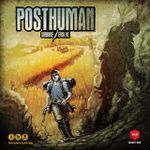
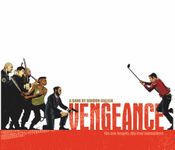
Ok, so after Posthuman what other games came along? Then, Vengeance, Vengeance and Petrichor were developed at the same time. We developed Vengeance here with our team in Malta and Petrichor was developed by David Chircop and David Turczi the Poland team And then during this period, we kind of, the company came together. Now there's Nights of Fire, which is the On Kickstarter right now? Yeah. So now you're working on Posthuman Saga. Yeah. How's that going? Crazy So yeah, Posthuman Saga is basically a standalone game in the posthuman world.
It has some similarities and feel, the fact that it's a journey like the first Posthuman but the system is completely different and I'd say it's more of a tactical survival kinda journey, meaning there's tighter mechanics, there's less randomness than the first game and it's overall a more streamlined experience and there's more more scripted story. We initially started off with the idea of making expansions for Posthuman. We were planning a series of expansions for the first Posthuman and we worked on them quite a bit. But while they worked to some degree we kept bumping on Okay let me talk about myself, I kept bumping into the issue that there was There are people who really loved Posthuman and the people who had gripes about it and the gripes could easily be summarized into four main challenges three of which I I could really see were quite a bit of an issue Not as much for the game itself but in extending it It really narrowed the design space possible for it one of them for example is the mutation system, the side switching, which is really good but to have a site
switching mechanic in expansions with some new gameplay not just content it was very difficult to do. Because we don't know when they're gonna change Posthuman was tested and iterated a lot to get that balance right but it works on that arc. And we wanted to create different gameplay. As I'm developing the expansion I felt like I wanted to fix those things that people weren't happy with. And then I think we were also coming up with new ideas as well for the game and like this could be really cool but nah, doesn't work with the other one. yeah I was like, we really want to put it there but doesn't work with the other one. And then you came to a point where we really had to take a serious, you know, discussion about, listen does it make sense to try and keep on pushing the expansion or should we just Now we're designing more I think with expansions in mind.
You know, thinking okay, if we have to do an expansion can the system take it? yeah Is this robust enough to take an expansion? And we wanted to further the story so Posthuman Saga takes place a good year after the events of the first game and the videogame ties into that I can't say how yet. The video game has quite a strong story arc and Posthuman saga feeds into that. So that was another important part of this all. The expansions we needed them to push the story forward and that was quite difficult to do because if you change into a mutant after the first game, then what, you know, happens. So yeah, This time we already have two expansions designed for it basically.
But what we're doing is moving the story forward so between the first game, the video game, and this game, the story is moving forward in the world but in a different game so it's not an expansion of the first one but it's a different board game. So for whoever played the first one it's a way of continuing the story but with a different game. And there's a lot of story. We decided to stop being coy about the whole lore and story and I don't know why we did initially to be honest and actually to delve more to communicate a lot more of that lore, it's not all there but there are more hints and because there's a story book with it we have a lot more space and real estate rather than just for random cards to put in a lot more feel, a lot more space, exploring the world in a spatial way that is obviously difficult to do on random mini cards.
So there is a lot of people who are into this post-apocalyptic theme in movies and games and so on Why do you think that is and what is it that attracts you to it? For me it's how close of this to the now it could happen in ten years time or even less, I mean, if there's a war or something could be next year. So I can easily see myself in it so it's kind of you can easily project yourself into that situation without it being like science fiction or fantasy Science fiction is far away, fantasy is kind of completely another world
And then visually I think it speaks to me a lot as well. So the environment, how the environment changes some of the situations and I'm interested in what we would be wearing, what we would be in that situation, I think there's a lot of So, that's from my part. Similar Visually, I similarly like that I I love to think about how the world would be without our presence. And inspired by Wiseman's "The world without us", a book that explores what would happen if humans disappeared in five, ten years time and so on. But for me there are several threads to it Researching post-apocalyptic literature and theory and patterns of post-apocalyptic cults and stuff like that through time and there are two main lines of interest there.
One is that it seems like it's a cyclical phenomenon since we've had a notion of linear time, this idea of an end has always been there and I think also there's this I think subconscious we're seeing a lot more post-apocalyptic movies come out for example and games and so on while they've been there for a while, in recent years there's been more of an uptake on this because I think there's an unconscious or conscious fear that we are facing a paradigm shift, not necessarily end of times and a MadMaxian situation but that things as we know them are going to shift and that of course brings in a factor of massive unknown where it could be no electricity and no nations to a different way of doing business or whatever, right the longer spectrum and I think, so that's that's one thing that really interests me and placing ourselves in that situation I think that it allows you to play with "what if" okay what if this, this and this and this are not there anymore what we can do.
Placing yourself in that world so that's was a big motivation behind the first Posthuman especially and that's why we have character customization, we tried to keep the character very much like, you know, us, the gamer, the mountaineer whatever the philosopher. I think that there's another element this is a random theory of mine about why we're fascinated with the post apocalypse. I think it has to do with the fact that we are so saturated by technology especially communication technology that requires from us this increasingly fast feedback loop of response and hive mindedness I have an idea, a thought I ping you and expect a reply I think that we are not adapting in time to that rapid change and what it's creating is a desire for a simpler space.
More basic rawer So I think that we have an unconscious desire for things to just shut down so that our brains stop shorting out so that I think the fantasy of Preppers is exactly that to go and camp and have just books and some disposals Just focusing on survival all the basic stuff
And for your mind to actually getting rid of the clutter yes getting rid of clutter exactly and actually reading those books you've bought the last couple of years and didn't read And have people stop depending on you constantly I think this may be a random theory but I think there's something to it and I wanted to project that simplicity and I've didn't wanted to be a grim and "the Road" kind of experience only I wanted there to be those moments of light and then we do speak of board games as being something cozy that you play together, right and a post-apocalyptic game doesn't seem like a cosy game to play but coming back to this then yes make sense because then it is a cozy game to play cause we can forget about all the the things of modern life that kind of The mounting pressures, I think it's an acceleration as well just focusing on very basic things, yes, surviving eating you have one book that you can read and makes it happy cause yeah and appreciating the space around you on the nature, of course the role of nature in this world taking over space is also something that we are attracted to And this is what we're trying to to bring out in Posthuman.
Bring cozy back to post-apocalyptic Cozying up the end of the world Yeah, that's us So you think growing up in Malta has inspired some of this post-apocalyptic love or..? Are you saying that we live in a rusted shithole?
it might be that we long for a less crowded place I guess I think there's a fear that we've had unconsciously as well, as Maltese, because we don't produce enough water for 25 percent of the population, we don't produce enough food if we were cut off from the rest of the world, we'd be pretty screwed. There's a fear an inherent fear that has been that we've inherited from our grandparents and other generations that's have seen a very harsh reality in the Second World War where most of the population lived underground, right and had means of hiding from constant bombardment and just a long history of being attacked basically yeah our ancestors have been survivors they have the mind set of survivor you know, in their daily lives Even our parents, but as in as in the sense that they inherited from their grandparents and Of course, it's a fear of scarcity.
They are very frugal with their what they had And the obsession to store a lot right it comes from a scarcity mentality coming from being very close to times when population was starving because of being sieged. We've been sieged by different massive powers compared to the 23 km island. It's all around us, we have walled cities we have shelters everywhere catacombs, the whole island is riddled with underground networks of it's designed to withstand attacks bombardment in every way, from massive bastions to these underground places so I think it's been hard to get away from that I mean I grew up not having forests and mountains and stuff like I grew up exploring underground passages, you know, nice fortresses and stuff like that I mean that's where I spent most of my childhood, in ruins, A lot of Malta was ruined and back especially when we were young in our teenage years the fortresses that are now pretty and fixed were abandoned there's rusted stuff and it was a beautiful adventure for us, for me it was a beautiful thing yeah a lot of buildings destroyed after the Second World War they were never repaired again Now there's a revival of this areas, of all the cities and everything is being repaired and made to look pretty and there were a lot of wealth that wasn't there when we were young, so the government did not have any funds to fix these beautiful castles, they were just left
to rot basically. I remember like the Manoel island fortress still having pots and pans left there by the British when they left. and diaries from the war stuffed into toilets that I found, stuff like that, was just left there. so yeah it's all around us basically. I think it does have an influence, I didn't think of it so much but yeah.