
Posthuman Deep Dive
What the Community Thinks About Posthuman
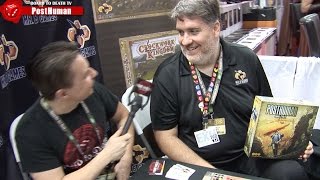
Viewers who have spent time with Posthuman tend to describe it as a tense survival journey whose appeal rests on theme and hard choices rather than on a long list of bells and whistles. Board Games UnLocked placed the game at number eight on a list of 2015 releases, and the praise centers on how the encounters keep the table on edge. The same segment is clear that Posthuman is a race rather than a cooperative effort, with players trying to reach the fortress while also resisting the pull toward becoming a mutant. Board to Death TV visited the convention booth of the US co-publisher, who described the game as a race to a fortress where only the first arrivals are admitted. The walkthrough there highlighted sturdy components and a turn structure that the reviewer found simple once the basics were explained.
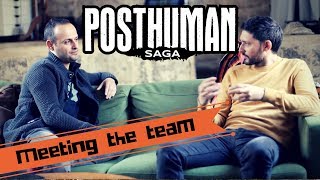
Cardboardrhino took a different angle, touring the Mighty Boards studio in Malta while the team prepared Posthuman Saga for Kickstarter. The designers talked openly about what the first game did well, and they credited its reception mainly to its theme and mood rather than to the lore printed on its cards.
Core Mechanics That Define Posthuman
Tile-Based Zone Exploration
Reviewers keep returning to the way the map is built one tile at a time. Board to Death TV explained that a turn offers a choice among camping, foraging, scouting, and moving. Foraging on a city tile flips a terrain card that can turn up weapons, while moving blindly into an unexplored tile commits the traveler to reaching it, which turns the trip into a longer adventure. Scouting costs a turn but lets the player draw three tiles, look them over, and choose their orientation. The reviewer pointed out why this matters, since a city route can take three turns and five encounters while an easier zone may take only two turns and two encounters.
Cardboardrhino described the aim behind this structure. The designers wanted an open world built from a modular system that would create a rogue-like feel for a board game, and the tile-by-tile journey is where that ambition shows up at the table.
Scar and Mutation Tracking
The other mechanic reviewers single out is the slow slide from human to posthuman. Hunger and lost morale both cost the player ground, and a knockout sends a survivor back to the start tile with two scars. Board to Death TV summarized the thresholds, noting that once a player has three or four scars they can choose to mutate, and at five the mutation becomes mandatory. A mutant's goal changes from reaching the fortress to stopping everyone else from getting there, which turns a race into open conflict. Board Games UnLocked described the same tension from the four-player side, where one player turning mutant can pull others toward the same choice.
The Posthuman Experience
Foreboding Pressure
Reviewers describe the game as a steady squeeze. Board Games UnLocked called the chase stressful and said the survivors must cope with the weather, the mutants, and everything else at once. Board to Death TV framed losing morale or health as something that is always bad, and the rules make each setback feel like it carries into the next turn. The dread comes less from one looming threat than from watching a limited supply of food, morale, and ammunition run down with every move.
Narrative-Driven Encounters
The story in Posthuman comes from encounters rather than from a script. The designers said they wanted an emergent story rather than a scripted one, and they accepted that this required a lot of small rules to generate the events that shape each run. Board Games UnLocked offered a concrete example: a group that includes a child, where the player must decide whether to hand over food and risk going hungry. The same reviewer compared these dilemmas to Dead of Winter, where giving up supplies to a stranger can earn help later.
What Makes Posthuman Stand Out
Theme and Feel Over Lore
Posthuman is praised for its atmosphere before anything else. The designers admitted they were too subtle in hinting at their world, and they said the game has been liked mainly because of its theme and feel. Board to Death TV also praised the physical product, calling the components sturdy and the dice beautiful. The designers were also clear that they did not want the experience to be grim all the way through, and they set out to include moments of light in a world that could easily have been bleak.
Customizable Survivors
Board Games UnLocked described building a character before the first journey. A standard runner might be fast and little else, but the reviewer shaped a survivor around how they imagined they would fare, choosing to be smart and slow. Progression follows the character through the game, since the Board to Death TV walkthrough showed victory points being cashed in for a skill at three points and for an attribute increase at six. The designers said they kept characters close to the players themselves, so that people could picture themselves inside the post-apocalyptic world.
Potential Drawbacks
Dense Rules and a Steep Start
The rules load is a recurring concern. The designers acknowledged that the game's approach needed many small rules, and they admitted they may have had too many design goals for a single game. Board to Death TV moved quickly through combat and warned that viewers basically need to know the game to follow it, with simultaneous ranged rounds, melee dice compared by strength and party size, and hits blocked by shields all in play. Board Games UnLocked went further and called the game hard, pointing to the pressure of racing other players while also fighting off the mutant path.
Expansions Are Hard to Build
The designers were candid that the original game's strongest feature made its expansions difficult. The side-switching mutation system works well inside the base game, but a new mechanic has to fit alongside it without disturbing the balance. The designers said the first game was tested and iterated heavily to reach its current balance, and that the team moved away from a planned series of expansions because the design space had narrowed too much. They chose to create Posthuman Saga as a standalone game in the same world instead.
If You Enjoy Posthuman
Dead of Winter is the comparison reviewers reach for. Board Games UnLocked linked the hard supply choices in Posthuman to the ones in Dead of Winter, where sacrifices made in the present can pay off later. Readers who want to stay in the same world should look at Posthuman Saga, which the designers describe as a standalone tactical survival journey with tighter mechanics, less randomness than the original, and more scripted story.
What Reviewers Are Saying
"I really wanted to pitch elements of euro style mechanics with a thematic game and have an emergent story rather than script one and that requires a lot of little rules to try and create those images in the players mind."
— cardboardrhino
"So if you get three or four scars you can voluntarily mutate take yourself out and try to go after guys if you get five scars you must mutate very very cool."
— Board to Death TV - Board Game Reviews
"This game is hard I mean not only are you racing against everyone else because this is not a co-op game you're trying to survive this apocalypse as well as trying not to become a mutant if you don't want to but sometimes you're forced to."
— Board Games UnLocked