Calimala Review: The Ol' Florence Pew
Games in This Video
1 game is featured in this video — it unlocks as you watch.
Transcript
Hello and welcome to the Dice Tower. I'm Wendy Ye.
And I'm Chris Ye.
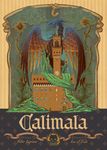
And today we're going to be reviewing Kaly Malala by Lupiano.
Fire Lupiano and Alleycat Games with the second edition of this game that's been around, has been out before. Uh this is the first time that either of us have gotten to play it. It looks much nicer than the first edition. I can't show you in the camera because it never shows up, but the rule book has all this like pretty shiny goldness to it.
Very nice. Very nice. Eno Tool, man. He rocks it.
You know, too. All right. So, Wendy's is going to show you how this game plays, and then we'll give you our thoughts.
Kyle Mala is an area control game where players are vying for control over different cities, different chapels, and then also different types of resources across the board here. Now, the way they're going to be doing that is by taking turns with their family members over here. They're going to take a family member on a turn, and you're going to place it on one of these brown spaces or a tile that's already there. Now, let's say I choose to go over here. I then would look immediately to see if scoring happens. Now, scoring hasn't happened yet because there's only a stack of two previous tiles on this spot. However, if there was a stack of three, I would trigger scoring. I'll show you that later. Um, but then you're going to go ahead and take actions starting from the person on top of the stack of the adjacent spaces over here.
So, this one would gain me one marble and one stone. Then the next player in this stack who already got to go to this spot earlier will also gain a marble and stone. And then finally, the bottom one is going to gain a marble and stone as well. Now, we also have these contractor workers over here. These are neutral workers that double up the action spaces. So, let's say in a future turn, purple were to come over here and they were to play this neutral worker. They would first look for scoring. Now, because there are three stacks, it's so hard to see. I'm sorry. Because there are three on the stack previous to placing this one, scoring would trigger. And so, the bottom person is going to be bumped out. That bottom player will then be placed in the next scoring tile up here. Now, these scoring tiles start with the top row, working left to right.
uh and then middle and bottom. So, they're going to go over here and go ahead and kick out Bruge. And now they have uh basically some area control that's up here. And this is going to be used for breaking ties um during the game and it is its own little miniame. So, Bruge gets kicked out. It will immediately score. Bruge is this over here. Only players that have these little trading posts over here can actually add cubes. And so, we immediately look to see who has the most cubes. Yellow has first place, so they would gain three points. Orange has second place, so they would gain two. And then purple has no uh influence over here, so they would gain no points and not even have a third place. After that scores, then you go ahead and go down the whole stack like previously. So this contractor tile will give two. So purple would actually gain two marble. Uh maximum of sorry, max of four can be in these spots. So they've maxed out there.
Um, and then they would gain two stone as well. And then once again, purple would go. So that's the same person. They're maxed out now. So this was probably not a wise idea. They cannot add more to the stone or the marble. And then yellow would go. Now, because purple could not actually take a turn, they have the option instead to come over here with the actions and take one of these cards. You get to have maximum one card per turn. So, even though they missed two actions, they can't just take two more cards. These cards can be used on your turn as just extra actions. These actually match the action spaces that are over here. Um, and there's some pretty basic ones that are set up at the beginning specifically, but then the rest of the deck is just shuffled. All right, so let's talk about what these basic actions are. We have gaining basic resources, which I showed you are these spots down here. Then we have gaining cloth. So, this one says you gain a cloth per warehouse that you have. Now, you start the game with only one warehouse, and you can choose to build more throughout the game, and you're going to gain one cloth per warehouse.
So, I would actually be gaining three cloth right now. And I can split those up between all my warehouses. It doesn't really matter where they're stored as long as I have storage space for them. Hopping down here, this is actually where you build warehouses, boats, and trading posts. Like I mentioned before, uh warehouses up here, you start the game with no boats, um and then also none of these trading posts. And the cost is right here. So, you can choose to build one of those buildings for that cost. Hopping down here, this is actually where you build warehouses, boats, and trading posts. Like I mentioned before, uh warehouses up here. You start the game with no boats. Um and then also none of these trading posts. And the cost is right here. So, you can choose to build one of those buildings for that cost. Like I mentioned, warehouses help you gain and hold more cloth. Boats help you deliver over here to these three sea fairing areas. And then finally, the trading posts go into specific cities over here so that you can deliver to those cities directly.
Speaking of delivering, let's talk about the four delivery actions that are right here. We have the basic goods. These come once again from these spaces down here on the bottom of your board. And they can go out anywhere in their line. So if I want to place out a wood, I can place it anywhere in any one of these chapels. The statue line works similarly only it's not just in the three chapels but it's also in the plots vetio or veio. Um and this is going to help to also add to the area majority thing that's going on over here that will be tiebreers in the future. Next we have the ships over here. And so basically for each ship that you have you can deliver one cloth to any combinations of cities over here that you want. And then finally we have the cloth per trading post. This one works a little bit different because you can only deliver a cloth where you have trading posts and you can only deliver one cloth per. So I could deliver one to Troy and one to Hamburg if I was purple. However, if I was yellow, I could deliver three. I could deliver one to each city. Play's going to continue until all of these little scoring tiles have been scored or until a player has used all of their workers. The round will finish and then final scoring has to do with these cards. Everyone's going to have a secret card that's going to have a special scoring at the end that hopefully they've been working towards the whole game. And then there's also going to be some face up cards on the side. There happens to be one in a three-player game that players know about from the beginning. There you go. That's a brief overview of Kaly Mala.
All right. So, this game has a lot of area majorities. Like that is
the entire game. It is Euro area majority.
Yeah. Well, it's all of the scoring and then the worker placement kind of thing to it has an interesting bumpout mechanism and you know I mean like you get to reactivate other people's workers which is very own area majority.
Yeah, they bump out.
Yeah. Yeah, that's true. Yeah, that tiebreak anyway. So, yeah, I think that yes, it's all majorities. You got to like that. You got to know what you're going into. Uh it is
but there's there's no fighting. There's no removing cubes. There's none of that. Like when I think of area majority games, I often think of like very merry trashy games. This is not like that. This is
Well, that tends to be what people call like area control.
Yeah, that's true.
Then this is majority. Once you put your cubes in a spot, they're there. And once you if you lock in a majority, you're like, h looks like that area is mine. And then you realize, well, that area only scores once
and is worth three points maximum or whatever. Yeah.
Yeah. So if someone runs away in one area, it's not the end of the game. But yeah, this is one where it is kind of hard to catch up on when someone's like doing really well in a aspect of the board.
Well, what I think is interesting is that because you know exactly what order everything is going to score in. You just don't know when that scoring is going to get triggered. Um you can think ahead and so you obviously can't win everything.
Yeah. But you have to make that choice of like am I going to invest in a few specific things including my card which will end up scoring double. Um or am I going to try to do a lot of everything and just get those like little points,
right? Like having a lot of second places is better than having very few first places
because the point differentials is basically one, two, and three points. It's pretty minimal.
It is.
But they all add up. So by the end of the game, you've scored a lot of points. And it's not it's not exactly like a uh when people complain about a point salad game where every point feels unearned. What did you do this turn? I chopped wood and got two points. What did you do? I captured a fish and got four points.
Yeah,
it's definitely not that.
It's not. And I think that the tiebreers, which I didn't really go into. I just basically said like this is for tiebreaking. Um, the tiebreaking is so pivotal to this game [clears throat]
and there is like an eight-step process of how to break ties and a lot of it has to do with those bumped out workers of whoever's farthest whoever has the majority and then who's ever farthest ahead on the first one to have put it out and then the statues come in. Like it's it's a process.
They want no ties in this game. You do not ever add up first and second place, divide points, and then the second point. No, none of that happens. There's a tiebreaker for it.
And I I feel like it's a little over convoluted how many steps, but I feel like they're also relatively logical once you get them. So, you have to like run through the list a few times, but you're also doing what, like 18 scoring rounds or 12 scoring rounds in a game. Like,
you eventually figure out the tiebreaker.
Yeah. Let me ask you a question about Eno Tul. It's no secret that we are huge fans of his work. Uh he tends to do incredibly well in more difficult complicated games. This is not really that difficult. Do you like the way that this looks and and his touches uh you know on the board on the scoring and all?
Yeah, I feel like it's all very clear like his iconography for the things originally like I looked at it and I was like, "Oh, I'm not sure what this icon is." But as soon as I understood what the icon was, like I read it, I was like, "Oh, that's logical." Like, "It makes sense."
It looks over complicated at first and then it really isn't.
It's the six main regions of the board.
Yeah.
Yeah. So, I my favorite part of this game is definitely the worker placement. You get to place in between two actions. You get to do both actions. That feels really good. Oh, I want to take this action, but I can't do the other one next to it. Draw an action card. And that's that's a nice degree of flexibility. And when you have a bunch of action cards, it feels so good even though that means well, you know, I I under those actions for later.
Yeah, I think that's a really good system. So you you have a small bit of luck and you might luck into some better actions and you might not. And I feel like that evens out over the course of the game. I think it allows you to have some really epic turns, too, because you can just play a bunch of those cards and if you can line it up, you can really slip in and get one of those majorities,
right?
Kind of plan things out. So, I think the cards have such a pivotal like they're so pivotal to the game and I think they make the game a lot of fun.
They add it so that it's they add to it so it's not just I took a worker placement action. I think that it adds Yeah. some really interestingness to the turns. Well, and I love that your your workers sit out there and they get stacked upon and so when someone goes and takes an action, it's going to also activate the workers below it. So, you get to take actions outside of turn sequence. That part is so fun to me.
Mhm.
Unfortunately, I like that part much more than I like the majorities and the scorings and stuff. I think that that part is okay,
but I really like the action driving in this game. Yeah, I think the worker placement is interesting and it gives you that tactical choice of do I want to try to get as many out underneath things as I can early on so that they can get into the tiebreaker area or do I want to really focus in and like start gaining the woods, start gaining the stone, start gaining the resources so that I can build up my engine because I need to be able to get more of those factories out, more of the trading posts, more of the, you know, I guess they're warehouses, not factories, Yeah. The decision making in that space is so good. Also, you're giving so much positive interaction there because you're giving other people turns.
Yeah.
And so, you're making those choices of I really want this action. I can get to it from a couple different directions. So, how can I benefit me the most?
Right. Or do I have to take these two actions I really need to, but I'm going to benefit other players. Especially with that bumpout. Once there's four on a stack that bump out that leads directly to tiebreaking. And that is my other issue with the game is that I feel like if someone gets ahead on that first tiebreaker, it's it's really hard to flip that script on it.
It is because everything is really close.
Yeah. Things can be
very common that you'll have two or three of something in an area. Yeah.
Yeah. And so that tiebreaker is very important. I think it's kind of neat that everything has a will the ties will all be broken, but if someone can kind of get ahead and stay ahead on it, they're going to get the three points constantly. And that's
Yeah. So, I have a lot of things I like about the game, and I have those reservations and concerns.
All right. So, what are you going to come in score-wise?
Score-wise, my final thoughts on it is uh I'm giving this one a 6.5. I I like it. I really like that action driver. I wish I liked the game built around it more because it's smart, it's intelligent, it's clever, but I I see whenever I've played, I've seen people kind of get boxed out of things and have less fun. So, I think that the fun factor at the table is a little more uneven. And you might just say it's a little bit more of an old school Euro game. That's how it's going to be. And that might be true, but for my tastes and for for playing something that is this clever, I wish it was a bit more fun. So, 6.5. I still like it. Very close to even recommending it. But yeah, that's where I that's where I fall.
Okay. A little bit better than fine.
I think it's I think it's it's it's good, just not quite good enough for me
for you to recommend it. Okay, cool. I'm coming in with a 7.5. I enjoyed the game and I'm hit or miss with area majorities, but like you mentioned, the worker placement is so interesting and the fact that I get to have turns on other people's turns always makes me happy. Um, and I think that this game has a few of those really big feeling moments. If you can have those times where you use um like the [clears throat] oh, what are they called? The little like double action workers. If you use a double-action worker, they're the neutral ones,
it gives you Yeah, the neutral ones. They give you like super benefit if you can, you know, compound that with some cards with triggering a scoring. Like you can have some really fun turns in this game and I think there's those exciting moments. Um, so yeah, 7.5 for me. I enjoyed it. I do recommend it.
All right. Well, there you go. High score of 7.5 gives Kaly Mala here a seal of approval from us here at the Dice Tower. Uh, so yeah, if you haven't tried it out, go check out the second edition. If you have played it, go ahead and tell us what you think about it. Thanks for coming up. My name is Chris Ye.
I'm Wendy Ye.
We'll see you next time.
All righty. It's game found time. We really appreciate everyone that has donated to our game found uh this last year especially. Uh so we want to thank Elden Kian and Max Etsy.
We've also got Brian Lvesque from Chelsea, Quebec up in Canada. Thank you all so much.
Appreciate you guys.
Hey everybody, thanks for watching another video from the Dice Tower. Hey, you want to learn more about us, communicate with us? We have a Facebook group, we have a Discord channel, lots of different ways to get involved with the Dice Tower. You can find that in our linkree link below. So, just click that. It will take you and you can communicate with us on Facebook. Join our Facebook groups. There's lots of cool things that you can find and become part of the Dice Tower. Thanks so much for watching. I'm Tom Bassel.