Good Games - City Builder, Imperial Steam, & Scout!
Games in This Video
2 games are featured in this video — they unlock as you watch.

Transcript
welcome to jongit's games this is a new good games vlog that was recorded live and then i've edited it down to what you see here today now in this i'm going to discuss an overview and my initial impressions on three games that i played recently that i enjoyed and i will be going through them in alphabetical order now i do want to mention that if you prefer to listen to this vlog instead of watch it then you can do so by searching for the john gets games podcast wherever you normally listen to podcasts i'd also like to ask that if you enjoyed this video that you please click the like button for down below as well as the subscribe button and also if you find anything about these games to be particularly interesting or of note then please comment down below and let me know what you think about these games the final thing that i'd like to ask is that um if you want to support this channel and the creation of videos like this one in the future that you please go to johngetsgames.com support there you can find a bunch of ways that you can really help things out and many of them come with bonuses like watching a few of the videos that come out each month early and advertisement free as well as voting on which of those videos are made alright let's now start talking about these games and the uh very first one is going to be city builder ancient rome uh now this is a game that i only learned about recently uh and uh primarily because i saw an image of what the game looks like and i'll show what that looks like very soon it popped up on twitter and it immediately captivated me and i actually reached out to the publisher and asked if maybe they were interested in a tutorial or just sending a copy of the game over for impressions coverage and they did send a copy over which i'm super happy about because i enjoyed the game and i think let's now talk a little
bit more about the details of this really neat game now this is a tile laying game each player is going to be doing their own tiling in front of them and the tiles are squares but one interesting part about this game is the fact that on each one of these square tiles there are roads that go on the diagonal now that is a big part of the reason why this game jumped out to me the first time i saw an image of it because i saw this square grid of tiles and a diagonal grid of these different streets on these tiles making up different districts and that just captivated me from an artistic perspective just the idea of having you know the squares and then uh off on the diagonal these other different patterns and also you have these different tokens on it and i just needed to know more so speaking of knowing more let's talk very briefly about how this game plays because actually um there's not that many rules it's a pretty streamlined game on your turn you're going to be placing one of these square tiles down into your own personal tile laying area and um i don't show it in this image but you actually have a few of these tiles to choose from you have a hand of tiles now when you place these towels down you can spin them around and they can go into any orientation because all of these roads that are on them go into each of the diagonals or the corners i guess of the tiles so you have a lot of freedom with where you want to put these tiles but there's a lot of decisions to make about where you actually want to place them because the goal of this game is to get points and a big way to get points is by making districts a district is going to be a area in your city that is completely surrounded by roads it could be a rectangle it could be a bent type of
district they could be very large or they could be short and whenever you complete these districts you then have the option of doing something to give you points inside of it the first of these is building a monument in the middle of the table there are multiple monument options and they are exactly one by two in size so when you complete a district that is exactly one by two it has to be that exact shape you can put a monument in there as long as there are the correct landmarks within that area now on each of these tiles or at least most of these tiles there are landmarks that come in different colors like green uh yellow red etc and inside the district where you place this monument you have to have the appropriate types and then the monument is going to score your victory points based off of what it says it could be just a set amount or it could be conditional at the end of the game so as you get these they essentially become goals for yourself for the things that you want to actively work towards as you're building out your city more now a big part of this game and another thing that really grabbed my attention is the idea of putting settlers into your city which is the other thing that you can do with your districts between you and each of your opponents there is this settler board and you are going to be randomly placing out to these small and large tokens onto them or at least mostly random and then as you complete these districts instead of putting the monuments down you can actually settle these uh tokens down and you have to start from your end and work your way towards your opponent now this makes a really interesting uh situation because you essentially have a race uh with your right-hand opponent and your left-hand opponent and you have three lanes of this race because as you
take these tokens out there are numbers underneath them which give you points and once there is a single token left like this one over here no one can take that anymore so that race that row essentially is locked in and obviously the person who was able to settle more is going to get more points than the other person because you've stopped them from scoring those extra points so you have these lanes that you're competing with both of the people on your sides as you are trying to complete these districts and these give you a whole bunch of points so you're considering all of these things as you um just build these tiles out as i said you have multiple options in front of you in your hand so there's a lot to think about while you are playing the game especially while your opponents are going um so i've only played this game once uh unfortunately i've intended to play it more but i played this actually like three weeks ago or so and shortly after that i stopped going to the weekly game nights for various real world reasons uh so i am looking forward to playing this one more but up to this point i've only played it the one time and it was a four player game now there was some analysis paralysis a little bit uh as people were thinking about the orientation of each of their tiles but it didn't really turn into down time to me because i was focusing on what i was going to do there's a lot to think about in this relatively simple game from a rules perspective because you have these tiles that you can spin around to place into different areas you also probably want to glance over at your neighboring opponents areas to see are they just about to score a district to go deep into one of these rows that you are trying to compete on because that might change your plans you might decide to close one district instead of another so
that you can dig deeper in and settle those um people before your person to your left or your right is able to you know settle back on that row so thinking about the pacing of that is really important and i have to say that i was super impressed by this game and so was everyone else around the table um when i first set it up i think there was an initial um intrigue based off of again the shapes of these tiles maybe i'm focusing too much on it but um to me when i see square tile laying games i'm not used to seeing this multi-dimensional thing going on and i will say that while i like the art overall it can be a little bit busy uh the landmarks have different colors and at first i was pretty concerned honestly that i would have trouble seeing what landmarks i had within these districts but uh for the most part as i was playing the game that concern went away um in general i could tell what landmarks i needed i just kind of mapped my brain to see what the different areas were um they could have popped out a little bit more but it wasn't that big of a deal certainly when looking at my own personal area so um i will say that i love thailand games so um right off the bat um that is a uh an association that i have with this game i was predisposed to enjoy this game because i like thailand games carcassonne is one of my favorite games ever and that is also a square thailand game but there's a lot of differences between this and karkszone and as well as many other title games and a big one is these rows i wasn't sure if this was going to be something that i considered a lot or a little and honestly in this game i focused on them quite a bit um it
might not look like it in the image that i have right here with the left person i actually went pretty hard on one of the rows um and kind of ignored the right-hand person one's area and i don't remember the actual scores but i don't think i won this game however i very much enjoyed it you keep playing the game until all of the tiles are gone so each player is going to build out a pretty big area in front of them i will say that once the tiles are gone you keep playing the tiles that you have in your hand and one of my opponents did not plan very well or at least they found themselves in a situation where their last two or even three turns they had no legal placements because they had these really uh cumbersome tiles where i guess they had legal placements but they could not complete districts because the tiles they had didn't have rows so while they could place tiles those tiles didn't do anything for them and at the end of each turn you are actually allowed to discard tiles and draw more so there is some card draw luck or i guess tile draw luck in this game but it's not like you just draw a tile and you're stuck with it you for the most part have opportunities to ditch those back to the bottom of the draw deck to draw more until you get to the end of the game when the draw deck is gone and then those are the tiles that you're locked into so i think that was maybe a bit more of a newbie learning mistake type of situation for that player who ended up not having some good plays for those last couple turns uh once the last tiles did disappear um everyone knew that they had those last tiles in front of them and things got really thinky as we were trying to figure out exactly how far we could go with those tiles and that wasn't really a problem i don't think it was overly long with the thought process there but it was kind of a fun final
puzzle i'll say that in this game i think i only ended up picking up the one monument and it gave me bonus points for having um for the longest straight road that i had in my area which is part of the reason why my area has this really long road going on and when the game ended i had extended this by three or four more tiles so i had this really big diagonal uh play space in front of me whereas the different monuments that other people had made them build some uh very different looking areas one of them scored points for unscored landmarks i think on the very edges of their cities they're really focusing on that another person was trying to get different shapes of the districts in their areas so there's a lot of different puzzles that people are going to be going after and as you play this game i imagine as you play it multiple times the things that you are going to be focusing on are going to be quite different as you get these different monuments and of course you are competing with everybody else for these monuments but this is a relatively solitaire experience for the most part mechanically because again you're just building your own area in front of you now you do have these tracks between you and your opponents so i don't want to um over focus on the solitaireness because you do want to beat them on these tracks but for the most part it seemed like you know you're just staring at your own area trying to do the best you can and occasionally if there's a monument that you desperately want you might spend a little bit of time to look around or maybe even ask like is anybody you know about to score a district with an orange and a blue or something like that and they can tell you to try and orient what you're doing over there so um i don't mind being very self-focused in games but again you do
have these tracks and i think that um this is probably my favorite part of the game uh honestly i like i like the diagonal roads i like tiling and i like the monuments but these tracks really put in a fascinating experience because you might want to build out really big districts to try and score a whole bunch of stuff uh or settle a whole bunch of these people but if your opponent is making a whole bunch of small districts and just picking away at these lines to settle those before you get to it then you know maybe you've over committed and i really like the potential pushback that you have between those two options again i've only played this game once so i don't want to read into it too much but i definitely anticipate playing this game more when i have the opportunity to i really enjoyed the experience overall and i will say that the game does come with a cooperative mode there's competitive and cooperative obviously i've not played the cooperative mode at this point but i briefly glanced the rules and it seems like you um are all still building your own personal area and you're working together to hit some certain conditions uh mechanically it seems like it plays quite similarly at least as far as the tie lane is concerned um i didn't go into the nitty-gritty of the rules but honestly i'm kind of curious to try that i can't think of a cooperative thailand game that i've played in the past so that's one that i will probably want to give a shot at some point in the future but yeah that's essentially um my first impressions of city builder ancient world they're very positive it's a really fun uh thailand game with some neat ideas that really make you feel attention between you and your opponents and you build a really cool diagonal looking city with a whole bunch of streets i really liked it
alright the next game is imperial steam uh now this game is quite a bit different from a city builder ancient world in fact all three games that i'm talking about today are very different from each other um this is a new heavy game in fact it's not actually published yet it's being published by capstone games and i believe it's going to be their sn release and i also believe it's up for pre-order at this point now i was able to play this game on tabletop simulator because they put out an official version which is a very nice version i've played a lot of games on tabletop simulator and uh capstone games versions or at least official ones are top notch now this game is obviously being published this year and the designer is alexander humer who uh also designed lignum which is a game that i had a copy of at some point i think and i never actually got a play of it in uh so i can't really talk about the comparisons but on that note i think let's just jump in and talk about this game because um there's quite a bit going on in fact i am going to uh try to not go into too much detail because there's a lot of rules to this game there's quite a bit happening and out here on the main board you have a series of cities and they're connected by little routes which might be regular bridges or tunnels and you're going to be laying track between these to build out a logistical network so there's quite a few mechanics happening here and the first is action selection so as you're playing through this game it's going to be up to eight rounds and you are going to have these little hand tokens that you are going to use to select actions there's always going to be these 11 action cards that are available and on your turn you just put
a hand down onto one of the actions and then you do what the action says i will say that there's quite a bit of iconography in this game but from my perspective the iconography is pretty great actually uh after reading through the rules and teaching it um even you know part way through the very first game i had no problem remembering um what all of these things meant but you know your mileage may vary on that one uh now the thing about this and the reason i'm calling it action selection is because you don't actually interact with your opponent's action tokens but you do interact with your own so that means if you select an action where other hands are there's no impact as long as they aren't your own if you go on to a spot like right over here where the teal player went here and then played another one of their hand tokens there later on you actually suffer a penalty where you lose influence equal to the number of hands that are already there so there is an incentive in this game to spread out your actions and in this game the very first round you have two actions in the second round you have three then four and then five actions and you'll keep five actions through the rest of the round so you'll have many opportunities where you will feel tempted to activate the same one twice now i mentioned that you lose influence and why does that matter well influence matters for a whole bunch of things and at a very high level this is the turn order at the start of each round you're going to reset the turn order to the players who have the most influence so if you go down then you're going to go after some of your opponents and you might be wondering why you care about that because obviously with the action selection over here um if somebody goes someplace before you there's no penalty for you except they get to do that action before you did get to do that and speaking of these actions let's now talk about this main board out here now one
of the uh most important actions in this game is laying track and you're going to put your own track tokens down between cities as you slowly and then more quickly build out your own network now in order to do this you have to pay various resources which you're going to pull off of your trains every player every player has a personal board in front of them with uh starting off at the beginning of the game one train and you can buy some more and these increase your storage capacity and there are ways to get these cubes and you spend them to place the track out now if you lay track where somebody else is you have to pay them 10 money which isn't a lot in this game you're often times over 100 money but that's certainly something to keep in mind but a bigger part of this game is accessing new cities which will give you new opportunities now the key part of this game is not only increasing your network but also making these cubes and one of these actions involves laying stations or building factories and building factories is a fundamental part of this game um i would go so far as to say that this is a factory building game with a track laying side aspect to it although they really are uh intertwined in in a very smart way uh now these factories are going to be purchased with money and then you're going to use your workers in order to place your uh workers down onto the board and that is a factory and then you take a certain number of cubes from the supply and then those cubes are there that's the only cubes that factory will make for the whole game and another one of the actions that you can perform is harvesting as many uh uh from as many factories as you want up to one cube and you take those cubes and you put them onto your trains where you can then spend them to do various things like building out more track uh now a huge part of this game involves delivering
goods to the four main cities as well as some sub cities and out here on the board there are four cities uh there's a whole bunch of other cities but there's four main hub cities and they have spots on them to place these cubes in order to do that you have to extend your track to that city and then you can spend coal from your trains in order to take that cube from a factory and immediately place it onto that hub city so instead of harvesting that cube to then use it for laying track or something like that you are using that cube to satisfy the need of one of these cities and when you do that you get a whole bunch of money depending on how many of these factories have been built the sooner you uh deliver this the more money that you get and this really is the most important part of the game uh at least as far as doing well as far as i can tell i've played this game twice um you need to spend money in this game and you need to get money and you do get some income at the start of each of the rounds but this is the main way that you are going to be getting money or at least one of the two main ways and having money is very important now i said two main ways because there is another way which involves actually selling stock now if you hear the word stock and you run away don't worry this is not a stocks type game each player has a stock value in their own personal company and you will acquire these investors and as a free action you can have an investor buy some stock at the price that makes sense i'm not going to go into the details of it and that just gives you some free money and then you can use that money to do various things but at the end of the game every single investor that you use will lower your victory point score by 10 so if you invest 10 times then your
score will be zero by definition which is kind of hilarious so you're going to be getting money through these investors as well as through delivering these goods and then you're going to use that money to buy some goods as well as buy factories to get you cubes that you can then harvest to lay track so that you can have more opportunities to build factories and you could probably start to get the idea as you are building out this network on the track now coming back to the turn order a big part of this is being able to um deliver before your opponents and the deliver action is actually a free action that you could do on your turn but again if you are earlier in turn order then you will take your turn before somebody else and that can be a pretty big swing because each of these hub cities only wants one of the three building resources and then they do want to coal and the coal lets you get keys which can give you a whole bunch of points at the end of the game but coal does not give you money and in the middle of the game you probably want money so that means if i have connected to a hub city and so as my opponents i probably really want to go before them if i have a factory with an iron and they have a factory with iron so that i can deliver my iron first and get like 90 money and then they can't deliver their iron at all so that's definitely a consequential part of the turn order now at this point i'm going to say that i'm already getting a bit lost in all of the different things i can talk about in this game and i should probably move on and talk about my impressions but there's just one or two other things i want to briefly mention one of those are these contracts over here and these allow you to use the factories that you've been buying throughout the game to actually get a bunch of victory points at the end of the game as long as somebody has connected to trieste now we
always start in the top right and trieste is always in the bottom left and if somebody has connected to trieste then everybody can cash out these uh contracts i think they're called and you get those points but if you're not the person to connect to trieste then you actually have to use your opponent's railroads paying them 20 money for each railroad chunk that you use so you might have a contract that gets you 200 money but then you have to use it three track from one of your opponents which means you're giving them 60 money and then you get 200 so you still netted 140 but your opponent just got 60 money and that was 120 money uh difference between you and that opponent and that opponent might then go on to win and then you feel really bad about it so you definitely want to try and build to triage for other reasons that i'm not going to go into but the getting these contracts are is important now if nobody builds detriest by the end of the game then your contracts are worth negative points and i'll tell you right now that i play the game twice and that has not happened i don't know how often it'll happen but it seems like the incentive structures in this game really do push players to get to trieste it wouldn't surprise me if not getting to triassta is rare but again i'm not an expert at this game i've only played it twice now the last thing the last thing that i want to mention is the workers that we have in front of us now this circles back to laying track because in addition to spending cubes you have to spend effort and these workers start out at the one slot and you can move them up to get one effort out of them but if you don't use them they'll upgrade to the two and if you don't use them from the two they'll upgrade to a three and you then slide them up to get the amount of effort of their column and then you use that effort to lay the track out here and when you lay track you can put one or two down and the cost is the same unless
you're building tunnels and bridges which i won't go into so you are really incentivized to try and uh have enough effort from your workers to lay to track whenever possible and the big blocker there is probably going to be the effort of these workers but if you remember from before when you like when you build factories you have to remove a worker from your board and permanently place them onto the table so you are lowering your effort uh capacity to lay more track when you build factories and the higher value the worker is the more cubes you get to put down which means the more cubes you can use to harvest them to lay more track and to satisfy needs for cities so yeah a whole bunch of stuff there you can hire workers down on this board and they get more expensive i'm trying not to go into the details of it i think at this point i should probably start talking about the overall experience because i don't even know how much time i've talked about the rules at this point i want to start by saying i played this game at three players two times and each time we played with the same players uh for the first game i read the rulebook which is like i think 32 pages long and then i taught it to my friends and the teach took a little over an hour there was a lot to teach in this game and i'll admit that um i could probably teach this game probably 15 minutes quicker the second time i was definitely stumbling over some things because there's quite a bit of content here but you know the rules teach is definitely a significant thing but when we finished the first game all three of us really quite enjoyed it and we decided that three of the three of us wanted to play it again so we didn't have to do a rules rules teach we could just jump right into the game and play it uh so fortunately we were able to do that and i'll say that out of the three of us um all three have really enjoyed this in both of the plays and even after the second play of it um we all were
commenting about how we're looking forward to playing this one more now i will say this is a heavy game and it is a higher complexity and length than i normally like it's a little bit out of my wheelhouse i prefer games to be more like 90 minutes and our first three player game of this i think took about two and a half hours and our second three-player game where we all had played the game before took just under two hours so that's a pretty significant lowering of time although i will say that the game lasts up to eight rounds but the game will end at the end of a round where any player gets to trieste in our first game we went eight rounds and somebody got to trieste in the second game uh we actually reached trieste at the end of the seventh round so we only played seven rounds in that game and it wouldn't surprise me if that is relatively common as players get more comfortable with the game and the systems of how to get cubes and um you know figure out the actual pathway through this game um i don't really see the game ending after six rounds that often but seven is something i could certainly see now talking about the complexity of this game obviously there are 11 actions there's a big rule book and potentially a long teach but i will say that i've been really pleasantly surprised at how neatly all of this game works together the each one of these systems leads into another for example you need to have cubes in order to lay track and you're going to get cubes um often by harvesting them from your factories uh well in order to build factories you need to lay track so there's a cyclical thing going on there and you are allowed to take an action to buy some cubes from the market but it's a little punitive it definitely costs you money and at the end of the game every money that you have is worth victory points so you're
essentially spending points to take these cubes whereas you could have taken those cubes from factories although you did have to spend money for the factories but in general those factories are actually not that expensive um you might spend the same amount of money on a factory as you would for a single cube from this market as the game goes on and that factory could give you multiple cubes uh so moving on from that in order to deliver to these hubs you have to lay track and in order to deliver to the hubs you have to have factories so you are trying to do all three of those things and then after you start building these factories they kind of pile up on your board and the tokens don't do anything for you unless you have contracts so then you have a strong incentive to go to the contract action over here to take a contract that matches the factories that you've already built because you wanted to build those factories to deliver goods in order to get money so you have this incentive now once you take the factory you are going to gain investors which you can then use to get more money if you need it and once you start having these contracts you really want to get to trieste it's very likely that one player will have a lot more contracts than another but from our experience of playing this game two times it still seems like somebody's probably incentivized to get there the most and i will say that for um the weight of this game it's actually relatively solitaire i might have uh well i i definitely talked about the uh timing uh constraints of trying to deliver things before your opponents and that can definitely be punitive certainly i don't want to undersell that but for the most part you're kind of building out your track and if somebody builds where you wanted to go you could pay them 10 money or there's probably a different way you can go that's going to get you access to other cities to give you other benefits in our two games i
think we only ever had one moment where a player built a track where somebody else was i will say that this is a three player game so it's very likely at four players that you'll have more of that overlap but i also imagine in a two-player game there will be even less overlap and personally i'm totally fine with that this feels like the kind of game where you are building out your own logistics empire you're trying to get these factories and there's a bit of a race sometimes like if you and your opponent are gunning towards a hub city or if you both really need uh to build a factory and you don't have any spots for it you might gun for a spot out here on the board that has a whole bunch of these factory locations um so you definitely are paying a little bit of attention to what your opponents are doing but for the most part you are trying to build out your empire in a very nose-down type of perspective and i know a lot of people hate that term i personally don't mind it at all there's quite a bit to think about as you are considering all of these things so um one thing that i've noticed with games of this weight in the past other games not imperial steam is often times when you have a whole bunch of systems going on like a worker system and laying track and building factories and taking contracts and do you do investors um many games like this only have you doing some of those things like oh in this game i'm going to focus on factories and i'm not really going to work on you know workers or something like that and imperial steam is not one of those games you need to do all of these things i think every time you play the game and for some people they're not going to like that very much but for me i really like that um i enjoy feeling incentivized to touch all of the different aspects of a game each time i play it i oftentimes feel a little bit
like oh well you know if i play a game and i don't do anything with uh you know this one mechanic over here mechanic d let's call it um i might feel like oh well next game maybe i'll try to focus on mechanic d but then i won't do mechanic a which i really focused on in this game and that can lead to a certain type of replayability but um honestly i'm much more sold on the replayability of this one because i like how everything is cyclical uh things feed into each other as you're doing something you're incentivizing doing the next thing which incentivizes doing the next thing so you're doing all these things you're pressing all these buttons which is fun and from a replayability perspective you might be like oh well every time you play the game you have to do all of these things but when you play this game there's quite a bit of difference from the setups in the rulebook there is a fixed setup which suggests uh that you play that for your first game and in that um every one of these cities is in the exact same spot as every time you play the fixed setup it's fixed it's built to be a decent introduction into the game and that game was fine i had no problem with the fixed setup but obviously when we played the game a second time we used the normal setup which involves a decent bit of randomness there's a deck of cards that you use to um change where these specific cities are um you're gonna have different contracts out here there's um there's hub city influence which i didn't even talk about and i won't go into right now which is another thing that's going to be variable and we noticed from the fixed game to our normal game there were some significant differences in the fixed game there was actually some relatively easy effort areas around us so we did some track laying early but in the second game the normal game the effort around here was
like five six five and then i think one of them was three over there so right from the get-go our track lane was a lot slower and we focused a lot more on building up our worker pools in order to have enough effort to break through these rather expensive cities and that's not a critique it just changes the incentive structure for how you're going to play each game also these contracts are going to be different each time you play and the number of points on them varies quite a bit the uh best contract gives you 370 money and um for uh your information in our two games the winning scores have been around 900 so one contract giving 370 is huge but in another game we kind of messed around with the uh the tabletop simulator mod and saw a few different uh normal setups um you could also have the highest value one be like 270 or maybe 300 and that big difference from the best contract being 370 to 270 or 290 is going to impact how much people are going to be gunning after these contracts so i think as you play this game more you're going to be focusing more on the little differences like where these different cities are what cities are next to each other what different combo chains you can build out here and i'm actually thinking that this game has a lot of replayability more so than honestly most games that i play which again is surprising considering it's a game where you want to do all of the things each time you play but you're gonna have to focus on the timing of doing them a little bit differently with with each play um now i will say that you know in one game you might go heavy on workers and another game maybe you'll only go medium on workers but like i never see a game uh i never see somebody being successful going light on workers
because then you're not really building railroad and the railroad tracks don't give you points unless you get to trieste which again i won't go into but they do open up new opportunities to give you advantages which is going to potentially increase your stock price or potentially increase your influence um and in order to uh actually get access to new factory spots you need to build track at the beginning of the game there's a few spots over here but you're going to quickly realize that you need to lay track to get access to new spots to build factories to then make the cubes that you need to get money that you can then use to buy cubes and buy new trains and do all of these different things in our first game my biggest nemesis was myself i felt like i was constantly not having enough factory spots to build and i was desperately trying to build factories out and trying to lay track to even get one more factory out and i remember at the end of that first game saying to myself next game focus on having factory options and so in the second game i did do that and in the second game i also tried to focus on building enough factories to do the harvest action over here to get the resources that i need to simply lay track in the first game we were using the uh action over here constantly in order to buy resources spend our money which is victory points to buy the resources that we needed in order to lay track to get new access to factory spots etc and in the second game this is an image from the first game right here in the second game we still went to that quite a bit but all of us definitely focused on factories earlier as well as focusing on our patterns getting us through the map to give us factory options and there were a couple times where i just harvested everything i needed to lay track immediately after that and that was very satisfying i will
say that i came in uh second in the first game and third in the second game and one big takeaway that i have from this uh we actually had a long conversation between my friends after that second game um is that it's really easy to ignore these investors and i'm starting to think that you should not do that now as i mentioned a long time ago i know i've been talking about this game for a while at the end of the game every investor that you use is going to lose you ten percent of your score which feels like a lot however if you are able to increase your stock price enough you could get to the point where you could uh use one of these investors sell stock to them which might get you like 120 money or 130 money and from our very tiny uh data set um before investor penalties the highest amount of money we've seen somebody have at the end of the game is about 1100. so if you're able to sell a stock for 130 money and then that investor is going to cost you 10 of your final score but your final score is 1100 then you just made money you just netted more money than you would have had in fact at the end of the second game where i came in third uh i was very close to the second place player actually all three of us were really close in that second game um we did some math at the end of the game and tried to figure out the difference if i hadn't focused on influence and instead focused on increasing my stock price because again not to go into the details there's definitely a bit of a seesaw there like if you increase your stock price a lot your influence is probably going to go down and we ran some numbers and realized that if i had um put four of my influence bumps into my stock into my stock price instead of influence i would have won the game because i would have had a stock price
high enough to use the investors that i had through the contracts that i had picked up to actually net significantly more money than i would have had also when you use these investors in the middle of the game they give you liquidity which you can spend in order to lay more uh to build more factories and do more of these things get trains that you might desperately need in that certain situation so from my experience playing this game twice i have never used an investor token because it just sounded bad i didn't want to lose 10 of my money but in both of these games the player who went hardest on investors won the game in fact in that second game the person who won was surprised they won they felt like they made a bunch of blunders they felt like they were behind the whole game and at the end they had a couple of those investors and we just you know crunched a little bit more math and realized that probably a big reason why they won is because they leveraged this mechanic more and i think i've been over emphasizing the influence because going first seems fun and there's other things that give that influence gets you but in future plays i'm definitely going to experiment more with the stock market area um i'm not saying that i'm gonna go crazy on it and focus on it purely but i think a balanced approach to actually using this is important and as i mentioned again a long time ago um this game seems to be the kind of game that incentivizes you to do everything a moderate amount and maybe one or two things heavier from one game to the next and in both of my plays i've entirely ignored this module and i haven't won and i feel like that might be a big part of it so um in the future i think using that extra thing that i've ignored is probably going to help everything overall and i guess what i'm sitting here saying is that um you know don't ignore it give it a shot play with it maybe not worry about the
penalty and see what kind of options it gives you again none of us are super experienced with this game we've only played it uh twice but all of us have really enjoyed it uh now i've talked about this a whole bunch and i want to kind of end this by talking about player count uh we've played it um twice at three players and one of my friends really wants to play this one at four i think a big reason for that is because they want to see some more um overlapping out here on the map of like uh getting in people's way with the different train tracks um and it is worth noting at different player counts that the worker purchase board is different at two three and four the uh factory board is different at two three and four and many of the tiles out here are different at two three and four players so there's a lot of development focus that's gone into bouncing this game i guess for each of those player accounts to make each of them work well um i have to admit that i'm personally not super jazzed to play this one at four players and it's mostly due to the play uh length um as i said before i generally prefer my games to be more about 90 minutes a two-hour game is fine and our second play of this took two hours so i did not feel like it overstayed its welcome especially in that second play but when you bring in a fourth player there's no reduction to the number of actions that all the other players take so that just means that's more actions that are gonna happen and it's just gonna make the game longer i know that um also having another player means there's higher likelihood of somebody getting in your way and delivering right before you to kind of mess up your plans to send you back to the drawing board a bit to try and figure out new things which is going to probably put in a little bit more downtime as well and for some people that's fine for me i i don't know if i would say no to playing in it for but i would definitely give myself a
longer block of time uh i'm actually most interested to try this game at 2. i feel like it would work really well and it would probably be even faster i could definitely see a two-player game of this lasting 90 minutes which again is my sweet spot that's the amount of time i want to spend playing games especially games of this type of weight so um yeah i think two player would work really well uh it's very likely that you will be even more solitaire out here on the board kind of laying track in your own way and your opponent lays track in their other way um it's possible that you're gonna end up going to the same hub city and delivering but it's also possible that you wouldn't but i think i would be fine with that and again there's some bouncing things that will kind of force you back to the hub cities more in a two-player game than a three-player game but i do think that the two-player game would work quite well and that's the one that i'm most interested in trying so to wrap up this really long section um i've been really impressed with imperial steam there's a lot going on uh the rules teach certainly um is you know more than most um it has uh i wouldn't say it's the most elegant game in the world it's got a lot of little bits like free actions here and uh ways to get yourself out of jail which is nice um this is certainly not trying to lean in that direction this is leaning in the direction of having a lot of buttons and a lot of things to do and i think it's been developed really well to force you um or i guess to incentivize you to try all of these things and it's been a very satisfying experience through both of these plays um i won't say that this is my favorite game of the year because again the overall weight and complexity as well as length is a little bit out of my wheelhouse but this is one that i um would certainly uh uh enjoy playing more
in the future especially at the two and three player count and i'm hoping that more of my friends learn this game so that we can just jump right into it and explore the systems more from that perspective all right let's now take a look at the chat there's a quite a bit of uh chat that's been happening while i've been talking forever uh the first one is from ginray and they say at first glance imperial steam reminds me a bit of brass uh and i can understand that because you have cities and you have routes between them and you have little tracks that are going between them but i have to admit it doesn't feel terribly brass like to me a big part of brass is building stuff and then your opponents can potentially use your stuff which isn't terrible for you but a big part of that game is leveraging the stuff that your opponents have done and in this game it's much more about building your own thing as you're expanding your overall network out i'm sure you are delivering things to different spots but um i wouldn't say the brass comparison is super strong also you know brass is a card driven game for a lot of the different actions that you're doing and um in this one you have the action selection we have a whole bunch of opportunities in front of you um there's more rules in uh imperial steam than there is in brass i would say that this is certainly a more complex game um overall brass especially brass uh lancashire is is a pretty elegant streamlined system overall from my perspective at least for games of that weight uh ginray says uh their comparison is mostly saying that from the aesthetic standpoint and from the viewpoint uh there is some overlap but he's gonna check this one out when i put out a tutorial video for it uh that has not happened uh up to this point just yet um uh jj asks what's the longest teach uh i've ever experienced
or given and huh i think the longest teacher i've ever experienced and given was the first time i taught through the ages back in like 2009. uh i'd played like four modern board games and through the ages was really high up there on the uh board game geek top 10 list so i acquired a copy because you know settlers of catan was great let's try this game that's super well rated and i think it took like two plus hours to teach that game because i was so inexperienced at teaching games we ended up playing i think through one age in that game and then stopping it was it was a very long night my friends ended up sticking with katan i obviously did not uh hans says uh advice for me uh buy a copy or uh of lignum because that was the reason for them to have imperial steam be a must buy oh cool i mean i don't know a lot about lignum i know it was a medium to heavyweight game that had a bit of a time track mechanic where you are doing lumber i think cutting down trees and doing things with lumber that's really the extent of my uh my knowledge about lignum at this point uh aloe says they played imperial steam last weekend uh eight pages of the rulebook are just for setup so i don't think uh so i don't think this doesn't uh worth the investment i don't fully parse what you mean there but that is true the setup um takes eight pages in the rulebook which is fine actually i looked at the setup part the tabletop simulator does the setup automatically which is great um but the setup in the rulebook has lots of big graphical examples so even though it does take eight pages of the rulebook i think it's good to have that to make sure that you're not setting the game up wrong and it really leads you through the setup in a very good way also i suppose that means that the actual part of the rulebook that
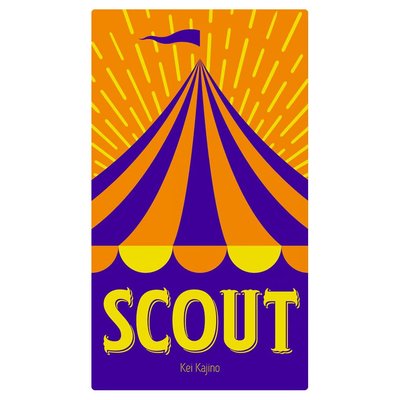
teaches you the game is more like 24 pages instead of 32 pages plus you know an intro page and whatnot uh so yeah i think that is going to bring the section about imperial steam to a close and now we can move into the third game which is scout or i guess scout uh because there's an exclamation point at the end uh as i mentioned earlier the three games i'm talking about today almost couldn't be more different from each other we've got a thailand game we've had a heavyweight euro logistics type of engine building game and now scout is a ladder climbing card shedding type of game now this game came out in 2019 so it's actually technically been out for a couple of years and it's not very available i've already looked into it spoiler alert i liked this game quite a bit and i looked for a way to acquire it and it seems like the only way to get it right now is through amazon.jp although the price for it was not that bad considering i would get it shipped from japan over here to california now uh this is a three to five player game that um bgg says takes about 15 minutes to play and i played this game once and um i think our play was probably more like 20 to 25 minutes maybe 30 i don't know we were having fun so this game um is a like i said a ladder climbing uh card chatting game and right at the uh the start i would like to mention that the image that i'm using over here is uh one that was provided me by uh taylor rainer or renner i'm not sure how to pronounce that i'm sorry taylor um taylor is part of a group that i've been playing games with lately and he actually has a youtube channel called taylor's trick taking table which is great i just wanted to give it a shout out um when i
first heard i was going to be playing scout with these people they mentioned that channel to me i'd never heard of it before and i watched taylor's video on scout which taught me the game so that when i played it with these people i just jumped right in and then i ended up watching like four other of taylor's videos like in a row he mostly talks about card games and specifically trick taking games uh depending on your definition of that um and he talks about a whole bunch of games that i've heard a little bit about so i strongly recommend the channel and um i'm also thankful to taylor he took this photo and sent it over to me letting me use it because we actually played this one online um we uh the interface that i had didn't show off the game very well from a good games vlog perspective so i asked him to take this photo and let's talk about the game let's talk about the game so you have this deck of cards and in it each card has two numbers on it it has uh in the corner a primary number and then a secondary number and in the opposite corner those numbers are flipped so what was secondary in one corner is the primary one and then vice versa for the uh the secondary one in that other corner now what this means is in this game you're going to deal out the deck of cards to everybody all the cards will be dealt out and then um you'll look at your hand of cards and this is a game where you are not allowed to reorder your hand um there's a few games out there like this like bonanza and i think kras karat however you pronounce that is another game where you can't reor reorder your hand and i think that's a really cool idea in card games now in scout as i said this is a ladder climbing game and if you're not familiar with the terminology or the nitty-gritty of this terminology for card games i said it's a ladder climbing shedding game now shedding games are card games where you are trying to get rid of cards
generally as fast as you can and you often usually can play multiple cards at once and then ladder climbing is a subset of shedding where um in each of the hands you're going to play cards out to the middle of the table and you are trying to play better sets of cards than the previous cards that were played on the table as you're essentially climbing the ladder of stronger and stronger hands now the hands in this game are really simple you are either going to put down straights or you're going to put down sets of the same number now um the sets and straights i guess both kind of start at one card so you can put one card down it's a set slash straight of one and that can be beaten by a two card set or a two card straight let's say a two card straight is put down then a two card set actually beats that so to a pair is better than you know one two or something like that and when you're playing these cards out you have to take them from your hand in the order that they were because remember you're not allowed to reorder your hand so what that means is looking at this example hand right over here you could have a set of or yes straight of four five but you cannot have four five six because they're not in order um if the cards were in different orders then you could put a three card straight down uh also you have looks like a couple of sixes over here you could play those down as a pair so you have options in your hand but you're also quite restricted now the start of each round i love this at the start of each one you're going to look at your hand of cards and decide is this the orientation that you want you can look at all of them and if you like the secondary ordering better you simply rotate the entire hand of cards and then display it out again and now they are the opposite again you're not allowed to reorganize any of these but that means
at the start of each round you are analyzing essentially two different hands and deciding which one you like better there's the hand with the primaries and then there's the hand with the secondaries so uh looking at the secondary hand right off the bat there's a one two three which is a three card run which seems pretty darn great and that might mean in this example at the start of the round um they could have flipped this deck over and then had that one two three straight to use because maybe they felt like that straight was stronger than the other options they had now once you decide which orientation you want you cannot spin the cards in your hand around again and then you just start playing these cards out uh in this example out here the person to this player's right put down a set of two twos and that means two threes could be that or these two sixes could be that uh in this example let's say this player put down two sixes then they actually take all of the cards that are out there on the table so in this case they would take these two cards which were just beaten and you put them face down in front of you and each of those cards is worth a point so that's good you obviously want to beat stronger hands of your opponents because the stronger that hand is the more cards it has and the more points you'll get when you end up beating that now let's say you're in a situation where you either can't beat the previous hand or maybe you can but you don't want to now the other option instead of playing a card is you can scout which is the name of the game when you scout you're going to take one card from the cards that are currently on the table and you're going to add it into your hand you're essentially scouting out that card and putting it into your hand and you can choose either orientation so this card here is a two seven so that means if i scouted this card i could orient it as a two or a seven and importantly i could slide it in wherever i want to in my
hand so that means you have this set hand of cards at the start of the round but then you can modify it trying to flesh out various straights and runs and those kind of things by scouting also you have this wonderful thing to crunch on where as you remove cards from your hand new cards become adjacent so there is this awesome puzzle of trying to figure out okay i'm gonna play you know um these two sixes first and as soon as i play these two sixes this four and that four will be adjacent to each other so i can play those two fours as a pair and then the five and the three will be next to each other well maybe that's not very good so maybe you do something else but you get the idea we're trying to essentially have a collapsing set of cards that turn into good things that you can actually play out in front of you now i did mention that when you scout you take a card from the table and when you do that the person who had those cards in front of them gets a scout token which is just a victory point token and since you took a card from that uh previously placed trick well i guess not trick hand um that means it's weaker so that means if i scout this and i pull this to seven that's my turn and now the next person to my left gets to go and all they have to do is beat a two a single two they could play a a single card that's higher than a two or they could play a two three four five card set anything that they want so that means you've essentially increased the um options that you have in your hand by scouting a card and you've also made things easier for your opponents to score but also if they score that then they'll just take the one card instead of the two so there's this awesome balance that's happening as you're playing through this game now one time per round each player can use their single scout and play token and this just means you can scout a card and then immediately play so you can essentially do a double turn where
you have to do those two actions in that order and then you push that token to the middle and you don't get access to it again there's no bonus for not using it so you should definitely do a scout and play at some time during the round and then once any one player has played all of their cards the round is over or once everyone scouts around to the player who played these cards so that means in this example if this player put these twos down and then this current player scouted and then everybody else scouted and no one played cards to take those then that would also end the round and then the person who triggered the end of the round is just going to get all the points in front of them and everyone else is going to get the points in front of them minus one point for every card they have in their hand so that means right now there's one two three four five six seven eight nine cards in this player's hand and they have you know maybe four points in front of them so if the game ended right now they would actually lose five points so i guess if the round ended they would lose five points and that's bad once the round's over you just shuffle the deck up deal it out again and you play a number of times equal to the number of players and this is such a cool game from an aesthetic perspective i am super impressed with the cards i think they're really clean and i love this idea of looking at two hands of cards uh one big aspect of card games in general is just the randomness of the deck of cards you know you you deal out those cards and then that's what you have and this game has the extra randomness of the actual ordering of these cards in your hand and then from a mechanical perspective you you have two hands so it's this really neat thing where you get one hand that's actually two and there's this awesome moment at the very beginning of the round where you're analyzing these two hands you're not only trying to figure out which one is stronger from a oh i have a three card set here and a four
card straight there but you're also again trying to think about the collapsing um effect as you remove these cards okay well i've got this pair and i remove that that's actually going to make a four card set if i remove that then boom that gives me a three of a kind i'm gonna flip these cards over and then do that and i really enjoy that analysis that being said you are all doing this analysis at the same time so there's some simultaneous action there and in my one play of this i think i generally took longer than my opponents like they were generally waiting for me to decide if i was going to rotate my hand or not maybe that's because i was just enjoying the process of thinking through the options so much kind of reveling in it i don't know i ended up tying for the win in this game i actually had two really strong hands and i did poorly actually lost points in this third and fourth uh hand of the game we played it was a four player game and it went down to a tie breaker and i can't remember if there was a tie in this game or not i'm not sure if i won it but it was me and taylor i remember we tied which felt pretty good then again i guess getting a whole bunch of points and then losing them in the end was you know not so great but it was just a super fun experience um i did play cress karate again i'm not sure how to pronounce that i played that once and i thought it was neat that in that game you had a hand of cards and you couldn't reorganize them i can't remember the specifics of that game because it was like three years ago but it didn't really blow me away but this game did uh i think the the the rotation uh the fact that you have two hands in one at least at the start of the round is brilliant and i love the uh ladder climbing aspect of this game teach you is one of my all-time favorite games in fact we actually played a game of teaching after we played scout so that was a really fun night
but teach is one of my favorite games and that is a shedding ladder climbing game and this is essentially that but even simpler in teach you you have um you know consecutive pairs you have um various other things like full houses and and all these kind of other sets and in this game you're either paying playing sets of the same card or runs of cards it's so simple and so easy to gronk what you're allowed to do and what things are better than others and um this is a game that i definitely want to get a copy of i don't play card games that often but this game is so simple it's you know quite compact as well in the box that um this is one that i just really want to have around it's such an elegant design it's so fun to puzzle together the options that you have in your hand uh again i've only played this game once but um it seems like it's got pretty much universal praise for this one the reason i wanted to try it is because i keep seeing people post about it on twitter and whatnot saying that they're just loving the game and i was so happy to be able to try it and see that yeah this is a gem uh just the balance that comes into play where you scout and then makes the hands weaker so that other people can jump in but then they get less points for those hands and the um the escalation that happens as you go deeper and deeper into a hand because you're losing more cards which means you have less potential opportunities to do things but you know that everybody has been trying to make these collapsing things so that means you know the beginning of the round you might be you know tossing out a pair and then you um you know another person puts out a pair and they're all kind of weak but then as people are selectively and smartly pulling out different cards suddenly someone puts down a five card straight and then somebody puts down a
six card straight and you're just like holy cow i can't believe you did that and they did that by selectively removing cards to get them out of the way and by scouting the good cards to slot in to then build those big straights of course if you're scouting a bunch to build that big straight and then somebody else ends the game before you actually can then you're stuck with a whole bunch of negative points so you have this push back as well of trying to strengthen your hand to have a really strong late round push but not wanting to be caught with a whole bunch of cards in your hand because you went too slowly so that's scout um i i think i managed to describe the rules far longer than i probably should have it's a really simple game overall but you know the intricacies of how this stuff works i think is uh just really really cool um it looks like taylor's actually here thanks for joining in taylor and thanks for uh teaching the game via the video uh i've actually put a link uh in this video straight to taylor's uh video about scout so if this sounds interesting and if i've confused you with how it works then check his video out because it's really straightforward and i'll also put a link to that in the final version of this video so you can learn about a whole bunch of weird trick taking games and stuff that taylor likes to cover and also learn more about scout which is a really cool game as i said it's it appears to be only available right now by buying it through amazon.jp which is the japan amazon but it seems like it has a lot of stock and the price isn't that bad so i haven't pulled the trigger on it just yet um but i'm hoping this one gets a wider release i think it could do potentially really well i mean i'm not a marketing person i don't know how well card games do you know in america for example but um i think that if this one was picked up and had wider distribution i think a lot more people
would fall in love with it because it does so many smart things in so many fresh new ways and uh yeah i i'm uh repeating myself a whole bunch here i i can't say enough great things about scout i'm looking forward to playing it more and hopefully uh acquiring a copy of it at some point soon all right well that is going to wrap this one up um thank you to everybody who decided to join into this live and thank you also to everybody who decided to watch this one later uh it was uh pretty interesting uh just kind of whiplashing between all these different types of games with uh the tile lane and the heavy euro and the trick taking game and honestly you know the fact that i played all these games over the last couple weeks um does show that i've been able to play a whole bunch of interesting different games over the last few weeks and i really like that overall variety uh i wouldn't call myself an omni gamer because for the most part i don't really find myself playing party or social deduction style games that much but most other games i am down to try and uh playing a nice variety is great uh so yeah i think this is going to bring this good games vlog to a close thanks again to everybody as always i'd like to thank everyone who's been supporting this channel including these producer-level patreon supporters if you too would like to directly support the channel in the creation of future videos just like this one then please go to junketsgames.com support also if you enjoyed this video then please click the like button for it down below as well as the subscribe button for the channel thanks for watching