Is Fate of the Fellowship just Pandemic: Lord of the Rings? - TCbH Review
Games in This Video
1 game is featured in this video — it unlocks as you watch.
Transcript
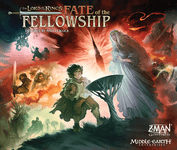
The Lord of the Rings, Fate of the Fellowship, a pandemic system game, is a bit of a mouthful, but it's also kind of an interesting full circle that bears examination beyond just being a cool new cooperative middle-earth game. See, for a lot of people, Matt Leox's Pandemic and shortly thereafter, Forbidden Island was their introduction to cooperative gaming, period. both enjoying widespread success as well as numerous spin-offs. Though you can attribute a lot of the still growing popularity of cooperative gaming to these two pillars, it was actually Rhinard Cania's The Lord of the Rings published in the US by Fantasy Flight Games that was the first cooperative game to really make headway in the hobby, which according to Lee himself in an interview on this very channel, well that the the podcast arm of this channel served as direct inspiration for pandemic. I played uh Rhino Keniti's Lord of the Rings shortly after it came out, probably around 20201. And um that really showed me that cooperative games could be a thing. So here we are all these years later and Matt Lecock is doing a cooperative Lord of the Rings game with Zman Games, which is under the umbrella of Asthma North America, which is formerly known as Fantasy Flight Games. And this is the third pandemic system game following
Wrath of the Lich King and the Clone Wars. both of which we've covered on this channel, but this is the first one in that series that Leok has designed himself. Like I said, full bull circle. While there are definitely marks of its lineage, Fate of the Fellowship is the biggest departure from the pandemic formula in this series yet, and you do yourself a grave strategic injustice if you rely on well-honed instincts of Yore. Across Middle Earth, a clockwork war is raging, where each turn, enemy forces scheme and march, following battle lines dictated by shadow cards drawn at an accelerated pace as the game goes on. These forces, if left unopposed, will crush the free peoples of the West, representing armies of elves, dwarves, and the men of Gondor and Rohan. If they reach havens and overcome any opposition, it becomes a new stronghold, and the hope of victory depletes. A hope resting on a few banded by fellowship, marking another large departure from most co-ops in the past.
Each player takes on the role of two characters, each with their own unique powers and a pawn on the board. And each turn you take up to four actions with one and one with the other, which does feel strange at first, but given the expanse needed to be covered and the heavy emphasis on tactical gameplay is quickly apparent how welcome it is. Your character conducts the heroic deeds needed to delay and defeat the shadow before hope runs out. Largely by mustering, escorting, and leading troops to battle or otherwise work as roadblocks in the battle lines and completing the objectives selected thematically or randomized for your game. Pulled from an enormous stack of story beats with tons of possibilities. Some focusing on the acrruel of resources. Some about leading troops to assault a shadow stronghold to convert it to a haven, restoring some hope in the process. Some about fortifying specific regions, but ultimately always ending with Frodo having to reach and spend five rings, then survive a final search at great peril at Mount Doom.
Okay, so there's a lot to take in here. This is easily the most complex and richly strategic game associated with Pandemic that I've ever played. The sum total of legacy complexity aside, but it is woven together in a way that makes it really digestible. It's great. The actions themselves are really simple. movement. Share cards associated with your region. Use cards for their resource or cash those cards at havens for resource tokens which can be used in the same way, but don't eat up your hand. Or escort troops around to pick fights with the shadow, rolling up to three dice and inflicting hits and suffering casualties accordingly. But between the automation of the marching armies of Mordor deployed and handled through a really cool system where you flip a shadow card and the new on deck card either has a red banner indicating that the now revealed card resolves its march along its colored path or black banner and you resolve the dark minations on the bottom. But between contending with those forces, you also have the conflicting needs of the unique quests that you set up during any given game and the special role of the player who controls the Froto and Sam character, who can do the same thing and may have to do some of the same things that any other character can do, but ultimately is going to need to draw into five ring cards and or ring tokens and
then haul their butt over to Mount Doom. So, you got a lot of competing strategic priorities you're going to have to juggle. This is where Fate of the Fellowship sings. The thematic resonance of mounting pressure as you harness the desperate mechanics echoing harrowing and beloved moments from Tolken's story. And make no mistake, this is an absolute love letter to the written Lord of the Rings with fine details, quotes, and illusions. From the player cards each featuring numerical flavor, also used to designate starting player, to things like one of Legololis's special abilities to shoe neighboring Naz Ghoul and Aowin bearing one of the only ways to fully remove them from the board. But it goes beyond just representative powers. See, many consequences of shadow plotting are based on what region Sauron's eye is at. Usually bad if hanging out with Frodo. Though anytime a player initiates a battle, that eye is moved, proving a valuable distraction. A major element of this game is that under a few shadow-driven circumstances, and anytime the Froto and Sam player moves, even if by escort from other players, unless the moving player discards a cloak resource, a search is conducted.
rolling black dice equal to the enemy armies on the new location and Naz Ghoul looming in their region, losing hope, potentially a lot of hope if not shielded from some results from being in a haven in the process. As a huge Tolken geek, I mean, I've done freaking poetry readings on this channel. I love the distinction and separation though direct relationship between the marshall combatants. the perhaps too tiny of wooden figures making up the various armies and the individuals, the Naz Ghoul and the heroic pawns that are leading the armies and conducting the various events that drive the narrative that we all love, which there are a lot of Middle Earth games, including notable titles like the Fellowship of the Ring Trick Taking Game and Duel for Middle Earth, having just come out last year. Not to mention icons of this hobby like War of the Ring and the Kitia Lord of the Rings that I mentioned at the beginning of the video in the first place. And yet, with just a few plays in, I can already say that this is a contender for one of my favorites. It captures the splendor and scope of a game like War of the Ring, though trades in the grand strategy for automated co-op with adventurous questing and the spreading hand of Sauron that hearkens back to the now nearly forgotten Middle-earth quest. If
I have any major criticisms, it's in the duality of the production. I mean, you got your absolutely lovely and surprisingly sturdy Barador, which yes, collapses into three parts easily and fits all back in the box, but at the same time, you got a dizzying board with numerous colored paths to follow and tiny, tiny, tiny wooden figures. Not to mention the Naz Ghoul, which are beautifully sculpted and smartly on different elevations in their stands. So that way they're not bumping into one another, but nonetheless, as you're scooting them around the board, will inevitably fall, possibly knocking some pieces over that. And no matter how good certain characters are at freely generating resources or mustering troops at affiliated locations with no cost, it does have the ability towards the end of the game to fall into the old pandemic trap where you have no good actions other than just how to best survive long enough to draw into the right cards because my man Frodo needs five flip-flopping rings in order to cast that thing into Mount Doom. Of course, that's somewhat mitigatable if the Froto player is thinking about the endgame right from turn one, which is what you're going to need to do because this game is particularly hard. I just wish that there was another proactive layer that was built into the game, not specific to certain characters, maybe unique actions tied to capitals or
certain havens. But on the other hand, the immense despair and weight of unassalable evil is a big part of the thematic conceit of the Lord of the Rings. So with all that said, I was dubious about this one, both in my love of Tolken and the abundance of pandemic games and just games that use Middle Earth as set dressing. But Lord of the Rings pandemic, this is not. Fate of the Fellowship is the real deal. A completely unique, complex, richly thematic, cooperative banger that's also a love letter to the past. And that's our review. But let me know, what is your favorite Middleear game? I think I've asked that question in the past.
So, bonus question, what is your favorite Middleear character? Put it in the comments. As always, thanks for watching, thanks for supporting, thanks for being such an awesome community. You know that I've been Jack for the Cardboard Herald.