When Less is More - Minimalism in Table Top Adventure Games
Games in This Video
4 games are featured in this video — they unlock as you watch.

Transcript
Hey folks, welcome back to the dungeon dive. Daniel here. I hope you're doing well and if you're not, I hope you are soon. Okay, in today's video we are taking a little look at some games that employ a certain level of minimalism in their design. And you know there are a few different types of minimalism that we'll focus on. We have artistic minimalism, component minimalism, and mechanical minimalism. Like a lot of us, I like games that come with a lot of stuff, you know, especially stuff that adds variety. You know, games like Arkham Horror or Eldrich Horror or Shadows of Brimstone. these games that just have a ton of stuff and that stuff often adds a lot of fun. However, sometimes that stuff does add a kind of barrier to entry. Uh it's hard to store. It takes up a lot of shelf space. It takes up a lot of time to get to the table because you have to sort through things. And so sometimes a game that just has a little bit of stuff or employs a certain kind of minimalism can be a breath of fresh air. One example here is from Jack D Games and that is The Adventure of D. This is a little box about the same size as like a Magic the Gathering starter pack here.
And uh this game is great. It gives me a full adventure game experience in a very very small box. And one of the ways it does that is by multi-use cards. Almost every card in this game has multiple uses. I do have a detailed video on this game, so if you want to know more, check that out. But, uh, we set up a map here in a 3x3 grid, and these locations are double-sided to add some variety. All of the encounter cards have multiple uses. They can become items. Uh, they can be used for different to trigger different powers that your heroes have. Uh, the heroes have multiple uses on their cards. they have a skill and then as you level up you will add the skills from unused heroes to your character and then on the back side they have an item called fairy dust. And so the there are all kinds of different ways that this game uses its cards. And so it's kind of a minimalist in its component quality and quantity. Uh even the little tokens here for your characters are just these little folding paper tokens that you use. But when I played this game, I really have a lot of fun and it does make me feel like I am playing a much bigger game and it's pretty easy to get to the table. It's really easy to store and so I appreciate this kind of minimalism in an adventure game. Uh a
couple games in some bigger boxes, but still not big boxes. We have kind of a small box and maybe a medium-sized box here, but we have Seven Moons and Glory second edition. Both of these games are fantastic adventure games. Uh they are very fun to play and they are relatively simple and they come with kind of the bare minimum amount of things to create that kind of adventure game feel that I'm looking for. I think that's especially true with Glory second edition. This game is so minimal in what it provides and in its mechanisms. You know, I if you took just one thing away, it would kind of stop even being a game. I mean, you have all of the things that you want. You have your bosses. You have items that you can buy. You have quests.
You have different abilities. You have different monsters that you will attack. You have a number of different characters that you can play as. And a game board. And uh this game does remind me of kind of, you know, a very early version of something like Talisman, but I think it's even simpler than Talisman, but it's it's really good. It's really fun, and there's almost nothing in this game to get in the way of me having fun. I can set it up very quickly. I can get it relearned very quickly if I forgotten how to play and have a great adventure experience. Uh Seven Moons is somewhat similar. Now, this is the deluxe version, which comes with a lot of wooden and metal pieces, but you can get just the regular version that's all cardboard, but uh this comes with a really super cool small hex map. Uh this game is a competitive or co-op/solo adventure game. It has a very simple kind of rudimentary market system where you are buying and trading goods in order to gain coins. you are moving on the map, having encounters, fighting monsters, and just taking care of quests. And it too just has kind of the bare minimum of components that you would need to have an adventure game experience. And once again, this is just one of those games that is super easy to set up, super easy to get played, and it's in a very nice small box, and it's
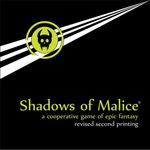
easy to keep on my shelf. You know, these kinds of games here, even if I don't play them all the time, I am more happy to keep them because they don't take up a lot of space in my small room. And that's pretty important to me. You know, I can only have so many Arkham Horrors or so many Eldrich horrors or so many Shadows of Brimstone before I am just completely out of room. And I like to play a variety of games. You know, I'm not a lifestyle gamer. I don't focus on one game for a really long time. And so having these smaller kind of minimal games really does add a lot for me. Next up is an example of a game that uses that employs artistic minimalism. And you can tell even from the cover, Shadows of Malice. I mean, this looks so basic. It almost looks like, you know, a generic beer that you would buy in a store that just says beer. this adventure game. That might actually even be cooler if it was just called adventure game. But, uh, this game is a really cool co-op adventure game that does employ a very minimalistic art style. As a matter of fact, when the designer was designing this game, and this is from Devious Weasel, uh, the designer wanted to wanted to use no art at all. and he put some very rudimentary
placeholder art on the cards and the play testers ended up liking that placeholder art. I kind of wish that he would have gone completely into his vision of having no art at all, but it's still very minimalist. It's very rudimentary. There's almost no flavor text in this game. Everything is kind of a blank slate for when you play. Your uh characters are just these uh little tokens. Where are my character tokens? Uh they're somewhere here. Your characters are just these little oblong tokens. They are these avatars of light and you will create a character by combining a couple different powers. And the powers don't really have any flavor text. And so it's really up to you to determine what your character is. And the more uh of your imagination you kind of put into it, the better. Uh even the art on the tiles is pretty minimal. And another very minimal thing is how the enemies are created. You know, we don't have a huge deck of different enemies of different monsters with all kinds of different art and powers. You have a creature generator and you might uh come across a secttoid or an aven or maybe a proteian and then you will roll up on the various powers and their creature abilities that you will add and then you kind of have to use your imagination to
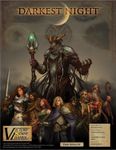
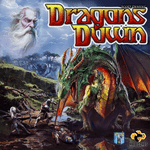
construct that monster in your mind. Uh the game doesn't construct things for you. It leads it leaves a lot up to the players to determine how things look, how things feel. And because of that, when I am playing Shadows of Malice, I feel more invested in the world than I would in a game that has a lot of intricate art and flavor text. Okay, next up is two games that employ a certain kind of mechanical minimalism, and I think they're both better for it. Uh, neither of these games, Darkest Night, this is the first edition here, the Necromancer bundle with everything. And it's also true about the second edition, but neither of these games, Darkest Night or Dragons Down, have any kind of component minim minimalism. I mean, both of these games, both of these boxes are jam-packed full of stuff.
These games have a ton of stuff. Um, especially Darkest Night. This might be my most jam-packed box. I mean, this thing is simply overflowing with cards and tokens and stuff. So, uh, these two games definitely don't employ any kind of component minimalism, but they do have some minimalism in their mechanisms and, uh, they are better for it that. So, Darkest Night in a lot of games that we play, a lot of games that we cover, uh, when it's your turn, when it's your character's turn, you know, you have a number of different actions you can take. You might have five action points, and you can spend those action points to do different things. You know, you can move, you can attack, you can engage with an encounter, uh, you can hide, as in Dragons Down. There's all kinds of things you can do, and usually you get to do multiple of those things on a given turn. Well, Darkest Night takes the complete opposite uh direction there. And you only get one action on each of your turns. So, it uses a kind of minimalist action economy. And the reason why I think this game is better for it because that goes a long way in strengthening the theme of this game.
So, in this game, the heroes are just up against the wall. Their backs are against the wall. This very very powerful necromancer has taken over the land and you are having to go out in the secret of the night in the shadow of the night and you don't want to draw attention to yourself because as you draw attention to yourself as you do more things you become a target for the necromancer and until you find one of those holy relics it is impossible to destroy the necromancer. So, you kind of have to sneak around and you can only move once and that would be your whole turn, moving one space or attacking one thing or interacting with one card. And you want to do the bare minimum in order to not draw the attention of the necromancer until you're ready to defeat them. And so, I think that kind of action minimalism really goes a long way in selling the theme. Now, Dragons Down, it has a ton of stuff. It has a ton of actions, you have action points, but where Dragons Down employs a minimalist uh mechanism and is is is in the way it creates stories. A lot of games these days employ a kind of maximalist attitude when it comes to narrative. You know, we see campaign games on Kickstarter uh boasting about how their campaign books are like 500,000 words.
Uh our campaign book is bigger than War in Peace. piece I think I've seen before with so much flavor text and so many paragraphs and pages and [clears throat] pages and pages to read. Well, Dragons Down takes the opposite approach. In the current version of Dragons Down, there is not a single sentence of flavor text on any of the cards. Every time you play Dragons Down, it is a blank slate for you to create a story based on the actions that you are taking and the way the game reacts to those actions. You know, none of the factions are natural enemies. Uh you know, they they might become enemies by the way the game plays them. You know, you might befriend a faction. You might make an enemy of a faction. Uh you might go into a deep and dark secret tomb, but the tomb doesn't really have a name. Uh you have to come up with that. You have to kind of develop the story while you are playing.
And you get to create everything from this blank slate. And for me, the stories that Dragons Down creates are far more interesting than any story I am being told in a board game. And so by employing that kind of narrative minimalism, I think Dragons Down is a much better game for that. Okay. And finally, the game that I was playing that inspired this topic, and this is the wonderful game from Tom Wam called Search for the Emperor's Treasure. Now, I have done a detailed video on this as well, but every time I play this game, I have so much fun. And it is so minimal in every way that we've already discussed in artistic minimalism, in component minimalism, and in mechanical minimalism. This game is so simple. Uh, it is a competitive game.
There aren't any solo rules, but I usually just play two characters and see who wins because I have fun doing that. Um, it's not hard to do it all. And it is fun. And it's kind of like, you know, the way I used to play a runebound solo or or Talisman solo. I just play double-handed and try to have fun on the adventure with my characters. But in uh this game, the characters are exploring this world. They are looking for treasure. And within all of the treasure tokens here, there are six Imperial treasures. And the game ends when all six imperial treasures have been drawn and they were out on the board or with players. And then you total up the number of treasures that the players have and whoever has the most treasure wins. Uh the game is super simple. On a turn you can move and then you encounter a space. And that is basically it. Uh right now in this game I am playing as uh Rocku the Dwarf versus Herald uh the cleric. And I mean talk about component minimalism. These are just really thin cards. Uh Tom Wham's doodles are very simple. They are very minimal minimal, but I think they add a lot of charm to the game. Even on, you know, the little the little chits here. Uh we have a whole bunch, you know, dozens of little encounter chits. And the encounter chits have a little doodle on them with a name. When you draw one, you have to
look up the encounter on these pages here. And then that gives you a little bit of a story and your stats and how you need to deal with that encounter. Uh mechanically it's very simple. You can move up to three spaces along a road or if you're moving off road you can move one hex. And then depending on if you are in a named space or not. If you are, you will roll uh 2d6 and consult the exploration table to figure out what you have found. If you're not in a named space, you draw a random encounter from the pool if the terrain matches the terrain that you are on. For instance, this Ralph the Troll is only in the swamps and the mines. I'm in the desert, so I wouldn't have to encounter that and I would just discard it. The turns literally take about 2 minutes to go through. Uh if you're involved in combat, it's a little it's a little more involved. Combat is a simple uh d6 dice pool system where fives and six count as successes. I love that. But this game has everything I look for in an adventure game. It has a whole bunch of different armor and weapons and items.
Very, very simple. They will add to your attack. They will add to your defense. That's it. Uh we have quite a few uh spells. We have all these different spells. And here's what the spells look like. There's a heal spell. It just has say says a spell heal. Uh here is a spell familiar that will add to your defense or to your offense. And then to determine the the effects of the spells, you just look at what the spell does on your information uh page. We have a small deck of treasure clues. And so these clues will tell the players the named space that there uh that there is a treasure in. And so you move to that space, do what it says, draw a random treasure. But, uh, you know, if you were just playing this as a solo game just to create a little story with one hero, uh, you could get through a whole game in probably 30 minutes because the turns are just so fast, maybe 45 minutes, just super super fast. It employs minimalistic art. Its uh, components are minimal and uh, the mechanisms are also uh, minimal. And all three of those things combined to make this an awesome game. I love it. It is so much fun.
Every time I play Search for the Emperor's Treasure, I just have fun because of how simple it is. There is nothing to get in the way of the adventure that I want to feel. You know, Rocco, uh, he's over here on this road and he met these imperial this imperial patrol and the imperial patrol wants to take the imperial treasure back to the king. And so to overcome this challenge, I either have to give up all of my imperial treasure, which is very important for winning the game, or I have to fight them, and they're pretty powerful. Uh, right now, Rocco has a side quest of taking this elf princess to the Imperial capital. Uh, Harold here, he has a familiar that he can call. Uh, Harold is just cleaning up with the treasure. Harold is doing very good. Uh Harold had a side quest where he needed to take a maid to Reevar Castle down here. And now he is making his way over to the village of uh Scrab in order to find a treasure. Uh there are all kinds of different encounters and everything is just so simple. You know, sometimes I fall into that trap of thinking that I need a component for everything or I need huge stacks of cards and all kinds of different things in order to have a great adventure. But these kinds of games that I'm talking about really prove that that's not true.
And you know, it's just I I wish I could embrace that more often. But I often do say, especially when I'm covering a game on this channel, like, ooh, think about the expansions. Think about how I know a deck of 50 more adventure cards would add so much to this game. Well, maybe that's not true. you know, maybe we just need a bare minimum of art, of components, and of mechanisms because sometimes a really small, very simple game is exactly the game that I want to play. So, uh, let me know of of the games that you enjoy that employ, you know, artistic component or and and or mechanical minimalism. And, you know, if I haven't covered them, maybe I'll take a look at them. So, I hope you enjoyed this video. We'll talk to you later.
Bye-bye.