Gaia Project Review - JonGetsGames
Games in This Video
1 game is featured in this video — it unlocks as you watch.
Transcript
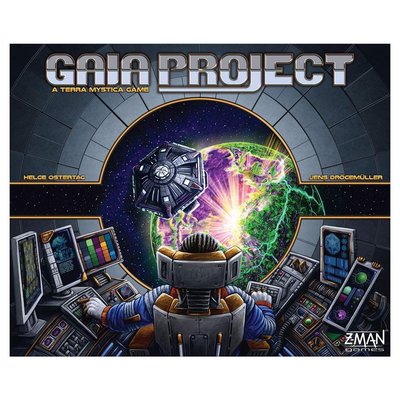
welcome to Jong it's games today I'll be reviewing a guy project now this is a large strategic board game that is also the sequel to Terra Mystica which came out many years ago both of these games share several things in common including expanding out on to a map as you control highly asymmetric factions and you also increase your economic infrastructure with a bunch of engine building but with diet project you are now set in space and you are much more mobile as you fly from planet to planet also this game has a large tech track structure that is completely new as well as lots of little tweaks to the overall Terra Mystica system first I'll explain how the game plays and then I'll jump into my review out here in the middle of the table we have the game fully setup for our two players now there are several different things that are going to be randomized with each play the first is that these are nine different technology stacks are put into these various places randomly then we have these booster tiles of which you only use a small subset and then you get rid of the rest and then lastly up here we're gonna have two endgame goals out of many more and six of these round boosters and we're not going to use those over there let's now come down here and take a look at this overall map you'll see it is made up of all of these individual little pieces and this is a standard layout for a two-player game you'll have more of these tiles with a larger player count and if you want to as a variant you can make your own patterns of these tiles and even rotate them around the last thing that I'd like to show you before we jump into the mechanics of the game is that the player board down here and you'll see that we picked the orange faction we are the geode ends and each one of the factions in the game has an asymmetric ability some of them actually
have asymmetric detractors as well and there are 14 of these to choose from so you'll see this big stack right here and every single one of these it's actually double sided so there's two brown to red and then on the back side of this there's a different orange one to pick as well okay it's now time to start talking about how the game works and we can start up here with the round tracker you'll see there are six of them which means we're going to take six overall rounds in the game and so we start the game off with this round right here and at the start of the game each player is gonna grab one of these boosters and then we will be grounding more of these as game goes on and when we aren't in the upkeep phase we simply look for every one of these up held to handle a cons anywhere in our area and then we take those Goods so this right here is going to give us two money as part our income then we look over here we have a little hand for the blue knowledge token so this is going to go up right there and then we see three of these white squares down here well that is or and we can go one two three just like that it is worth noting that these little colored spots on at the track show you where you start with those given resources but we as the geo dents started at six instead of 4 because this terraforming technology allowed us to start a little bit higher up which gives us some free or and I'm not going to go into the specifics of it but I figured it was worth pointing out also we all begin with one of these little qia cubes and you'll see I put that right here on the board now the game does give us a whole bunch of these tokens that you can just track them that way but we have found that we just track it up here on the track just like the rest of the resources to keep things simple once everybody has simultaneously evaluated all of their income we do the
Gaia phase which involves this bowl right here but I'll talk about that later on in the video and then we go into the action phase and we start with the starting player which could be us and then we each take one action and we go around the table until everybody has taken all the actions they want to do now there are several action types that you can do but one of these simplest ones is to spend our knowledge to go up on the technology tracks the cost is always going to be four and if you look at that we start with foreknowledge so let's go ahead and do that as an example spending our foreknowledge when we look up here at the research board we find these six different tracks as well as a little reminder down here that does cost for knowledge to bump our token up on one of them now you'll see we start right here because that's just something that the geode ends get to do and in fact you'll see that little 2 or right there that is how we got the bonus 2 so in this case we could spend the 4 in order to push us up one more on this track and this is gonna make it easier for us to terraform new planets but instead if we had gone with this track here that lets us fly farther this one gets us more of the green cubes which can be used for some very nice things this purple track allows us to do some guy forming which I'll explain in a bit this one here just gives lots of little hand symbols that I already covered so this is just a more income every single turn and lastly this one here it gives you hand symbols just for knowledge so this one that allows you to do better at bumping up your tokens when we look over here at this specific example you'll now notice that our token is on a spot with a two and a little arrow symbol which means that we can spend or per terraforming step and I'll explain that in just a second but if you look down here or opponent only has the
white token down at the bottom which is three per so we are already much more efficient than our opponents at terraforming speaking of terraforming let's now talk about to the next action type which is building out a mine so we look down here we see a we have a whole bunch of these and in fact we started with two of them on the map and over here we see the cost to place this mined down it's gonna be two money and one ore and if we look up here we actually have these two money tokens we started with 15 and this income right here brought us up to 17 so we could reduce this down to there and then spend the one ore and now we can put this mine out onto the map well first things first we need to figure out where we can put this mined down now obviously if we are playing the game we'd have this all planned out but let's go through this step-by-step so we have a miner right here at the start of the game as well as one over there and we currently have a space movement of one we know this because when we look over here at our blue research track our token is still at the bottom and you see little one for the movement that means if we were to get our token up to here we would have to movement but we are not quite there yet well when we come back to the map and we take a look at the things that are just one space away from us we have this white planet and we have this one red planet there is this purple one over here but that's special and I'll talk about it in a bit so that means we have a red and white available so we now come down to this nice chart on our player board we see that red planets are one terraforming symbol and a white planets are three terraforming symbols and as we just mentioned when we looked up at that research tract it's gonna cost us - or per terraforming symbol so I think the right thing for us to do would be to place this down right over there so that it's only gonna cost us - or as opposed
to six or with that white one down there so we'd go down to six right there with this mind now on the board we are done with our action but there are two more things that need to happen before we can move on the first is that when we look at these two endgame scouring spots the first one is going to be counting the number of different types of planets that were on well we've just gone to a new type so that means we can move this little marker up to show we have at - and we are now beating out our opponent in a two-player game we do have these dummy put tokens right here which are kind of getting in our way and at the end of the game we're gonna get six twelve or eighteen points if we are third second or first in both of these tracks and this one down here was also randomly put there and this is the number of the large sector tiles that we are in at anytime and now the other thing that we have to check is the neighborhood around the area that we built in so this went right here and a local area is up to two spaces of way so that means this network right here and we notice that there is one single white building in that area what this means is you take the highest value building of that opponent in this case it's just this one white mine and that opponent is gonna be able to move some of their power when we come over here to take a look at our opponents board it's now time to talk about this area up here now each one of these are power tokens and as I mentioned before we built next to their mine which is the lowest value building and you can tell that by looking at the side there's this little power token symbol right here which shows that the mines are worth just one power movement and we built next to one of their minds so that means with one power movement they get to move one of their power tokens now the way this works is if you have any power tokens in
the one area then you must move it from the one to the two and that means if in the future they get another movement they'd have to move this one up here once the one area is empty then you can move the twos into the three area right here with future movements and once they are in this three area they can evaluate the power to get some additional bonus actions well considering we're talking about power let's go ahead and explain some of those bonus actions right here it's a little bit easier on my board so let's pretend like we had maybe three power like that in our three Bowl now if we look down here on our board we can see all of the various conversions and this is a free action that's not going to take the entire action for our turn so we could for instance use three of these power tokens going one two three into our one Bowl in order to generate one or so I can move us up right there and that can be really nice if we were just one or short we could also spend a four power to get another one of the knowledge and one power is going to get us one money which is a nice way to get ourselves out of a jam if we run out of money the last thing that we can spend power on is generating more of these little green cubes and if we look a little bit closer at this chart there are a couple other things going on here you'll notice we can spend a green cube to turn into one or we can also spend a knowledge to get em money and we could spend or to get money down here we can see that we can spend or to generate new power tokens and these get added right into our third Bowl here so this is a way to add of the tokens into here so that we can spend more big power things and the last thing I'd like to point out is you can spend your green cubes to get +2 movement when you're actually building these mines out there we started with
one of these cubes so we weren't actually restricted to going adjacent to one of our previous buildings with that first action we could have spent this cube and been much more flexible but I was okay with showing it like that for the example well considering we've been talking about power and cubes this leads us right into the next two different action types that we can do now one is we can go over here and put a little cover down so let's say we wanted to get to more knowledge well if we had four of this power in this area then we could cover this up right here move four of these down here and then generate two knowledge for ourselves this is not a free action though this does indeed take our entire action for the turn and you can see you can spend lots of power to do a variety of things this one right here gives you a couple free terraform actions so you don't have to spend as much or you could also just get more or more money as well as just more tokens to put into your power system the other type of thing that over here is the cubes you can spend your entire action and end it two cubes to evaluate this spot and cover it up or three cubes for this one or four cubes for that one now these are higher-level actions and I'm not going to talk about them explicitly but you are gonna be doing these somewhat often in the late game and they can give you some really powerful abilities as well as lots of points alright at this point I've talked about a lot of different actions that we can do but I've never discussed how we get to these cooler fancier buildings up here so now let's talk about upgrading now whenever you put a building out onto the map it has to be one of these minds but as an action you can turn a mine into one of these trading houses you can see that by this little pattern right here these mines feed into the training houses and a cost is going to be 2 or +
3 or 6 money now it's going to cost 3 money if you are placing this down that is in the neighborhood of one of your opponents if you remember a neighborhood is within two spaces this means that if we built this building right over here it would indeed be in the neighborhood of at least one opponent that opponent would once again get a power movement and their player board because that accounts for not only just placing mines down but also the upgrade action and now this would only cost us three money because it is in the neighborhood and this is a trading house so instead if we right here this is not in the neighborhood of any of our opponents so that would cost us six money instead we of course have to pay for that building and then you'll notice we pulled this mine off so it's now gonna go over here on to the player board and it can potentially cover up one of the income slots but now this training house is no longer there which means we would generate three money if it is still not there at the beginning of our next income phase so now if we look at a little bit more detail on our player board we can see that the training houses can be upgraded into this planetary Institute we only have one of these and it is rather expensive but every planetary Institute in the game will unlock a nice special ability for that given faction in this instance we would now have the ability to get three knowledge every time we colonize a planet of a new type so in this case we probably should have got our planetary Institute down before we built over there on that red planet but this is fine for an example and if you'll notice right here we're gonna generate power every single income phase and we're gonna generate for power movement every single income phase so getting this planetary Institute down is a very nice thing instead we see the training houses
can turn over here into research labs and these research labs will allow us to generate more knowledge so that we can go up the research tracks a little bit better these also can turn themselves into academies which are simply better versions of these research labs right here now the last thing that I want to mention is you'll see this little outline right here on the board now that is a technology outline which means you get to gain any technology every time you build a research lab or an academy well when we come back over here to the research board it's now time to talk about to these at nine technologies I mentioned at the beginning of the video that they are randomly put into these locations and we would now get to grab one of these when we build a research lab or an Academy now these top six are going to be associated with the different research tracks so if we took this one right here we would not only get an income of four money every single round for the rest of the game but we would also bump ourselves up once on at that associated track if instead we went down here and maybe grabbed this one now these three are wild so we would get an income of an or and a power bump every single turn which is nice and then we could bump our token up on any of these tracks right here and if you notice if we took this one up to there we would get a one-time benefit of getting three more power movement we would terraformer it very well and it is worth mentioning that all of these technologies on this track are worth four points at the end of the game if we get to this one it'll be worth eight points and if we got all the way to the top that would be worth twelve points for that specific track at this point there are two more main concepts I'd like to talk about and the first involves just this purple track right here now this is the trans Damario
and you'll notice we start down here and on that spot we have an X well if we were to a bump ourselves up to right here then we have now unlocked one of our Gaia formers it matches that right there and we now have a new ability which is to guy format the purple trans didn't planets when we come back over to the board we'll remember that we have this purple trans dim planet next to us well now that we have one of these guy formers we can just put it down right on top of it and the only cost is the one that's printed over there on the research board in this case what I'm talking about is this little six right here you'll notice as you go higher the number gets a little bit less but this is the number of Power tokens that you need to pull off and put into your Gaia area back down here on the player board you'll see that that area is over here and we have exactly six of these tokens so the cost to place that down is to take these tokens from anywhere they don't necessarily have to be over here in the three bowl and we put them over here into the spot so that means for us we have no more power tokens that we can use for the rest of the round it's also important to note that the Gaia phase starts right after the income phase and in the income phase that's when you usually get to push your tokens around so only after you've done all that will these fall back following this arrow into the spot just after the income phase on the next turn speaking of the Gaia phase in the next turn that is the moment that this purple trance 10th planet will become terraformed into a green planet will then put this right on top of it and that means in the next turn we could just build onto this planet the cost is now taken care of and when we do that we will pull this guy áformer off and we can then use it to go over and try to terraform another trans
dim planet now you'll notice that there are already green planets listed out here on the galactic map and the cost to build buildings onto these is a flat fee it's always going to be just one cube when we come back to our player board we could see all that printed down here the one cube to go onto a green planet or just having a terraformer is going to be good enough in the down here we can see requiring that cost to put the terraformer down on to the purple trans dim planet okay it's now time for me to go into the last significant mechanic that I'll be covering and that is Federation so you can create a Federation of buildings as soon as the power level of the buildings in it is seven or more now by power level and once again talking about those little power spots on our boards when we look over here we see that mines have a power level of 1 trading houses and research labs both have a power level of two and then the planetary Institute and academies have a power level of three well when we come back to the map we see that we have three here for a planetary Institute that's four five for the trade house and then six seven so we have enough to create a Federation but in order to federate we have to connect all these buildings together and that is lastly what all these cubes are gonna come into play these are satellites and in order to make this happen we're gonna need to put one satellite right there so that all of these buildings are now connected and I figure it is worth noting that each player can have one satellite in an area so you're not actually blocking anybody off with this there is of course a cost for putting these satellites down and it's pretty simple for each satellite you have to permanently remove one of your power from anywhere in your power area except
for the Gaia area so that means if all of these were over here we would not actually be able to build any satellites but with it down here we could go ahead and take this one and remove it so our overall power pool is now five and that satellite is now happily out there on the map once you create a Federation you are going to get a bonus there are these six different type of Federation tokens you'll see that these are worth six point seven points eight points and then twelve points these also come with a variety of other bonuses like knowledge or as well as more cubes this last one up here is just gonna be worth the points you get no other benefit and you'll see that these are all green and this one is gray on both sides well these are green on one and great on the other because you can exhaust one Federation token in order to go from the fourth research level up to the fifth or if you are in the fourth or fifth and you're taking in technology you can go ahead and flip one of your federation tokens over to grab the advanced technology that is up here and then get a free bump of one of your tokens on one of your tracks these advanced technologies can be really nice usually they give you a one-time payout if you ever see this little starburst that means that you do the thing once and then it's done but the penalty for these advanced ones is you have to put them on top of one of your standard technologies and you permanently remove that for yourself from the game at this point I've covered essentially all of the major actions that you can do and each of the players is going to continue taking actions around and around the table until they get to the point where perhaps they either want to stop taking actions or they just don't have enough stuff to do anything more when they do this they are going to pass and when
they pass they're going to go ahead and take one of these unused boosters and they're gonna put it in their area maybe grabbing this one right here this one that they had previous is gonna go into the main pool so that the other players can now grab it and they will then flip this over to show them their past put this in front of them and they will not take any more actions as the rest of the players take as many actions as they want to and once everybody has passed we can move on to the next round speak into that we can now come back to the round track and as we go from turn one two turn two we can flip this over to show where we're at and it is also worth noting all of these different bonuses on these spots now you are gonna generate points for doing specific things on given turns and you do it in the middle of the turn so if we hadn't built a trading house in the first turn we would have immediately gotten three victory points before doing that so in my little example I probably should have gathered some points and this means that in the second turn we are going to be incentivized to do some terraforming in the third turn you're gonna get some bonuses for going up on your research tech and as you can see there's just a lot of different things that we'll sprinkle some more points and incentivize you to do things on one turn instead of another once players have successfully gone through all six rounds the game will end and we'll go into some final scoring it's pretty simple and it's all down here you're gonna get points for your research tracks as I said before it's four points for a three and you get four points essentially for each step so it's four eight and twelve next up you'll get one point for every three resources you have and then lastly we have these two competitions so once again this one is how spread out you are in space and this one is the number of different types of planets that you occupy and you get six points if you are
third on the list 12 for second and 18 for first once you add up all these points you see who has the most points and they're going to be the winner let's now begin the review off for Gaia Project by starting with a few positive points and the first of these has to do with the wonderful strategic planning that goes into play with every single turn in this game now the game in general they split up into six overall rounds and within each one of those rounds you're gonna take as many turns as you can realistically as it goes around the table with each person taking one turn and this game really asks you to plan out what do you think you can get done in this round and how are you gonna get there you have a lot of resources at your disposal with money or technology the power in your little power bolts as well as the qia cubes and all of these things do a variety of different things you might spend the technology to get that one bump up on the research track which gives you the two extra or that you need in order to put this building down and have them that buildings down you could do this other thing and you can chain all these things together there's just a wonderful array of stuff to do and it's very important that you plan the stuff out well and on top of all that you also have the round bonuses within each of the six rounds you're gonna get bonus points for doing a specific thing so now you are not just planning what am i trying to do this round you're looking at all of the rounds of the game and you're saying okay I think I'm actually gonna try and do this on the second round and maybe I'll just wait do that other thing on the fourth round because I'll get a lot of extra bonus points for it then and I'll do some other stuff in the meantime and so all the stuff mixes together into just a highly satisfying strategic planning experience that I have really enjoyed while playing it for positive
number two let's now discuss at these six different tracks on the research board now the idea of this is that each one of those tracks is kind of associated with something that you want to be doing in the game like terraforming or flying really far to get to new planets maybe just getting a lot of income or getting new knowledge so that you can bump up more of those different tracks now if we are talking about these tracks compared to Terra Mystica in that game you did have at these like temple tracks but in that case you didn't get any benefits for going up those except getting a lot of points at the end of the game which I found to be somewhat less interesting than in Gaea project where as you are going up these things you get these incremental benefits it'll either be something ongoing or just quick infusion of resources that you might really need and then once you get into the much higher levels you are gonna get victory points and in fact only one person can get to the top of each one of those tracks so there is a little bit of a race going on there but usually players just kind of see who's already going high on one and they say well I'll just kind of work on something else and try to go up to the top over there so I enjoy the sense of escalation that Oh of those research tracks have and I like the new tools that it kind of unlocks for you as you are going up them and feels very satisfying to suddenly realize you can now fly three spaces and set up two and that can unlock a whole bunch of new things or like the first time you get up to the point where you can't air for them for just one or you feel like you can go anywhere and that's a really empowering sensation the other aspect to the research tracks that I really like is the way that you randomize the nine different standard technologies and you put six of them under the different tracks and then three of them are essentially wild spots
and this is gonna make one game play very differently from the next and looking out to see how those different technologies ended up is a very big part of trying to plan out the game because sometimes that one technology works really well with the thing above it because of course if you take that technology that's associated with that track then you get to bump up just that track and then almost more importantly you really want to take a look and see what those three wild ones are because if you take one of those you can bump any track of your choice which gives you a lot more control and I think when all these things come together it's just a wonderful mechanical package that adds so much to the game for positive number three I now like to discuss it the power pool system and how guy project does a really good job of bringing it over from Terra Mystica and then doing some tweaks to I think improve upon the whole system so the basic idea for both of these games is that you have the three bowls on your player board and you have to move stuff from the third Bowl into the second Bowl before you can move anything from the second Bowl into the first bowl where you can then spend it to get a bunch of good stuff and then it goes into the third bowl and it just keeps cycling around and it works quite well in both of these games but a big issue that I had in Terra Mystica is that when you destroy your power which you can do in order to move stuff from the second Bowl into the first bowl a little bit quicker if you get impatient or you just need to do something right now the destroying power never comes back in tournaments to get but in guy project there are lots of ways to add power back into your system so now not only are you going from Bowl 3 - 2 - 1 - 3 - 2 - 1 but you are leaving 2 and then coming back into 3 eventually as you kind of take stuff out of the system and bring them back in and there are other ways to do this as well
you have these satellites which you have to put out in order to create the Federation's and you need to spend the power in order to do that and you discard it taking it out of your system entirely so once again you are going to be motivated to try and bring some back in and it's a constant thing you need to pay attention to to make sure you have it the right number of power just in your bowls you're not spending it more than you are bringing it in also that you're not bringing in too many and just being blooded with tons and tons of power tokens unfortunately there are ways to get rid of them the third way that you can kind of manipulate it this new and Gaia project is the gaia forming bowl essentially it's a fourth bowl that feeds directly back into the third and when you do guy forming or some of the races let you just put power into that bowl for other reasons then they're kind of out of your bowl area for the rest of the turn so it's like temporarily permanently losing them if that makes sense like you're pulling them out of the system so suddenly you become much more streamlined if you had eight and now you pull four out into the area and now you have four that can run around really quickly this turn and then it dumps back in and the next turn after your keep phase and then you can keep going and trying to just keep flexing this power all over the place and I think at the end of the day guide project just gives you a lot better tools and the whole system flows a little bit better specifically because you aren't able to bring the stuff back in and just utilize it in so many ways all right let's now move into a couple of neutral points and for the first of these I like to discuss the fourteen different factions that come in the game from a couple different angles the first angle is the asymmetry in between each one of these factions I like that too on a high level some of them just go after
different goals as you're playing the game like lots of Technology or expanding really fast and trying to make networks but also even within that there is a really nice variety of strange ways that these actually interact with the game itself some of them just break rules like one just never creates more than one Federation it just keeps expanding out this gigantic Federation out on the map you have another that can just move its planetary fortress toggling it all around the board and another event just cannot even use one of the basic resources in the game until you upgrade one of your academies down and I think the variety of these is really wonderful at this point I have seen 11 of them being played so there's only three that I've not witnessed just yet and honestly all three of those look pretty cool too and I'm looking forward to seeing how those play out I've played five of them myself and I suppose just being in a game watching other people play these strange things is quite satisfying as well especially because some I've seen somebody take one of these faces and I'm like yeah I saw that I'm not really sure why it's good and then I get halfway through the game and I'm like oh that's why that's good that is really cool I didn't expect that and I didn't really see what that one little benefit really meant to the overall gameplay experience and I know I'm being rather vague here but you can actually apply that to several of them and in general I've really enjoyed the asymmetry but the next thing that I'd like to talk about that often goes hand in hand with asymmetry is balance between asymmetric factions and at this point I've only played the game five times but I can say that it seems like the terran faction which is one side of the blue board really seems very strong especially when players are new to the
game it would not surprise me if this faction is relatively balanced once everybody is an expert around the table and they know how to play off each other and kind of circumvent some of the advantages that people are getting but when people are just starting to feel out this game the person who's playing the Terran can just run away with it if they're paying any attention at all because that race is particularly good at doing the a projecting like turning the transiting planets into the green planets and if nobody else competes with them they just scatter all over the board and get so much benefit from doing that and it's gotten to the point where most of the people I played with don't really want to see the Terrans in a game and I think maybe that's maybe a little bit extreme at this point after playing the game five times I'm curious to see the game played with turns again and see if maybe we can check and rein them in because at this point from my personal experience I've not seen them lose in like four or so plays and now they have men in all five of my games but I have friends in my group who have played the game kind of next to me and that the game isn't like did the Terrans win oh yeah they did okay well mental note and I guess that's kind of why I'm mentioning it here so it does seem like that one is really rather strong and I guess the last thing that I want to talk about is the act of actually picking out these races so when you are sitting down to play the game the starting player is to choose which race they want to be and then they pass the rest of them to the next player and it goes all the way around the table and what I expected it to be like going in here would be every time I sit down to play I'm like what do I feel like playing today oh this one looks weird I'm gonna play that one and you can't play that way that's fine but that's not necessarily what you should be doing if you're looking to win
the game and for a three-hour strategic experience I am usually trying to angle my way around to actually win the game as often as possible and what we found is that since guy project has a random set of round bonuses as well as a random set of in-game victory points and a potentially a random board that the person who is picking last especially in a four player game really feels like they're kind of at the butt end of the stick because people have been choosing races that work really well for this current random set up all around the table until they get to that person and it's like well okay well I see why you took that one because that's good over there and I see why I take that one cuz that's good over there I guess I'll pick from these over here and you might say oh okay that's kind of like picking from the dregs I mean I guess at that point you still are gonna have in a four player game for different boards so that's eight different races to pick from which is a decent variety until you realize that you really don't want to be butting up against your opponents too much when it comes to the color of the different plants and that is something you actively need to pay attention to we played a game where we didn't realize that three out of the four players were all adjacent to each other on the planetary ring so they were competing like crazy for these planets while one player was over there with just you know tons of different planets they could go for easily terraforming before everybody else got there at high expense and that one player just ran away with the game so it is really important to note that as you are picking these races you have to be very cognizant of not only how these races are gonna interact with the rain of stuff out on the board but also what specific planetary colors that everybody has taken and that's gonna be totally obvious to anyone who's experienced with Terra Mystica but if you were not that experienced
with this game as term asuka style games and you're going in a guy project you could accidentally pick the worst race possible for yourself and then have like a three-hour slog as you are just constantly hamed in because all the good plans for you are gone because you really chose race that you shouldn't have so I guess this kind of sums up a very long point here with these factions I think there is wonderful asymmetry but highly impactful picking that comes into play that people really need to pay attention to next up we have neutral number two and for this one I like to talk about analysis paralysis and downtime in a game of guy project so for a little bit of context it's important that you know that I do suffer from analysis paralysis in general like it's not crippling for me but I do sometimes take a little bit more time with my turns and I'd like in most games and unfortunately when it comes to a guy project I think this game triggers mine process more than any game that I have ever played in my life there is just so much to think about and I mentioned before as a positive that the strategic planning is really wonderful but it is possible to just tunnel down it's so hard with the math that you're doing like you know this much money Plus this much or on this turn and the next turn will have how much well I'm going to activate this bonus to get to more ore and that means I'll be don't do this and fall into that do this and that you're the thing there's just so many things to think about and the ordering of these things can be very important but on top of all that like as a an extreme example from my perspective in the last game that I played we did it for the first time where he ran demised all of the space tiles in the middle of the table so we did not have the standard starting layout and I ended up taking over 10
minutes to pick the faction that I'd be playing in that game because I was having extreme analysis paralysis on this first decision like I have this big Fistful of a factions to play with who was a two-player game so I had lots of different options and he was just like analyzing the endgame scoring and the round scoring and what is the clustering of the planets and how do those interact with this and in this and this and this is following all of the different factions and it has just an example that was really bad now I remember stopping myself and being like oh my gosh I really need to just pick a faction so we can start playing this game I'm already doing analysis process like crazy at this point and my opponent was being very nice across the table like I don't know probably searching his phone at that point considering I was taking 10 minutes to pick a faction and maybe I was going a little bit overboard like trying to mid max and find the exact perfect faction to win but again if I'm gonna play a three hour game I'm gonna play it to win and I want to get every advantage that I possibly can and it is so alluring like his bright shiny light to walk towards just a little bit more country just a little bit more time I just give me another 30 seconds to try and compound this and put this into there and try and figure it out and when you actually get into the game itself I have found that downtime can also be a problem fortunately if you have somebody doing lots of analysis process everybody else is also probably crunching and thinking so I have notice situations where you have like a big log jam and then suddenly a couple turns in a row happened because that blog Jam person has now figured out their next four or five turns and in the process of figuring that out everybody else has been thinking a bunch too and of course things change a little bit but this
neutral point because I think most people are going to expect a decent amount of downtime and analysis paralysis in a big complicated euro style game like this but I'm just here to tell you that this one really does press that button more often than most okay at this point it's now time to cover a couple negative points to the game and the first of these is gonna sound a little bit strange because it's more of a confession that it is pointing out to a particular flaw with the game and that is that I don't think I personally like the transitive mechanic that much now the reason for that is because this is an extra mechanic that's thrown on top of so many other things that you're planning for working towards and it is a bit clumsy to actually teach and understand for the first least play of the game and so for context what I'm talking about here are the purple planets out there in space and you have to go up a specific research track to unlock a guy former you can then put down onto a purple planet and at that point you have to discard a bunch of your power into a special little guy bowl and next turn you can turn that purple planet into a green planet that you can then use and it's that whole thing that just feels like it's just stuck on top of this game like you would get for an expansion and I think that's probably what happened here essentially is that the designers of this game we're viewing guy project is kind of like an expanded version of Terra Mystica and you know there's a lot of Terra Mystica in Gaia project but there's also a lot of new stuff that's been added on and this one new thing of turning these purple planets into green ones and I don't like that much I think it's just an extra thing to calculate it's an extra thing for people to trip over and not really understand I feel like every time I've taught this game I've had to
go over the transitive section like three or four times and then people like okay I think I get it and then usually first time players just ignore it for the entire first play because it's just kind of complicated and I'm like well I'm just so focused on doing all these other things and what that means of course is that if only one person is going after this then they have free reign after after all of these purple planets on the board and in general I've seen that player do very well and oftentimes win the game so it just seems to me like I wish that this trans dip thing was plucked out and had to actually been put brought in as a future expansion to the game I really do wish I could play this game without that at all I like the green planets like I think you can still put call the game guy project and have a special green plan you have to spend the qia cubes in order to go on to that's kind of like a nice evening of the playing field to get people to spread out on the galaxy a little bit more and yeah I guess you could say well a lot of the races use the guy bowl in different ways but a lot of those races I feel like they could just have their own special racial bowl that they can put things into to work in that specific interaction to have a variety of mechanics without actually having the trans stem thing here so I guess like I said I'm not saying it's bad I just wish it wasn't there because it's just one extra thing on top all these other things and I personally don't think it adds all that much although I do think if I got to an expert level of this game and I played like 50 times then I would really enjoy the the things that adds into the game but as more of an immature board game or at least somebody who never really commits to going down the expo route it just feels like one too many things now
we have negative point number two and this one is quite simple and comparison to the last one I just did and that is that I feel like the game is just a little bit longer than it necessarily needs to be like it's six different rounds and I feel like if the game was five rounds instead of six it would be just as good and of course I don't really want a house rule it because it's gonna throw the balance of the races and a whole bunch of stuff completely out of whack I just wish that it was kind of geared more towards a like 20 minute less play time because in general I've seen this game usually go about three hours like even a two-player game it's been well over two and a half hours and I guess you could say that certain groups are gonna be like now I blitz new guy project in 90 minutes but I'll say that well that's not our group we definitely tend to lean towards analysis paralysis and downtime a little bit more than other people too so for the people I'm playing with and you know I'm always playing with myself and I know that I have a predisposition towards going towards the analysis process I feel like this game could have been a shorter experience and still been just as satisfying for me at this point is now time to discuss the variability for guy project and I think that it easily exceeds expectations for this weight and style of game of course if you go into it knowing that it's a Terra Mystica game you're gonna be like well of course there's gonna be fourteen completely different asymmetric factions but I think if you were just looking at it from I'm gonna play a highly strategic two to three hour gaming experience then Wow there is just so much going on here that's gonna make one game place so much different for the next with just the mix of the different factions people are playing you have an entire board that is completely modular and at the end of the rules they pretty much says once you played the game a couple
times do whatever you want with that board and then just roll with it so that's quite a bit of variability there and then of course you have the differing scoring tiles for each round and the endgame scoring and the random assortment of the nine different technologies there's just so much that just gets mixed up in this pot to allow every single play of guy project to feel significantly different from the next I found especially if you are playing different factions each time and since there are 14 different factions of the game that is 14 different plays potentially that you can go before you ever even need to double up and speaking of doubling up on a faction I think that's still gonna be a very satisfying experience because it the second time you play a faction you'll probably do way better and find yourself with a much different playing experience so yeah the variability I think really knocks it out of park with this one when it comes to player count giant project supports one to four players but I in general don't play solo game so I'm not gonna talk about the one player game although I will mention that the game comes with an autonomous deck that you play against maybe it's cool maybe it's not I don't know but when it comes to two to four players I have done all of those player counts and I think that three players is the best way to play the game two player was surprisingly solid and four players kind of let me down to the point where I don't think I really want to be playing for players that much in the future and let's go ahead and start there now the reason for that is twofold the first is just that the game is so much longer because you have an extra person who is going to be crunching through their turns and just taking making the game take longer to go around the table every single time and I felt like that extra opponent around the table does not add that much between the three and four player experience now the other issue that I have with the four player game it
has to do with the way that the players are going to interact with each other when it comes to the planets so you need to look at the planetary wheel there are seven different types of the main planets and when you're playing a four player game there is no way that you don't have a situation where two out of the four players are essentially next to each other or in their neighborhood when it comes to the proximity of the planets that they terraform well and then two of the players are going to be not as close to their opponents so that means two out of the four players are at a slight disadvantage to the rest of them because they're going to be competing higher for these planets than others and there's just no way to get around that and unfortunately it means that the fourth player is usually guaranteed to be blocking somebody and now they just need to decide well Who am I gonna be budding up against when it comes to the terraforming wheel and who am I going to be competing the most with I just don't think that that is a great way to be going into the game like as the fourth player already feeling like you're on a slight disadvantage and then when you add on to that the extra downtime just four does not really seem worth it to me three worked exceptionally well as I mentioned before and two player was surprisingly better than I expected I only played one game of it so far and the main difference is that you will make the map smaller when you're playing two-player and you have these two dummy cubes on the end game scoring tracks you're kind of competing against your opponent as well as a neutral cube in order to grab those points and for the most part that's it and I found that it was it was very good like I enjoyed that play of it and I think that's because a lot of this game is just about working your engine and having just one opponent was still fine the last thing I guess I'll mention is
that when it comes to the three player count that I say is the best way to play the game I think you should also play it with the variant of a smaller board you have two less of the tiles in the galaxy because I found when I played it at three with the full complement of the board which the basic rules say is fine for three and four players it was just too wide open I really think that having the board be a little bit smaller for the three player count is the ideal way to play the game in conclusion at this point I've played guy project five times and I'm happy to say that I've really enjoyed every one of those plays I found this to be a highly satisfying strategic planning board game even though it's not exactly the game that I was hoping for in the box so what I mean here is you have guy project which is a sequel to Terra Mystica and what I was hoping for was that this would essentially be Terra Mystica refined so it takes some of the kind of issues that I had with Terra Mystica and tweaks them around so that it's just a much better gaming experience and about the same playtime and about the same overall weight but realistically guy project is actually Terra Mystica advanced because you have all of those refinements but then you have extra things added on like the the transitive mechanic is the main one that I'm talking about here this is where you have the purple planets that are out there in the galaxy that you are flying around to and you have to do a special research in order to get a special token then a special rules to put it down onto the board and lets you cycle your power into a special bull to turn that purple planet into a green plan and I think that all those things are fine if you are into the advanced play of this game if you're gonna get to an expert level and compete head-to-head then you are going to enjoy the extra things that this unlocks but to me I
kind of wish this was added on with like a future expansion to added extra complexity and weight to this overall game that was hoping would be more on par with Terra Mystica which it just isn't at least not from what we've seen so at the end of the day I have really enjoyed the game like I said and I highly recommend it I personally don't see myself claim Terra Mystica again even though Gaea project is a little bit longer and a little bit heavier than what I wanted it to be I still think it is a vastly superior experience to Terra Mystica and I think if you are looking for a heavy strategic board game with some seriously different asymmetric powers as well as a ton of variability when it comes to all of the goals that you're going for within a given game and even just the board out in the middle I again I just cannot recommend this game highly enough it's very good even though at the end of the day it might not be exactly the game I was hoping it would be as always I'd like to thank everyone who's been supporting this channel through patreon including all of these producer level pledges if you two would like to directly support the channel please go to jungus Gamescom slash support to check out the various ways that you can do that and I would really appreciate it also if you'd like to see more in depth board game reviews like this one as well as full game playthroughs and vlogs please subscribe to the channel thanks for watching