Why Everyone Hates Catan (And WHY They're Wrong..)
Games in This Video
1 game is featured in this video — it unlocks as you watch.
Transcript
Katan, the game everyone loves to hate. Let's talk about why the hate is overblown.
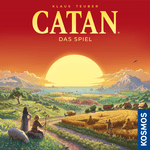
So, let's set the stage first because I think a lot of people forget just how massive this game actually is. Katan has sold over 40 million copies worldwide, translated into over 40 languages. During the co lockdowns, sales jumped 144% in the first 5 months of 2020 alone. This isn't some niche thing. This is one of the biggest board games on the planet and it was designed by Klaus Toyber, a German dental technician who started making games in the 1980s basically because he was bored at work. He won the Spiel Darus for it in 1995 and that was actually his fourth win, which is basically unheard of. He passed away in April 2023, but the game he made fundamentally changed the hobby.
And yet, if you go on Reddit or Board GameGeeek, you'd think the game was a crime against humanity. So, let's do this properly. Let's go through the actual criticisms, take them seriously, and then talk about why we think most of them don't hold up the way people claim because we've played a lot of katan a lot, and our experience doesn't match the rage. Let's start with the big one. It's all luck. The dice decide everything. This is the single most common complaint, and I get where it comes from. You roll two dice every turn and yeah, you can pick all the statistically best numbers, your sixes, your eights, your fives, and nines, and still watch those numbers just refuse to come up for turn after turn. That's genuinely frustrating. There's no built-in way to mitigate a cold streak other than trying to build on more hex's, which requires resources you might not be getting. Development cards add another layer of randomness, too.
You pay ore, wool, and grain for a random card that might be a game-winning victory point or something completely useless in the moment,
right? And I'll be honest, early on I felt this too. But then we started looking at the competitive scene more carefully and the picture changed completely. There's a whole competitive ecosystem out there. Tournaments, online leagues, championships, and the same players keep rising to the top. Top competitive players in leagues like King of Katan and the Katan Championship maintain win rates around 40% in four-player games over hundreds of matches. Players like M7 achieved 35 to 38% across over 500 games in competitive leagues, while players like Raymond and others have hit the 39 to 41% range. In a pure luck theme, you'd expect 25%. That gap is enormous. It's not just dice. It's board awareness, adaptability, social skills, understanding probability, and pattern recognition. The competitive scene includes things like the King of Katan Premier League and a World Championship.
And none of that would exist or produce repeat winners if dice were all that mattered.
The dice randomness actually serves a purpose, too. And I think people miss this. It acts as a leveler between experienced and new players. It gives beginners a genuine fighting chance without needing some artificial handicap system. That's a feature, not a bug. Now, the second big criticism, it's the setup phase decides the game before it starts. And there is some truth here. Your initial placement of two settlements and two roads is the most important decision in the game. Where you place determines your resources, your numbers, your expansion paths, everything. And if you're a new player who doesn't understand any of that yet, you can fall into a trap and have a miserable game because of one bad placement before you've even rolled a dieice.
This one I actually have some sympathy for. The game uses a snake draft. The last player to place their first settlement gets to place their second one first, which is a balancing mechanism, but it doesn't change the fact that you're frontloading the entire strategic weight onto two decisions made before the game begins. You're choosing which of the five resources you'll reliably produce, which dice numbers you're tied to, where you can expand toward ports and open territory, all before a single die is rolled. Most modern games ease you into their systems gradually. Katan just throws you in. But here's the thing. After playing hundreds of games, I've come to see this as a genuine skill expression point. Experienced players make dramatically better placement decisions than beginners. They know to diversify across numbers and resources, to consider expansion paths toward key harbors, to avoid bottlenecks where roads will box them in. That gap in placement skill translates directly into game outcomes, and it rewards deep knowledge in a way that a lot of more complex games with arbitrary opening moves just don't.
Yeah, though, I'll push back a little. The expectation that veterans should essentially coach beginners through their most important decisions is a real design weakness. But before we get to the robber, we need to talk about soft elimination because this ties into the placement problem. In a four-player game, roads act as walls that block opponents from expanding. We've been in games where one or two players get boxed into poor positions early and then spend the remaining hour or more just sitting there, occasionally rolling dice, watching other people compete. One of the worst games we ever had lasted close to 4 hours, and one player was essentially locked into producing almost nothing but sheep the entire time due to bad placement combined with terrible dice luck. That's the monopoly problem.
When the losers are obvious early, but the game drags on anyway.
And modern game design has largely moved away from this for good reason. Player elimination is either completely absent or it triggers the end of the game. In most modern designs, Katan sits uncomfortably between those approaches. A player who's soft eliminated still has to sit there, still rolls dice, still gets robbed, but has no realistic path to 10 points. That's a legitimate flaw, and I won't sugarcoat it. But it also doesn't happen as often as the horror stories suggest, especially when players make reasonable placement decisions and the table uses the robber strategically to keep things competitive. Now, the robber. People hate the robber. Rolling a seven, which is the most common role at about 17% probability, forces anyone holding more than seven cards to discard half, and then you move the robber onto someone's hex, blocking their production and stealing a card. Knight cards do the same thing, and there are 14 knights in the development deck more than any other type. Players feel targeted, victimized, piled on. And here's where I think the critics are most wrong. The robber is actually one of the most criminally underrated mechanics in all of Katan.
It's the game's primary balancing mechanism, the very catch-up tool critics claim Katan lacks. Think about it. The leading player gets robbed more often, gets shut out of trades, faces the most opposition. That's a natural negative feedback loop. Smart deployment means blocking what an opponent specifically needs, not just their highest producing tile. And it creates this whole ecosystem of negotiation. You can bribe people not to rob you. Negotiate non-block agreements. Use night cards as deterrence. Keeping track of how many times you've been robbed and reminding the table to spread it around. That's pure social gameplay. The catch-up mechanic is there. It's just social rather than systemic. and it requires players to actually use it properly.
I'll grant you that it works beautifully when everyone at the table understands it, but the emotional experience of being robbed three turns in a row is still awful, even if it's strategically sound. The perception problem is real. Now, trading, this is theoretically Katana's crown jewel, and it's genuinely one of the rarest and most compelling mechanics in all of board gaming. The five resources maintain roughly equal value, making one forone trades intuitive even for beginners. In our games, the best players offer more than 30 trades per game. The constant negotiation is what drives the whole engine forward.
But people have real complaints here. If you're visibly winning, nobody trades with you. You lose access to a core mechanic. Trailing players have nothing to offer, so nobody engages with them either. New players get exploited because they don't understand resource values, and desperate players can kingmake by handing out sweetheart deals just to end the game. Those are all real scenarios we've seen play out.
They are, but I'd argue those are player behavior issues, not mechanical flaws. The rules don't force anyone to refuse trades with the leader. That's a strategic choice, and it actually functions as the game's built-in balancing mechanism. When the leader gets blacklisted from trades, that's the table self-correcting. It's elegant design. It's just not obvious because it happens through social dynamics rather than printed rules. Few games excel at trading and negotiation as effectively as Katan does. The genius is in the simplicity, asymmetric resources that maintain roughly equal value, which players can grasp intuitively in a very short time. A lot of designers have tried to replicate it and found it's deceptively hard to do well. Let's talk about kingmaking because that's closely related and it's a persistent complaint.
A player who can't win ends up determining which opponent does through trades, robber placement, or just resource decisions. We've been in games where someone far behind has two opponents near 10 points, and every single thing they do tips the balance one way or the other. It can feel terrible.
It can, but the game actually builds in a partial solution that doesn't get enough credit. Victory point development cards. These stay hidden until you reveal them to claim victory. A player sitting at seven visible points could secretly hold two or three VP cards, putting them at 9 or 10. Someone can leap from six visible points to 10 in a single dramatic turn. by combining a road push for longest road with VP card reveals. This hidden information creates genuine endgame tension and blunts the kingmaking problem significantly because you can't always be certain who's actually closest to winning.
You think you know who's about to win and then someone reveals two VP cards from nowhere and the whole table erupts. That's peak katan. Now, the boring midgame criticism after the initial land rush, there can be this lull where players are saving for cities or development cards, and turns are just roll, collect nothing useful, pass the dice. In our experience, this is real. The turns can get less interesting as the game goes on, not more, which is the opposite of what you want.
But I'd reframe it that Midame slowdown is actually when trades matter the most. It's when development cards are being stockpiled, when the endgame surprise is being prepared. If you're just sitting there waiting for dice to deliver the right resource, you're not playing katan properly. You should be trading, negotiating, scheaving. The apparent inaction is only real if players aren't engaging with the social layer.
That's fair, though. I think some groups just naturally don't trade much, and for those groups, the midame really does drag. It's a game that rewards extroverted play, and not every table has that energy.
The contrast with engine building games is worth noting here. In something like Terraforming Mars, your options expand as the game progresses. You feel more powerful, more capable. Katan's late game narrows into a tight race where you're mostly waiting for the dice to deliver the right resource for that final city or that last road segment. Your turns can actually get less interesting, not more. That's a legitimate structural issue.
It is, and I won't defend it completely, but the compression also creates tension. When three players are all sitting at eight or nine points, and anyone could win on any turn, that final stretch can be electric. The question is whether the journey to that point was engaging enough, and that really depends on the group. The catch-up mechanic criticism is related, too. A lot of modern games include rubber banding systems. Isisle of Sky gives bonus resources to players behind. Power grid makes the leader buy resources last at inflated prices. Katan has nothing like that formally,
except it does through the robber and the trade blacklist. We just talked about this. The leading player gets robbed more, gets fewer trades, faces more opposition. The catch-up mechanic exists, it's just social, and honestly, I prefer that. Artificial rubber banding can feel patronizing. Katan trusts players to balance the game through their own choices. Trade embargos, targeted robber placement, political negotiation that respects player agency in a way that a lot of catch-up systems don't.
The it's 30 years old and games do it better criticism is the one that actually has the most weight for me. Katan turned 30 in 2025 and the landscape has changed dramatically. After a 100 plays, I won't pretend the strategic depth is infinite. And the burnout factor is real. For a lot of people, Katan was the only modern game their group played for years. After discovering games like Concordia or Terraforming Mars or Wingspan, going back can feel like a step backward.
But here's the thing, those games exist because Katan proved the market was there. Before Katan hit the American market in 1996, most adult board games were about direct conflict and heavy randomness. Katan introduced American consumers to Euro games, indirect competition, resource management, mathematical balance. It created an entire market. Every modern board gamer can basically trace their journey back to Katan or to a game that only exists because Katan showed there was demand. Calling it outdated because newer games iterated on its innovations is like calling the original iPhone bad because newer phones are better.
That's a good analogy. And I think the variable board deserves more credit than it gets. Unlike Monopoly or Risk, where the board is fixed and optimal strategies can be memorized. Katan's 19 terrain hex's are placed randomly every game. The number tokens change. Even the harbor positions shift. No two games are identical. That's something many far more complex games still don't offer.
And the solved game criticism falls apart when you remember that katan is fundamentally a social game. And social dynamics can never truly be solved. The meta shifts with every group. Competitive online leagues play what amounts to a completely different game from casual in-person play. Way more tactical and intelligent. Elite players keep finding new layers after thousands of games. The depth ceiling is higher than casual players assume.
Let's also put the hate in statistical context. The vast majority of people who play Katan enjoy it. Millions of copies continue to sell every year and ratings data shows strong positive sentiment. The online hatred comes from a small subset of superenthusiasts on forums whose tastes don't reflect the wider world where katan is genuinely beloved
in the educational and social value is real and shouldn't be dismissed. It teaches probability, understanding which numbers come up more often. It teaches basic economics, supply and demand of resources, negotiation, risk assessment, emotional resilience. It creates shared experiences and brings people to the table who would never touch a heavier game. That matters.
So, where do we actually land on this? Because I want to be honest, Katana is not a perfect game. The criticisms about randomness, setup dependency, and soft elimination where a player gets boxed in and spends an hour watching everyone else compete. Those are legitimate. We've had games where someone was stuck producing almost nothing for the entire session. That's not fun. And I understand why someone who's played 200 times and discovered deeper, more mechanically sophisticated games feels like they've outgrown it.
Completely fair. But I think the question isn't is Katan the best game ever made. It's does Katan deserve the level of contempt it gets online? And the answer is clearly no. If you're someone who plays primarily at two players and wants deep strategic interaction, Katan probably isn't your game. If you need zero randomness and full deterministic control, Katan isn't your game. But if you play at three or four players and you enjoy negotiation, social dynamics, and a bit of chaos, there's still nothing quite like it at that accessibility level. And I think the gateway argument is genuinely important, not just historically, but right now. I still reach for katan when introducing non-gamers to the hobby. It teaches you to think about probability, about resource management, about reading other people and negotiating. It gets people hooked in a way that jumping straight to a three-hour engine builder just doesn't. The on-ramp matters, and Katan is still one of the best on-ramps in the hobby. It's not perfect, no, but the intensity of hatred it receives is wildly disproportionate to its actual flaws. The competitive scene proves skill matters far more than luck. The trading system remains essentially unmatched in accessibility and depth combined. The robber, far from being a pointless nuisance, is the game's built-in balancing mechanism when used properly. And the millions of people who keep buying and playing and loving it, not just from nostalgia, but because it genuinely delivers a fun, social,
strategic experience, they vastly outnumber the vocal online detractors who've simply moved on and forgotten where the hobby began. Hating Katan is not a sign of sophisticated taste. Understanding what it does well and what it was designed to do is. And honestly, after all the games we've played since, the heavy euros, the deck builders, the legacy campaigns, there's still something special about sitting down with four people rolling dice, screaming, "Give me brick." And watching alliances form and crumble over a pile of cardboard hexagons. Klaus Tuber built something that brings people together. That's Katan. That's always been Katan.
Give Me brick, the eternal cry. And look, if you've bounced off katan before, I genuinely encourage you to try it again with the right group. Play it for trade aggressively. Use the robber strategically instead of just punishing whoever annoyed you last, and actually pay attention to those hidden VP cards. The game opens up when you engage with all of its systems instead of just rolling dice and hoping. Thanks for listening everyone. Go play some katana.