Six Short Game Reviews - with Tom Vasel
Games in This Video
4 games are featured in this video — they unlock as you watch.



Transcript
Hey everybody, I'm Tom Vasel and today we're taking a look at six small games here. This is almost a six games I played so you don't have to, but one of these games is fine, the rest are not quite so much. But just some quick little overviews of these games. Well, let's get started. The Brain is a little game from Play to Z in which players are simultaneously uh or not simultaneously, but they're working together to basically discard an entire deck of cards from their hands following some rules and not having too many cards out in the middle of the table like this. This game is made up of a deck of cards and these cards are various colors. You purple and green and gray and each of these cards also has an item on it. So there's a red key, but there's only one red key. So there's six items on six cards. So there's one blue fingerprint, there's one red fingerprint, there's one purple fingerprint, etc. You're going to shuffle this deck and give players uh a handful of five cards. You also determine the difficulty level and this difficulty level matters because as the game goes by there's going to be cards in this display in the middle of the table.
And if there are ever a certain number of cards in the middle or more then everyone loses depending on the level. So in an easy game, it's seven. In a hard game, it's five. If there's ever five out in the middle of the table and on your turn you are required to play a card either from your hand or from your domain. Sometimes things will put have you take a card or you give a card to someone else and that card will then come in front of you and you have to play those cards. To win, you need to play the entire deck out and no player has any cards in their hand or any cards in their domain. They simply need to be out here. When you play a card, you have to do the action that's on this card. So, example, this card here is a donate card. When you play this one, you give a card from your hand or domain to another person and they'll put that card in their domain.
When we play this card here, this card is going to allow you to take a card back from the display and add it to your domain so that you can play it later. And there are all sorts of different cards in here. This one you cover a card in the display. So, that counts and that's covering that card. And this matters because the most important cards in this game are these cards and this one, too. When you play one of these, it will get rid of all the cards of either that color or that type from the middle. They go to the discard pile. So, that gets rid of this one, but not this one because it's covered up. And if I would play, for example, this one, it gets rid of all the keys, but there are no keys out there. But, if this was out, for example, then that would be discarded. So, that's how you get rid of cards in the display.
And that's it. You play till you win or you lose. Each person plays a card, draws a card if there are any left to draw, and you keep going. The big rule that I didn't mention in that overview is that you cannot communicate. You can't talk. You can't communicate. You can't do anything. In fact, the first time I played this, halfway through the game, we stopped. I stopped and I said, "Listen, we we're going to restart, but we need to There was one person who wasn't quite getting it and we couldn't say anything without helping them. It's like, "You need to wait till there's three green cards in the middle or help put three green cards out there and then you have a card that gets rid of all those green cards because that's how we're going to win. We That that middle fills up in well, if you're playing on easy mode, in seven turns and if you're playing a card that puts another card out there, even faster than that. So, you need to hurry." And just at the end of the day, I just found that part to be no fun. The lack of communication you kind of have to have the communication before the game so you understand if if we're playing this but you're not at the point or do nothing or hint nothing. And I that doesn't do it for me anymore. These no communications.
There should be some way to communicate with other people. Otherwise, we're just playing a big solitaire game that isn't particularly interesting. It's going to really matter on the the way the cards come out. You know, if I and and your hand, there's some interesting concepts here. But it it just didn't I didn't find it to be that interesting. I give it a five out of 10. That's the brain. Elementistic is a two-player game from Wise Wizards Games in which you are a wizard, I suppose, balancing fire, air, and water and fighting a duel against someone else. In other words, a theme you've seen a million times before. But, this game has a nine-card deck. Is that worth it? Let's see. Each player is going to have 10 health and you'll put this between the players to show how much health each of you has.
Uh one player is going to play first, the other person is going to draft first. There are nine element cards: chaos, shadow, storm, fire, light, water, lightning, earth, and air. You're going to shuffle these. One of them is a secret element that no one has. Then each other player gets a secret element that they have. So, for example, I have storm. And then the remainder are placed here in the middle of the table. And whoever drafts first is going to pick two of them. So, maybe they pick lightning and water. Put those face up in front of them. Then I'll pick shadow and chaos um over on my side. Then they get one more. So, maybe they pick light and I pick earth. So, now we each have four cards, three that are face up that the other player can see, and one that is face down and secret.
Starting with the player who plays first, players are going to play a card in front of them one at a time until you've each played three cards. You can play your face up or your face down cards. When you play a card, you can tuck it put it in front or you can tuck it behind like this. So maybe I put one here in the front and then they put one here in the front. We now have three columns and we're we're going to see who attacks who. So in this case, we're now going to see who goes first. So that's this middle yellow diamond. So nine is higher than one so they'll go first. It says play your tongue thunder token on the front of your opponent's column. So I put this one here. They don't get their special ability even though they had one. Although the thunder token can only be used once per game.
So now we are going to compare the attacks of the defense. My attack is seven. My opponent's defense is 3 4. So I do three damage to them. Their attack is four. My defense is two. So they do two to me. Then the draft card is going to reverse. The play first is going to go to the person who had this higher attack in a round. So it could be the same person having both cards. You'll shuffle the cards and do it again. Each of you has a card that shows you what they all do. They they can do various things like the shadow swaps the strength and defense. The light reveals the secret element next round. The air adds the air token to the next rounds attack. And there's a couple extra cards that are air token, shadow token, and light token that are used for their specific cards. And you keep going till someone reduces the other person's hit points to zero. That person wins. So this game has a weird back and forth has a weird there's a hidden element.
Well, since you don't know that element or the one your opponent has hidden, you know they have one of two elements. You can cuz you know your hidden element. So you know four and you see there are three face up cards. So that's seven of the nine cards. Doesn't seem to matter. This is the kind of game if you want to do well at it you obviously have to have everyone's deck memorized. But as you're playing them, you're watching your opponent. There's some interesting concepts here. Hey, the top card is the only one I get to do the special ability of. Uh it also is going to be the one that determines the speed because me going first is it could be a big deal. I could win the game, you know, by hitting you before you hit me. And then tucking a card, you're just getting the attack and defense at the top. So, you have to decide which ones you're playing one special ability per round. You can see three of your four opponent's special abilities. And you're kind of going back and forth and how you do this.
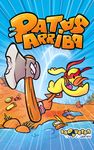
I think this is a game that sounds fun in theory, but this is a game that literally is just too small. Uh normally small is good. I'm Don't get me wrong. I like games that are small and and truncated, but it just it doesn't feel like you're doing anything particularly interesting. It's like, "Oh, well, there's fire again. Mm, I got fire. I guess I'll try that." And I don't know. It's It's I mean, it's small and little, so I get a lot of people would like that, but I just did not particularly Uh it's passable at best, but not one that I love. Uh the concepts, the token cards, I just can't really recommend it. Five out of 10, that's Elementic. Patas Arriba is a game in which ducks are throwing axes at each other. You're literally doing that in this game. You're going to throw cards. Here's how. In this game, each player is going to have a duck that they'll put in front of them standing up. Um they have a front and a back. So, your front is facing each other. You're fighting over the other person. I think this is a duck that got swallowed by a giant ice cube. I'm not sure.
And then you'll be playing through a deck of cards. So, you're going to shuffle the deck and split that evenly between all the players. Each player will hold their deck in their hand like this. And what's going to happen is at the same time, everybody will play a card in front of them. Now, if your card matches someone else in the type of item {slash} color, yellow, or the number of items. So, these two match each other and these two match each other, then you must fight the other person. And you do that by taking one card and throwing it at the other person's duck. And if you knock them over, good. But you can also use your free hand like yes, the same one in your front, to block the card the other person throws. But if your duck gets knocked over, you'll have an axe put underneath it. And there's also bombs. When a bomb comes out, everybody must hit the table and the last person to do so will put an axe underneath their duck.
And then there's a few other cards that are added if you want. They're called a mini expansion. There's a fake bomb, it's not a bomb. See, it's it's a square instead of a circle, or wilds and things like that. As soon as someone has five axes underneath their duck, that ends the game and whoever has the fewest axes underneath their duck is the winner. This game is all sorts of silly. My problem with this game is it doesn't really offer anything new other than the throwing of the card. The flip cards and if you see something, do it is in hundreds of games. The slap the table. And don't be the last person to slap it. Hundreds of games. I mean, this is just These are two concepts that are used over and over. You throw the card at your opponent and again, some people are good at throwing cards and some people aren't, but you can also block with your hand. So, when there's a duel, at the beginning everyone just throws a card.
Oh, we both missed or oh, we hit. After a while, you're like, oh, we match. I'm just going to put my hand in front of my thing. You can't hit me. Throw your card, I'm going to block it. It's not hard to block a card. And no one is good enough to be like, hurl it and goes around your hand and hits it. It's it's such a one-note game that I just can't recommend it. I don't particularly love this. I I I I think the concept's funny. Don't get me wrong, I like the cute theme. And I'm not even opposed to these games where if you match stuff or slapping the table. But, there's not much more to it than that. So, unfortunately, I'm going to give this one a five out of 10. It does stuff I've seen before, but not particularly fun. Trouble Bot is a game that is from Lucy Goosey who makes really weird themes. And in this one, you are uh a shroom bot. Like so you're robot mushrooms and fighting other robot mushrooms, I think somehow. This is a game in which you are going to be playing a card from your two-card hand.
Here's how. The game is made up of a deck of 18 shroom bot cards. You'll pick four of them out there and each player will have a hand of one. You also have a pile of This is called the patch where you'll have tokens here that are worth one to four points. There's only two fours in there. Uh uh four threes, 10 twos, and 20 ones. So there's a you know, obviously they're mostly more smaller. And what you're going to do on your turn is there's four cards face up. You will pick one of these cards, add it to your hand, and then you're going to play one of the two cards in your hand. So let's say I play this one. It says one by one flip over as many seedlings from the patch as you like. If you flip over a three or four, put all the seedlings you put into the heap. Otherwise, I got to take them all.
So I'll flip this one over, a one. Ooh, let's keep going. A two. A Now I get nothing. And then these all go to the heap. And then this card I play goes to the discard pile. A new card comes out and we keep going. Maybe the next player plays this one, which is just take three seedlings from the heap. So they take them and they're face down and they can look at them. What they got? A one, a one, and a two. And sometimes cards let you take stuff from Oh, that's I'm sorry. That's That this is the heap. So they get to take all three of these. Well, there you go. So they get those three tokens. But if you take tokens from here, they are face down. And there's all different cards that you can do like this one, perform any action of any shroom bot from the discard pile.
And then there's a whole sheet that players will have that tells you what all 18 cards do and explain it just so you know how they work. And the game will continue until someone reaches a specific number of points, which is going to depend on the number of players in the game. For example, four players, you're going for 16 points. You have 16 points, you say, "I have 16 points." and you win. Or if these are all gone at that point, whoever has the most points is the winner. This is another one of those games that's 18 cards for no reason. This is a weird thing we do in our industry where everyone makes these decks of 18 cards. Um and you don't have to tell me you have to make 18 cards cuz there's 36 cards in this in this uh box because they have German half English. But it's fine. The cards are sort of complicated with a lot of stuff on them, but it's just a bunch of luck. I play this card and they're trying to copy the old Love Letter. This game is almost exactly like Love Letter. In Love Letter, you drew a card, you had a hand of two, you played one, did what it said. That's what you do here. But here you're playing it going, "Okay." And you saw the example where I draw tokens until I bust or I do this and I get six from here, I take one, and then I mix up the pile.
And there's a lot of take that. There's a lot of going back and forth. You can steal from other people or I can block you. There's some cards that stay in front There's some cards that can be used as defense. And it's just it's just it's a lot of effort, all these different cards with a lot of different effects for a very simple game that isn't particularly fun. I like the theming of it. I like the artwork. I I even like the concept. But it's a five out of 10 because it just doesn't go farther than that. There's not a lot here to really get excited about. It's just play a card, take some tokens. Oh look, I got two four tokens. And as long as no one knows about that, that's great. But as soon as someone knows I have one, they're going to steal it. And then I'll steal it back from them and that's kind of the rest of this game. Yeah, it's a very mad game. Five out of 10. Troublebutt.
Driving me crazy. This is an apt name for this game. This is the ultimate road trip game. That's what it says on the box. Spoiler alert, it is not. Um, this is a game in which you are going to be playing a certain amount of roads till you get to a certain distance. You're like, "Hey, I've heard of this before. Isn't this a classic game, Mille Bornes?" Sure, it's very similar to Mille Bornes, but not quite. Let me show you. In this game, you are drawing uh four cards from the deck, and on your turn, you're going to play a card and draw back up, or you can discard cards from your hand and draw back up. A lot of the cards you play are going to be distance cards, which are either 100 or 50 km, and the whole goal of this game is to get to 1,000 km. That's how you win, unless you're playing a five-player game, in which it is 700 km. You can also play action cards. I can make somebody else skip two turns by playing this card, uh the stop light. So, if I want someone to feel just like it is during traffic, uh uh skip two turns.
Um, here, I make someone get rid of the last two distance cards they played. Here, someone can't play distance cards for four turns. Here, discard two cards from your hand. But, there are good cards. I can play two more cards after I play this one. Uh this one here, I can get rid of one of the negative cards, or I can play two distance cards. Search a deck the deck and draw two cards. Or, you can draw three cards and play a card, or draw a card, play distance card, and repeat. If this is not interesting enough for you, there are more cards. There's like a whole extra deck that you can shuffle in that gives you extra cards, and then there is even Signs of Madness and adding more action cards again into the game, and you can also play with up to seven players if you're a lunatic. This game is terrible.
I hate it. It's so bad. A card that makes someone lose two turns would automatically make me dislike a game. A card that makes people discard cards from their hands or not play road cards, they're just negative cards. So, let me talk about the strategy of this game. Okay, I'm done talking about the strategy. You're playing bad cards on other people. You're playing good cards on yourself. You play these cards out again, very similar to Mille Bornes, but it's not like Mille Bornes. In fact, I think Mille Bornes is more fun than this game. And then there's all these extra cards. It's Wow, it's a nice production, nice quality cards, but it's a terrible game. Uh, some people probably would like it. I'm I'm sure out there. And so, in fact, I've seen a lot of people who have rated the game very highly.
Um, but I cannot be one of them. I cannot This game is just not good. It's not broken. It's not I give it a three. Because I do like this box. But that's it. I still can't recommend it. Driving me crazy, indeed it does. No Thank Parliament is a voting game in which you are a member of the parliament of gnomes. And you're going to work on your procedures and blah blah blah. You're voting on rules. And these rules affect the gameplay, but you want to vote with the majority, because who doesn't want to be part of the majority? Here's how it plays. I'm going to tell you mostly the basic rules of the game. And in this game, players are going to have their character, and they'll have be like this. You also have some lobby tokens that you'll have There'll be some laws placed out here. And you're going to set a deck up. Now, I have the whole deck here, but it will be a much smaller deck than that, because there will be some game end cards shuffled in the bottom six of the deck. And when both of those comes out, that triggers the end of the game. One person is president, so the president will put this there to show you're president. And the president each round is going to pick a law that we're going to vote on.
And each player has a yes or no vote, and you're going to put that on top of your character as to whether you're voting yes or no. You may also place lobby votes on here and in fact, if you place three lobby votes on there for every three, you get an extra one. So, if I had six, I could put six on here and then I would add two more lobby votes to this. You're allowed to discuss and everything and the president can tell people to hurry up who haven't voted yet. Once everyone has voted, you will turn these over and this counts as one vote and each lobby cube that you have is one vote. But before we turn them over, players can also secretly bid a certain These are three lobby votes. Can bid a certain amount of lobby votes secretly in their hand, but these will not have any additional votes added to them like the open lobby votes will.
So, you add together all the lobby votes plus these and if the yeses win, then this will become a law pushing any law that's already up there down one further. If it's a temporary law, this will For example, this is going to give the president an every second known uh victory point. But if it goes into play, everyone who voted yes gets a victory point. And you will have spots here underneath your characters to as you get victory points, you'll score them like this and the threes go here. And tens, which you may or may not get, will go here. But anyhow, if you if the law doesn't pass, then everyone who votes no will get the get points for voting no. Uh but there's all sorts of things like this when the law's in play. Like for example, this says the gnome who if you're the only person to vote no when this law's in play, you'll get two victory points.
This one says anyone who had who didn't get honor points, the victory points, uh who didn't vote with the majority gets two lobby cubes. And so, these laws will be here, but there will only ever be three laws in play at a time. If more permanent laws come, then these get pushed off, but they affect the game. The gnome who votes the same way as his two neighbors gets two victory points. So, those are going to change how the game plays, and then these temporary laws also everyone gets three, and those without lobby votes even get four. So, these are going to come into play, and it's going to keep going once the first game end card shows up, if you vote with the majority, you'll get two points for voting with the majority as opposed to one. And then when the second game card comes up that ends the game, and whoever has the most of these points is the winner. This game has some clever ideas. One idea in the rules that I like a lot is when you are the president, you pick the law and everyone votes on it.
You can then remain president if you want to. If you pass the presidency on to the next person in clockwise turn order, you will get two of those lobby cubes, which are important to have cuz you want to play them out there. But you can keep it. But in the advanced rules, which I think you should play, if someone has lower points than the winner, like three points lower than the winner and they're not doing very well, they can challenge that and then players can vote and kick you out as president and there's a new president. I I find that to be amusing. This game is very similar to an old game called Democrazy from Bruno Faidutti, in which that was a game also where everyone voted on things. The lobbying votes I I I think it's a interesting concept. You can play lobby votes out beforehand, you know, and that for every three you get an extra vote. Or you can have secret votes in your hand. That's kind of fun. You actually don't know how people are voting, but you're kind of wanting to vote the same way as everyone else. You have discussions, you're not allowed to trade points or or the lobby votes to do that, but you can have all these discussions, and that makes interesting. But it's just shy of being good. It's it's a little procedural for the sake of being procedural. It makes you make rules that are about the rules that you follow. And it just misses that point where you're like, "This was so much fun."
Cuz it's not quite there. It There's some cool concepts. It's It's kind of there, but it doesn't make it completely. So, yeah, I I I like a lot of the parts of it, but just doesn't come together in a complete way even when playing with the advanced rules, which I think honestly just add more baggage and overhead. It's probably better with the basic rules as is. So, a six out of 10. It's not bad, but when it's done, you're like, "I don't know if I want to play this again." And that bugs me. I love this idea, and I'm still waiting for someone to make a game like these where it's just whack-a-doodle fun as you're playing through it. But, the laws themselves are like, "No." "Yes is when we have a tie." Oh, okay. Now, the only person to vote no gets points. Great. That's a little more interesting than the other rules, but Ah, just it just feels like it's missing that spark for me. So, that's Gnome Parliament.
And there you go, folks. Sadly, not many games here that I enjoyed, but you you may feel differently. Let us know in the comments if you feel differently or maybe you feel the same. Either way, that's six short games. Thanks for watching. I'm Tom Vasel. We'll see you next time.
Hey everybody, thanks for watching another video from The Dice Tower. Hey, do you want to learn more about us, communicate with us? We have a Facebook group. We have a Discord channel. Lots of different ways to get involved with The Dice Tower. You can find that in our link tree link below. So, just click that, it will take you, and you can communicate with us on Facebook, join our Facebook groups. There's lots of cool things that you can find and become part of The Dice Tower. Thanks so much for watching. I'm Tom Vasel.