Blueprints
Games in This Video
1 game is featured in this video — it unlocks as you watch.
Transcript
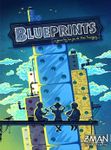
welcome to brains on games I'm dr. Brian McDonald and I'm a psychologist with the practice that focuses on supporting kids who have learning differences or learning disabilities and helping them to be successful at school for years one of the things I've done is prescribed board games to families to give them fun ways fun opportunities to allow their kids to practice the skills that need a little bit of extra support in order for them to develop now I I do talk about kids when I'm talking about these games but of course if you're practicing a skill that's good for anyone of any age and and there has been research on board games that shows that it's helpful in keeping your mind active as you get older so really it's for kids of all ages I guess you could say but I usually say kids because that's where my practice is this episode we're going to talk about a great little visual spatial game I know we did a visual spatial game last time around but this is one that I love and I couldn't resist talking about it but it's a visual spatial game called blueprints where you play as an architect or as a construction person who's building a tower from DICE you can see the dice here that make up that Tower now this is a little game that takes about half an hour to play it's not too complicated or long you can play it with between two to four players and it's appropriate for kids age 13 and older now I would say that you can't play it
with younger kids where they're going to get tripped up or mixed up will be in the scoring part because the scoring can be a little bit complicated so they'll need some extra help with that but I think younger kids can play blueprints as well now blueprints is a dice drafting game and and drafting is a style of game where each player is taking something from a community pool and then whatever they've taken isn't available for the other players they're going to use it to build something or do something and the other players can no longer access that card or in this case that dye that's been taken out of the pool and well let's take a look at blueprints here you can see there's the row of dice and that's where you're going to be taking pieces in order to build your construction you're building this screen this green screen that you can see here is how you hide what you're working on that way the other players can't see what it is that you're up to there's a real balance in drafting games between trying to build the thing that you want to build and disrupting what the other players are trying to build so you might take a die not because you wanted it for yourself but just to keep somebody else from getting it behind this screen is a cheat sheet that shows how each of those different kinds of dice will score I'll get that out of the way and I'll explain them this is the blueprint that you're going to be working on and there's lots
of different here's another example there are different blueprint design so you draw these at random so you don't know what kind of thing you're going to need to build and you can see that there's this 3d drawing here and then there's these these squares which is where you're going to be putting your dice the numbers on the square are how high they're supposed to be in order to build this thing so you're translating this isometric drawing you're kind of rotating it and imagining it in three dimensions that's the visual spatial part there's a mental rotation exercise here and some translation between this drawing and the 3d the real world the the grid and the numbers on the grid are really helpful in doing that so this is an easier one so I'll focus on that these numbers tell you like I said how high you're supposed to stack up the dice to make this model now you will get some extra points at the end of the round if you can make a model exactly like this but that can be tricky because the dice that come out are random they're pulled out of a bag and then rolled so you don't know what number you're going to get and you don't know what color you're going to get let me tell you a little bit about the colors these different colors represent different materials that you're going to be putting into your building the orange ones there's two of them here the orange ones are wood and wood obtains a score you get the score from
wood according to how many dice are adjacent to it okay so if I've got one wood here and I've got another die here well then I've got one adjacent dice so that's how I'll be scoring that one the green ones are recycled materials you get more points the more of those you use in your construction the clear ones are glass glass scores according to the number that's up on top and then the black ones here the black ones are stone and you get higher points for stone depending on how high it is in your Tower so if you've got it on the third level of your tower you're going to get more points now right away I think you can see that not only the visual spatial skills that are involved but there's mental math here you're trying to figure out what the totals are according to how each die is scored you're really going to be using that cheat sheet on the back of your screen until you get things figured out and memorized so there are mental math calculations that you're going to have to be doing there's the other little bit of numeracy that's required here is that you you can only put a die on top of another one if there's a higher number so now here's a three I'm going to need to put a four or a five or six on top of that one or else I can't play it I couldn't play this number one on top because it's too low now you're starting to think about probabilities how likely is it that I'm
going to get a higher number than that on the next roll so if you've got a high number like this five you might put it down here where the number one is because then I don't have to stack anything on top of it so again like most of these kinds of games that I talked about on the show there's a planning element and and a bit of problem solving that you have to do so you've got the the visuospatial skills you've got the mental math there's a huge working memory component for blueprints as well working memory remember is the whiteboard in your mind where you keep information so that you can do something with it so here you're juggling a lot of numbers and pause abilities in terms of how are you going to maximize those points am I going to take this wooden number three am I going to take the recycled number three in order to build my building am I going to build exactly like this and get some bonus points at the end of the round or am I going to try and get points in other ways another way that you can earn some extra points is if you've got numbers in a row from one to five you're only going to have five sorry from one to six you're only going to have six dice in your Tower and if you've got each number you'll get some extra points for that what if you've got four numbers that are the same you can get extra points for that as well you can build your Tower from five dice of the same material or you can build a portion of your Tower that's five dice high so those are the different ways that you
can obtain some points there's a few other things you can do I won't go into detail there but that's the working memory component you're juggling all of these different possibilities in an effort to maximize the points that you're going to get at the end of the game so that is blueprints in a nutshell a quick visual spatial game that also requires some mental math skills and some working memory skills as usual if you have any questions or any suggestions you can reach me at Brian at brains on games dot CA brains on games dot CA is the website where you can find all the previous episodes they've all been posted up there in fact you can find brains on games on Facebook and Instagram and Twitter as well we're all over the place now so if there's anything you have comments or suggestions about there's lots of ways that you can track me down hopefully you enjoyed this episode and hopefully you'll join me next time