DON'T BUY Byzantion Until You Watch This! Engine Building Meets Social Deduction (board game review)
Games in This Video
1 game is featured in this video — it unlocks as you watch.
Transcript
We dove deep into Bzantium, watched absolutely everything we could find, and honestly, I have a lot of thoughts about this one.
So, here's the big question. Should you back this Byzantine political intrigue game or skip it entirely and wait for retail?
Let's set the stage here because this one's genuinely interesting from a design perspective. Bzantium is from Meeple Pug, currently running on Gamefound, designed for 1 to four players. The campaign page claims 60 to 120 minute play time, but from all the gameplay footage we watched, you're actually looking at closer to 3 hours for a full four-player game. That's a significant time investment that I think people need to understand before backing. The campaign is sitting at roughly 69% funded with 16 days left. So, it'll probably fund, but let's be honest, it's not exactly setting the crowdfunding world on fire with enthusiasm.
Yeah. Yeah, and to be completely clear about how we approached this review, we watched every available piece of footage we could find and consumed every bit of information about this game that exists out there. We went deep on this one because the core mechanics looked genuinely interesting and we wanted to give it a fair, thorough evaluation. The basic premise is that you're playing as one of four historical factions during Emperor Justinian's reign in the sixth century. And you're secretly trying to manipulate the emperor's decisions on these major historical events while simultaneously building your own resource engine and pursuing hidden victory objectives that only you know about. It's competitive. It's got bidding. It's got engine building. And there's this whole layer of social deduction happening underneath everything else that really makes it come alive at the table.
The delivery timeline they're promising is October 2026. So you're looking at roughly 10 months from when the campaign ends in December. That's actually pretty aggressive for a publisher that's had some documented fulfillment delays with their previous crowdfunding campaigns. But we'll dig into those concerns later when we discuss the risks. Right now there are three pledge tiers available. €69 for the Strateggo's pledge, which gives you the base game without any miniatures, €19 for the followers autocrator if you followed before launch and get a free neoprene playmat included automatically, or €139 for the regular autocrator if you didn't follow before launch and have to pay for that same playmat separately. That €30 price difference based purely on whether you happen to click a follow button before campaign launch is definitely something we need to discuss later.
Oh, we're absolutely getting to that pricing discussion. But first, let's dig into how this thing actually plays because the core mechanics are genuinely clever once you understand the overall flow and rhythm of a round. So, the game runs over nine rounds total or six in a shorter variant that we saw demonstrated in the footage. And each round has this three-phase structure that creates escalating tension as you progress through the game. Phase one is where you pick your initiative position on this track that determines turn order and gives you different resource bonuses. And then you bid scroll tokens to secretly influence which of two possible outcomes the emperor chooses for that round's randomly drawn historical event. Like should Justinians send legions or catifacts to the battle of Dar. Your preference depends entirely on your hidden quest cards, which reward specific unit types appearing on the map at game end.
And here's where it gets really strategically interesting. Whoever places the most scroll tokens in the influence bidding phase gets two victory points immediately or one point each if there's a tie for most tokens. So, you've got this dual layer bidding war happening on top of the actual strategic event manipulation that you're trying to accomplish. From the gameplay footage we watched, this dual layer system creates immediate visible table tension that you can practically feel through the screen. Someone places one token, another player matches with two tokens on the same side, and suddenly everyone at the table is mentally calculating whether they can afford to compete for those bonus points or if they should conserve their scrolls for future events where the stakes might be even higher. It becomes this whole fascinating meta game of tracking who has bidding capacity left and who's running dangerously low on resources.
Phase two is your action phase where you're doing the actual engine building work. And this is really where the game opens up and gives you meaningful strategic choices. You've got six actions per turn to work with. Draw cards, play cards, activate your card groups, which are called abandons in this game. Buy resources from the market, sell resources to the market, or reset the market entirely if nothing suits your needs. The abandoned system specifically is where the resource efficiency really compounds over time and creates those satisfying combo turns that engine building fans live for. You play hero cards that can tuck other cards beneath them based on their level. So a level two hero can tuck two cards underneath it. When you activate that whole group as a single action, you get all the resources from every tucked card at once instead of having to activate them individually across multiple actions. Early game, you're getting maybe one or two resources per action, but by late game, we saw players generating 15 plus resources in a single explosive turn through clever abandon chain combinations.
Then phase three is the event resolution, and this is pure prisoners dilemma territory that creates the real social drama and memorable moments of the experience. Players secretly and simultaneously decide which resources to contribute toward meeting the event requirement. maybe four faith tokens and six crowns collectively needed for the plague of Justinian event to succeed. You get one victory point for every resource you personally contribute. So there's clear mechanical incentive to free ride and let other players do the heavy lifting while you conserve your resources for later rounds. But here's the brutal twist. If the collective contribution falls short and the event fails entirely, whoever contributed the absolute least losses victory points as a penalty. From the footage we watched, there was this absolutely brutal moment where one player deliberately and strategically declared their wild resources as the wrong type, specifically to make the event fail on purpose, preventing everyone from scoring the success bonus while simultaneously forcing another player to eat a massive six-point penalty for contributing the least. The table erupted in accusations and laughter. It was calculated political betrayal at its finest.
Right. Exactly. And the hidden quest cards create these emergent narratives that I really appreciate because they give every single player a unique secret story arc throughout the entire experience. In the gameplay footage we observed, one player spent six straight rounds subtly voting for events that would deploy military units to a specific region on the map. Nobody at the table noticed the pattern until round seven when someone finally commented on it. And by then it was simply too late. They'd already locked in over 20 military units for their quest that specifically rewarded Italian military presence. That gap between public appearance and hidden reality forces you to actually read your opponents as human beings with hidden motivations rather than just calculating optimal mathematical plays. You're constantly watching their voting patterns, their resource hoarding behavior, trying to figure out if they're building ecclesiastical engines because their cards naturally generate those resources or because their hidden quest specifically rewards it.
The engine building escalation also hits this perfect pedagogical curve that feels very intentional. Early rounds teach you the basic system through simple card plays where you're collecting resources one at a time. Midame, your first abandons come online and you start feeling genuinely clever about your efficiency combinations. Late game, everything explodes into these satisfying chain reactions where playing specific trigger cards lets you activate the same abandon multiple times in one turn for massive resource generation. The complexity ramps naturally through actual play without frontloading a massive intimidating rules teach. And the historical theme integration actually feels earned. Battle of Darra, Plague of Justinian, Gothic Wars, Codex Justinianis. When players debate whether to support Imperial law centralization or maintain local customs, the thematic texture elevates everything beyond abstract optimization puzzles.
You're getting really excited about Byzantine legal reform. Should I be worried about you?
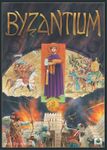
Look, the CEX Justinian absolutely deserves respect. It literally shaped Western legal tradition for centuries. But putting my history enthusiasm aside, the production value also looks genuinely solid from everything we've seen. The Autocrder Pledge includes 101 miniatures with this inkwash upgrade that adds real visual depth and definition to the sculpts. The Neoprene playmat is gorgeous with the Byzantine Empire mapped out. The campaign even includes two companion history books as gamefound exclusives, a historical deep dive, and a fifth E adventure module. That's real commitment to theme beyond just the board game itself. Okay, but here's where we need to pump the brakes because there are some real concerns with this campaign that backers need to think about. First, the rulebook is explicitly labeled work in progress.
From gameplay footage we watched, designers were issuing real-time clarifications during the stream. Questions about hero card identification, market procedures, discount stacking. These are foundational rules being resolved midplay. That tells me this hasn't been thoroughly play tested. And backing means accepting risk of post campaign ara changing how the game fundamentally works.
That really bothered me too. And playtime estimates feel genuinely misleading. Campaign says 60 to 120 minutes, but footage showed experienced players needing 3 hours for just a six round variant. Not even the full nine rounds. For a game whose core loop repeats nine times without major mechanical evolution, I'm honestly not convinced the strategic depth fully justifies sessions that long. The funding situation raises legitimate red flags, too. At 69% funded with modest backer numbers, you're probably looking at production under 500 units. Custom molds for 101 miniatures plus handapplied ink wash becomes extraordinarily expensive at low volumes. Can they deliver promised quality while hitting October 2026? Their previous campaign had fulfillment delays and communication gaps. So assuming best case scenarios feels naive given that track record.
And the pricing structure really bothers me. If you followed before launch, you pay €109 with a free €30 playmat. Discovered late, same pledge costs €139. That's a 27% penalty for not clicking follow at the right time. It's designed to create FOMO pressure before proper research. I understand rewarding early supporters, but €30 feels excessive and arguably manipulative.
We also couldn't find any footage of solo or two-player games, despite searching extensively. Everything was four players. The campaign promises a solo mode where you play as the emperor directly. But without seeing it demonstrated, we can't verify if it's compelling or bolted on. Same for two or three players. Social deduction elements probably need four people to work properly. Backing for lower player counts is essentially backing on faith.
So, where does this land for us? I'm genuinely torn. And I think that ambivalence is the honest reaction. Core mechanics are clearly innovative. The prisoners dilemma system creates real authentic tension. And when it works, it looks like exactly the political intrigue game I've wanted. But unfinished rulebook, production risks, aggressive timeline, punitive pricing. There's a lot of uncertainty baked into this backing decision.
I'm at 7.5. The design probably deserves higher based purely on innovation, but I can't ignore campaign concerns when recommending whether people should pledge. If [snorts] you followed before launch for the 109 tier, primarily play at four players, watched footage, and specifically want this experience, and you're comfortable with crowdfunding risk, worth backing. Those are a lot of conditional ifs, though.
Same range for similar reasons. The footage showed a genuinely good game, but I'd tell most people to wait. Wait for rulebook finalization. Wait for footage showing solo and two-player modes. Wait for post campaign reviews once production samples exist. If it's as good as observed, it'll be available in late pledger retail.
Who should actually back right now? If you're a three to four player group loving negotiation games like Battlestar Galactica or Dune Imperium, appreciate event-driven gameplay with real stakes, historical themes matter, and you followed pre-launch for better pricing, you're the target audience back with confidence knowing the risks. But if you primarily play solo or two-player, need finalized rules before committing, are sensitive to FOMO pricing, or want component certainty before pledging over €100? Skip this campaign and revisit later. Too much remains unverified to recommend universally.
Want something similar available now? Cycl does event-driven bidding with area control and 15 years of refinement. Raw is pure auction tension in under an hour. Pax Premiere delivers deep historical intrigue with proven solo mode. All available at retail, thoroughly tested by thousands of players.
So that's Bzantian, innovative design wrapped in a campaign requiring faith. The Byzantine Empire survived through calculated risk, balanced with strategic caution. Maybe that's the lesson here.
Did you just turn Byzantine history into investment advice?
I contain multitudes. Thanks for hanging with us while we geeked out over political intrigue and inkwashed miniatures. We're Board Game Critique and we'll see you in the next one.